To Be OFFERED AT AUCTION WITHOUT RESERVE at RM Sothebys' The Monterey Auction event, 13 - 15 August 2026.
Offered Without Reserve | $4,000,000 - $5,000,000 USD
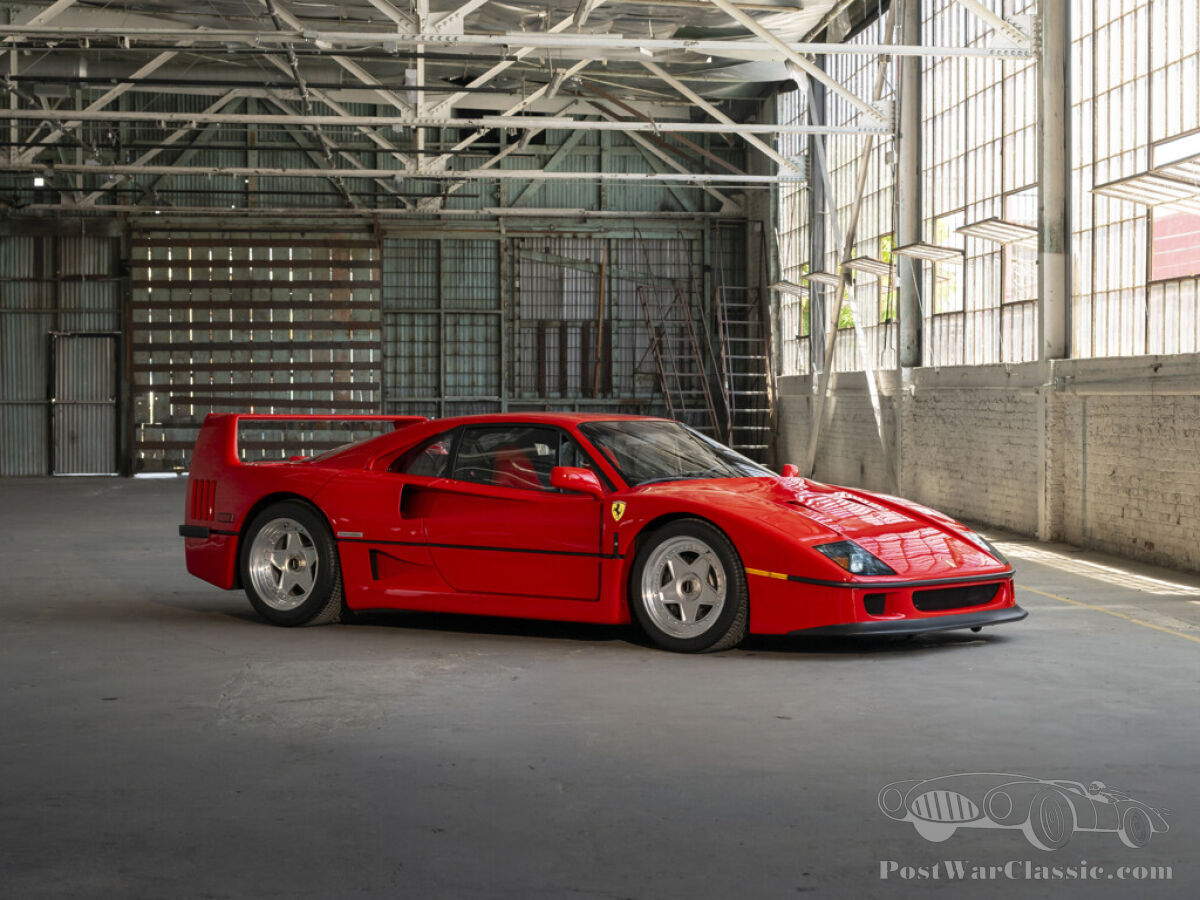
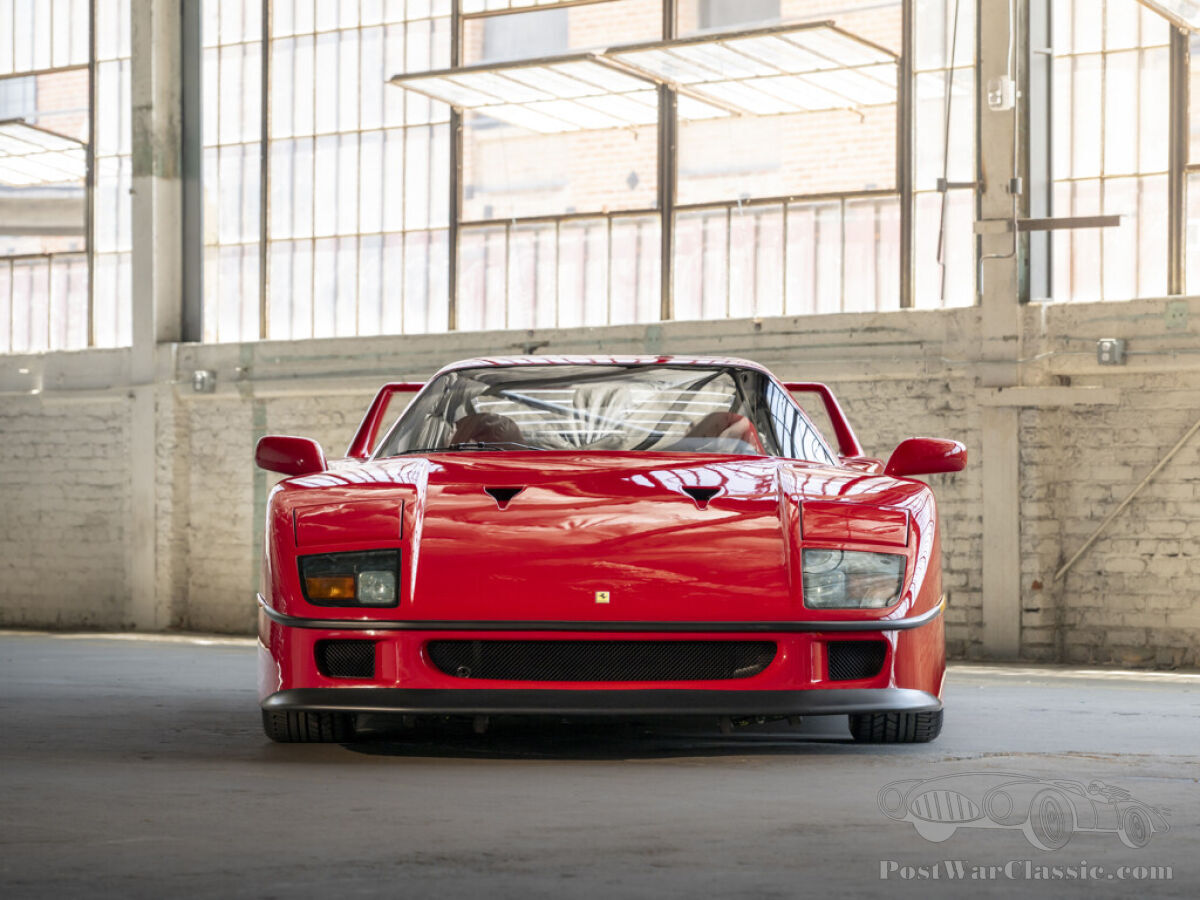
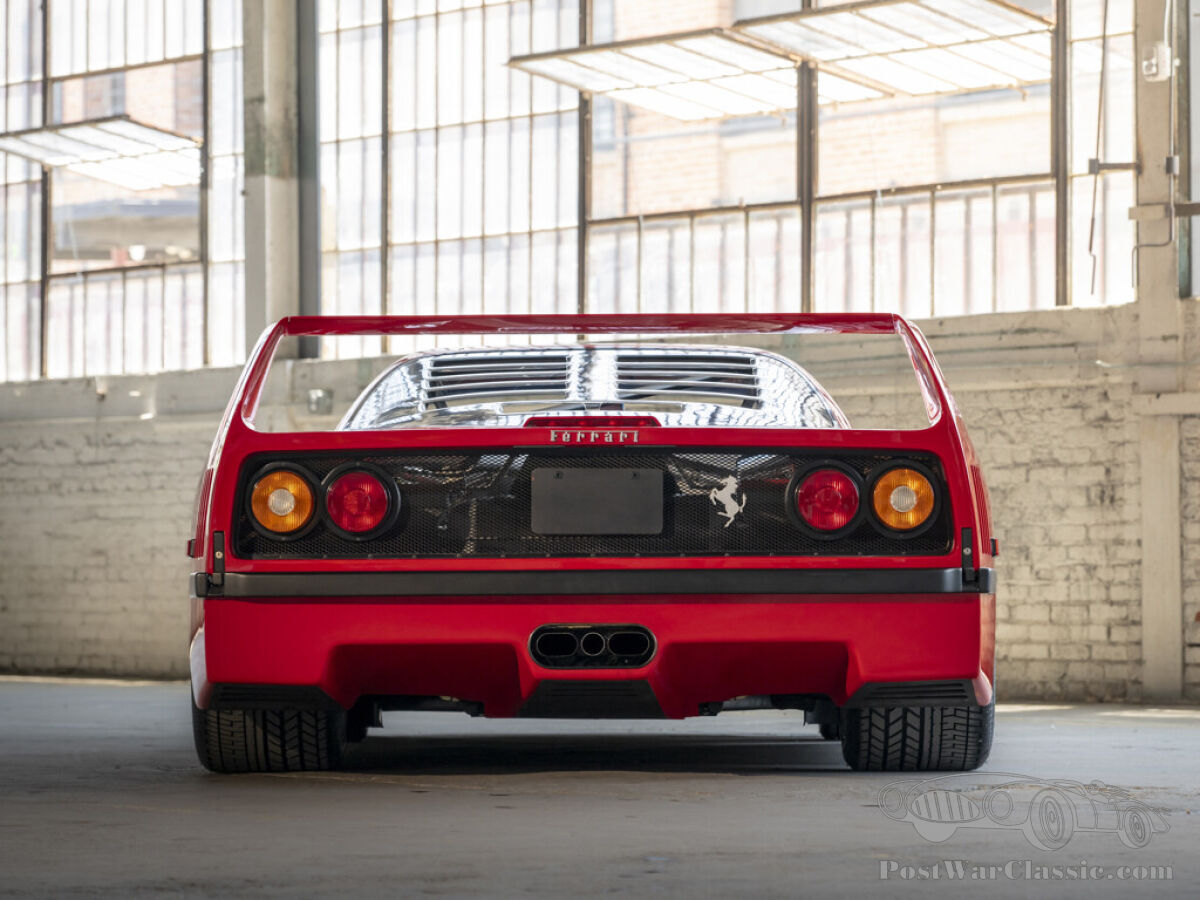
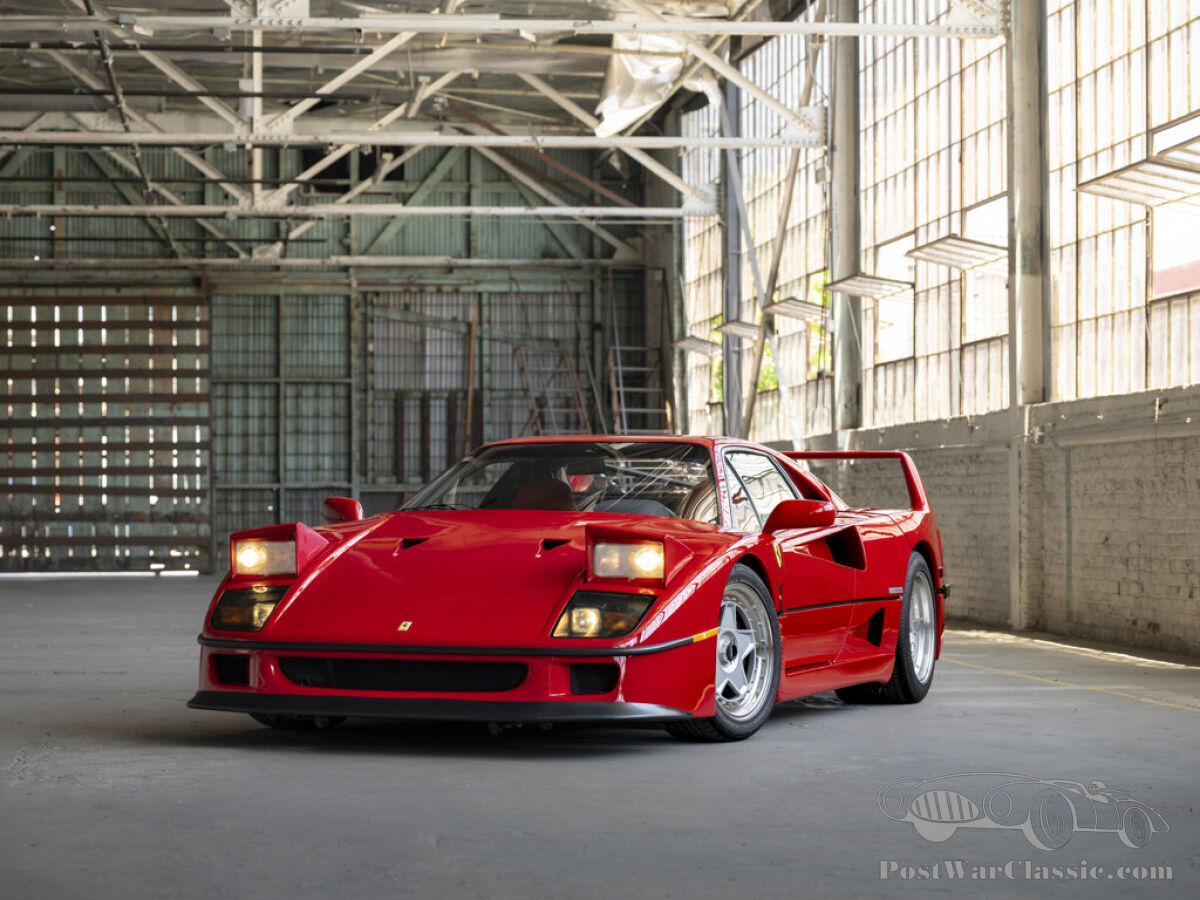
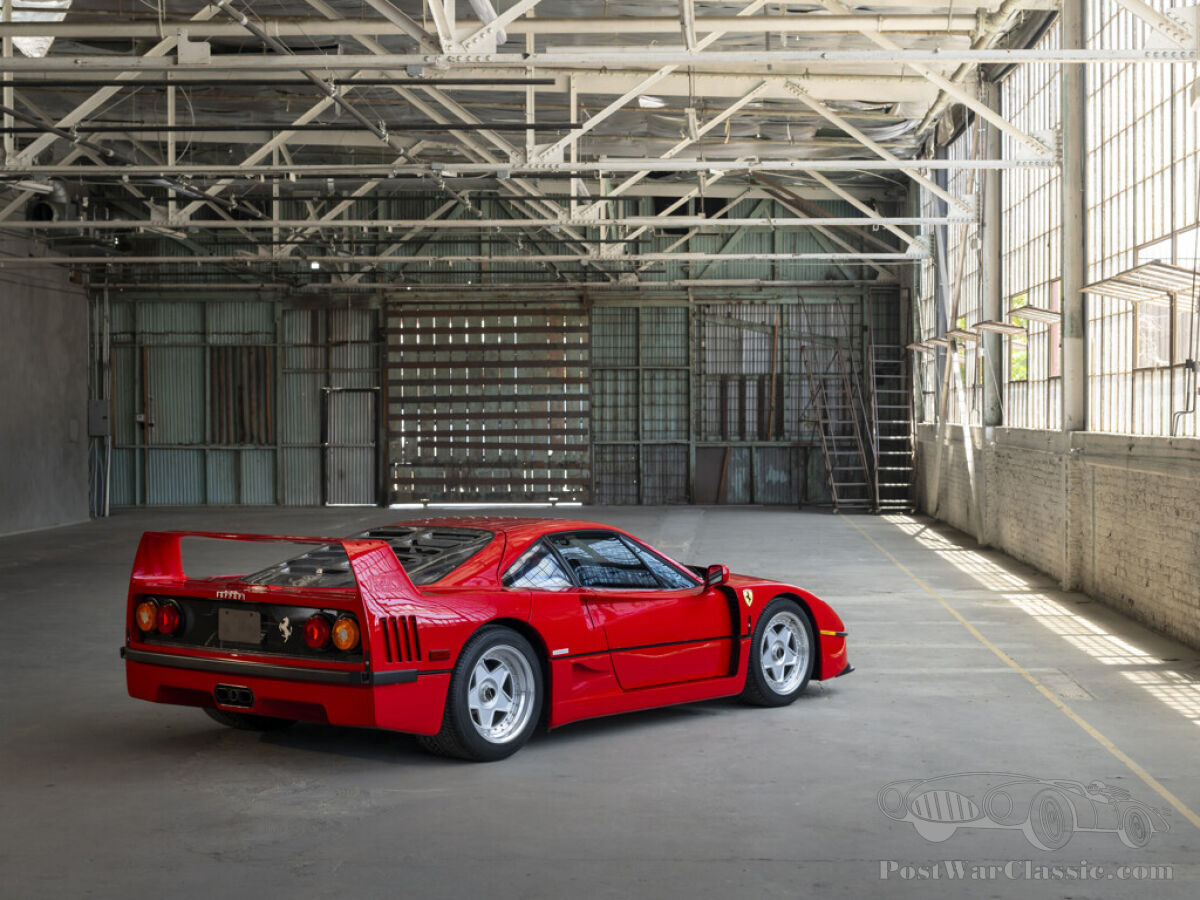
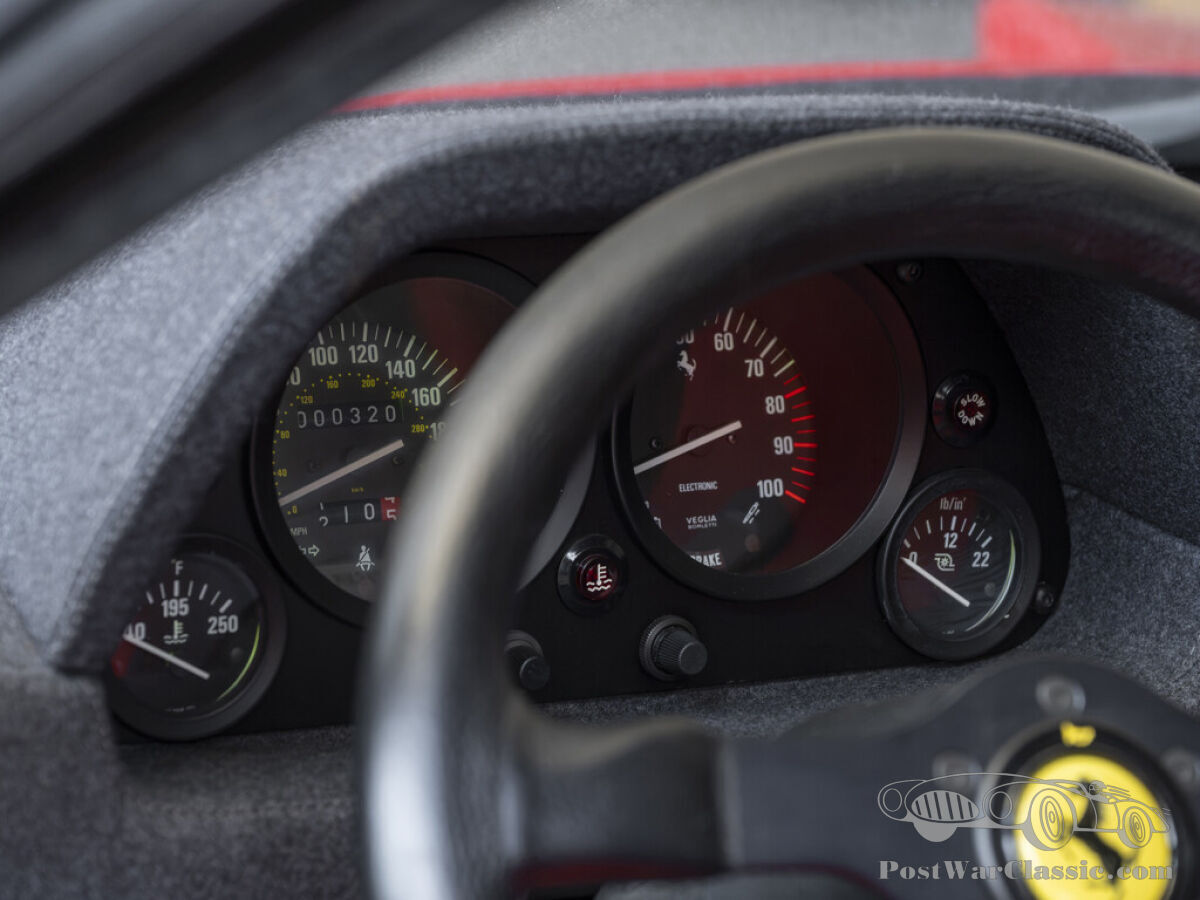
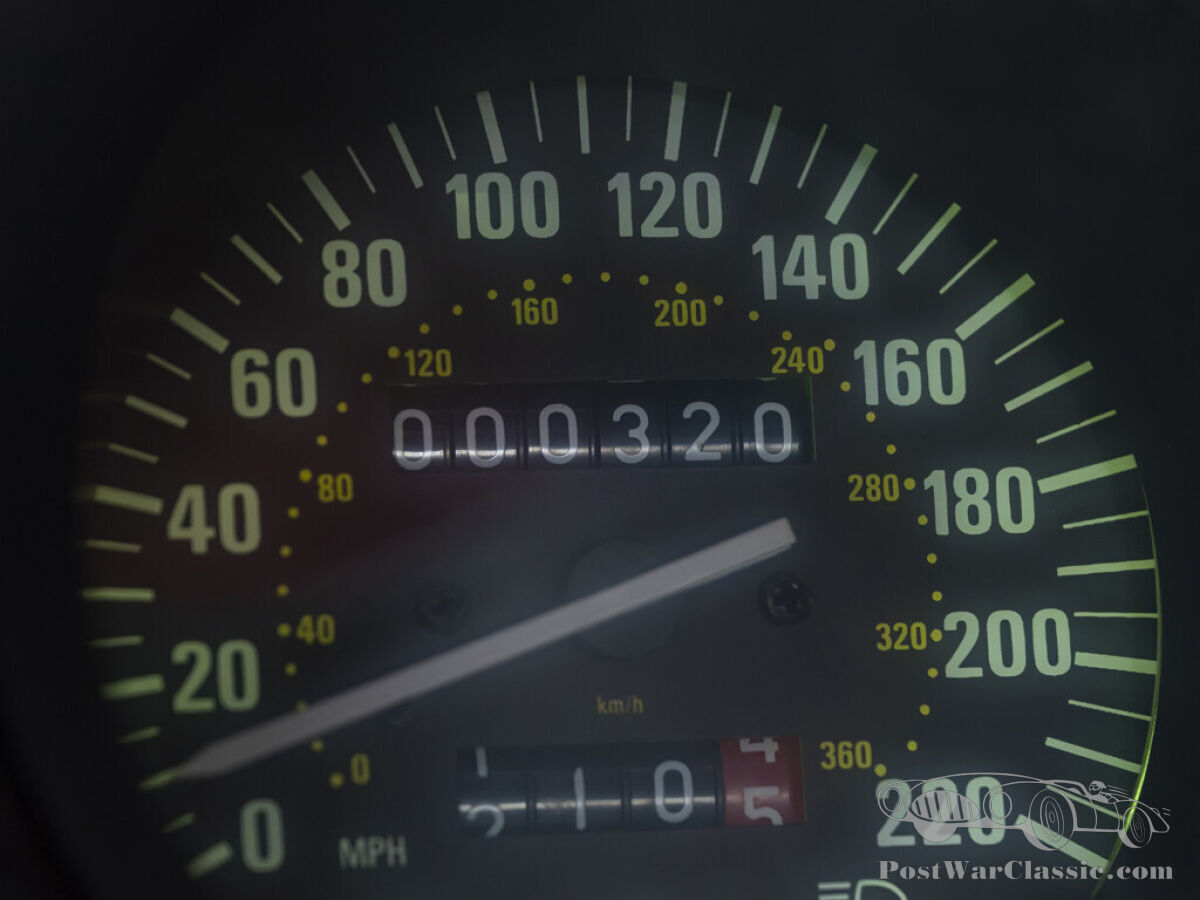
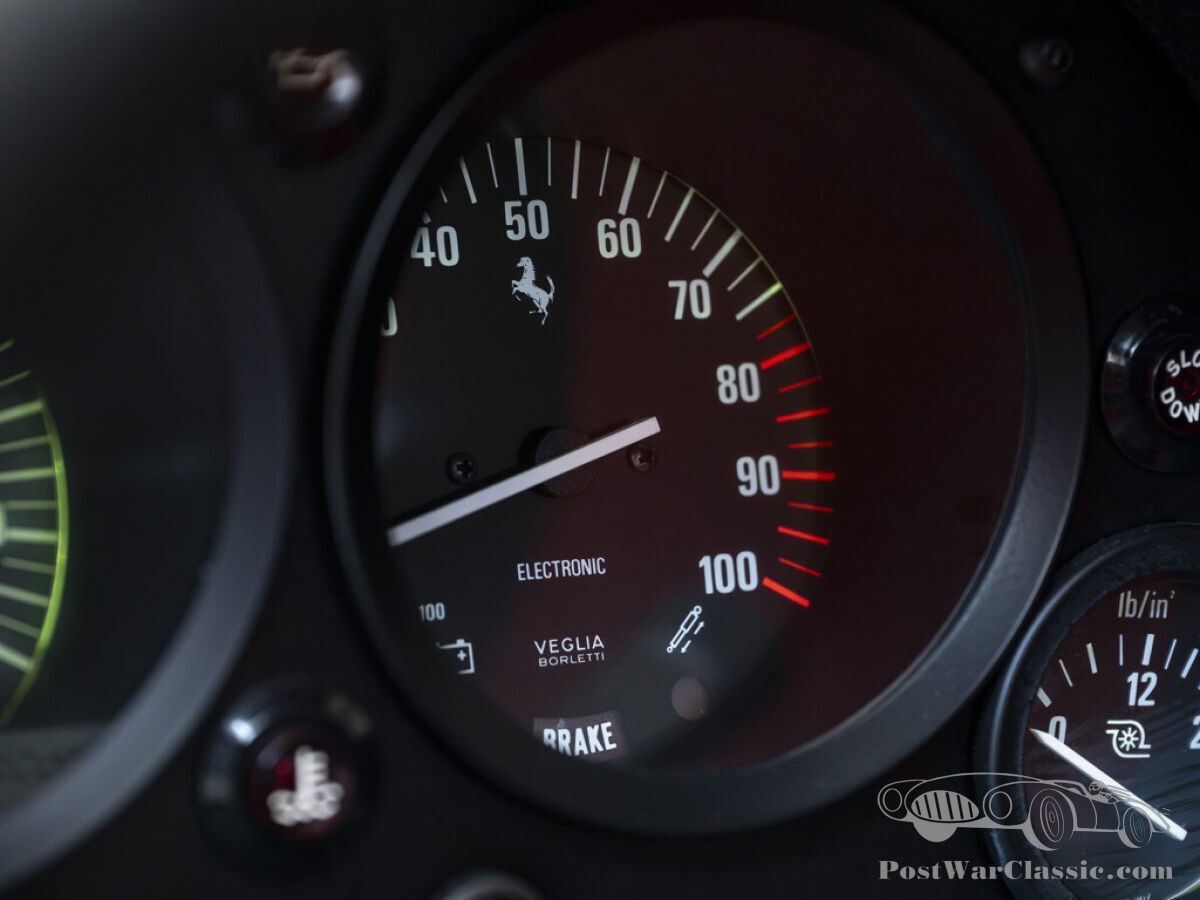
- Incredibly low-mileage example displaying just 320 miles at the time of cataloguing
- The 94th of 213 examples specified for the US market
- Purchased new by legendary US auto industry executive Lee Iacocca
- Offered from 14 years of ownership by the consignor
- Accompanied by owner’s manuals in leather pouch, tools, car cover, commemorative Lee Iacocca delivery plaque, and original warranty booklet made out to Lee Iacocca
- Recently major service performed by marque dealer Ferrari of Newport Beach
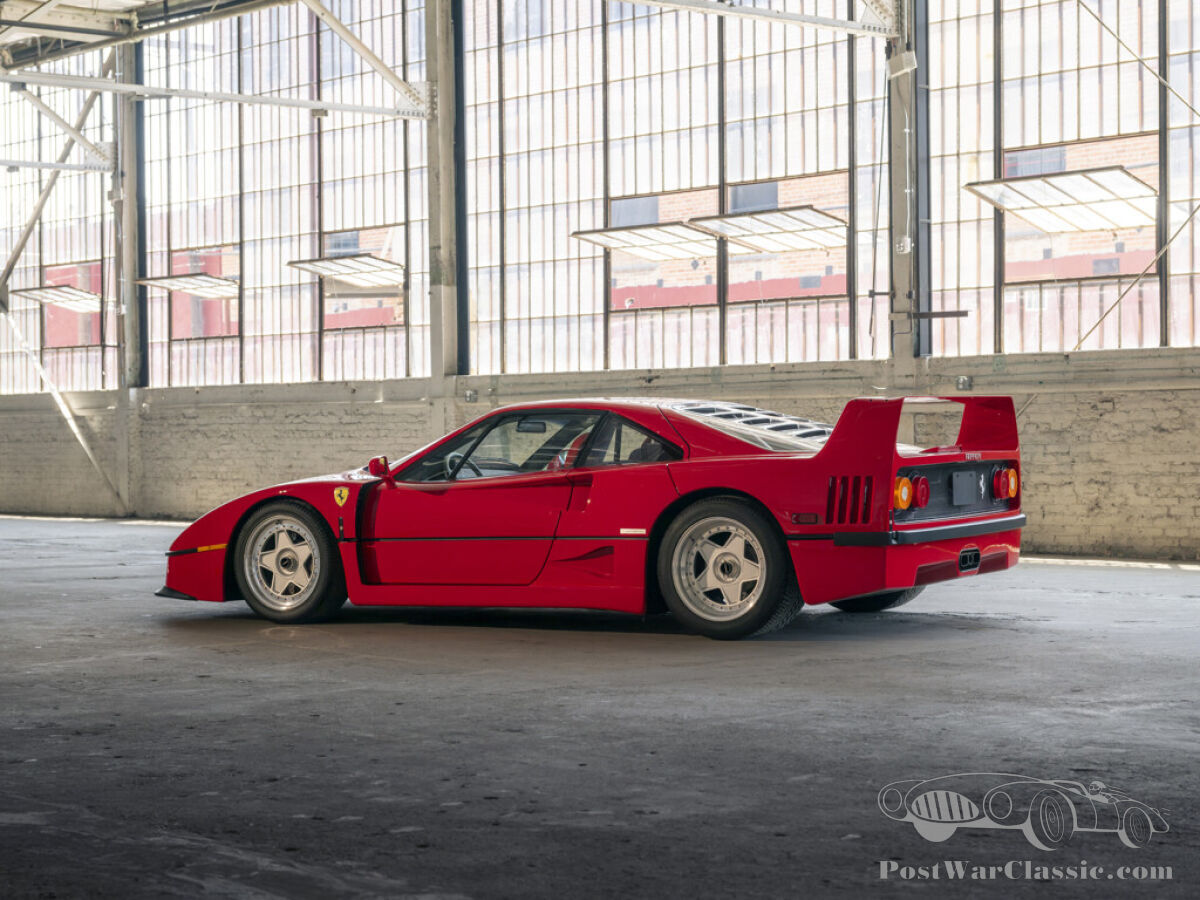
- Bellwether low-mileage, ownership-provenance enriched example of Maranello’s iconic 40th anniversary hypercar
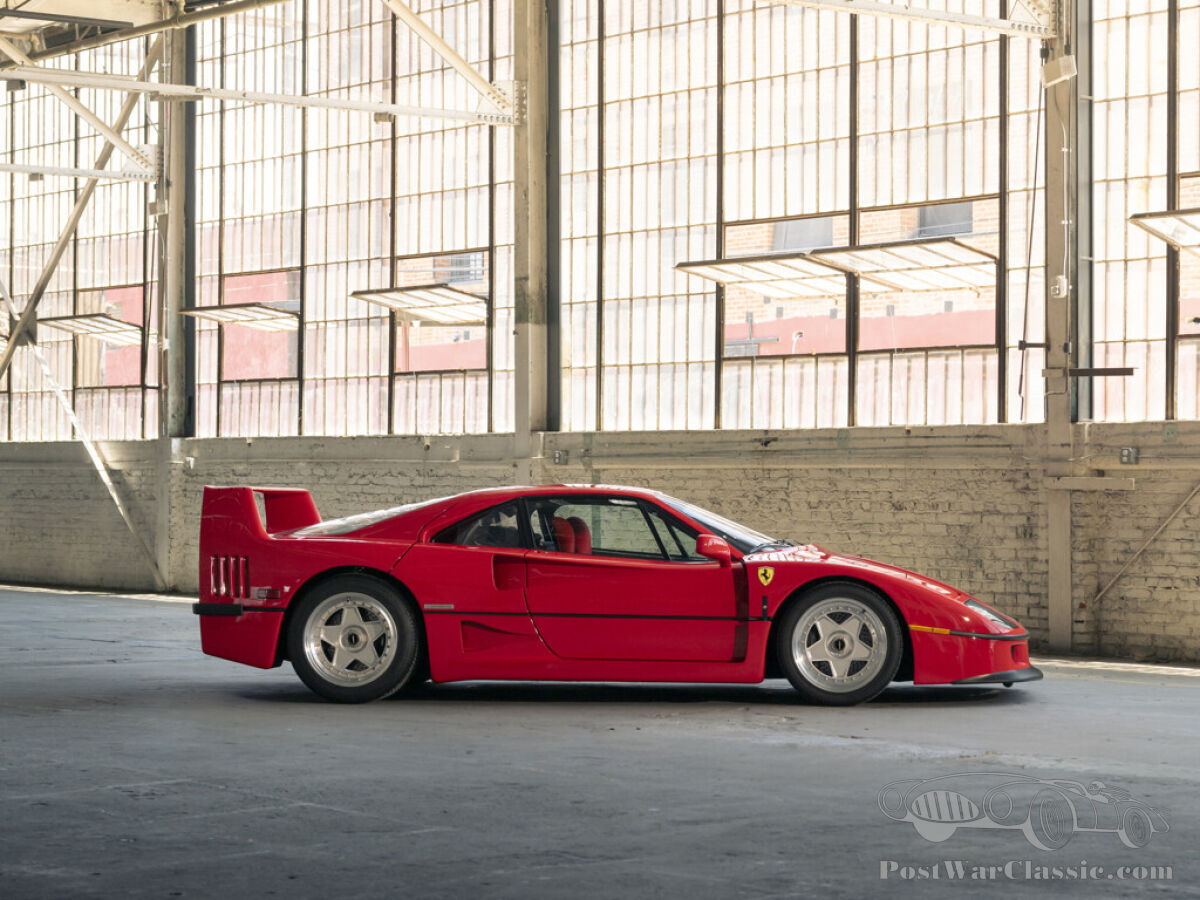
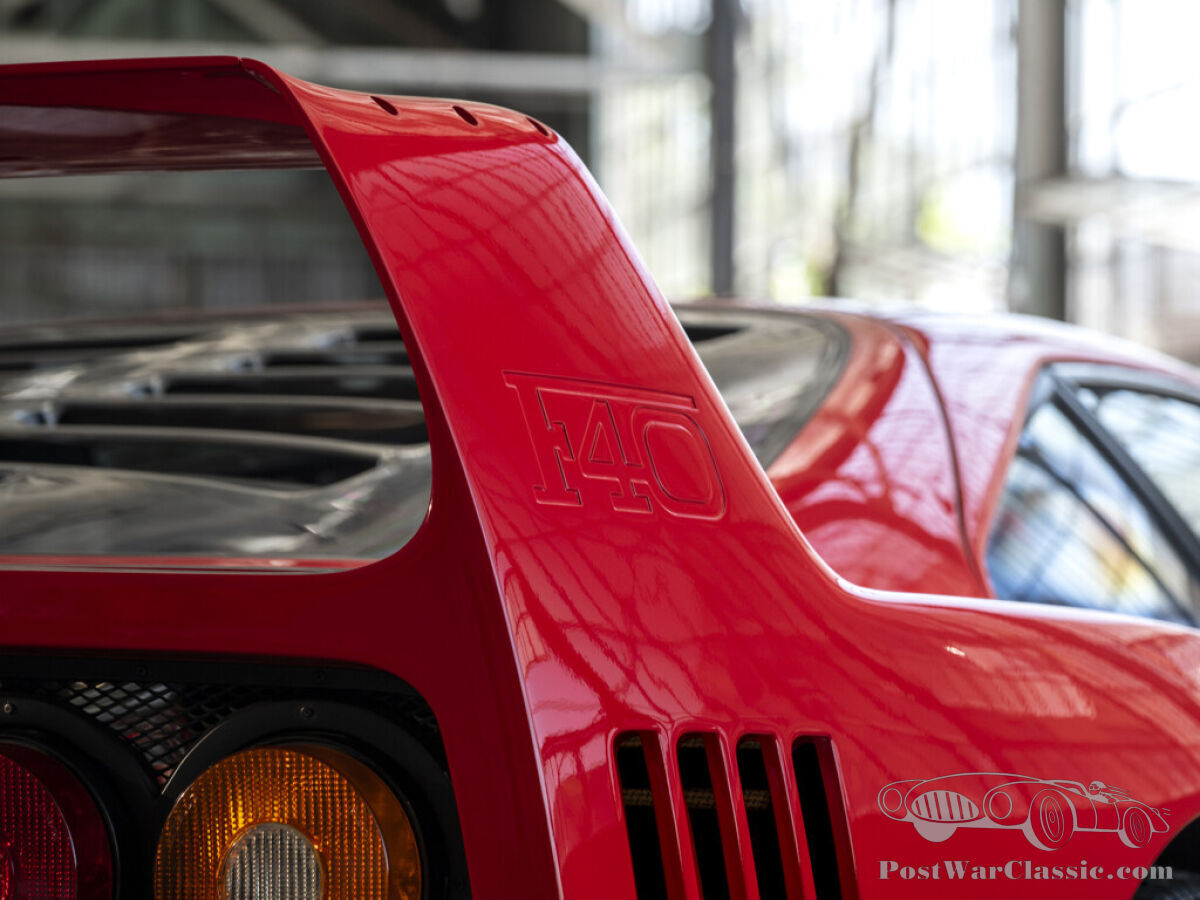
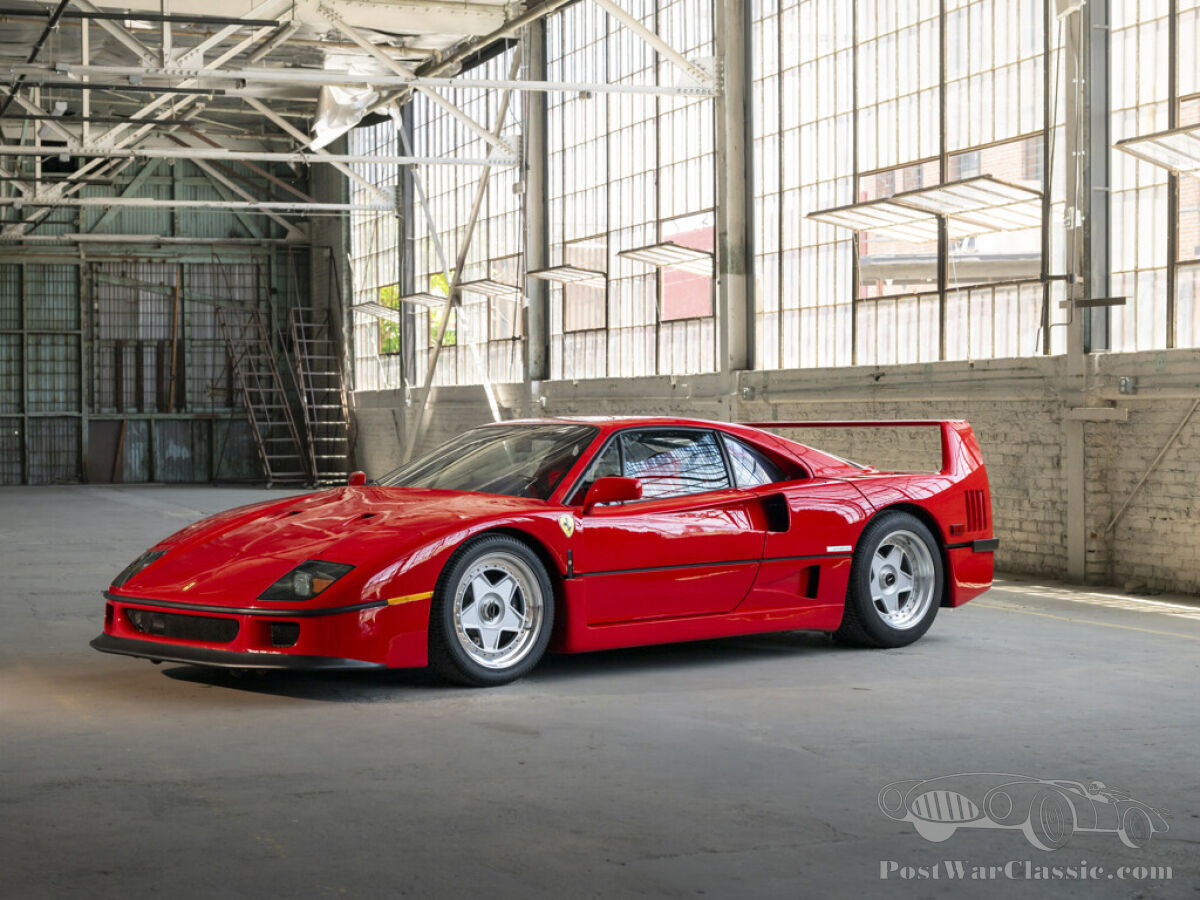
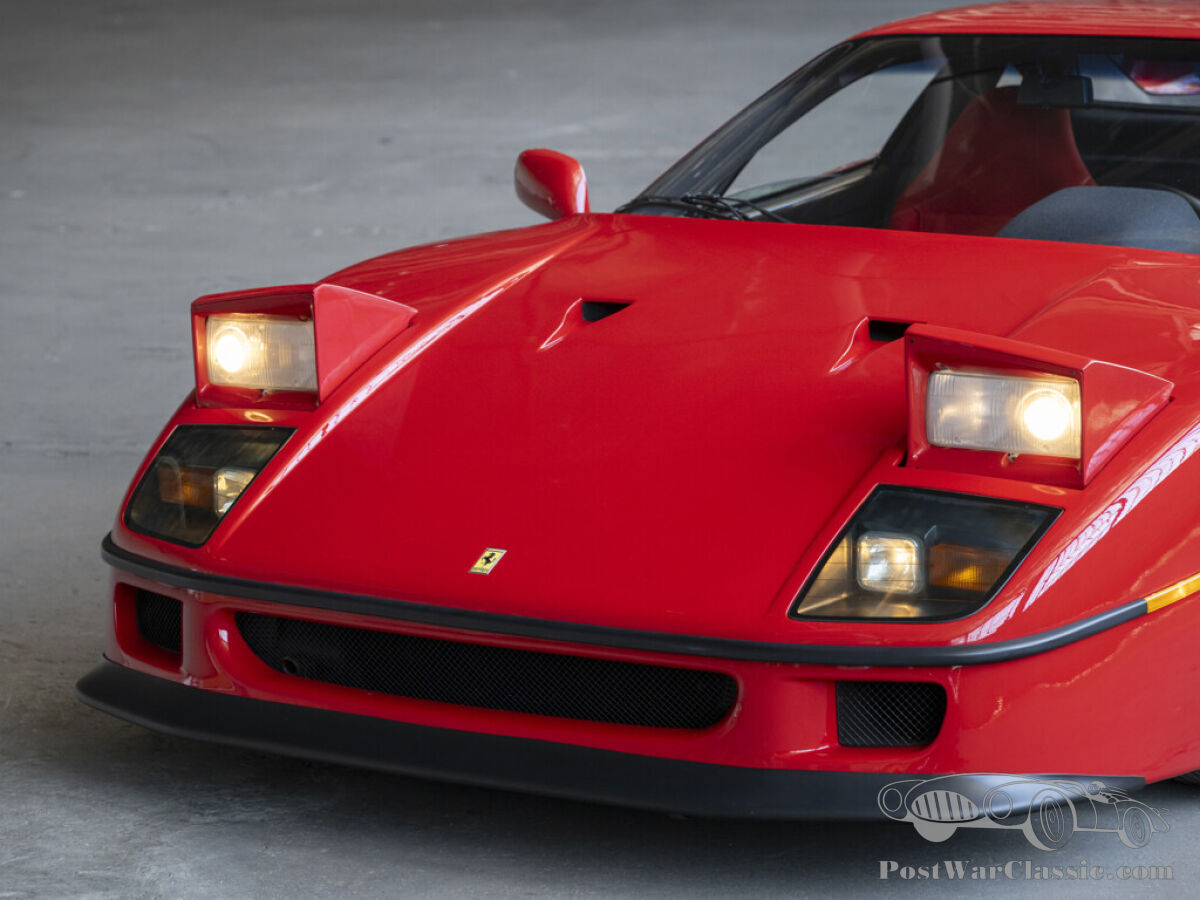
A FERRARI TO END ALL FERRARISAs the progenitor of Ferrari’s flagship line of anniversary-celebrating hypercars, the F40 is undeniably one of the most special Prancing Horses ever produced. Essentially built to racing specifications with a twin-turbocharged V-8, aerodynamically perfected carbon fiber and Kevlar coachwork, and the barest modicum of cockpit trim, the F40 oozed Maranello’s racing DNA. It was not merely coincidental that this was the last model developed under Enzo Ferrari’s watchful eye, as the F40 exemplified the spirit of the Scuderia Ferrari’s finest competition machines.
The model was originally conceived to be an FIA Group B competitor, developed from the superlative 288 GTO, to take on the likes of the Porsche 959. Enthusiasts can be grateful that the F40’s development continued regardless of the racing class’s cancellation. Rather than scrap the program entirely, Ferrari opted to use the five initial 288 GTO Evoluzione development cars as the basis of a new 40th anniversary model.
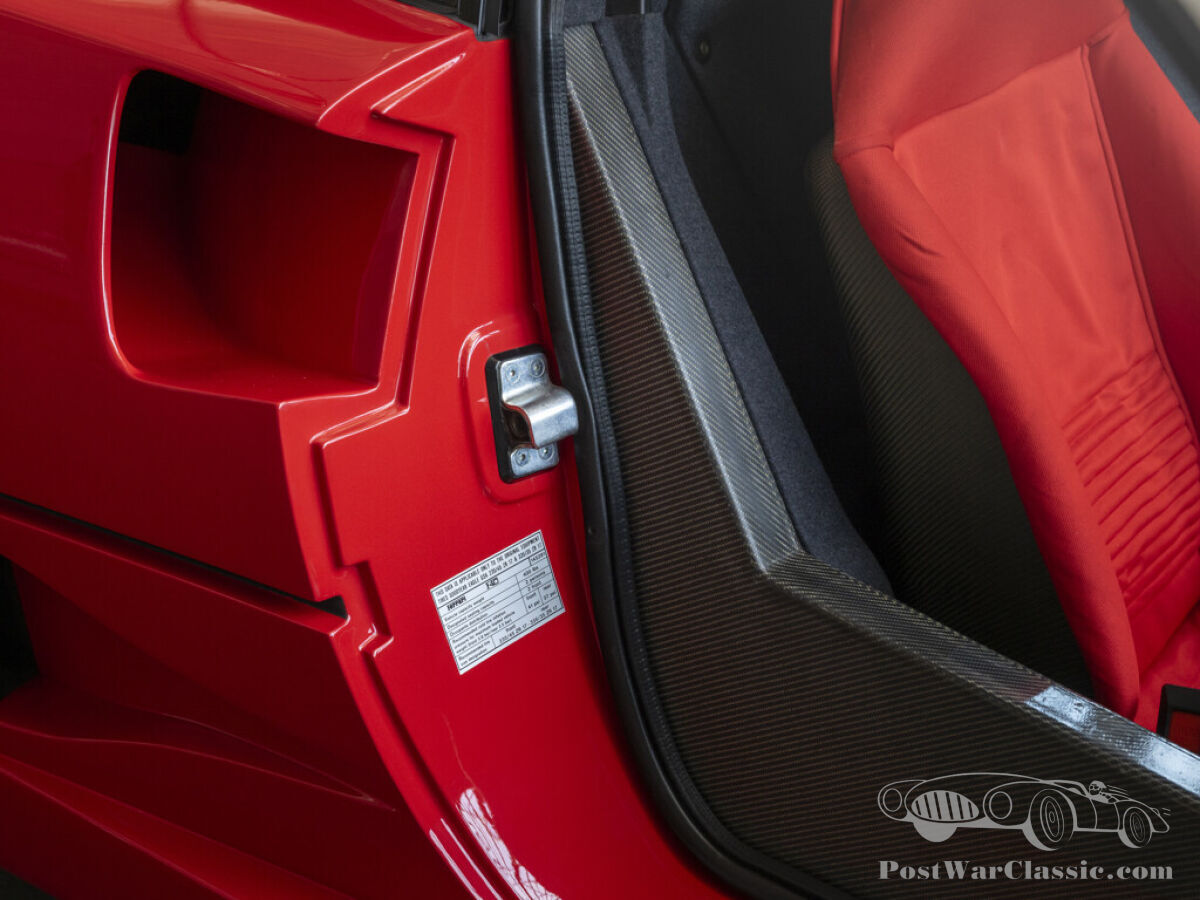
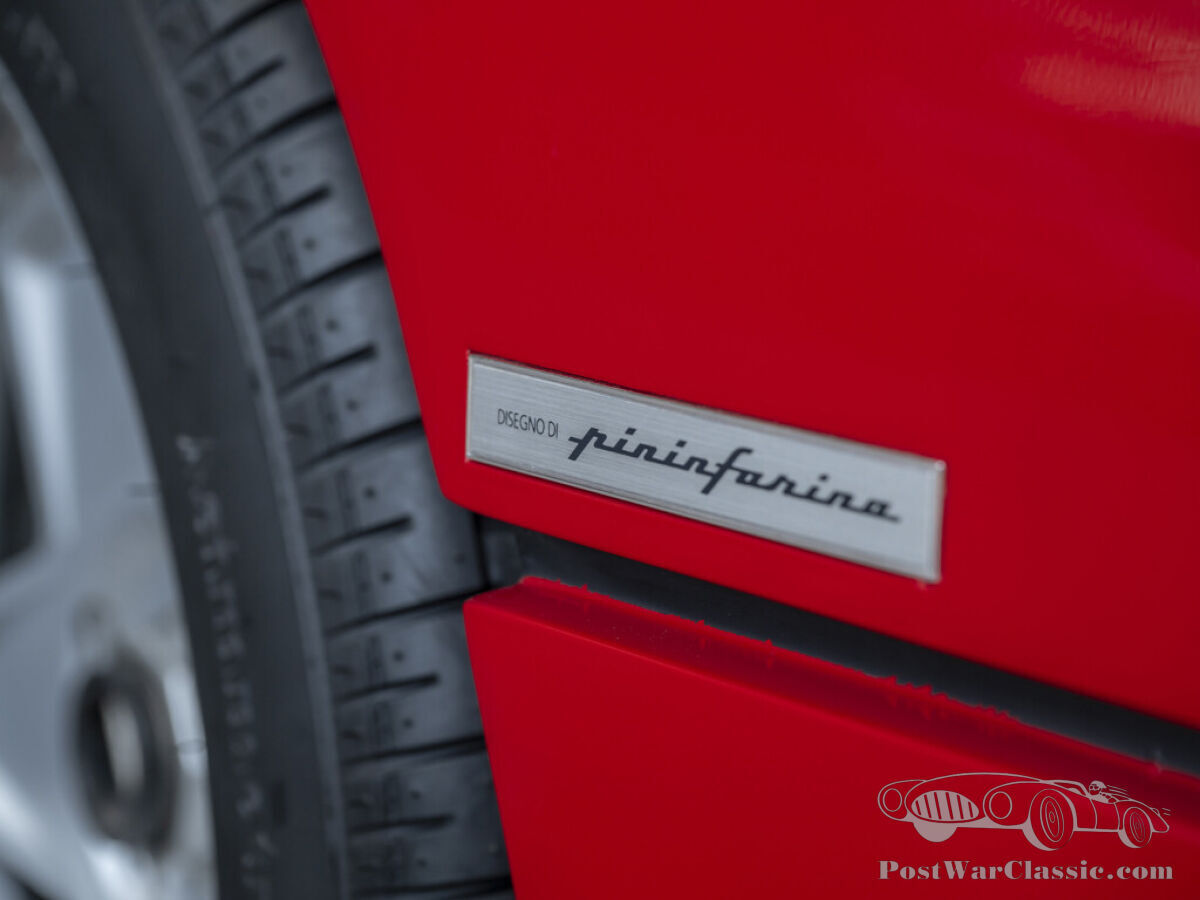
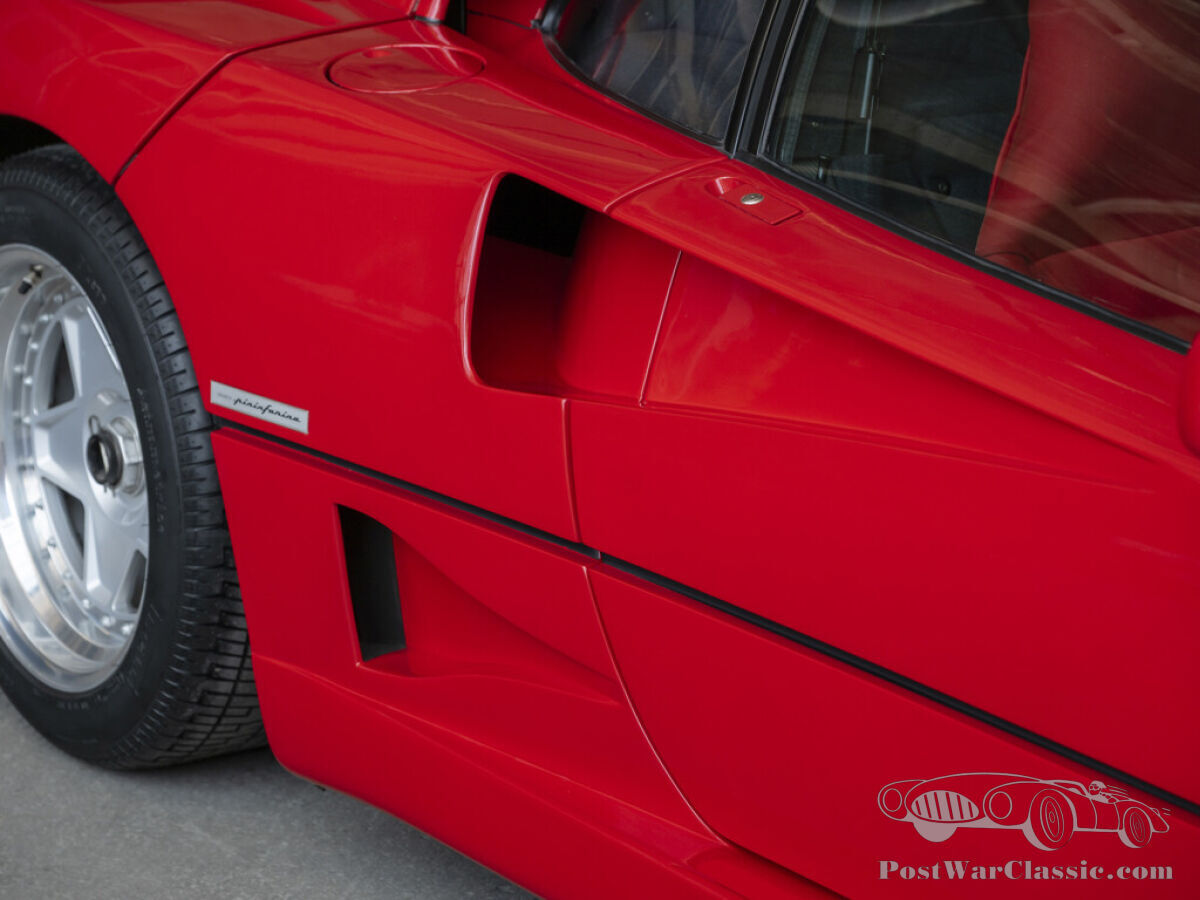
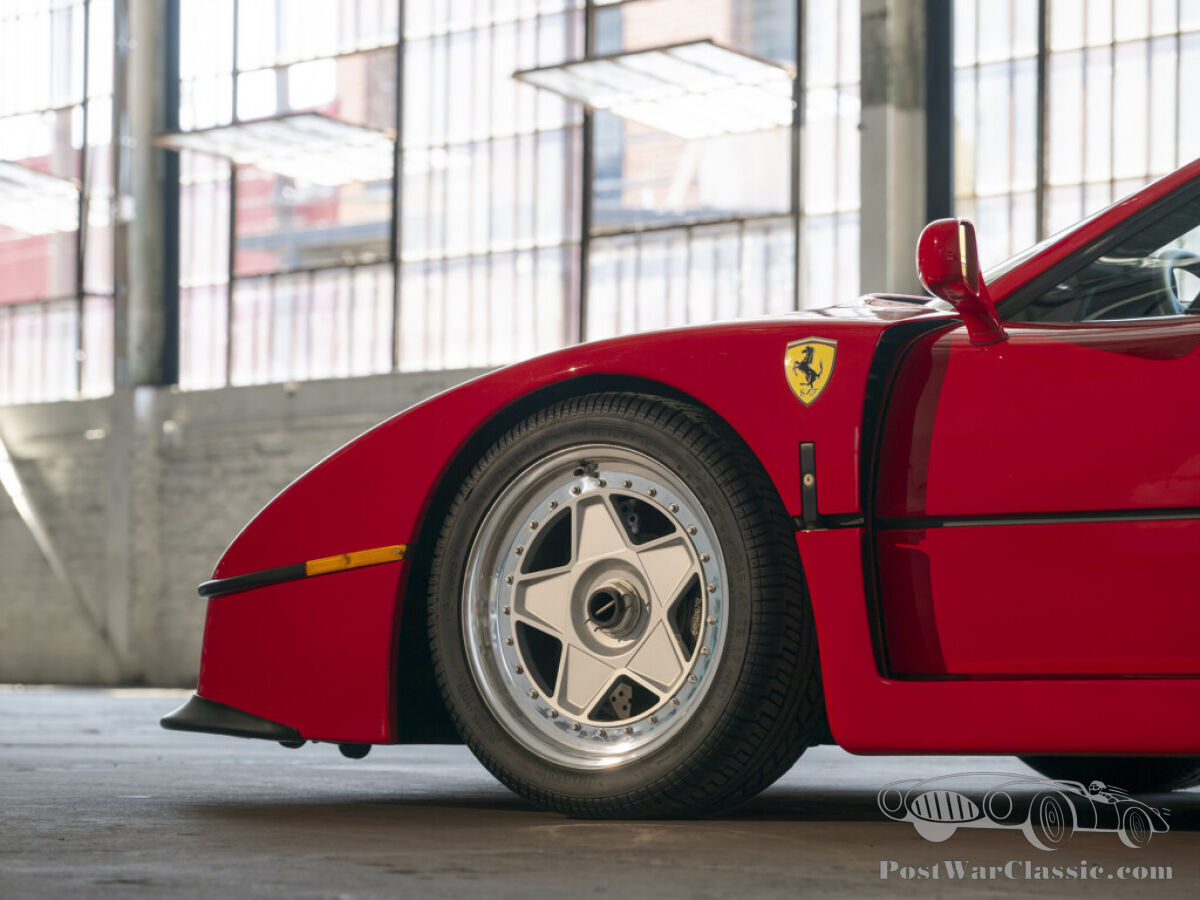
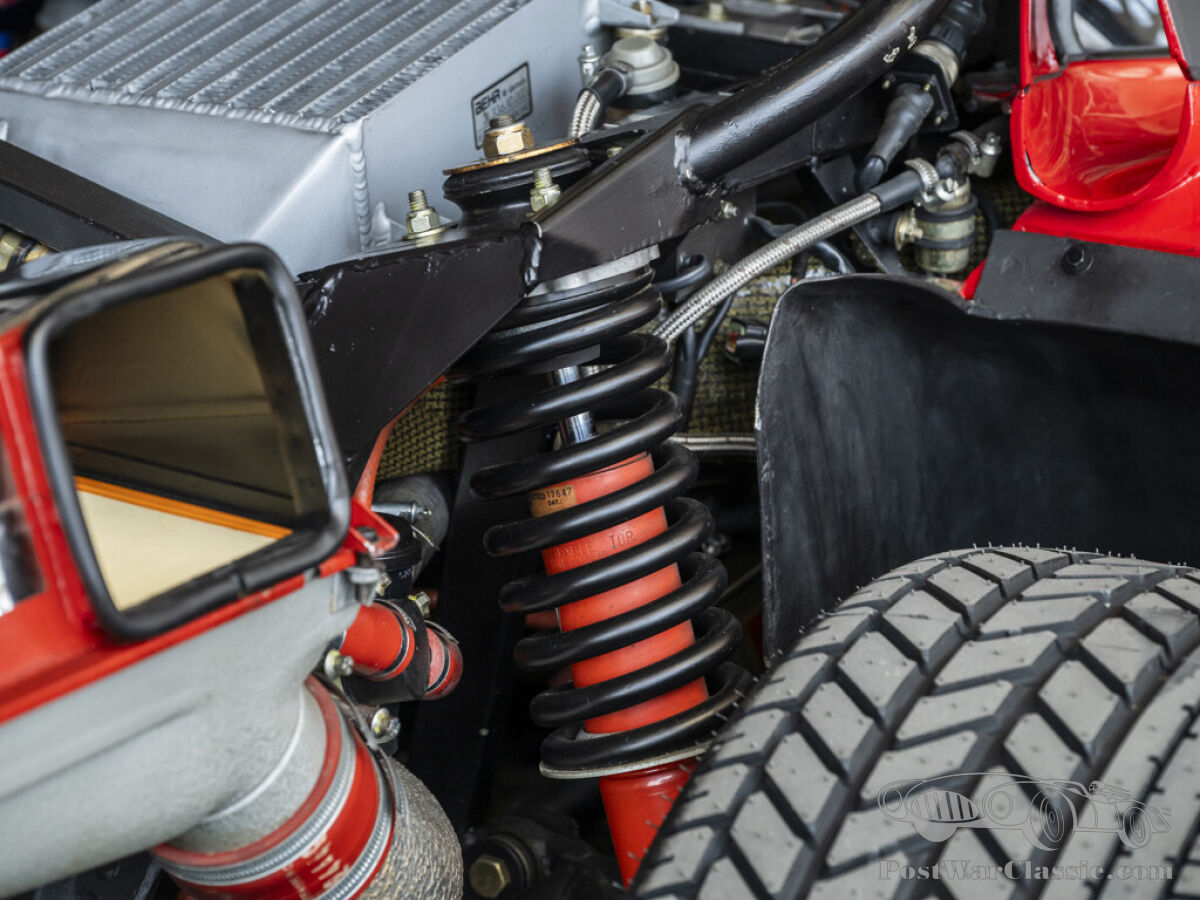
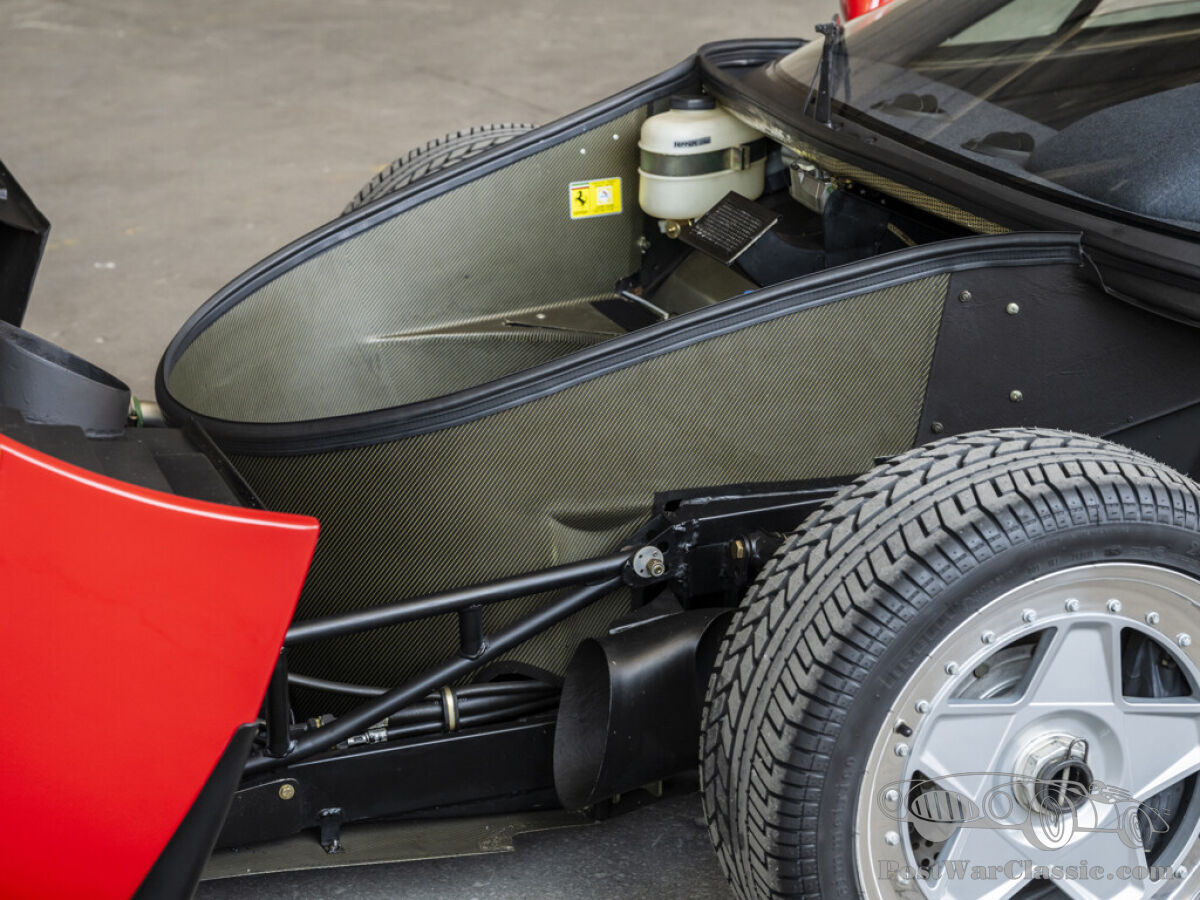
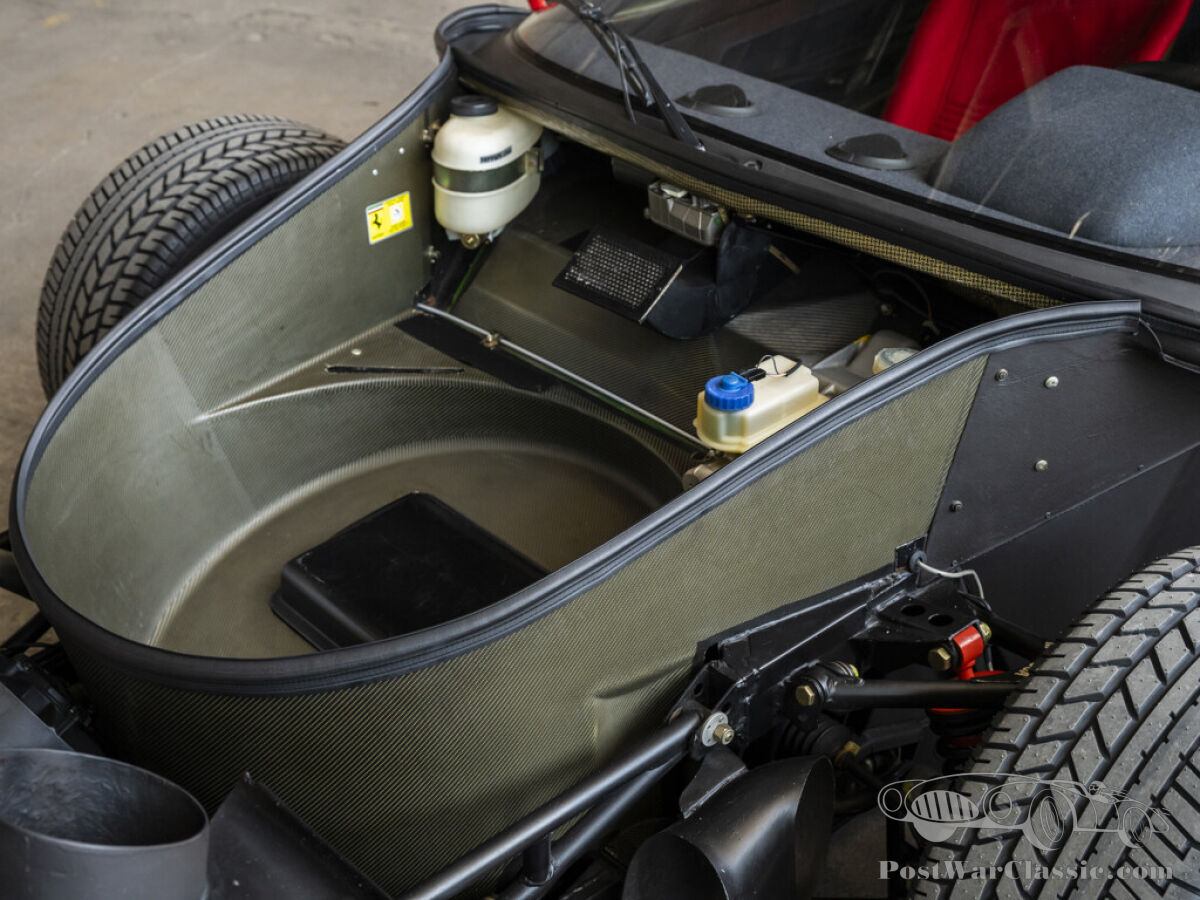
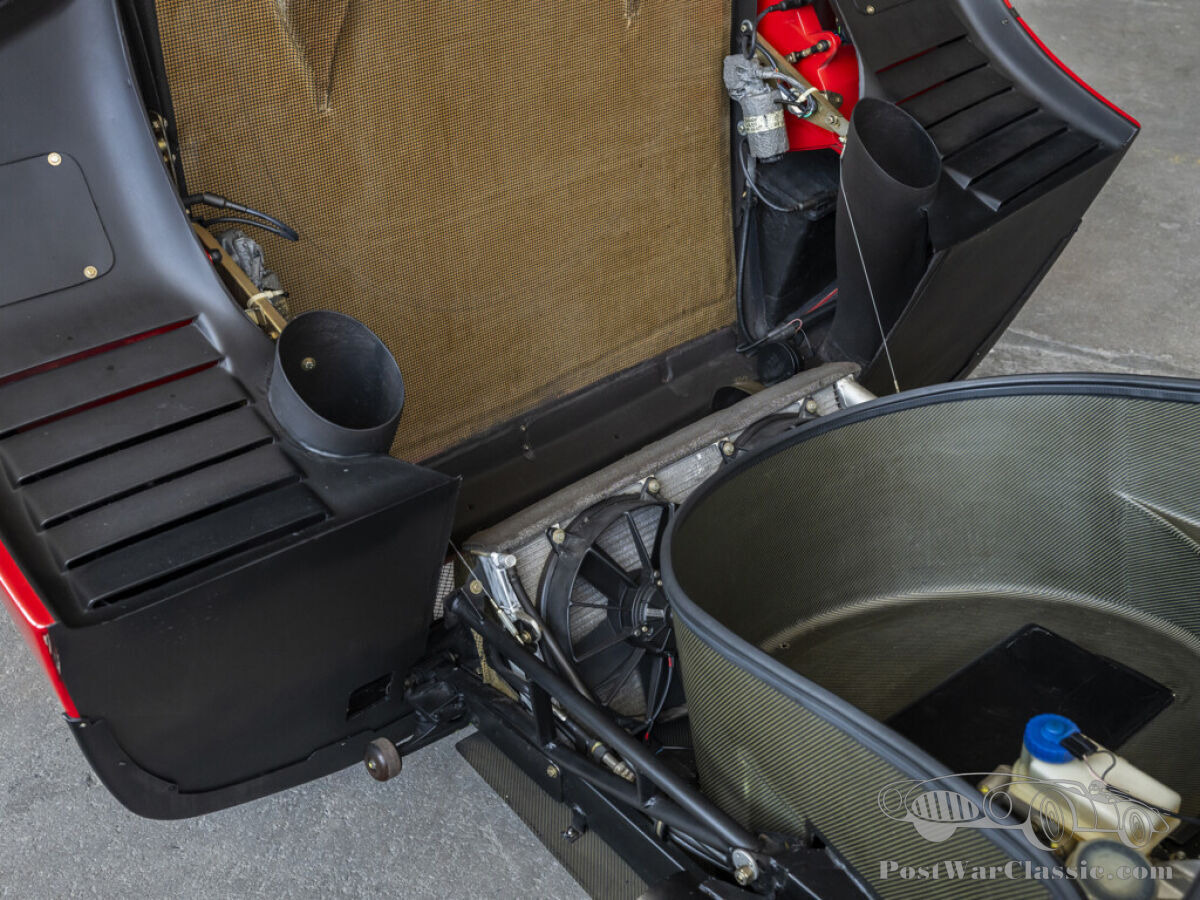
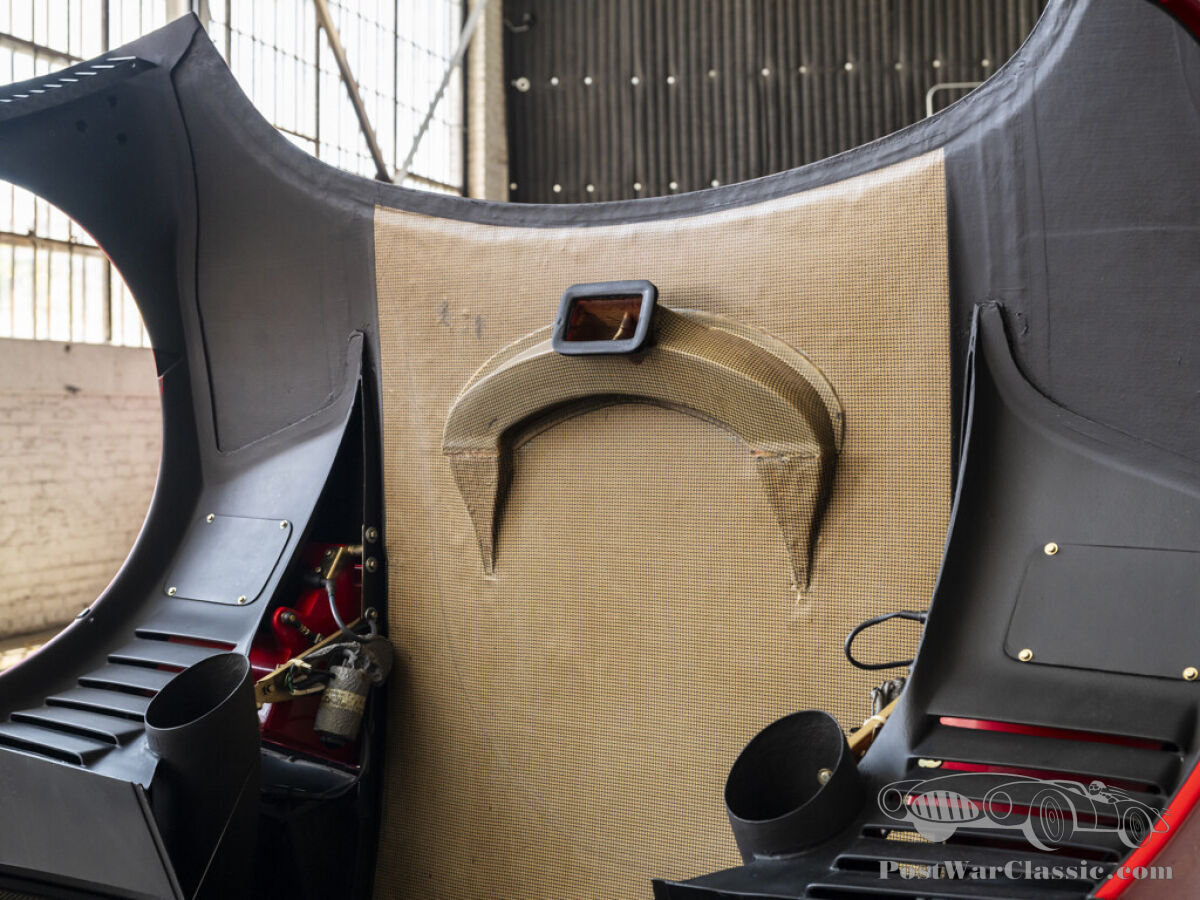
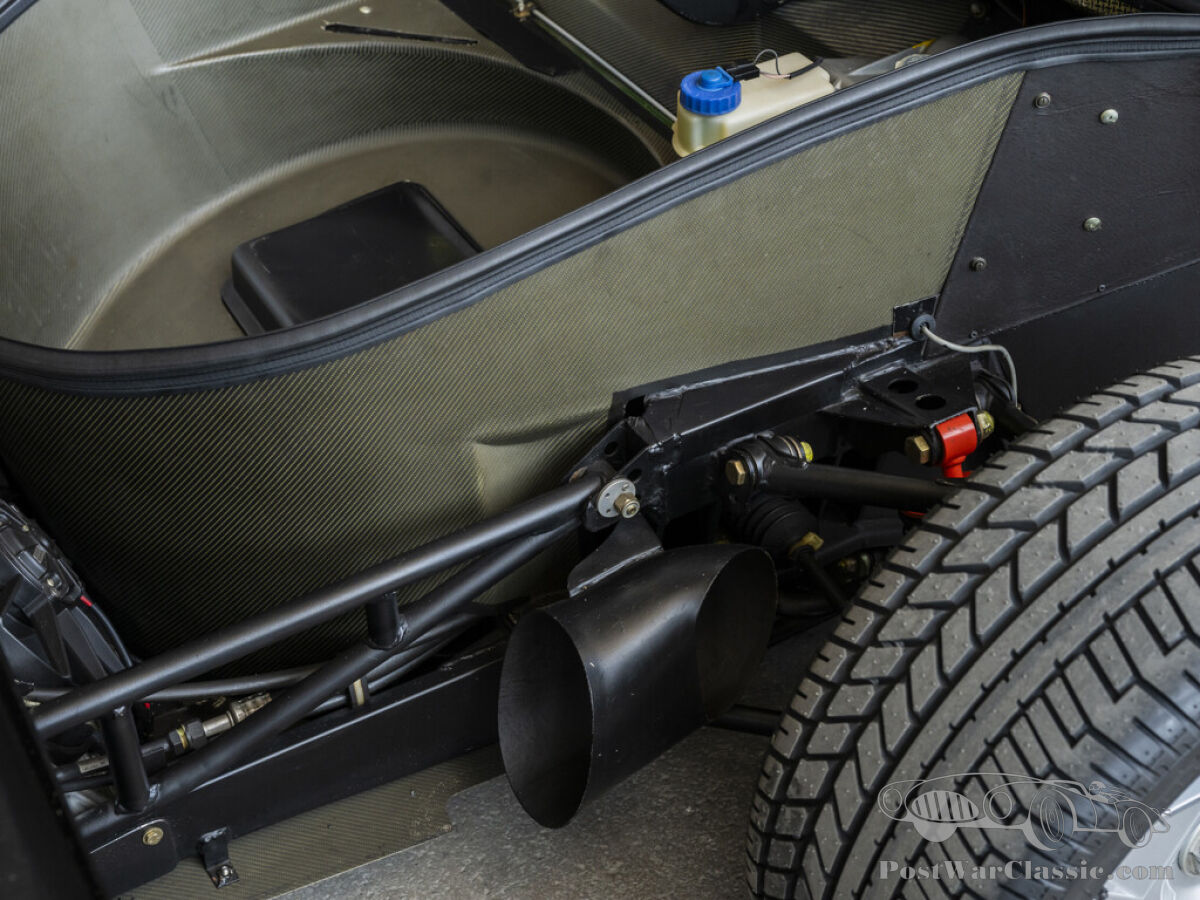
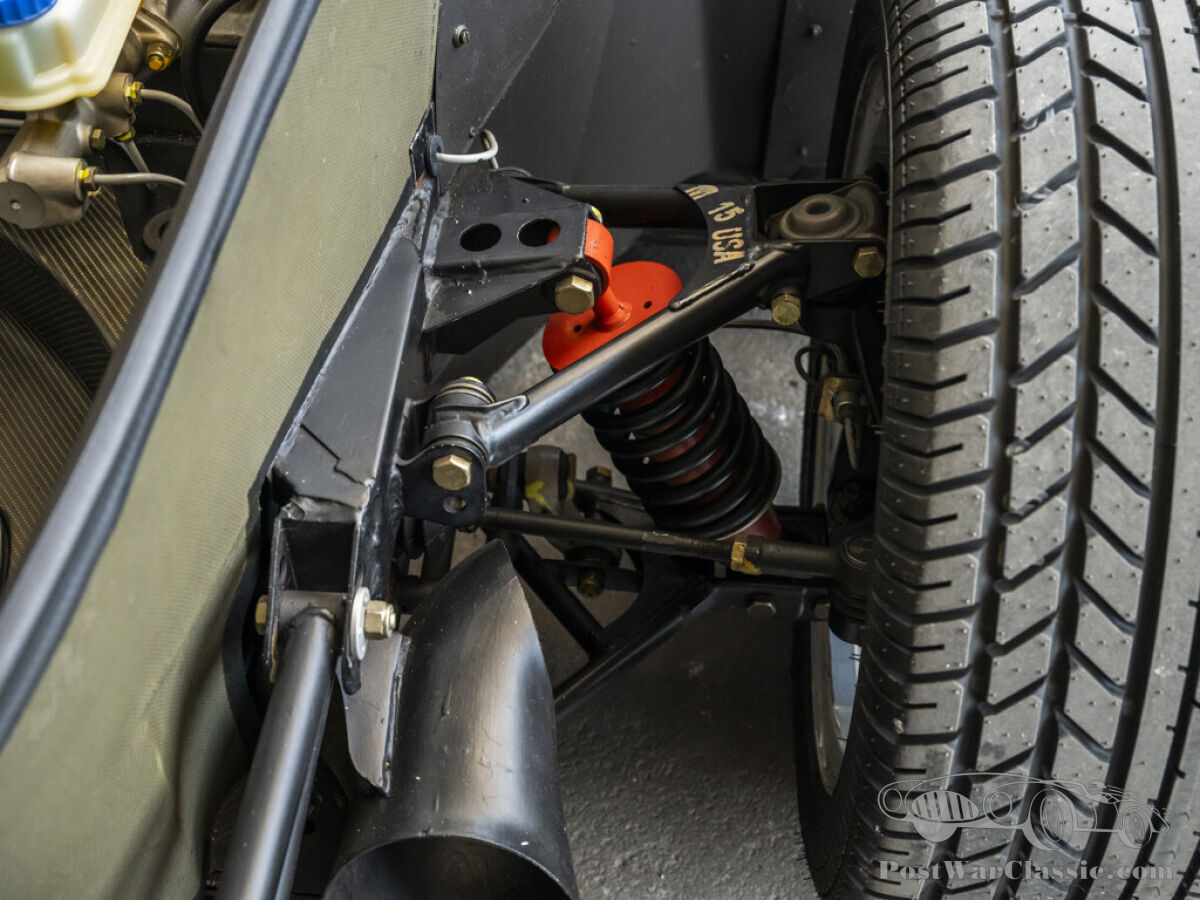
As it was designed for competition, the F40 featured a race-developed steel tube-frame chassis with four-wheel double-wishbone independent suspension, coil-over Koni shock absorbers, and four-caliper ventilated disc brakes. Pietro Camardella’s coachwork design, executed under the direction of Leonardo Fioravanti and aerodynamically perfected in Pininfarina’s wind tunnel, was built with paneling woven of Kevlar and carbon fiber. This reduced the curb weight by approximately 20%, while simultaneously tripling the car’s structural rigidity.
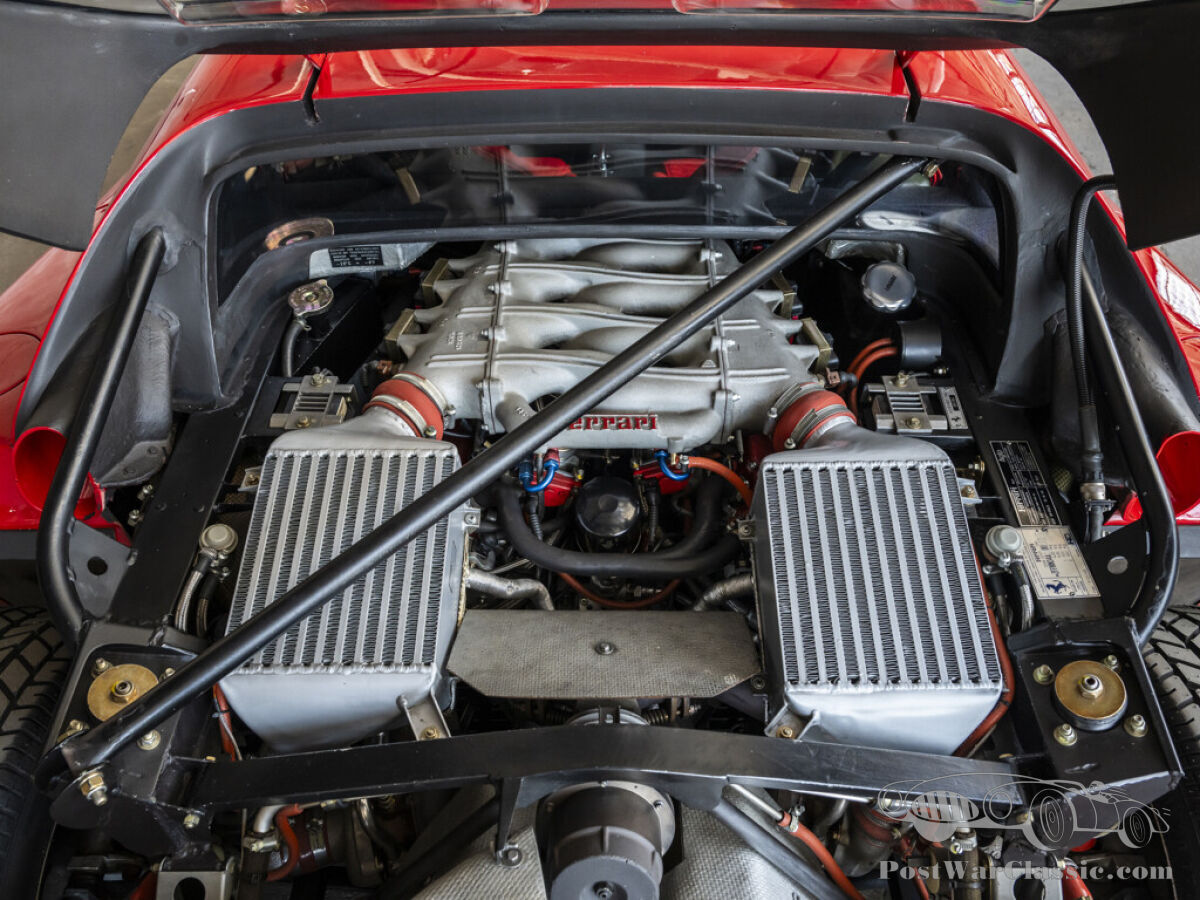
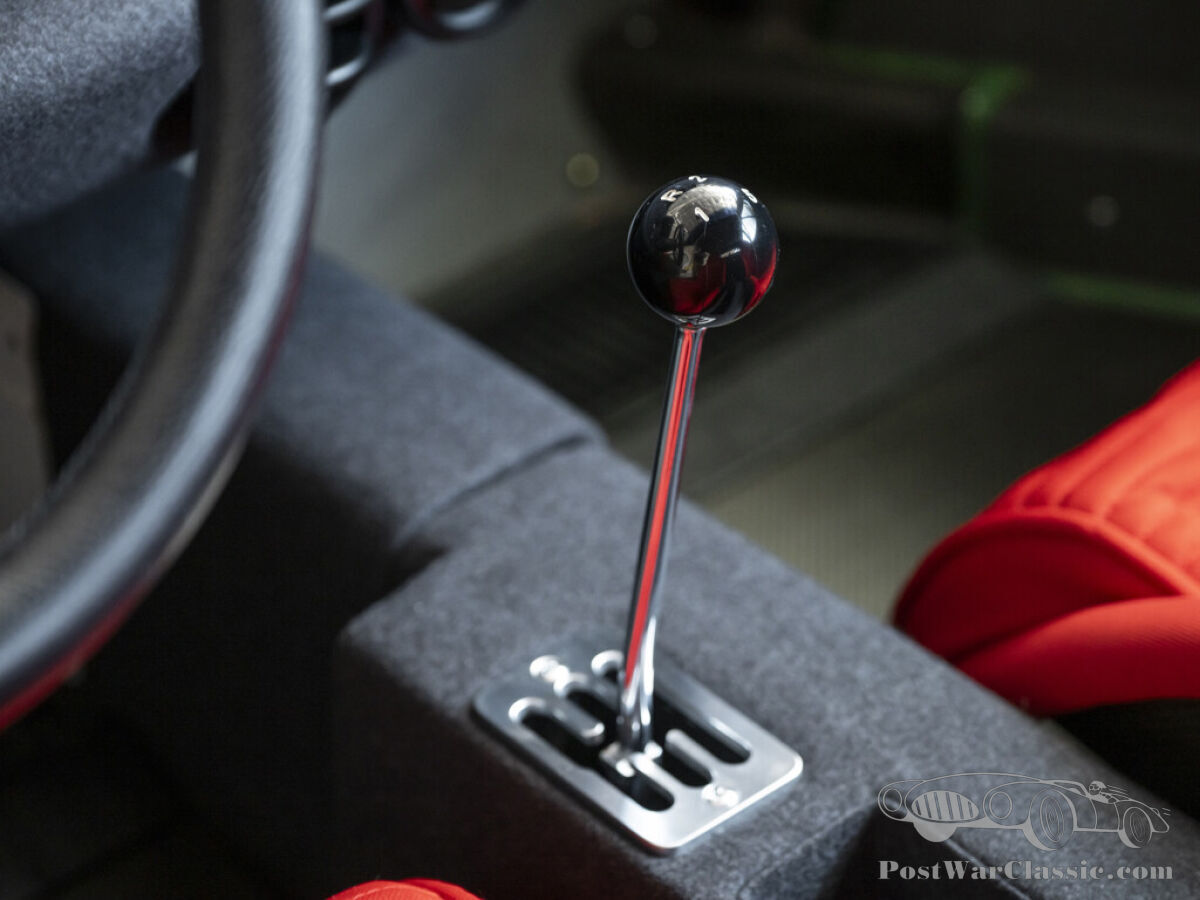
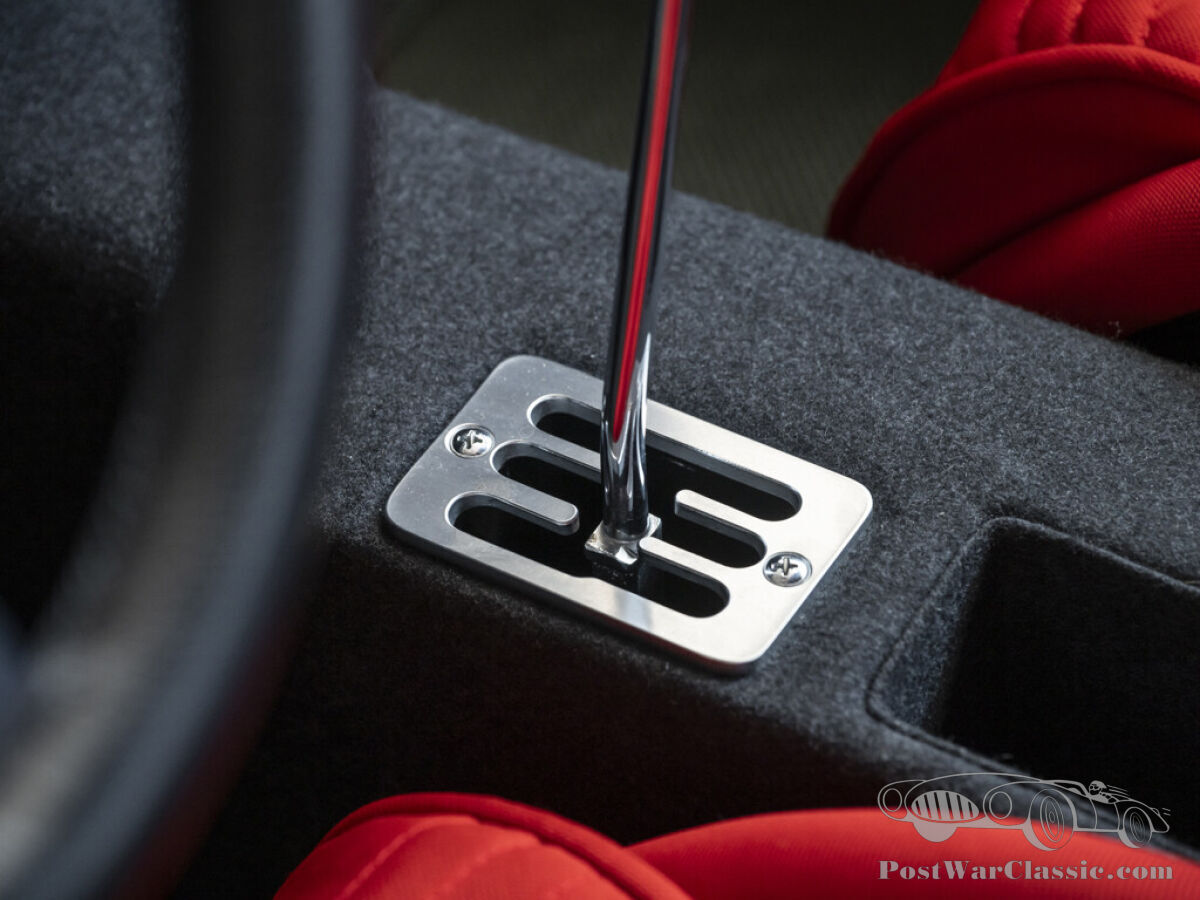
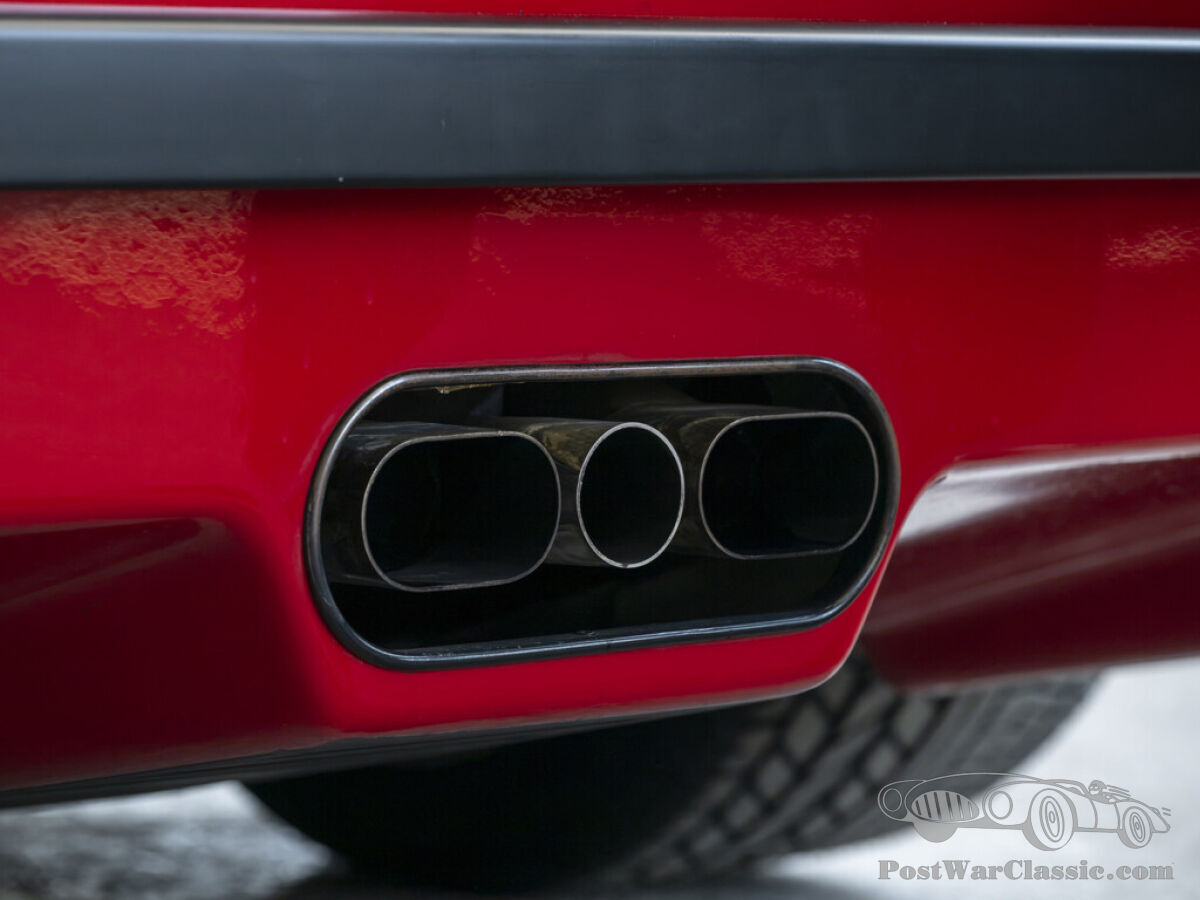
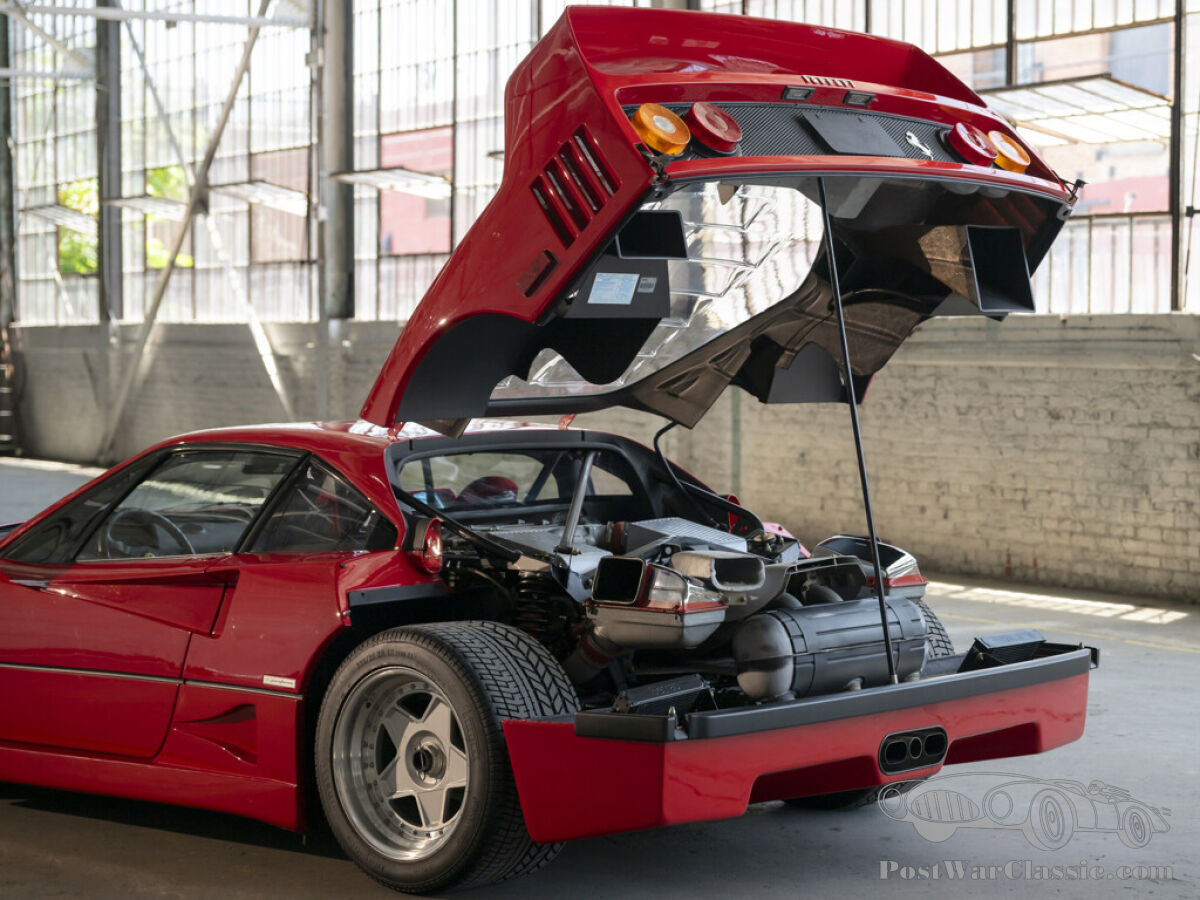
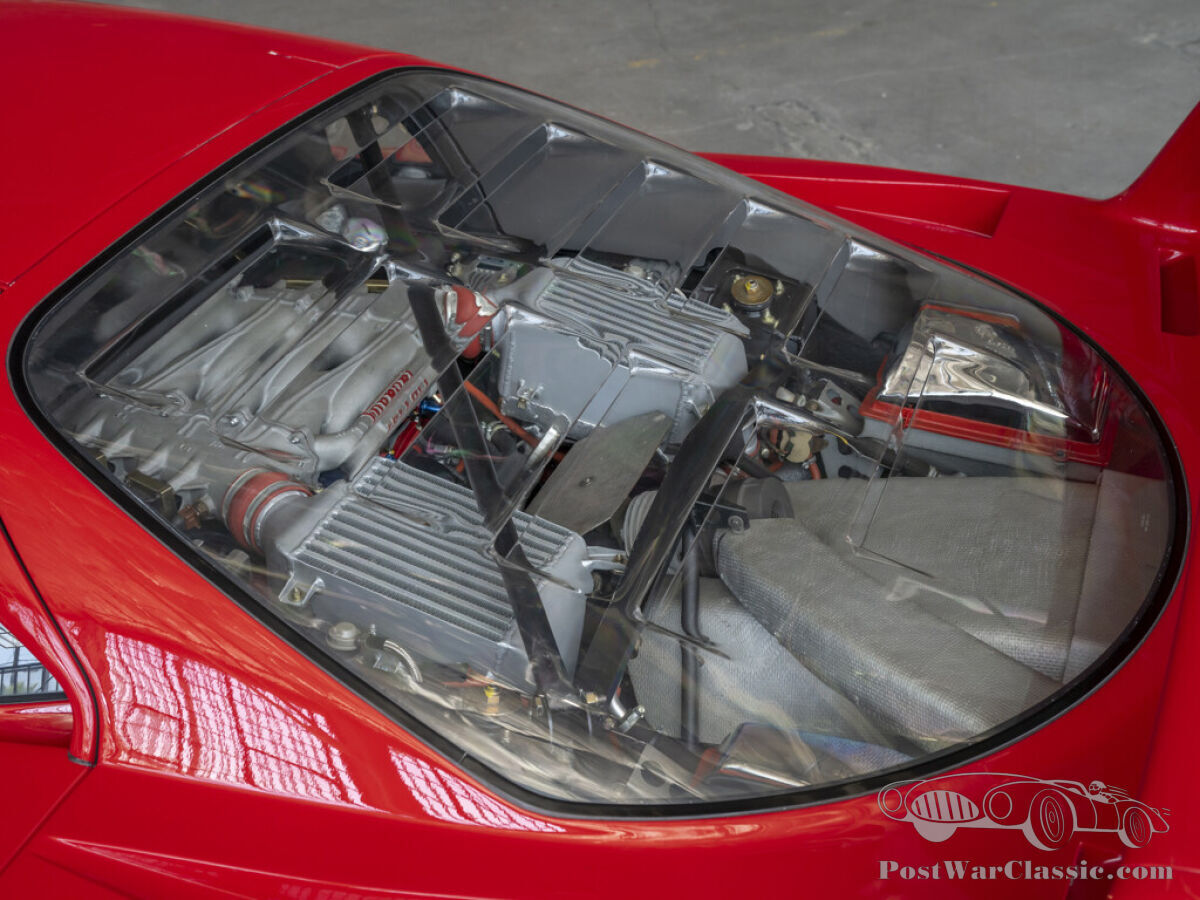
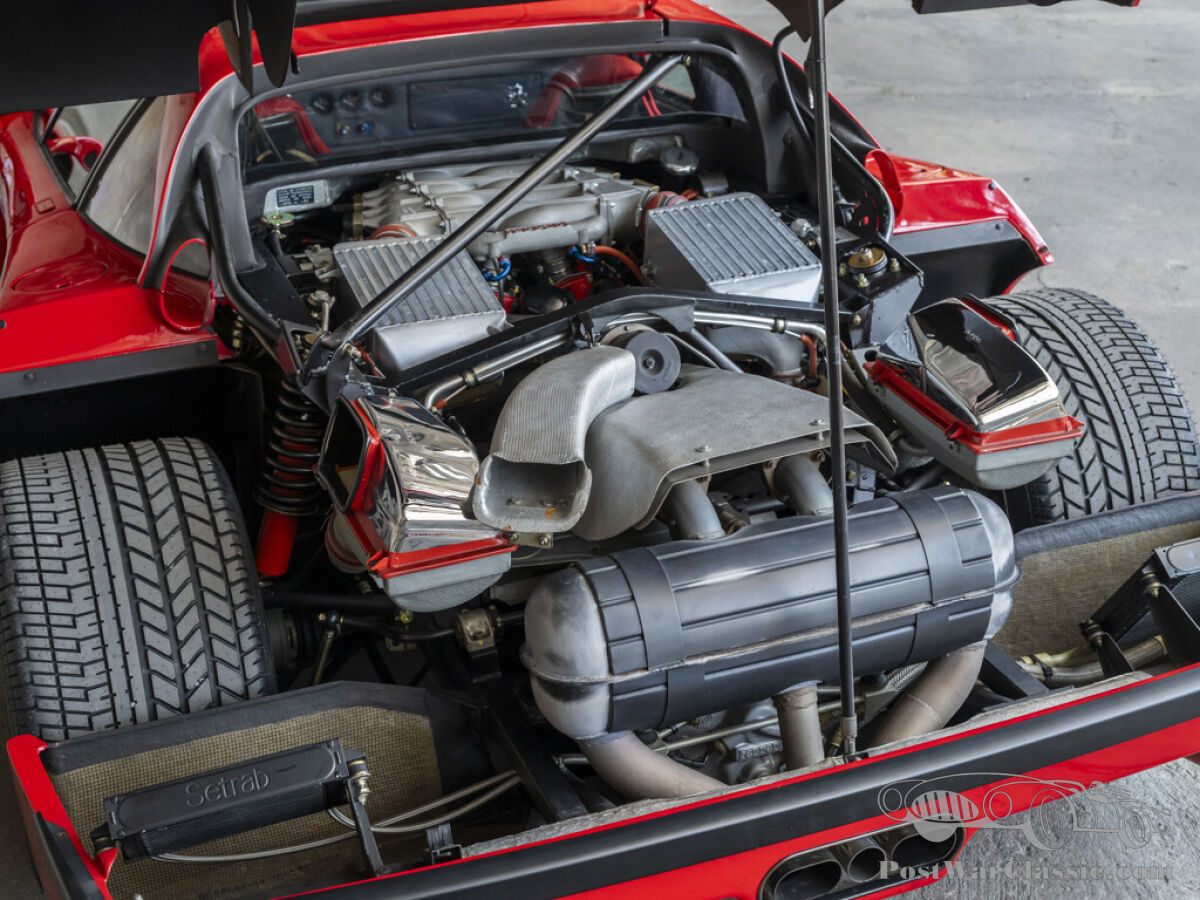
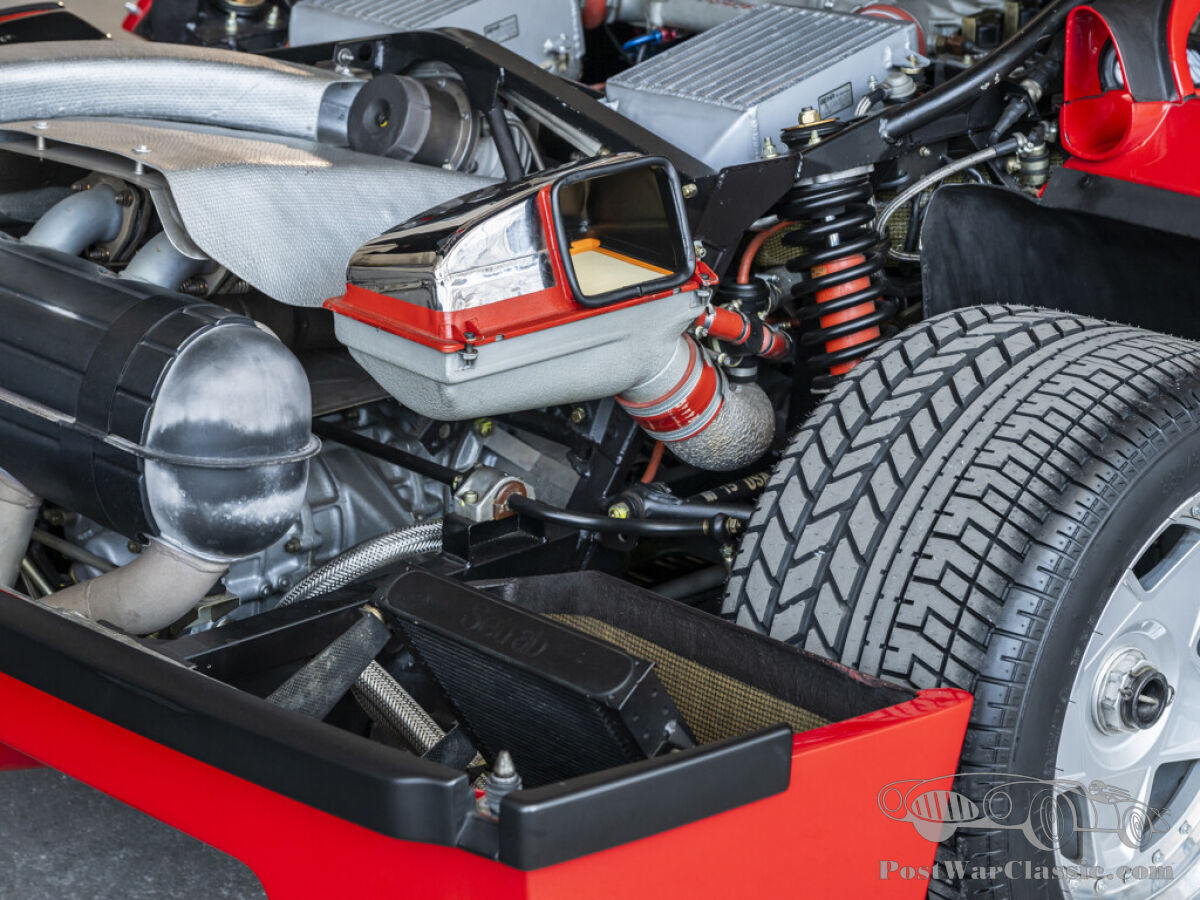
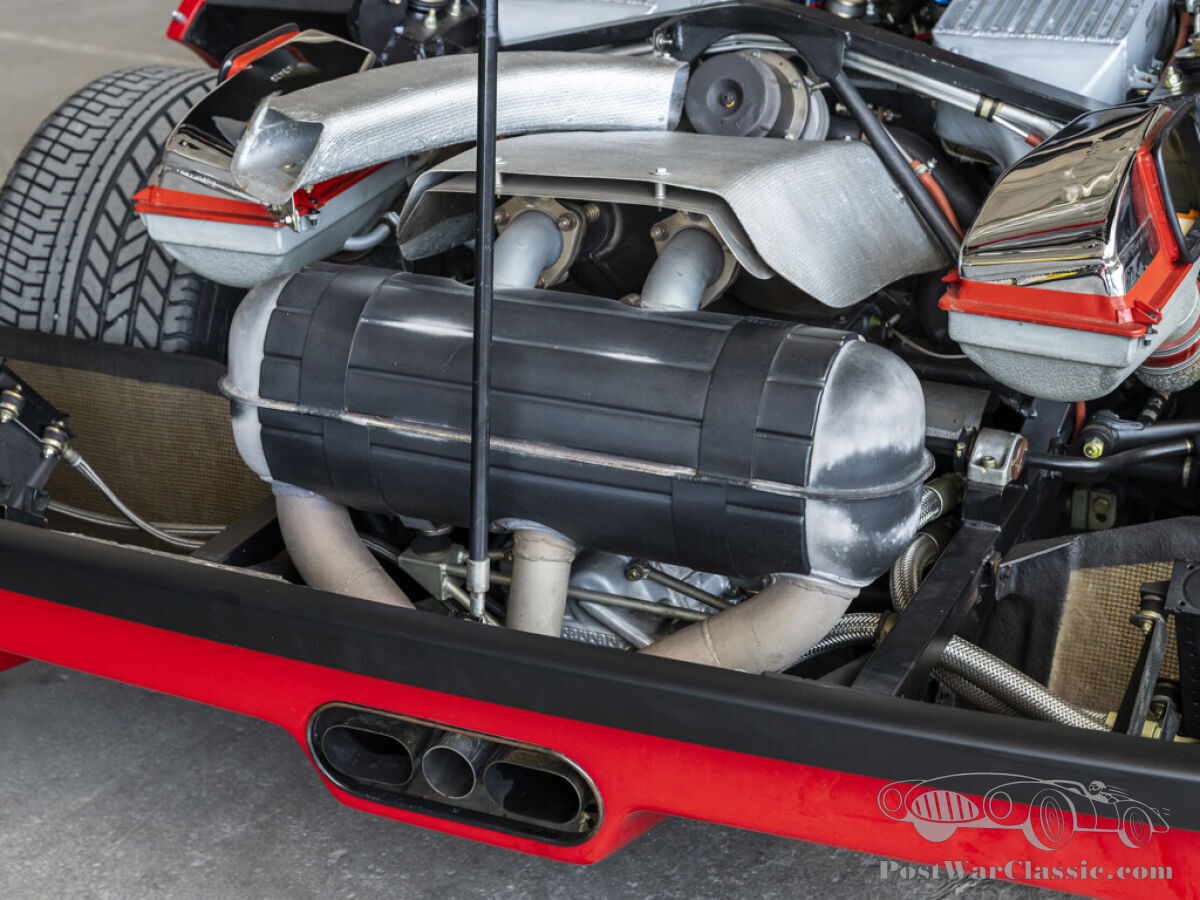
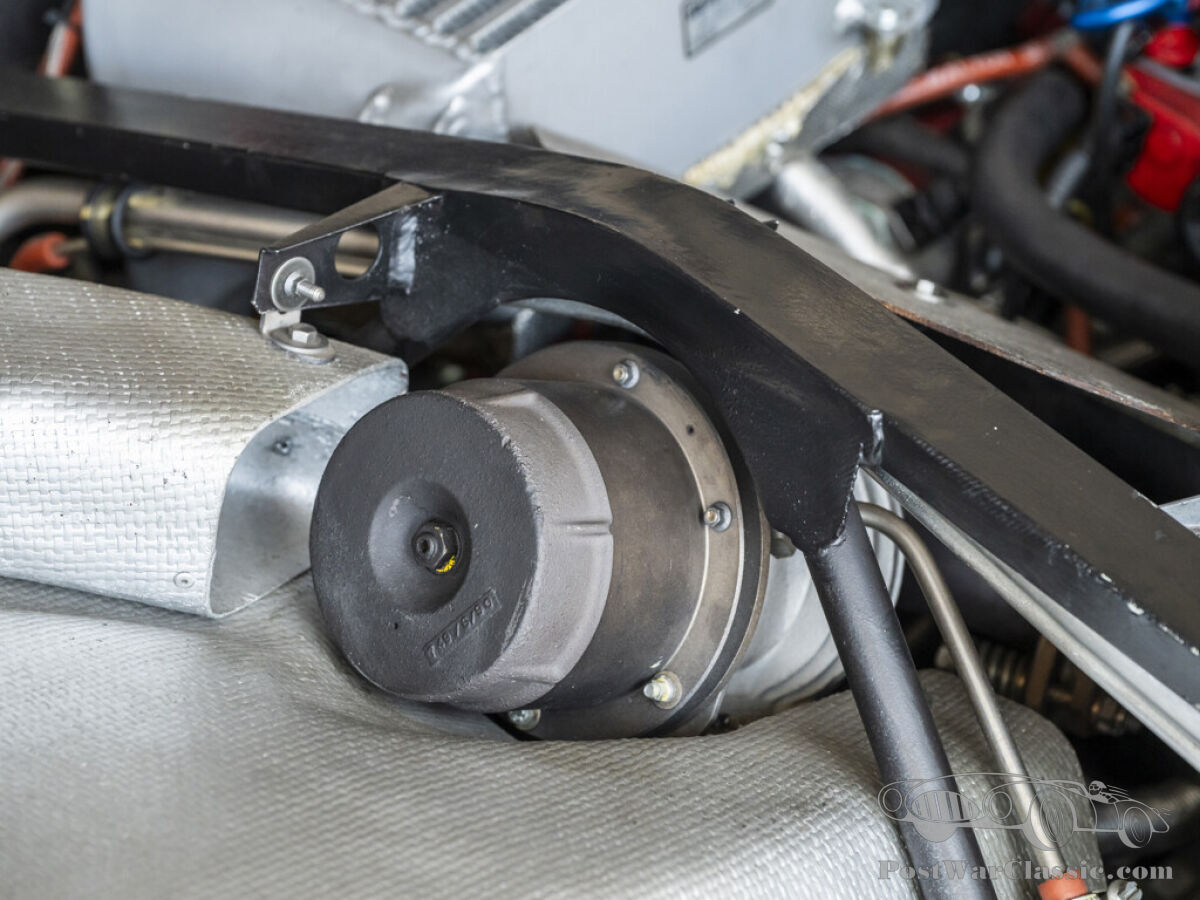
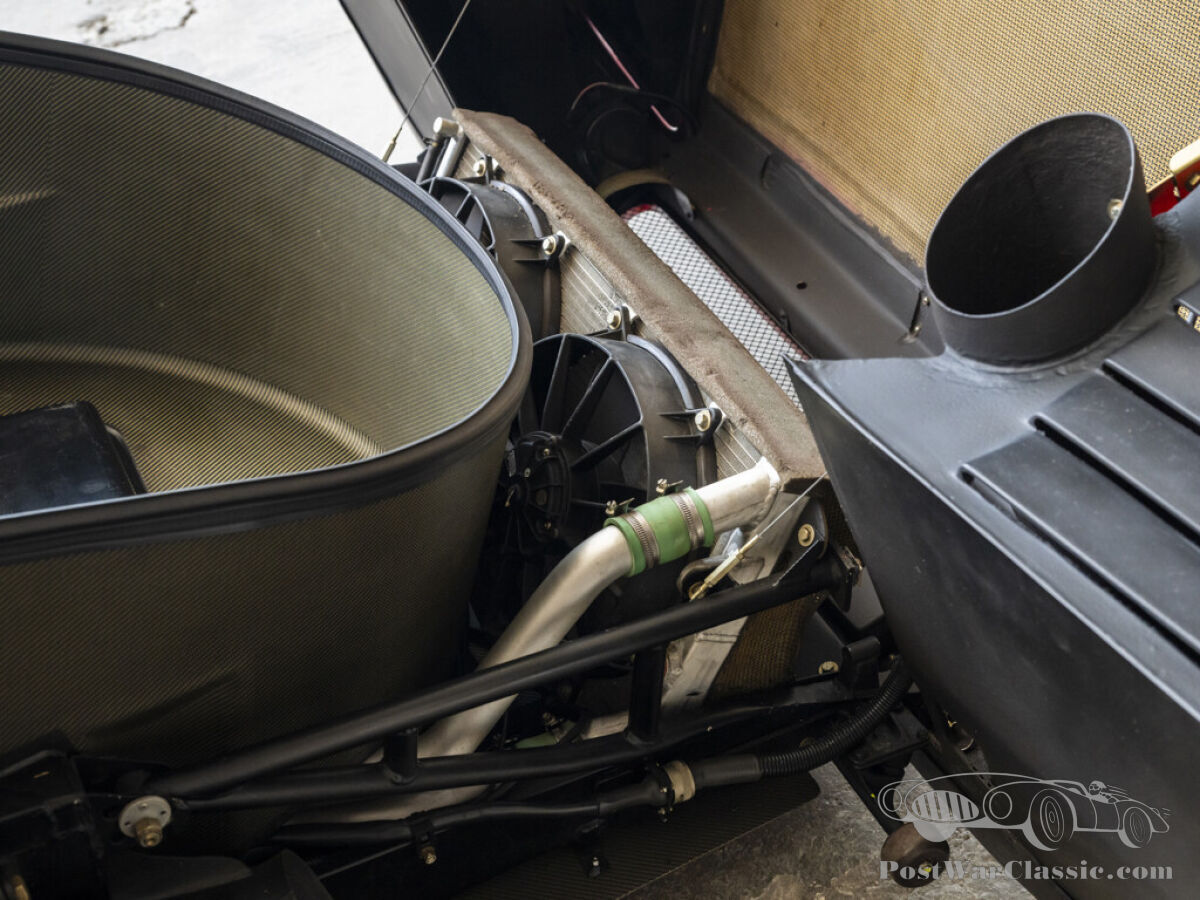
The 288’s twin-turbocharged V-8 was bored to displace 2.9 liters and equipped with IHI turbochargers and Behr intercoolers. It was then mated to a five-speed transaxle actuated by a gated shifter. The resulting performance was nothing short of astonishing. The type F120 040 engine developed 471 brake horsepower and 425 pound-feet of torque to launch the F40 to 60 mph from standstill in just 3.8 seconds, achieving a top speed of 201 mph (thereby exceeding the Porsche 959 and Lamborghini Countach).
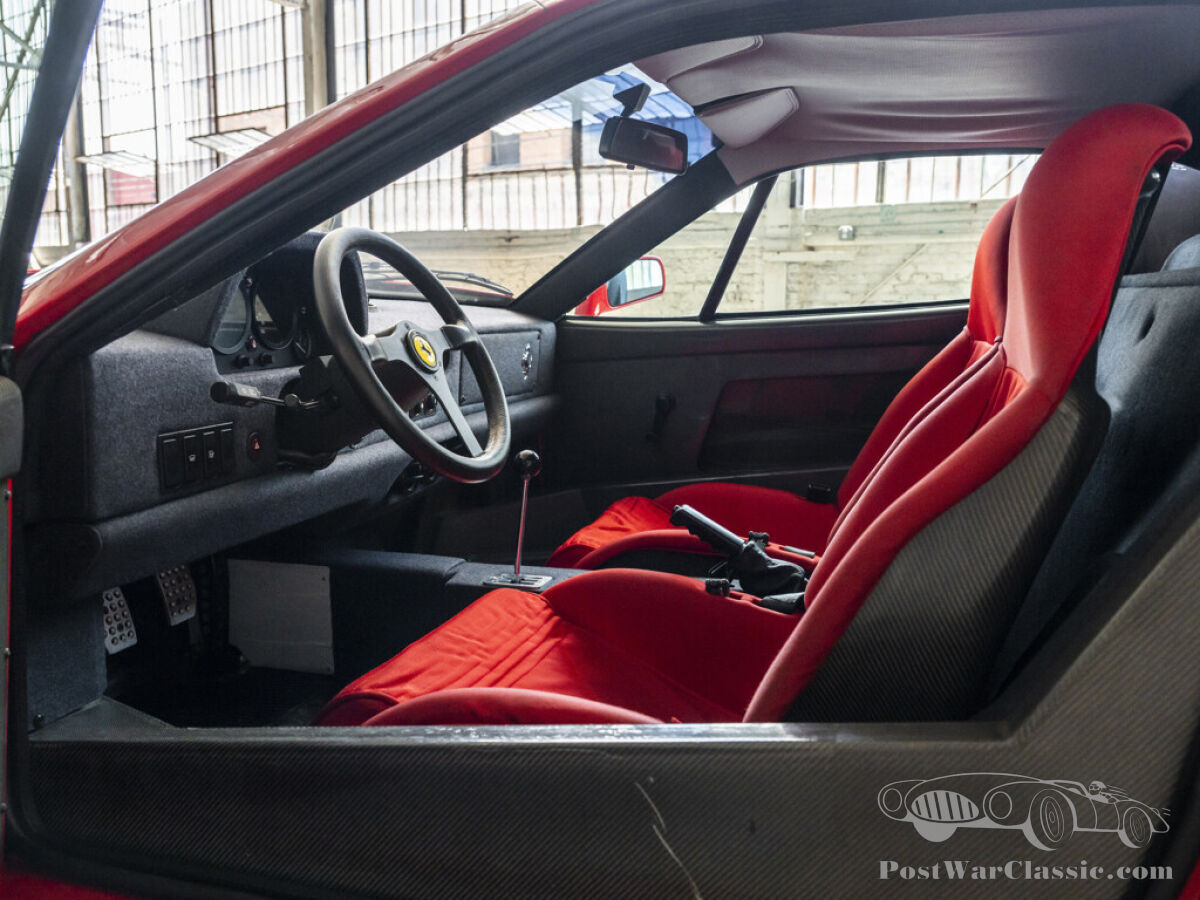
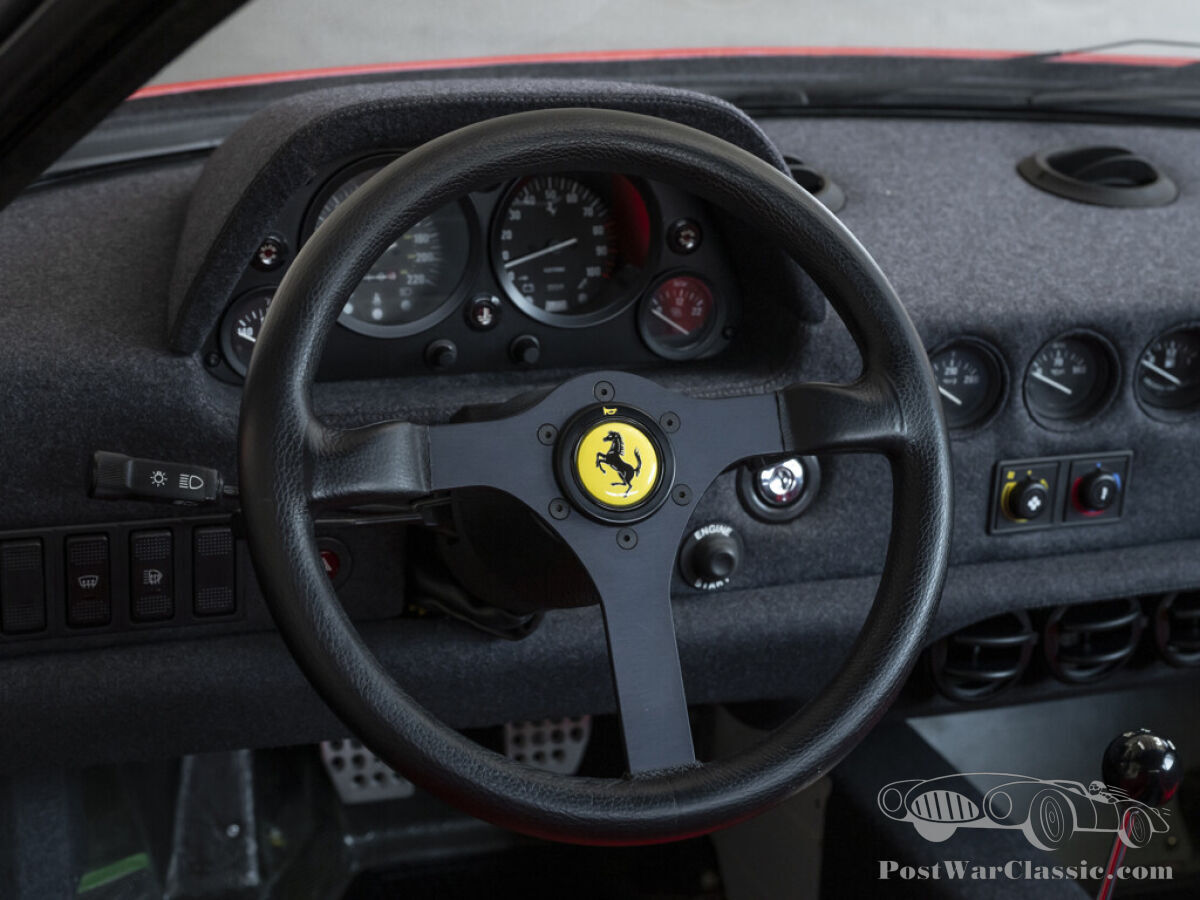
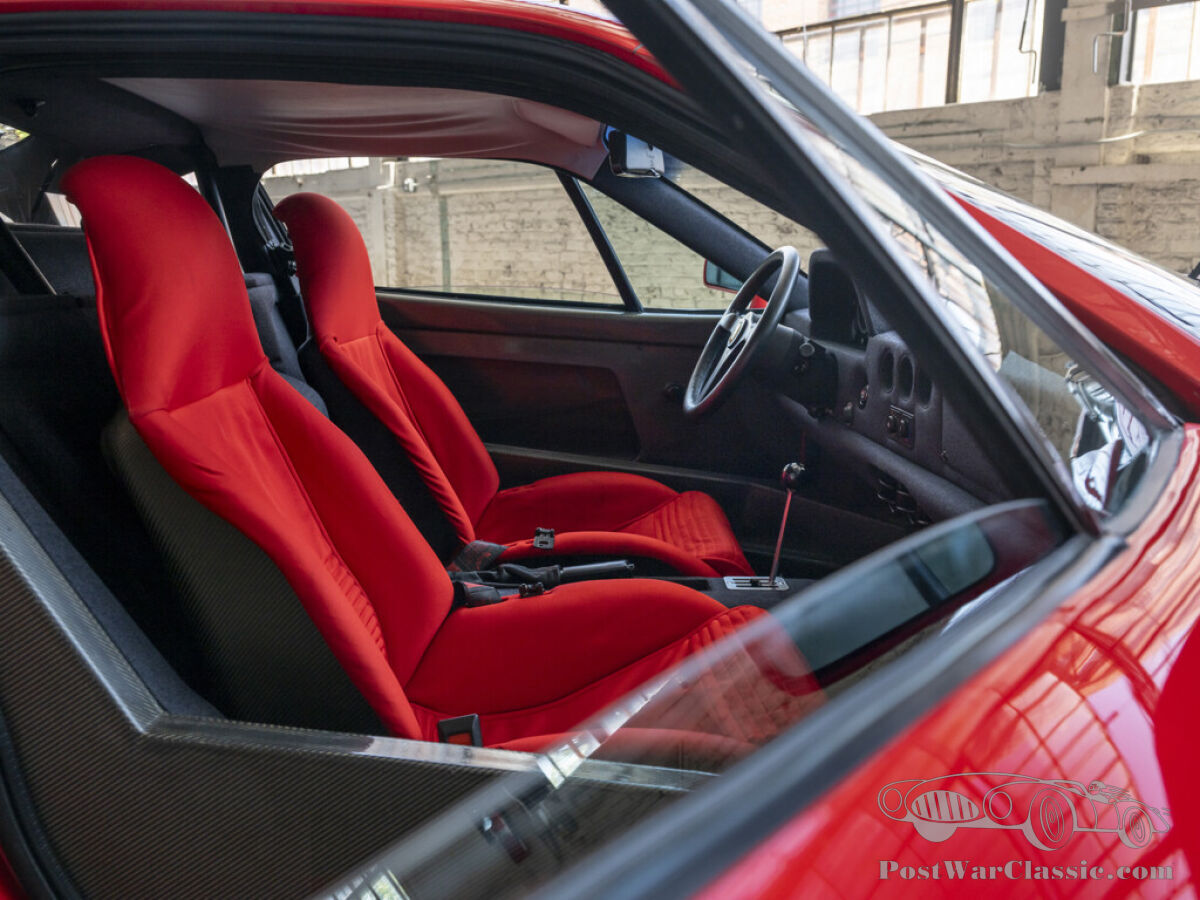
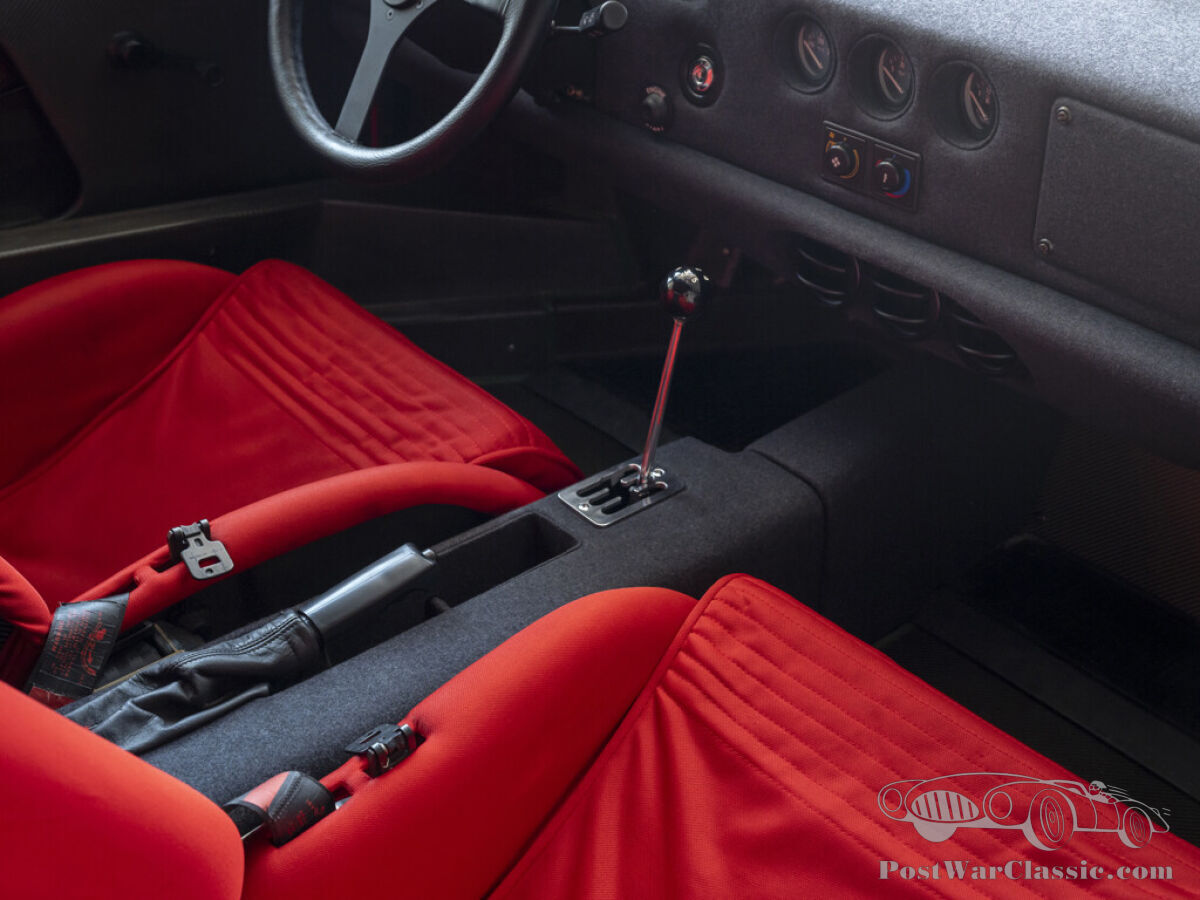
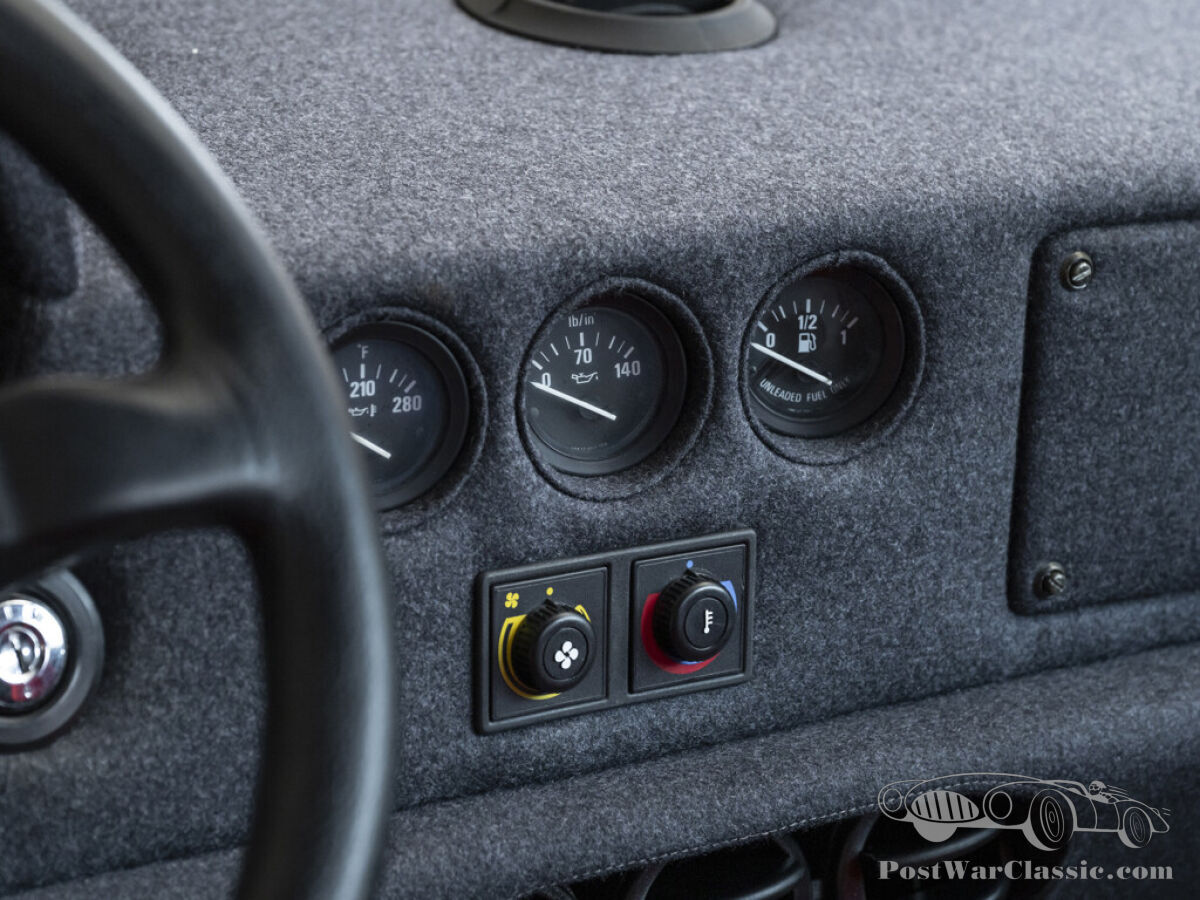
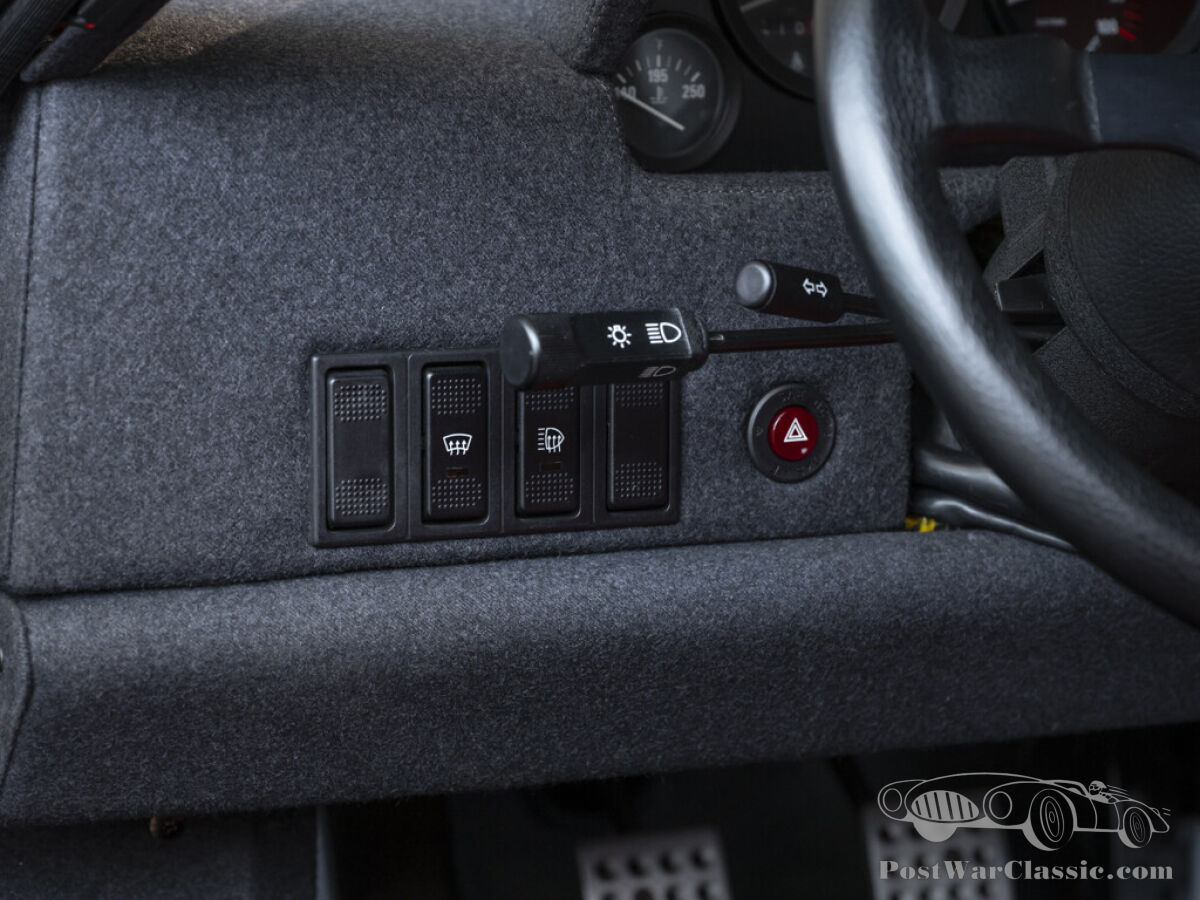
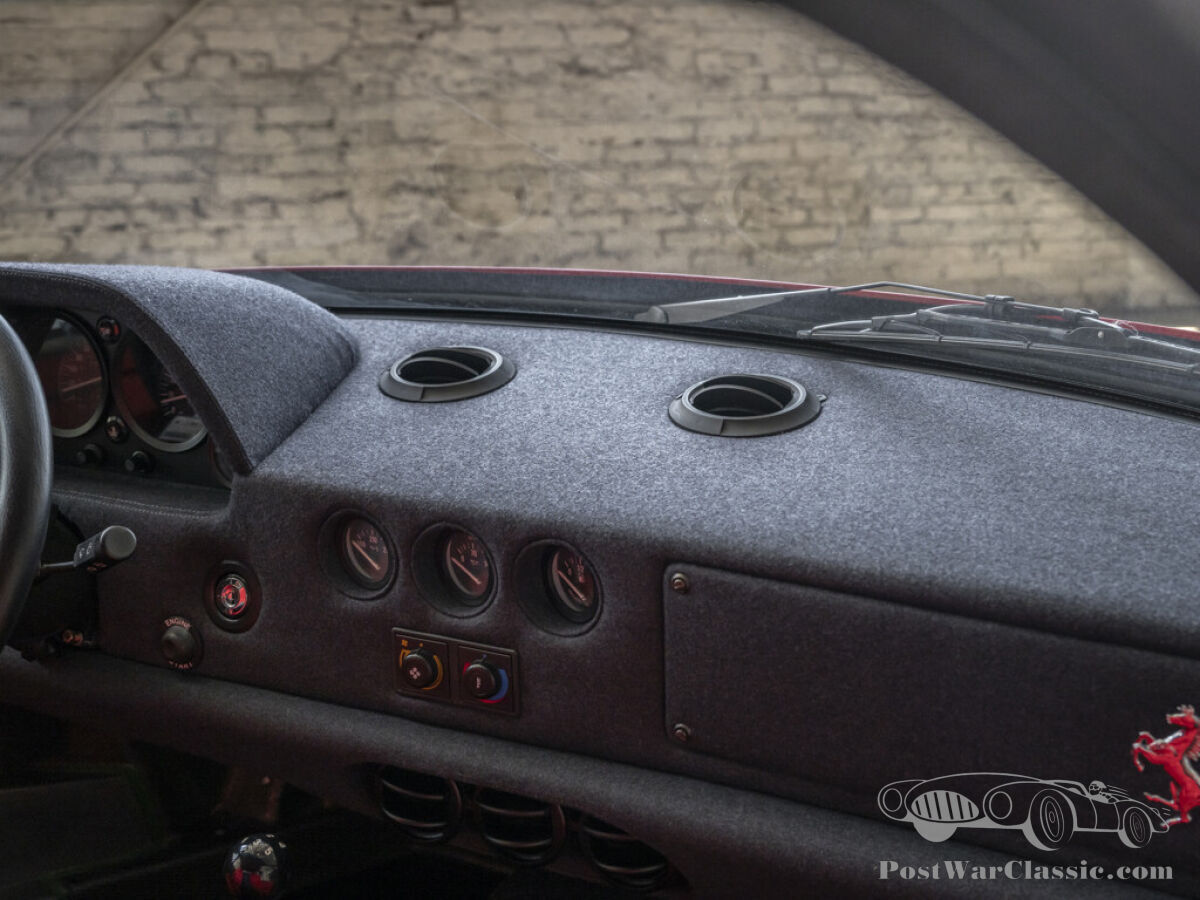
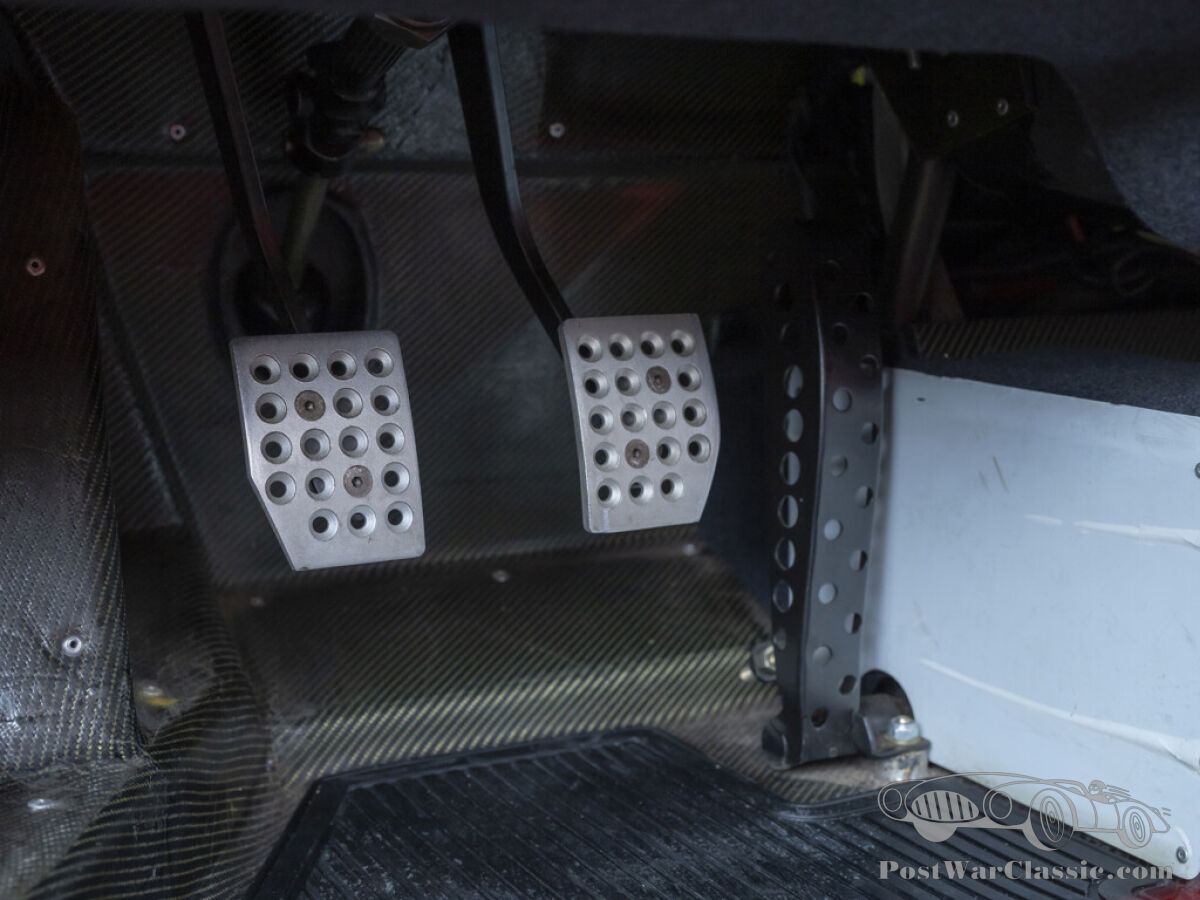
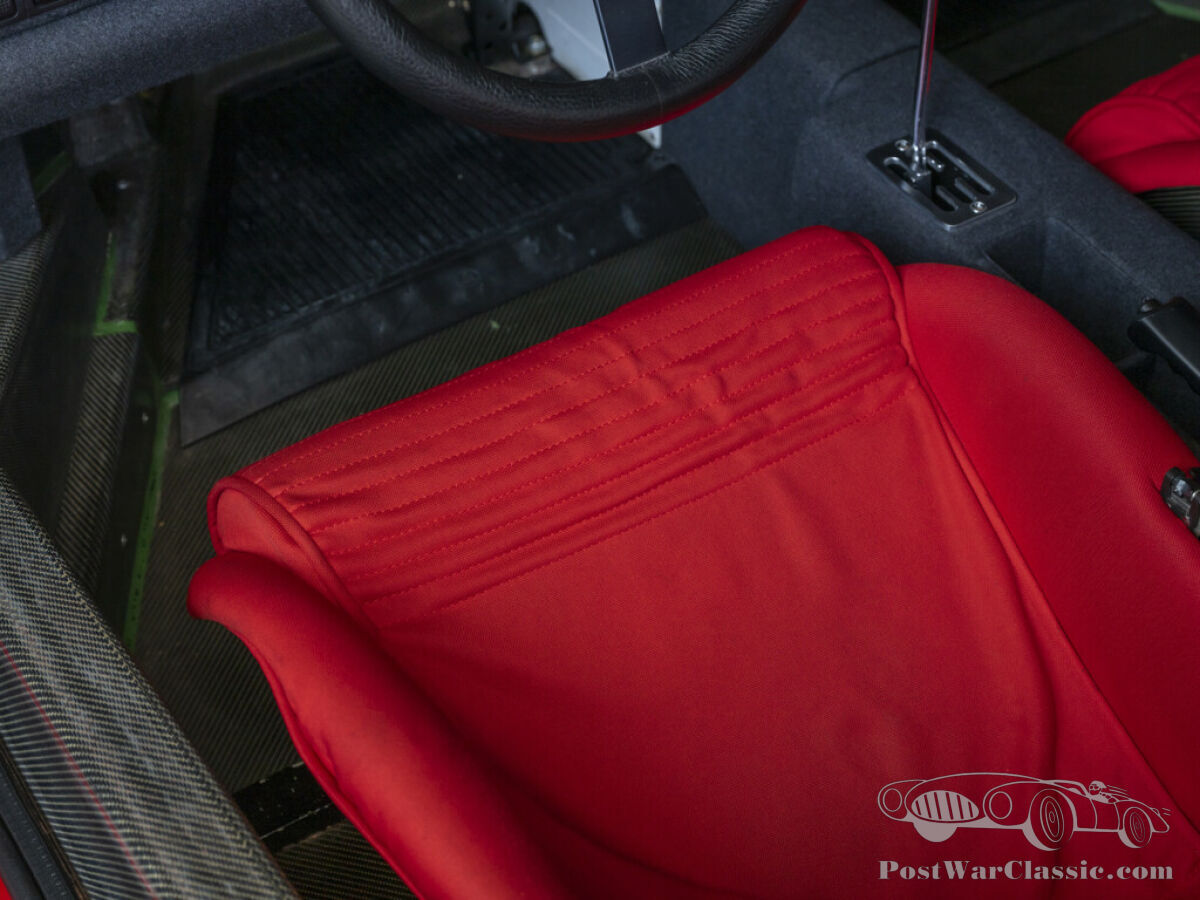
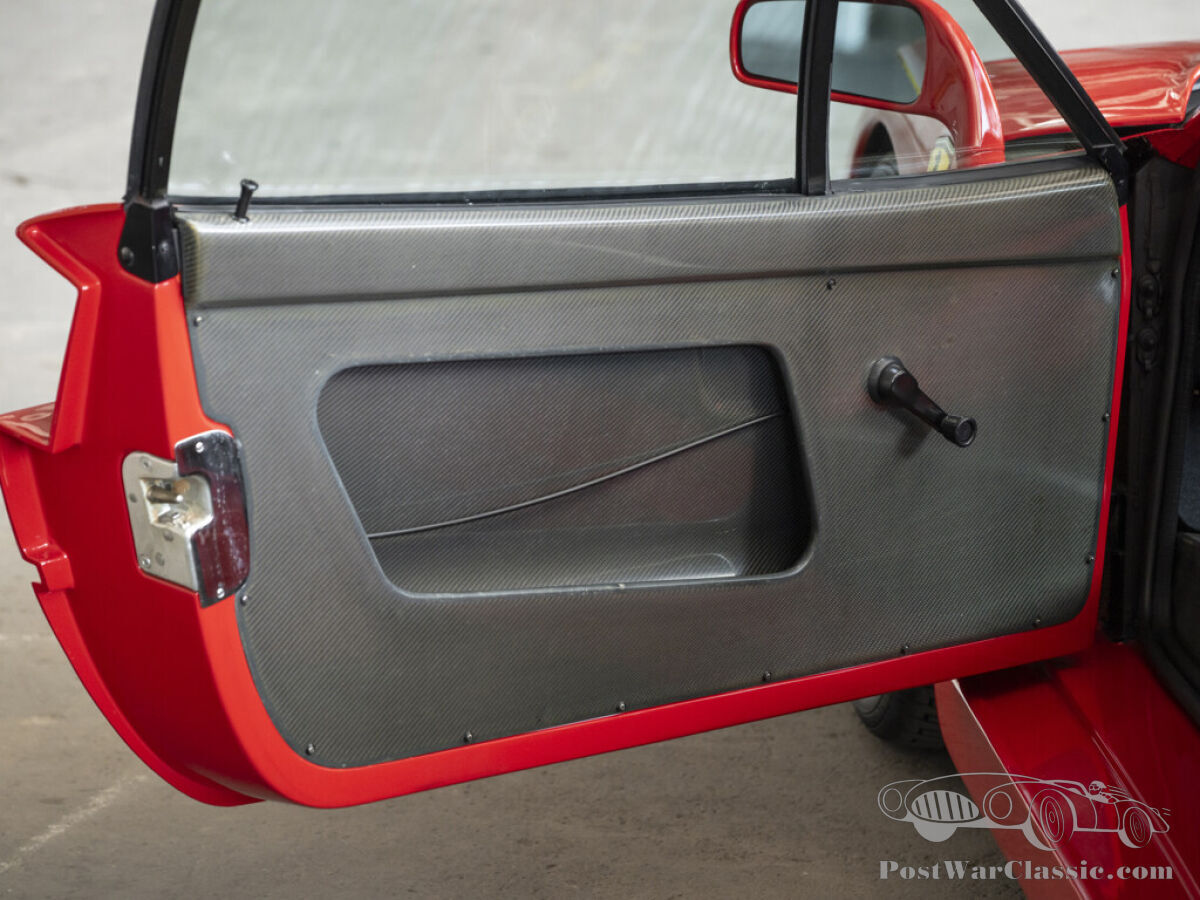
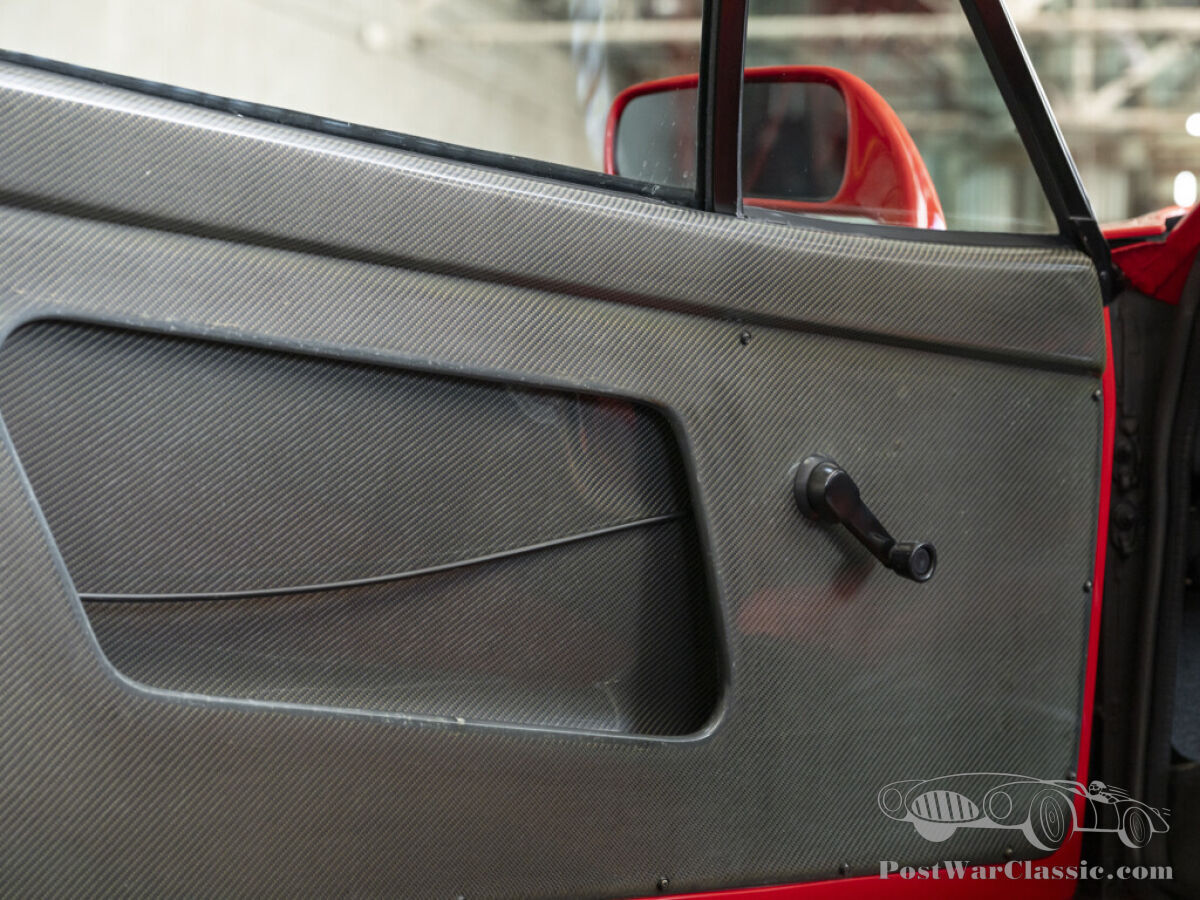
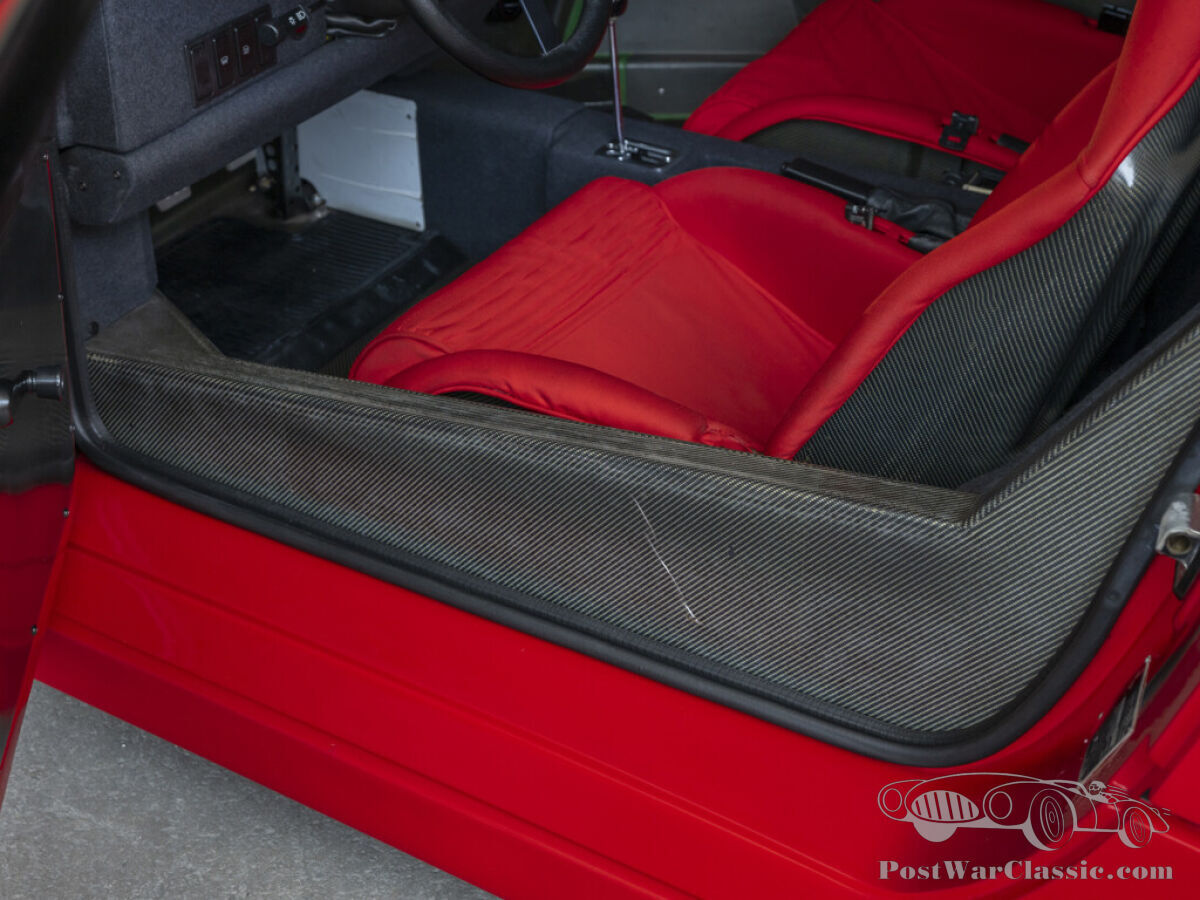
Unlike the more luxurious treatments that have become fashionable today, the F40’s interior aptly reflected its basis in race car development, with a no-frills spartan design philosophy. Accordingly, weight was thoroughly minimized with the use of components such as cloth upholstery on plastic-composite racing seats, pull-strap door releases, drilled pedals, and Perspex windows.
Publicly introduced at the 1987 Frankfurt Motor Show, the F40 was initially earmarked for a low production run of 400 examples. However, skyrocketing customer interest prompted Ferrari to build 1,315 cars. Occupying such an important perch in Maranello’s supercar lineage, it is hardly surprising that many F40 examples were initially purchased by astute collectors and largely restricted to showroom viewing and concours exhibition. Relatively few cars were driven in anger on a track, but a handful of drivers were lucky enough to experience the F40 under such conditions.
Case in point, five-time 24 Hours of Le Mans winner Derek Bell was allowed to push the car’s limits during a test drive for
Classic & Sports Car magazine conducted during the mid-2000s. His verdict: “It’s just magnificent…This is a car to make your hair curl. The power delivery is sensational, and I love the way the turbos come on with such a rush. Very quickly the situation changes from neutral understeer to amazing oversteer, but it’s all superbly predictable.”
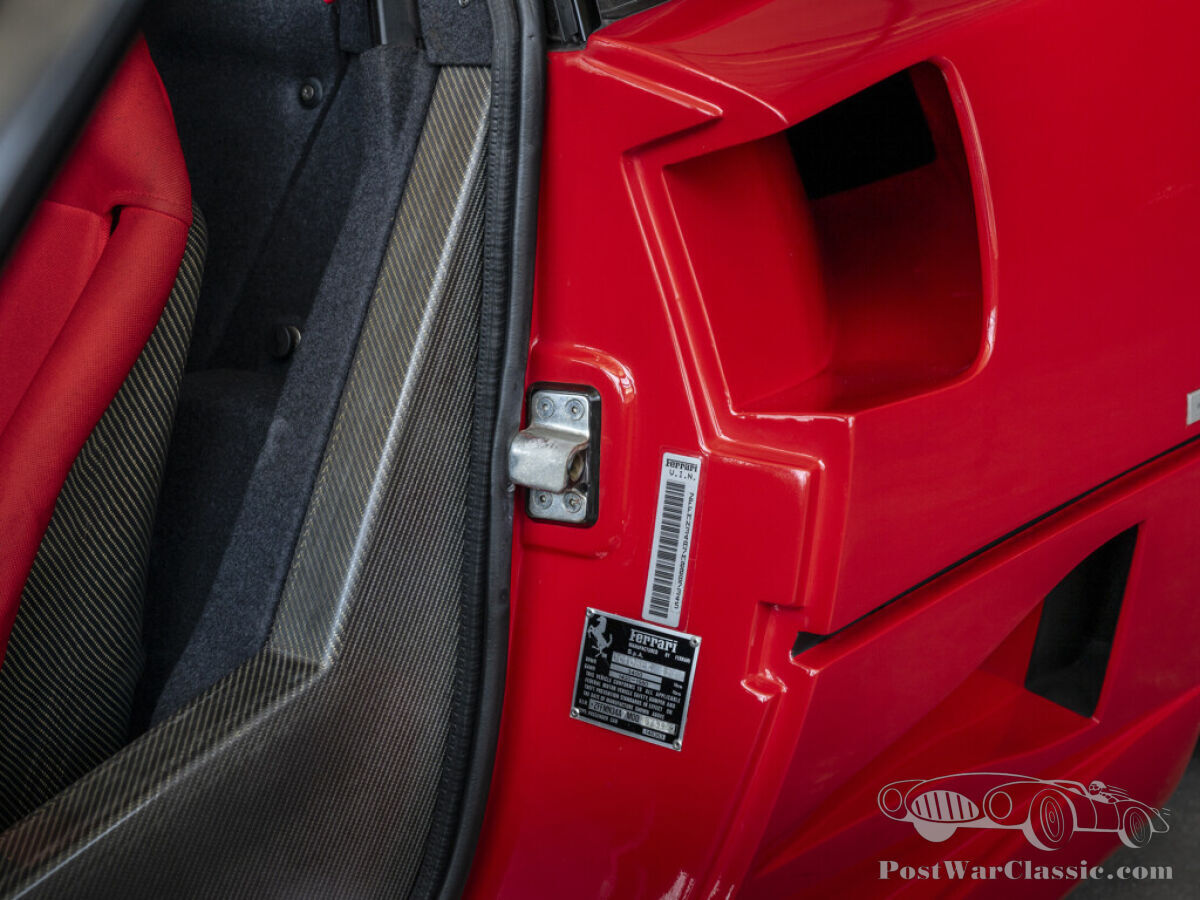
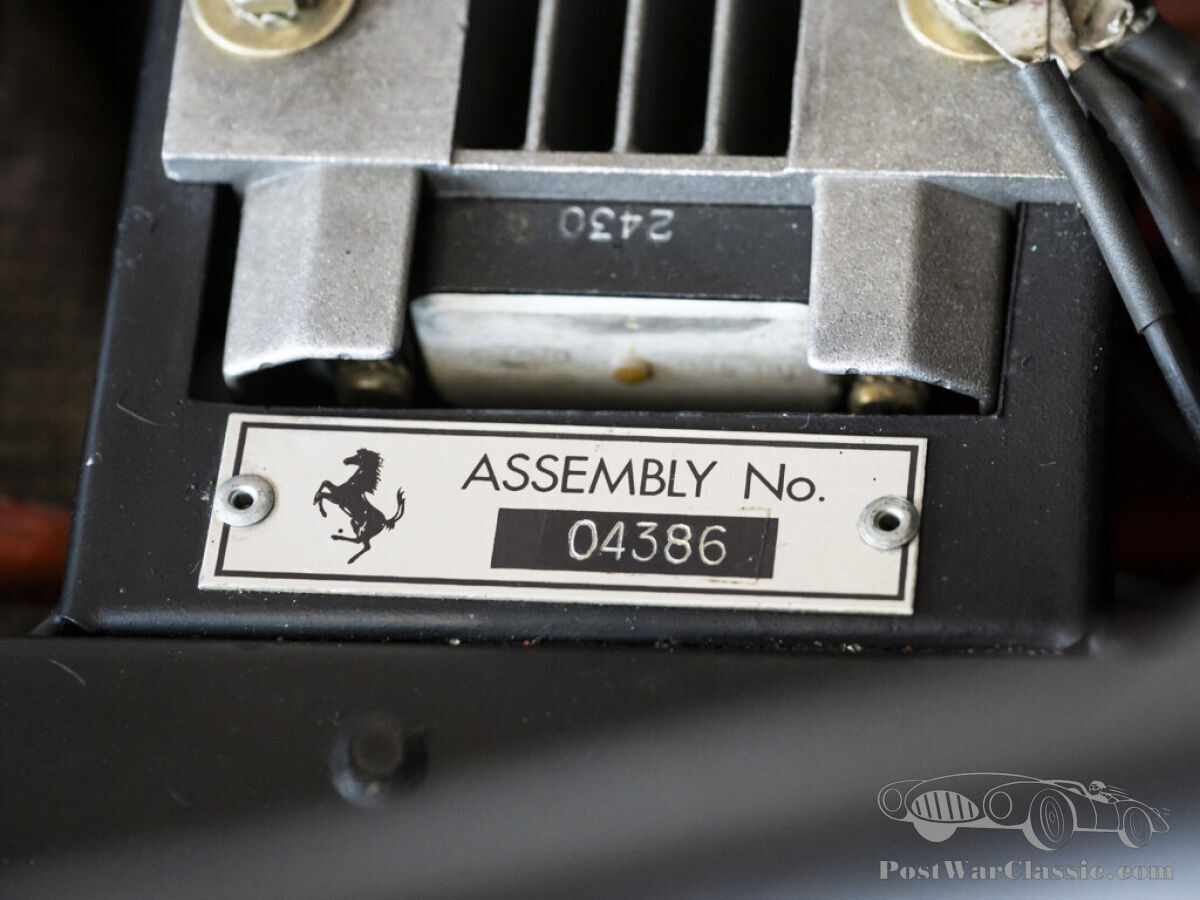
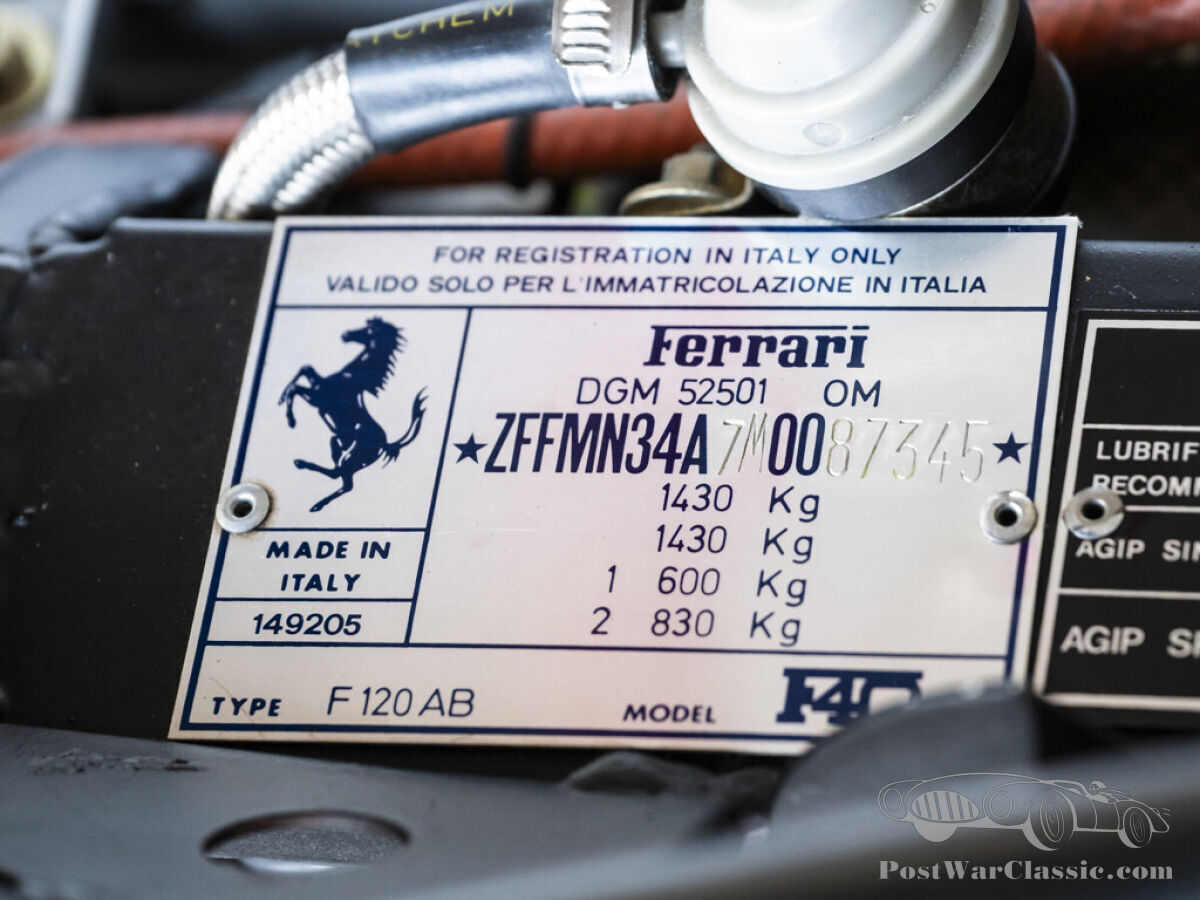
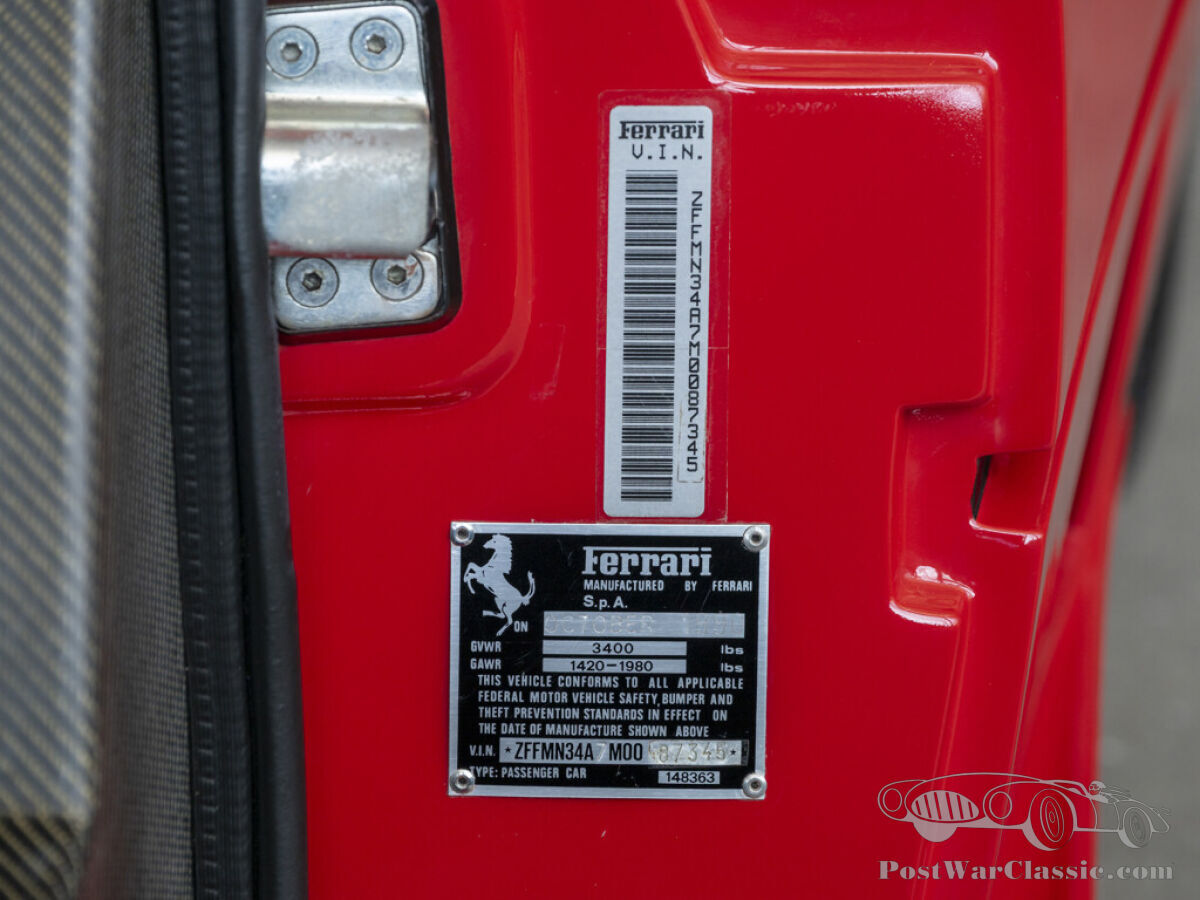
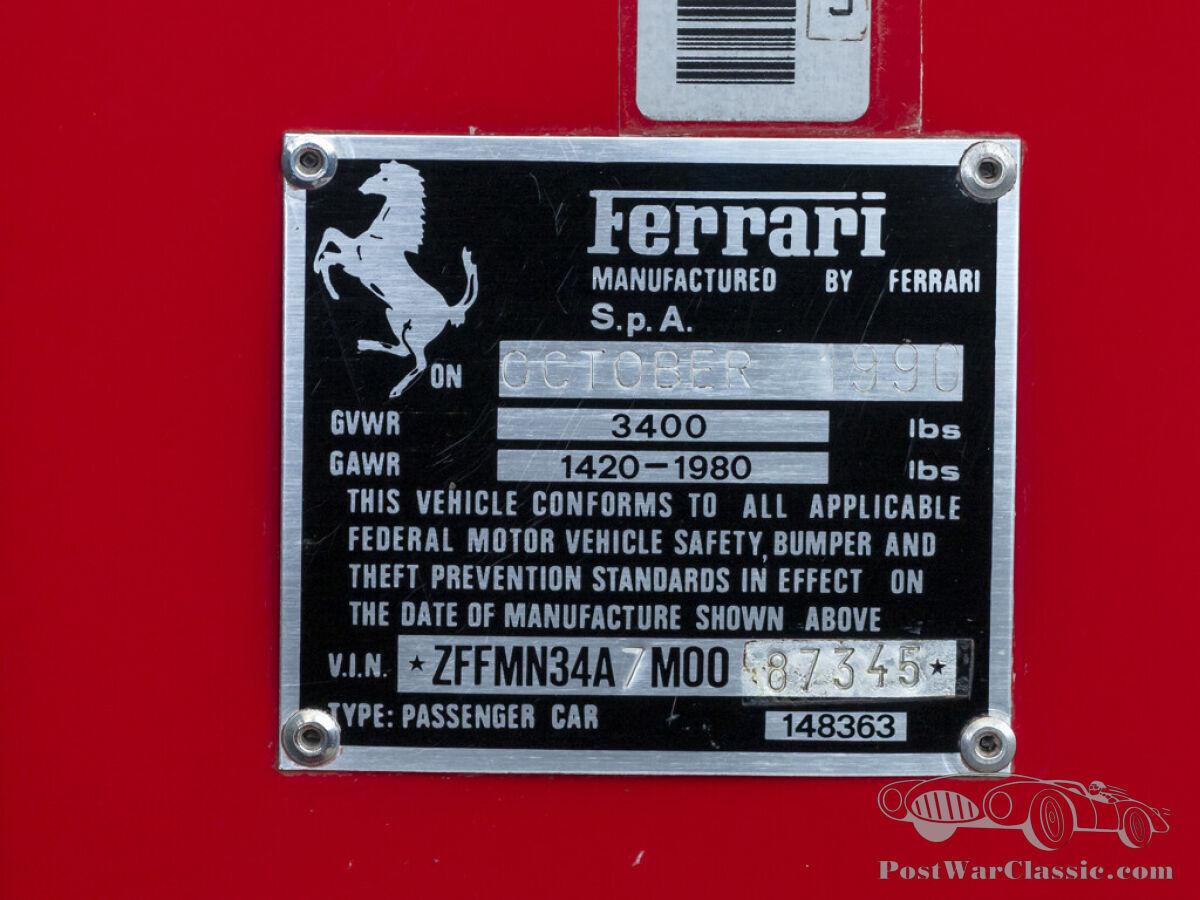
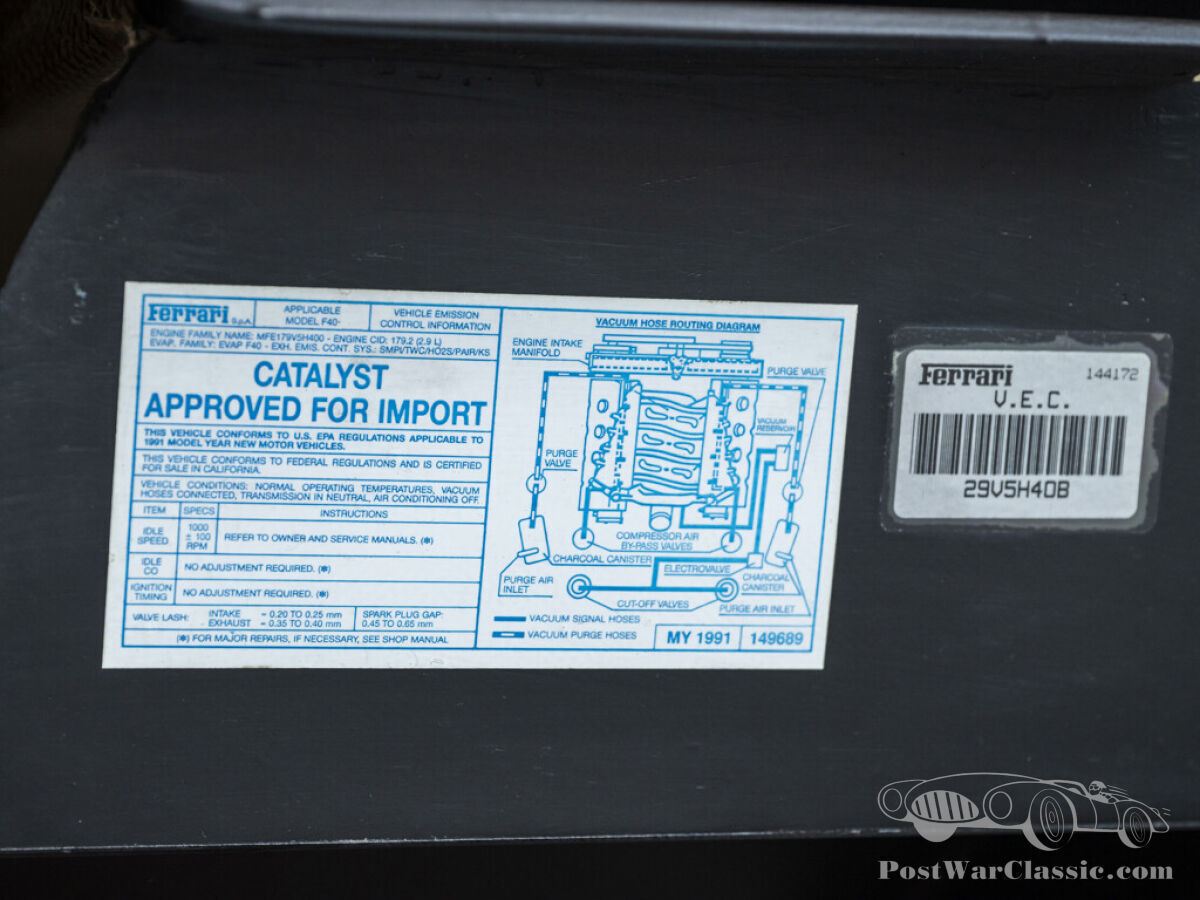
FROM THE MUSTANG TO THE PRANCING HORSEClaiming important ownership provenance, a short chain of private caretakers, and incredibly low mileage, this F40 is one of the most desirable examples ever offered. According to the research of marque expert Marcel Massini, chassis number 87345 is the 94th example specified for the US market of 213 such cars, and it began construction in October 1990. As such, the Ferrari was specified with instruments in miles and catalytic converters, and equipped with the non-adjustable suspension.
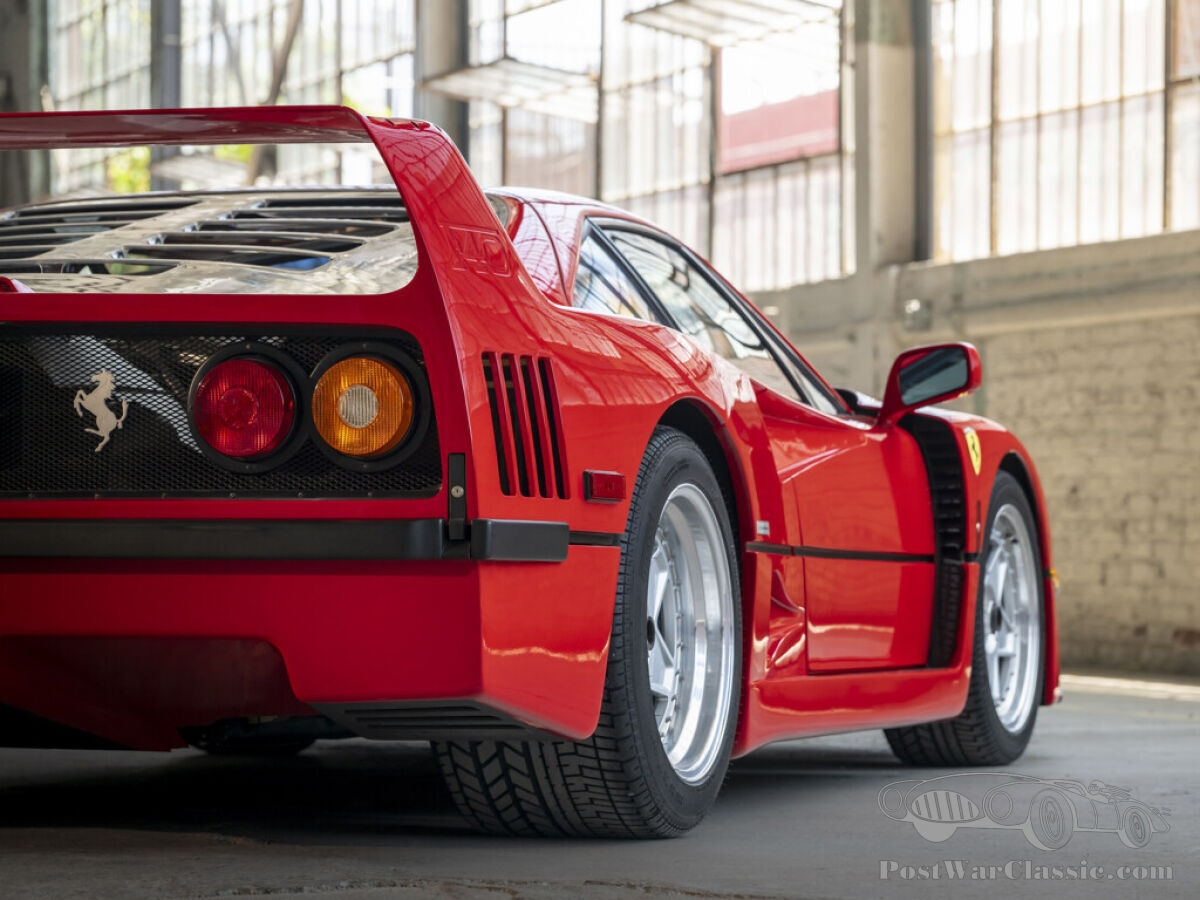
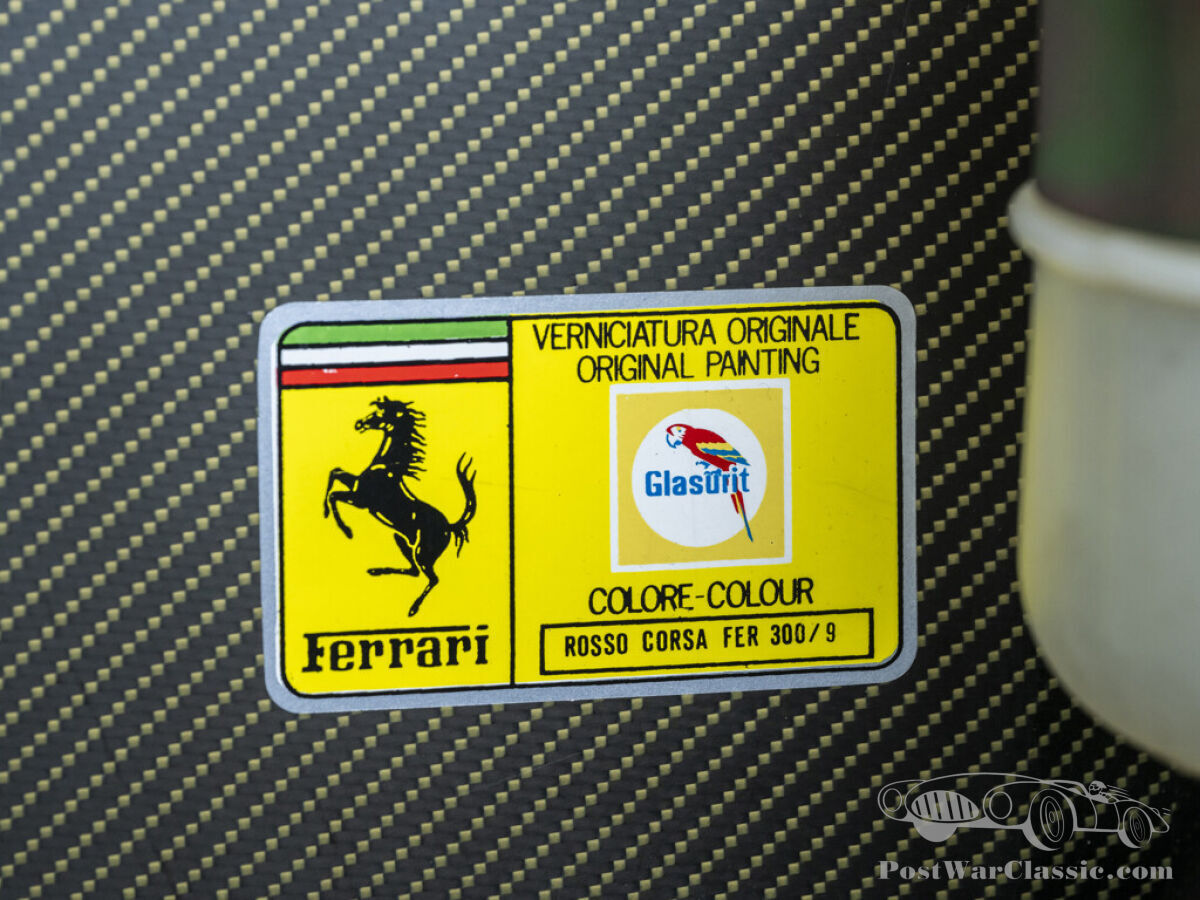
Finished in the trademark F40 livery of Rosso Corsa paint over an interior trimmed in Stoffa Vigogna (Vicuna cloth), 87345 was completed in December 1990. Later that month the car was accepted for customer delivery at the Ferrari factory for ownership by none other than Lee Iacocca, the legendary US automobile executive who played major roles at both Ford and Chrysler during a noteworthy 46-year career. His name is written in the car’s original warranty booklet, with the selling dealer being listed as “
Diretto”, or a rare “direct sale”, reserved only for serious VIP Ferrari clients to purchase directly from the factory. The man generally credited for the Ford Mustang also received a special plaque with the car that reads “Built exclusively for Lee Iacocca”. The plaque and a courtesy note from Ferrari to selling dealer Anthony “Tony” Carlini are key components of the car’s documentation.
After being registered with Italian tourist tags in 1991, Mr. Iacocca presumably enjoyed the car in Europe briefly before it was exported to the US. By November 1992 the F40 was offered for sale with an odometer reading of just 72 miles, and the car was acquired sometime thereafter by Scott G. Spencer-Smith, an architect residing in Santa Monica, California.
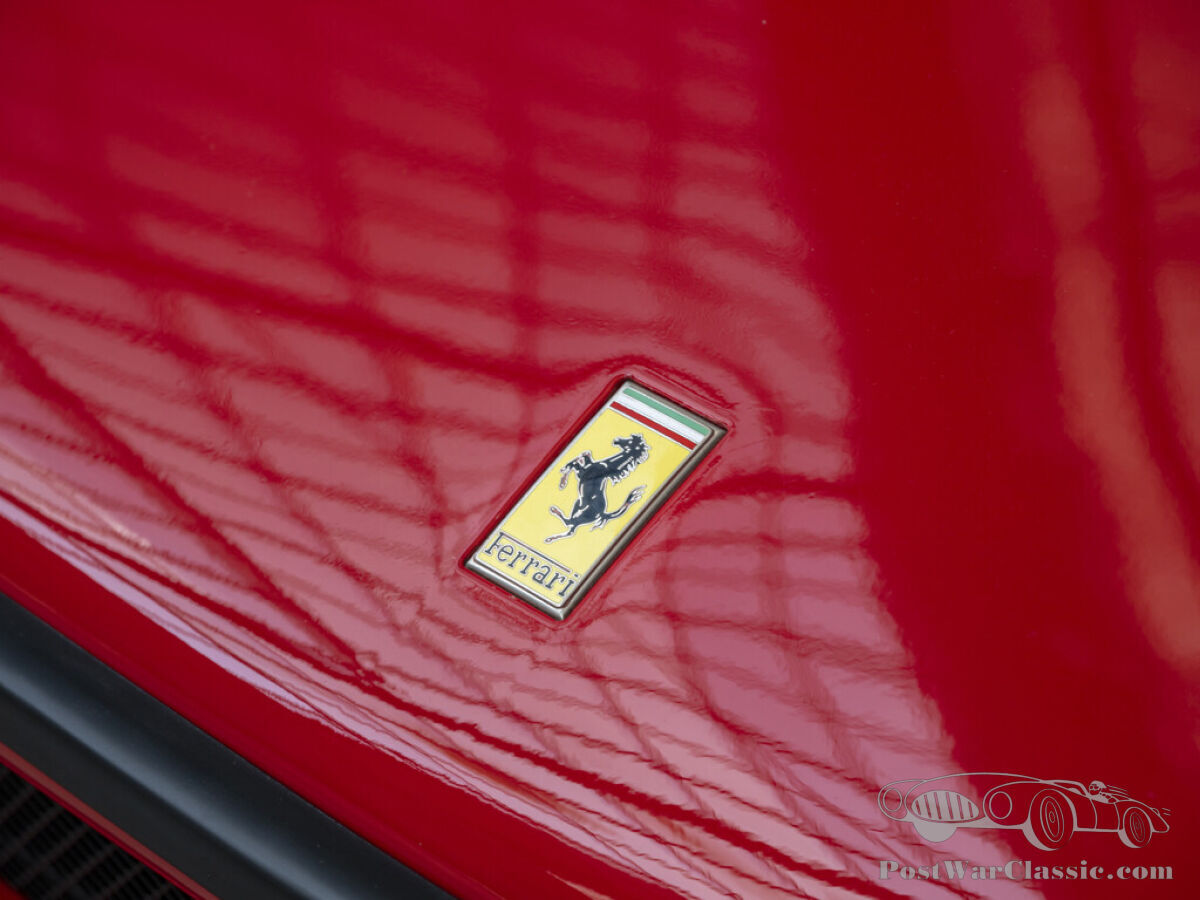
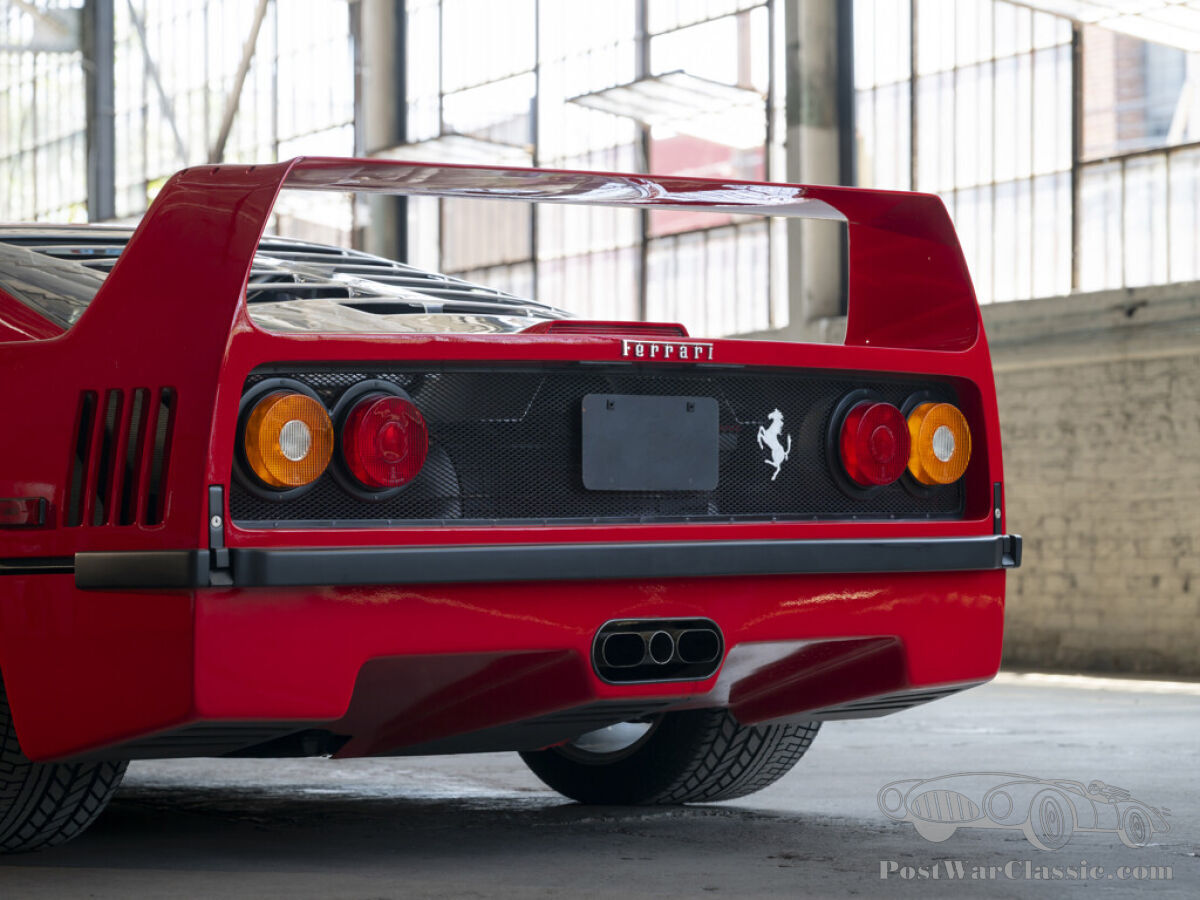
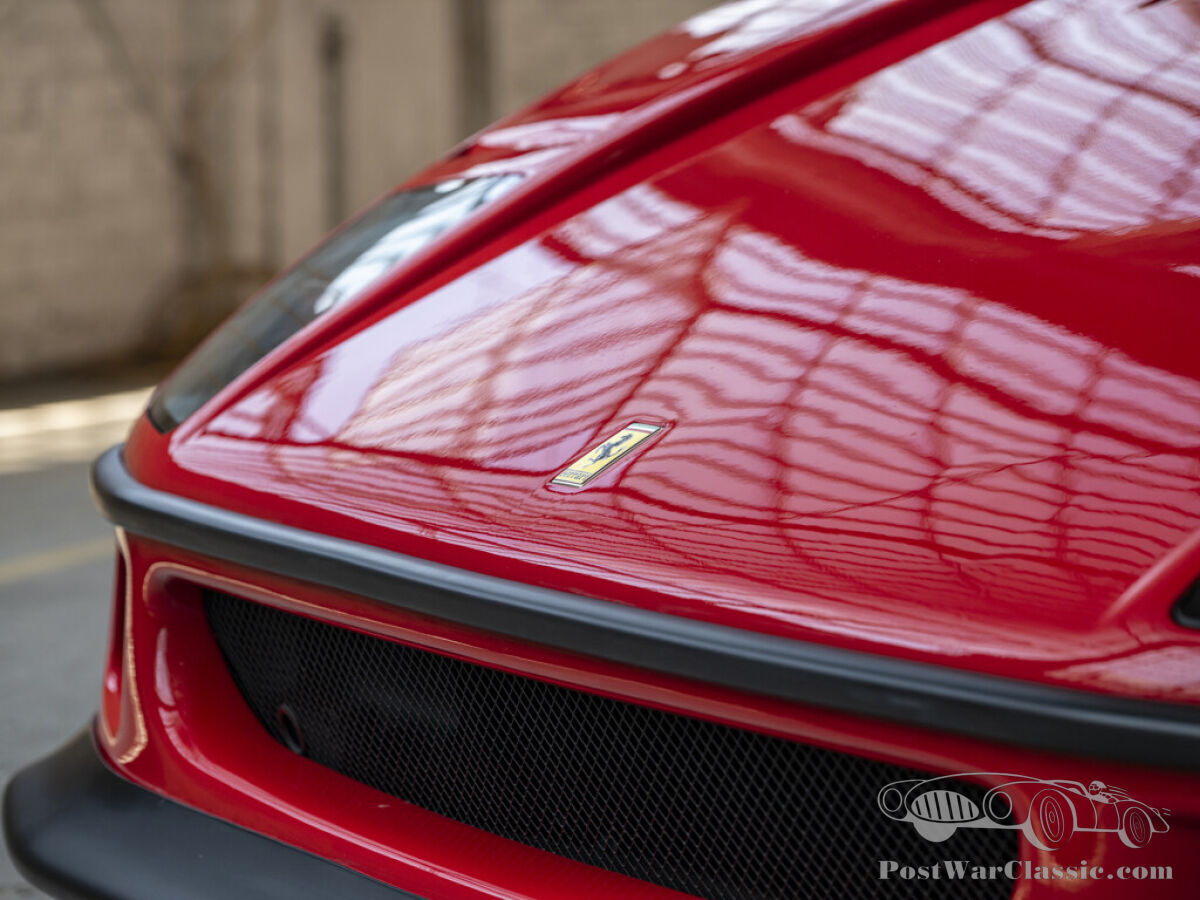
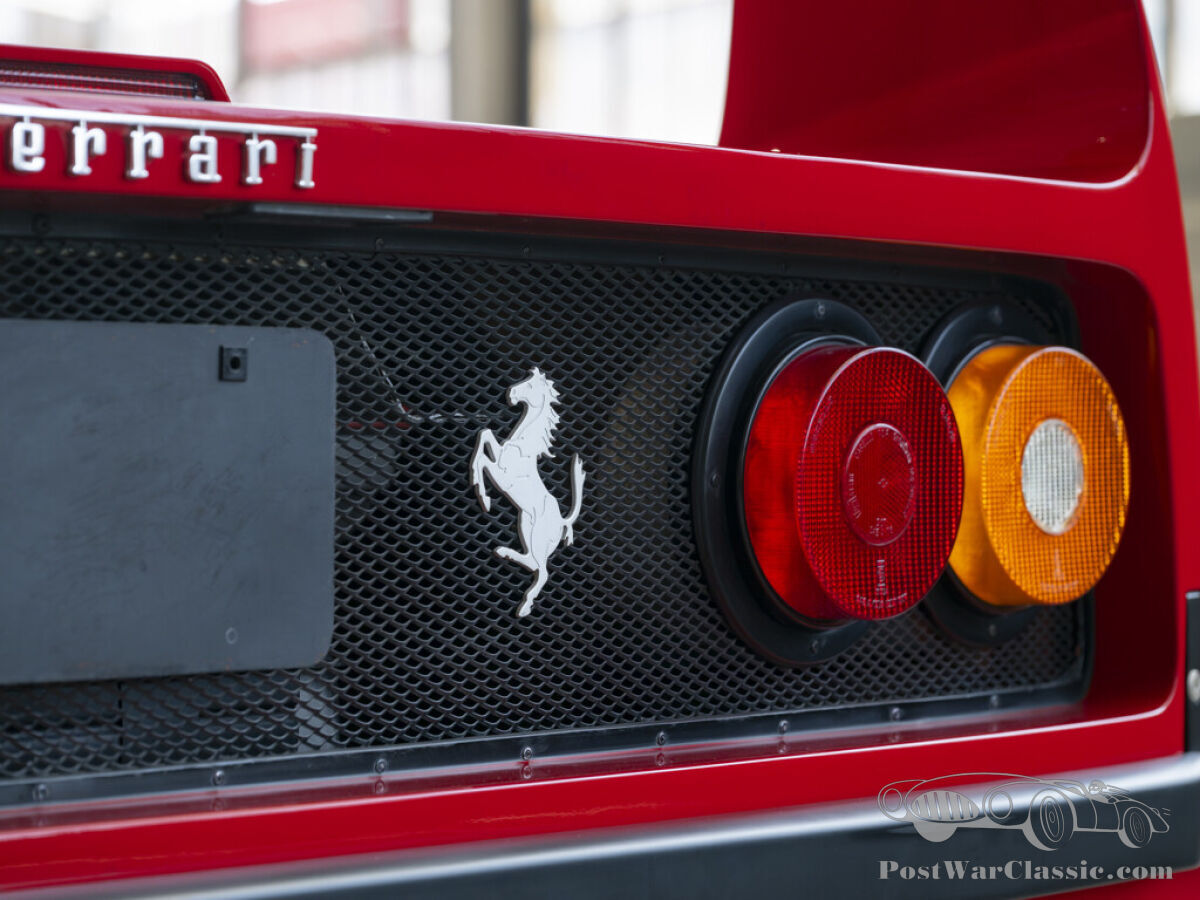
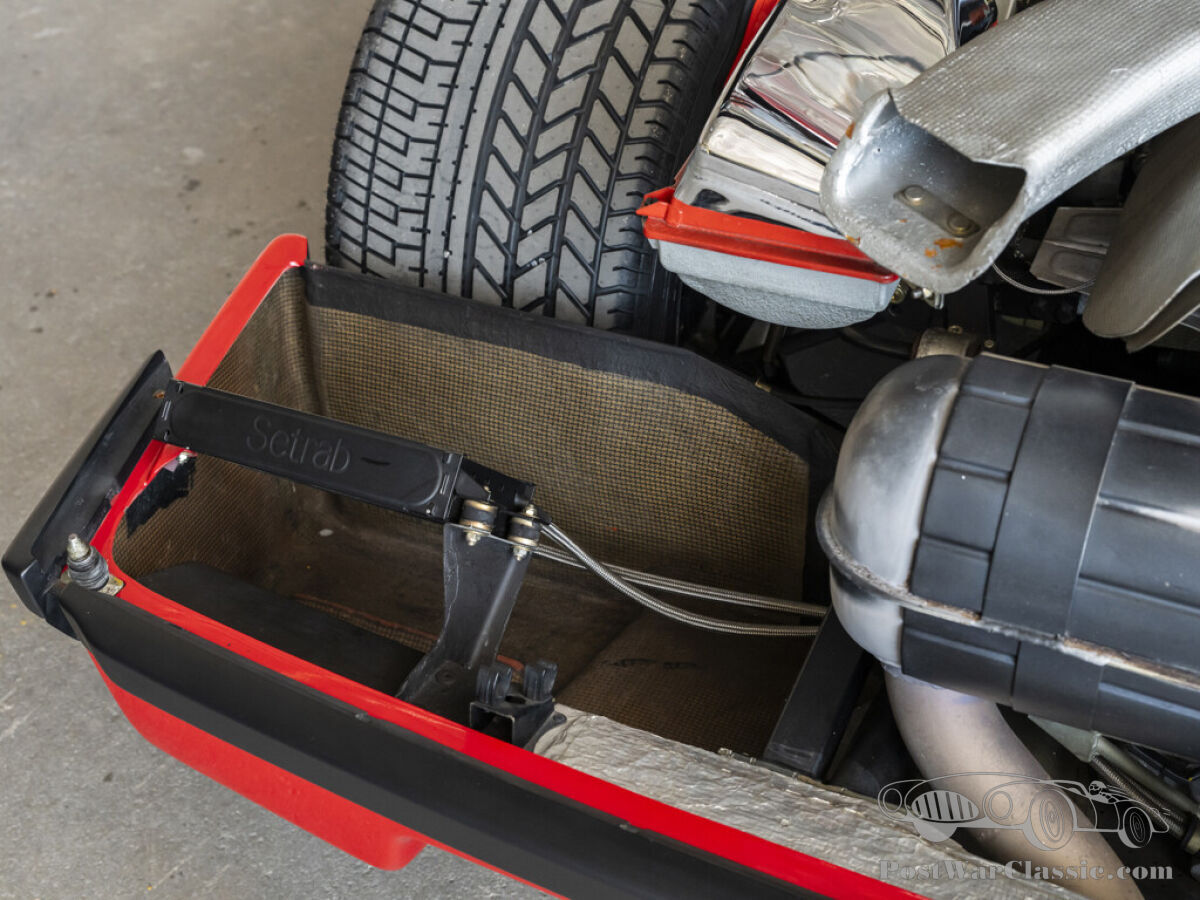
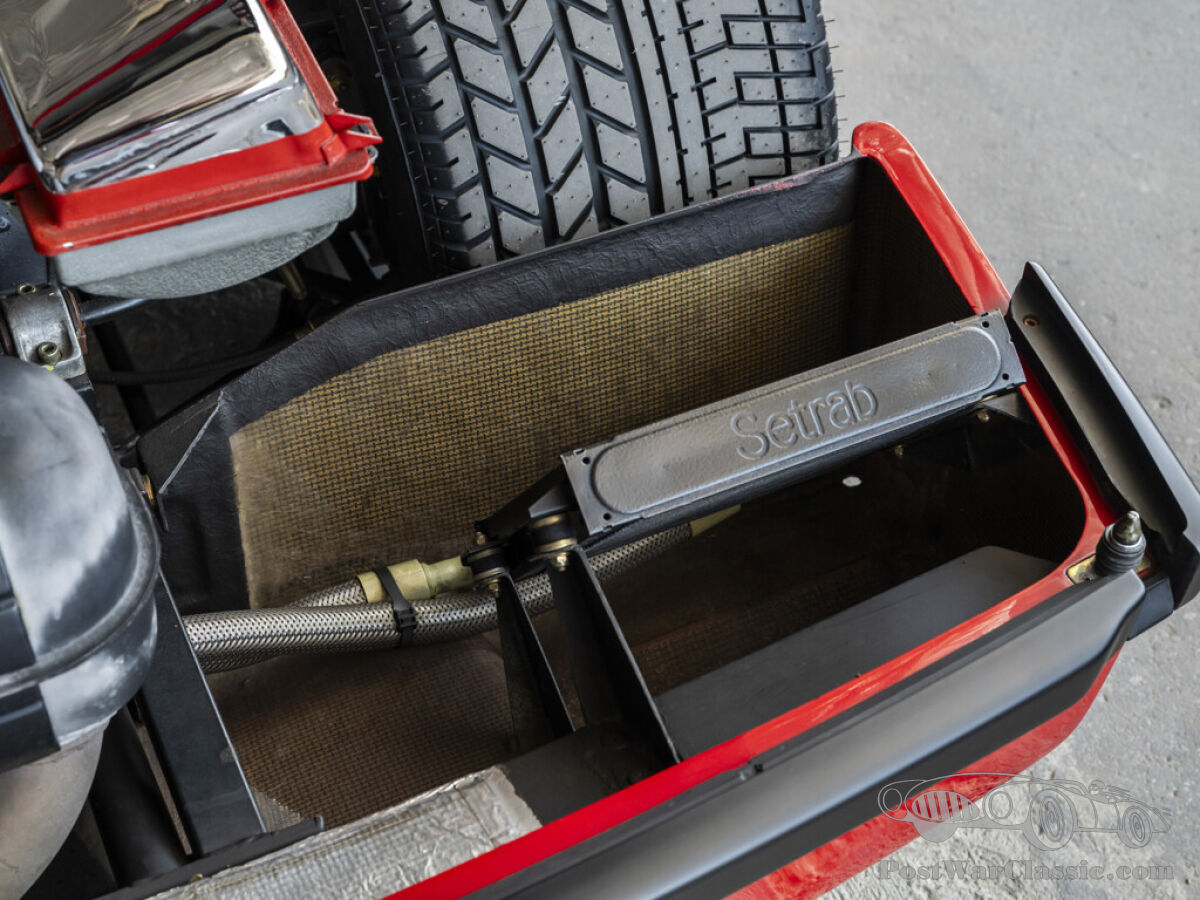
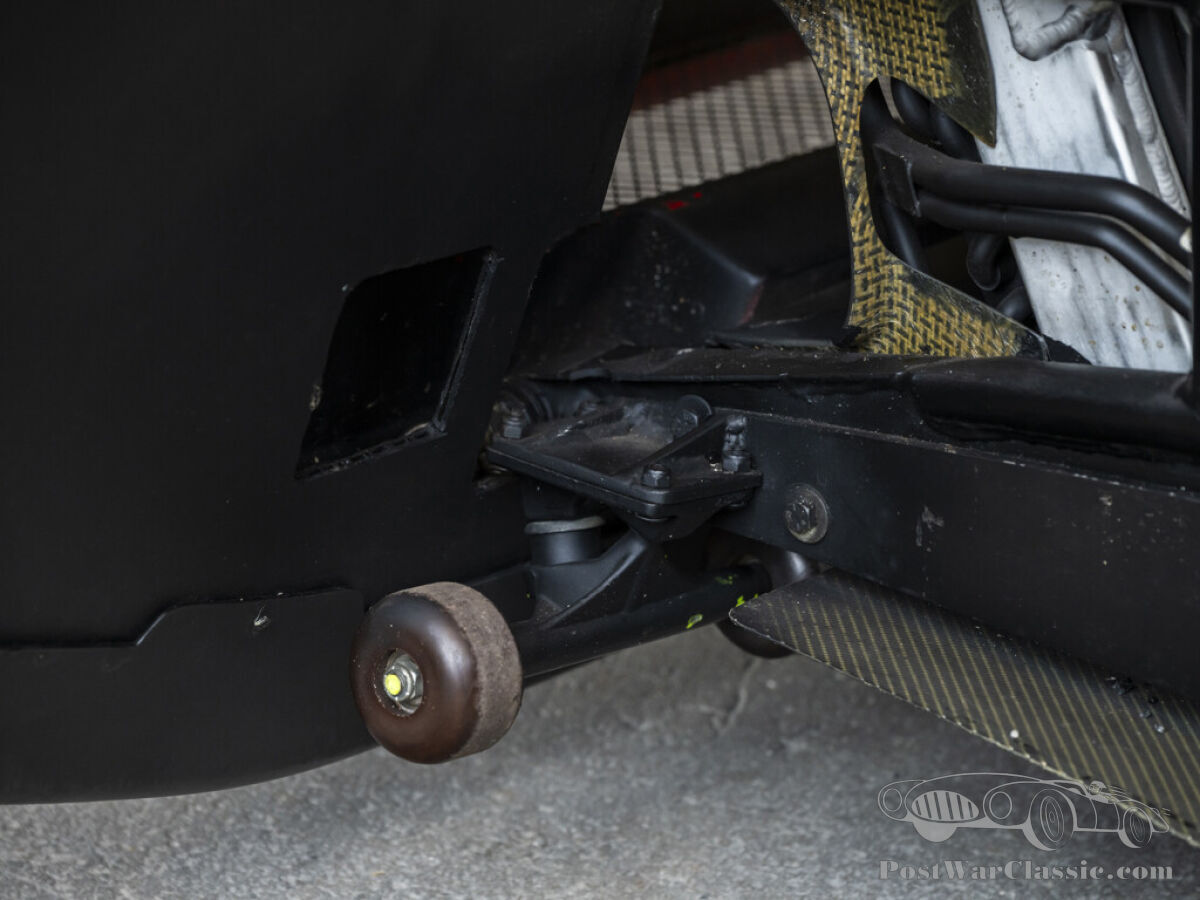
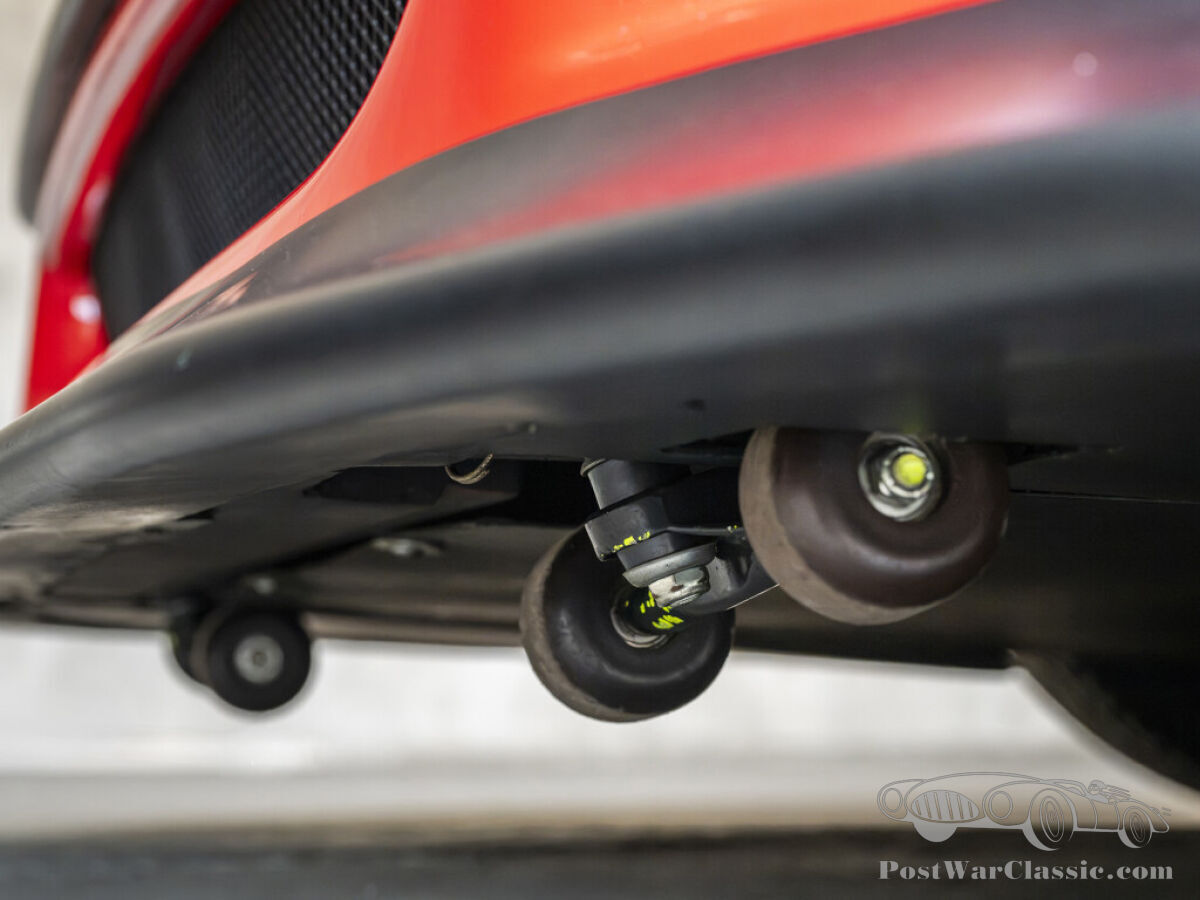
After being offered for sale in 2006, showing 218 miles, the Ferrari was acquired by Michael Scot-Smith, who kept homes in Southern California and Toronto, Ontario. As confirmed by invoices on file, Mr. Scot-Smith entrusted the car to the marque specialist Patrick Ottis for a thorough mechanical freshening, and around this time a chromed Prancing Horse was affixed to the rear grille and interior dash in front of the passenger. A unique addition to this F40 is a pair of skateboard trucks installed neatly under the front of the car. This setup was a clever solution in an era before mechanical front end lifts as the small wheels on each skateboard truck provided protection to the low-slung undercarriage from common road occurrences such as steep driveways and speed bumps.
In January 2012 Mr. Scot-Smith offered the Ferrari at RM Auctions’ Arizona sale, at which point the odometer displayed only 283 miles. It was acquired then by a respected collector based in Louisiana and Texas, and he only seldomly drove the car before his passing in the 2020s. Domiciled since then, the Ferrari continues to evidence a life of minimal road use, and at the time of cataloguing the odometer displayed a remarkable figure of just 320 miles.
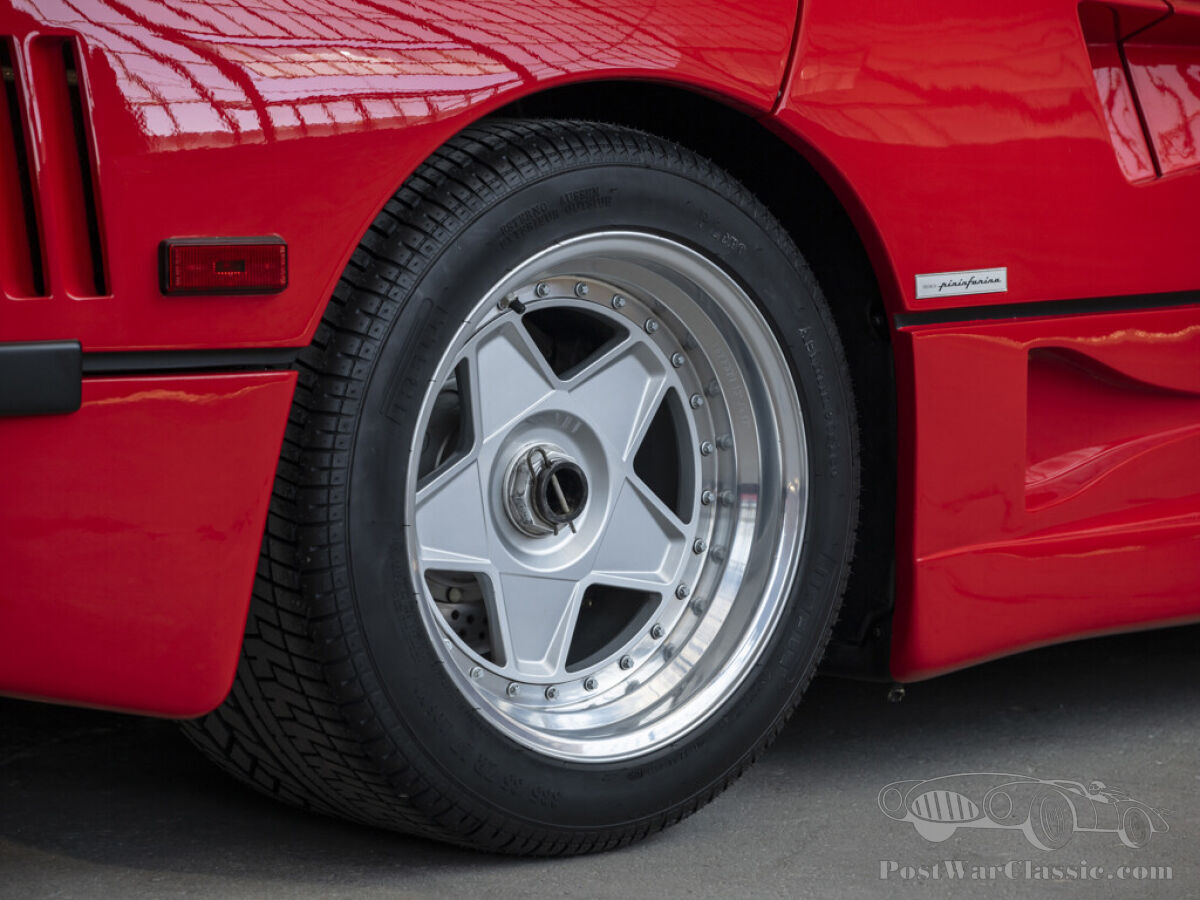
In preparation for its current offering, 87345 has recently undergone a major $40,000 service by the marque dealer Ferrari of Newport Beach to re-commission it for roadgoing use. This work has included the installation of new spark plugs, a new battery, and new Pirelli P Zero tires, as clarified by an invoice on file.
For collectors in search of a bellwether low-miles example from Ferrari’s “Big 6” hypercar portfolio, there could hardly be a better opportunity than this rousing F40—it offers a veritable time warp to one of Ferrari’s golden ages.To view this car and others currently consigned to this auction, please visit the RM website at
rmsothebys.com/auctions/mo26/.




 1967 Lamborghini Miura P400 by Bertone | RM Sotheby's | The Monterey Auction
 1954 Buick Skylark | RM Sotheby's | The Monterey Auction
 1947 Talbot-Lago T26 Record Cabriolet by Figoni et Falaschi | RM Sotheby's | The Monterey Auction
 1965 Rolls-Royce Silver Cloud III Saloon | RM Sotheby's | The Monterey Auction
 2008 Ferrari F430 GT3 Scuderia Evo by Kessel | RM Sotheby's | Private Sales
 1965 Ferrari 275 GTS by Pininfarina | RM Sotheby's | Private Sales
 1963 Mercedes-Benz 300 SL Roadster | RM Sotheby's | Private Sales
 1962 Aston Martin DB4 Series IV | RM Sotheby's | The Woodcote Park Auction
 2009 Ferrari 599 GTB
 2006 Ferrari Superamerica | RM Sotheby's | The Woodcote Park Auction
 2001 Ferrari 550 BARCHETTA PININFARINA "PAVESI"
 1995 Ferrari F50 | RM Sotheby's | The Monterey Auction