The global magazine and marketplace for classic car enthusiasts, by enthusiasts.


The Market; all post-war cars and bikes for sale
Overview of related ads to ad Fiat 500L - LHD
-

1973 Aston Martin V8 Series II Fi | Historics Auctioneers
These Aston Martins were intended to house the new Tadek Marek-designed V8, the DBS first appeared with the 4.0 litre six-cylinder unit of the concurrently produced DB6. Styled in-house by Bill Towns, the four-seater DBS employed a platform type chassis with independent suspension all round. Bigger and more luxuriously appointed than the DB6, the h.. -
1979 Range Rover Classic | Historics Auctioneers
Although now responsible for a whole lifestyle movement, the Range Rover had more humble beginnings. The first generation Range Rover was introduced in 1970 and was not designed as a luxury 4x4; whilst certainly up-market compared to preceding Land Rover models, the early Range Rovers had fairly basic, utilitarian interiors with vinyl seats and pla.. -
1976 Ferrari 365 GT4 2+2 | Historics Auctioneers
At the Paris Auto Salon in 1972, Ferrari unveiled an all new car to the world. It was a fast, svelte and elegant 2+2 powered by their legendary V12 engine, and was the most expensive series produced by Ferrari for 17 years. The 365 GT4 2+2 is easily distinguished from its successors by its six rear tail lights, knock-off alloy wheels, and lack of a.. -
1973 BMW 2002 Tii | Historics Auctioneers
BMW's director of product planning, Helmut Werner Bönsch and Alex von Falkenhausen, the designer of the BMW M10 engine, had both been owners of a 1600-2 (1602) and subsequently both had installed a two litre engine in their respective cars. Following the realisation that they had both made the same modification, they prepared a joint proposal to.. -
1974 Triumph Stag *WITHDRAWN* | Historics Auctioneers
DUE TO CIRCUMSTANCES BEYOND OUR CONTROL, THIS LOT HAS BEEN WITHDRAWN FROM THE AUCTIONLike the Triumph 2000 it was developed from, the Stag was styled by Italian maestro Giovanni Michelotti and featured the monocoque construction, independent suspension, disc/drum brakes, power-assisted rack and pinion steering and driveline of that Saloon. The powe.. -
1972 Morris Mini 850 owned by World Champion Boxer ’Prince' Naseem Hamed | Historics Auctioneers
The history of this revolutionary motorcar is well known and its impact socially, culturally and mechanically is well documented. The Swinging Sixties, The Beatles, Twiggy and the Mini are inexorably combined to represent an era that is remembered with great fondness by many people. The production version of the Mini was demonstrated to the press i.. -
1973 Jensen Interceptor Mk. III | Historics Auctioneers
With the Interceptor’s introduction in 1967, Jensen switched from glass fibre to steel for its car bodies. Underneath, the preceding C-V8’s chassis, running gear and 6,276cc Chrysler engine remained substantially unchanged. With around 280bhp on tap, performance was more than adequate, The Motor magazine recorded a top speed of 140mph with 100mph a.. -
1972 Citroën SM | Historics Auctioneers
In 1961, Citroën began work on 'Project S', a sports variant of the revolutionary Citroën DS. As was customary for the firm, many running concept vehicles were developed, increasingly complex and upmarket from the DS. Citroën purchased Maserati in 1968 with the intention of harnessing Maserati's high-performance V6 engine technology to produce a tr.. -
1970 Triumph TR6 | Historics Auctioneers
The Triumph TR6 was manufactured for seven years from 1969 and by the time production came to an end in July 1976, it was the best-seller of the TR range. The bodywork closely resembled that of the previous model, the Triumph TR5, however the front and rear were squared off and all TR6s featured inline six-cylinder engines. For the US market, th.. -
1971 Ford Capri Mk. I 3000E | Historics Auctioneers
Inspired by the success of the Mustang ‘Pony Car’ in the USA, Ford introduced a new model in 1968 for the European market, the Capri, ‘the car you’ve always promised yourself’. The Capri’s imaginative fastback styling was a relatively new departure for Ford, but beneath the lovely body design it remained typically Ford, sharing engines, gearboxes a..


Featured
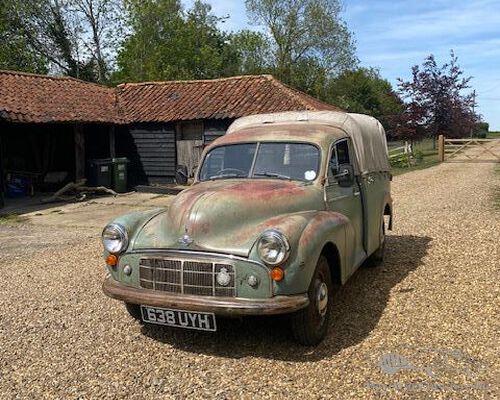
1954 Morris Minor Series II Pick Up
Morris Minor Series II Pick-Up, first registered 15th Jan 1954. Exported from new to Australia, returned to the UK in 2014. Swansea documentation r..
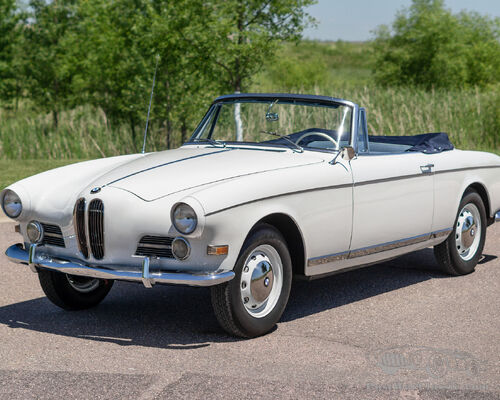
1957 BMW 503 Cabriolet (V8) 1 of 13 Built for US Market #Matching Example
1957 BMW 503 Cabriolet Series 1 Original Aluminum V8 # Matching Original Aluminum Body with Factory Stampings 1 of ..