The global magazine and marketplace for classic car enthusiasts, by enthusiasts.


The Market; all post-war cars and bikes for sale
Overview of related ads to ad 1998 Rolls Royce Silver Seraph
-

2003 Aston Martin DB AR1 | Amelia Island Auctions | Gooding & Co | March 2-3, 2023
Recalling the DB4 GT Zagato and V8 Vantage Zagato, a new collaboration between Aston Martin and Italian coachbuilder Zagato resulted in the DB7 Zagato and DB AR1. First shown at the January 2002 Los Angeles Auto Show, the DB AR1 starred in a “Power, Beauty, and Soul” tour of 13 North American cities over seven weeks in 2003, resulting in the sal.. -
2004 Porsche 996 GT3 RS | Amelia Island Auctions | Gooding & Co | March 2-3, 2023
Developed to homologate the 911 for FIA GT3 sports car racing, Porsche launched the Type 996 GT3 in 1999. In competition form, the GT3 enjoyed considerable success on the track with class wins at Le Mans, Sebring, and Daytona. For the 2003 model year, an even more track-focused RS – meaning Rennsport or “racing sport” – variant was introduced ba.. -
2016 Porsche Cayman GT4 Clubsport | Amelia Island Auctions | Gooding & Co | March 2-3, 2023
Unveiled at the March 2015 Geneva Motor Show, the GT4 was the first Cayman model to carry a “GT” designation. Based on the Type 981 Cayman, the mid-engine GT4 borrowed its 385 hp naturally aspirated flat-six from the 991.1 Carrera S while front suspension and steering came courtesy of the GT3. A more aggressive front fascia, enlarged side-air in.. -
1995 Porsche 993 Carrera RS 3.8 Clubsport | Amelia Island Auctions | Gooding & Co | March 2-3, 2023
Introduced in 1995, the 993 Carrera RS was conceived as a homologation special to qualify the 993 RSR 3.8 for competition use, and Porsche applied similar tuning and weight-saving measures to render a more track-focused model. Shedding nearly 220 lbs. in weight over the standard 993 Carrera, the RS’ seam-welded body shell lacked luxury amenities.. -
1988 Porsche 930 | Amelia Island Auctions | Gooding & Co | March 2-3, 2023
Following its utter domination of the Can-Am racing series, Porsche used its experience with turbocharging technology gained in motor sports for serial sports car production. Launched at the 1975 Frankfurt Motor Show, the Type 930 – also known as simply “Turbo” – was distinguished from the regular 911 by a turbocharged flat-six engine, flared wh.. -
2005 Porsche 996 Turbo S Cabriolet | Amelia Island Auctions | Gooding & Co | March 2-3, 2023
Built as the culmination of the 996 chassis, the 996 Turbo S featured the best of everything Porsche had to offer and was limited to 1,500 units worldwide. The “S” took an already potent 996 Turbo and added the larger K24 turbochargers, and revised ECU from the coveted X50 power package, giving 444 hp and 457 lbs./ft. of torque from the 3.6-lite.. -
1991 Mercedes-Benz 560 SEC | Amelia Island Auctions | Gooding & Co | March 2-3, 2023
Officially introduced in 1972, the range-topping S-Class has consistently led the pack when it comes to safety and luxury features. Its second generation, dubbed the W126, was no exception as it introduced state-of-the-art equipment such as driver- and passenger-side air bags, traction control, and anti-lock brakes. One of less than 7,0.. -
1998 RUF Turbo R | Amelia Island Auctions | Gooding & Co | March 2-3, 2023
Founded as a general service garage and mechanical repair shop, RUF Automobile GmbH has evolved into an world-class automobile manufacturer of finely engineered supercars based on the Porsche 911. Introduced in 1998, the RUF Turbo R was based on the 993-generation Porsche 911 Turbo. While appearing similar to the standard Porsche model,.. -
2007 RUF RK Coupe | Amelia Island Auctions | Gooding & Co | March 2-3, 2023
Originally established as a general service garage in Pfaffenhausen, Germany, in 1939, RUF Automobile GmbH later evolved into a Porsche specialist and tuner during the late 1970s. Receiving TÜV certification in 1981 from the German government allowing it to manufacture cars under its name, RUF began to launch its own stylized and elevated Porsch.. -
1998 RUF Turbo R Cabriolet | Amelia Island Auctions | Gooding & Co | March 2-3, 2023
Located three hours east of Stuttgart, RUF Automobile GmbH was founded in 1939 by Alois Ruf Sr. as a general service and automotive repair workshop. Following his father’s passing in 1974, Alois Ruf Jr. indulged his passion for the marque and refocused the company on modifying and building Porsche-based automobiles. In 1981, the German TÜV (Tech..


Featured
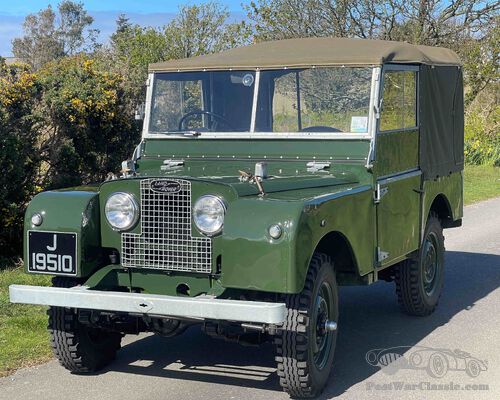
1952 Land Rover Series 1
Technical Specifications:Mark & Model: Land Rover Series 1Year: 1952Registration plate: Jersey registered
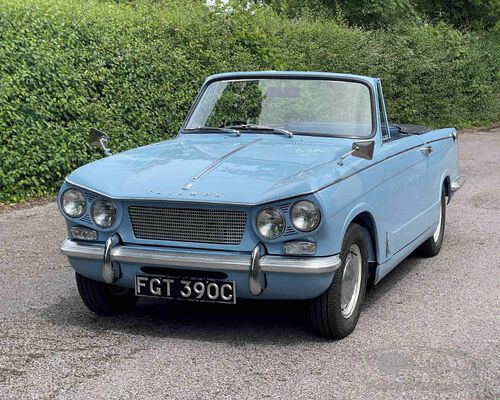
Triumph Vitesse 6 Convertible
Technical SpecificationsMark & Model: Triumph Vitesse 6 ConvertibleYear: 1965Registration plate: UK registered
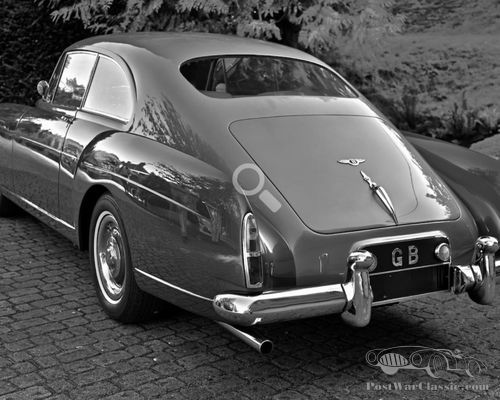
1957 Bentley S1 Fastback by H.J. Mulliner.
1957 Bentley S1 Fastback by H.J. Mulliner.A freshly restored award winning car in like new condition. A later car with Power assited steerin..