The global magazine and marketplace for classic car enthusiasts, by enthusiasts.


The Market; all post-war cars and bikes for sale
Overview of related ads to ad MGB GT
-

1952 MG TD | Historics Auctioneers
The 1950 MG TD combined the TC's drivetrain, a modified hypoid-geared rear axle, the MG Y-Type chassis, a familiar T-Type style body and independent suspension using coil springs from the MG Y-Type saloon. Also new were rack and pinion steering, smaller 15 disc type road wheels, a left hand drive option and standard equipment bumpers with over-ride.. -
1970 Ford Escort Twin Cam | Historics Auctioneers
The Mk. I Ford Escort was introduced in Ireland and the UK at the end of 1967, making its show debut at the Brussels Motor Show in January 1968. It replaced the successful, long-running Ford Anglia. The front suspension and steering gear were differently configured and the brakes were fitted with dual hydraulic circuits; also the wheels fitted on t.. -
1972 Mercedes-Benz 280SE (3.5 Litre) | Historics Auctioneers
The first 'S-class' Mercedes arrived in 1968 in the form of the 280S and 280SE which were large comfortable sports saloons offering powerful touring capabilities and luxurious interiors with space to seat five occupants. Known as W108/109 models, they were constructed on an 108” wheelbase and the new S-Class saloons were much heavier than earlier m.. -
1970 Maserati Indy | Historics Auctioneers
Maserati followed up its stunning Ghia-styled Ghibli two-seater with the equally elegant Indy 2+2, though the latter, announced in 1968 and noteworthy as the first unitary construction Maserati, was the work of Carrozzeria Vignale. The Indy first appeared publicly in prototype form on Vignale's stand at the 1968 Turin Motor Show and was officially .. -
1970 Citroën DS 21 | Historics Auctioneers
After 18 years of secret development, the DS was introduced in October of 1955 at the Paris Motor Show. In the first 15 minutes of the show, 743 orders were taken and orders for the first day totalled 12,000 cars. It was the first mass-production car with front power disc brakes. It also featured hydropneumatic suspension including an automatic sel.. -
1970 Porsche 911L | Historics Auctioneers
This is a beautifully presented European specification 911L in Slate Grey with full red leather interior. The vehicle has recently received extensive recommissioning and refurbishment, with recent bills of over £25,000 to bring this superb car up to standard. This model is equipped with a 2.0 litre flat-six which we are informed performs faultlessl.. -
1968 MG C Roadster | Historics Auctioneers
The MGC was the first 'high performance' version of the MGB. From early in the design stages of the MGB there was an intention to create high performance variants, using a range of Vee engines that did not make it to production. The MGC was much more than a tuned MGB, in fact it was a completely re-engineered car, but retained many visual connectio.. -
1976 Ferrari 365 GT4 2+2 | Historics Auctioneers
At the Paris Auto Salon in 1972, Ferrari unveiled an all new car to the world. It was a fast, svelte and elegant 2+2 powered by their legendary V12 engine and was the most expensive series produced by Ferrari for 17 years. The 365 GT4 2+2 is easily distinguished from its successors by its six rear tail lights, knock-off alloy wheels, and lack of a .. -
1968 MG B Roadster | Historics Auctioneers
The MGB was launched in May 1962 to replace the MGA. Introduced as a four-cylinder roadster, a coupé with 2+2 seating was added in 1965. It was a relatively modern design at the time of its introduction, utilising a monocoque structure instead of the traditional 'body-on-frame' construction used on both the MGA and MG T-Types. The lightweight desig.. -
1977 Morgan Plus 8 FIA Race Car *WITHDRAWN* | Historics Auctioneers
DUE TO CIRCUMSTANCES BEYOND OUR CONTROL, THIS LOT HAS BEEN WITHDRAWN FROM THE AUCTIONThe Morgan Plus 8 was introduced in 1968 in England. Developed by Maurice Owen, it is based on a modified Plus 4 chassis and equipped with a V8 Rover engine attached to the Moss gearbox and a Salisbury axle with limited slip differential. The model gradually evolve..


Featured
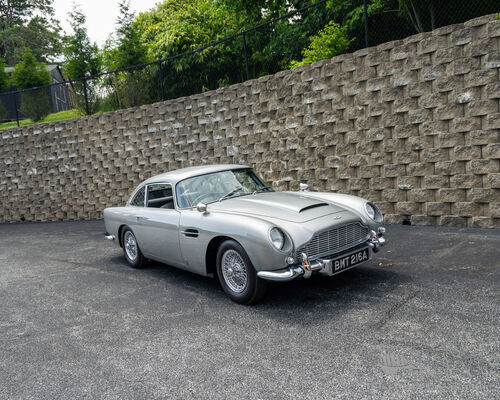
2020 Aston Martin DB5 Goldfinger Continuation | RM Sotheby's | The Monterey Auction
To Be OFFERED AT AUCTION at RM Sothebys' The Monterey Auction event, 13 - 15 August 2026. $1,000,000 - $1,500,000 USD One of 25 examples co..
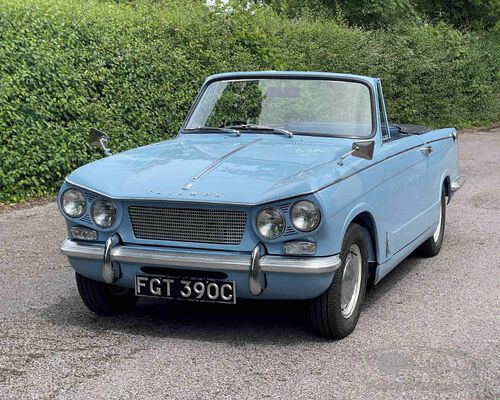
Triumph Vitesse 6 Convertible
Technical SpecificationsMark & Model: Triumph Vitesse 6 ConvertibleYear: 1965Registration plate: UK registered
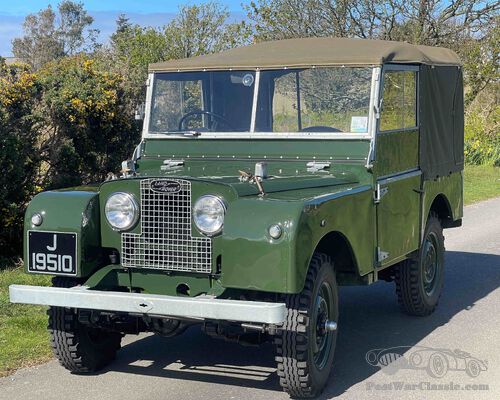
1952 Land Rover Series 1
Technical Specifications:Mark & Model: Land Rover Series 1Year: 1952Registration plate: Jersey registered