The global magazine and marketplace for classic car enthusiasts, by enthusiasts.


The Market; all post-war cars and bikes for sale
Overview of related ads to ad 1979 Rolls Royce Silver Shadow 2
-

1978 Ferrari 308 GTB | Ascot Racecourse | Historics Auctioneers | 25th September 2021
Officially introduced at the Paris Salon in October 1975, the 308 GTB’s styling was created by Pininfarina. The stunning two-seat coachwork was all new but incorporated all of the old magic by blending aspects of the Dino 206/246 with the later 365 GT4/BB. Reminiscent of the Boxer was the dihedral groove at bumper level splitting top and bottom, th.. -
1970 Mercedes-Benz 280 SL Pagoda | Ascot Racecourse | Historics Auctioneers | 25th September 2021
In 1963, Mercedes-Benz debuted an all-new roadster to replace the 190 SL and 300 SL - the 230 SL. The 230 SL 'Pagoda' was a stunning Paul Bracq designed two-seat convertible that followed Mercedes' new design language, featuring crisp lines and upright headlights. To save on weight, the bonnet, door-skins, boot lid, and tonneau cover were all compo.. -
1979 Rolls-Royce Silver Wraith II | Ascot Racecourse | Historics Auctioneers | 25th September 2021
The Rolls-Royce marque has long been the benchmark of automobile for which many aspired to. The Silver Wraith II is an extended wheelbase version of the popular Silver Shadow II and it was named in honour of the first post-war Rolls-Royce. The Silver Wraith was further distinguished from its shorter wheelbase stablemate by the fitting of the Cornic.. -
1973 Jaguar E-Type Series III 2+2 | Ascot Racecourse | Historics Auctioneers | 25th September 2021
There is no denying the legendary status that is enjoyed by the Jaguar E-Type, from its arrival on the motoring scene in 1961 until the final car was built in 1975, this sports car from Coventry had an impact that is still felt today. Even with its sportscar heritage, Jaguar depended on saloon vehicles for its survival and had developed its twelve-.. -
1978 Rolls-Royce Corniche Fixedhead Coupé | Ascot Racecourse | Historics Auctioneers | 25th September 2021
The Corniche was Rolls-Royce's coupé and convertible version of the Silver Shadow produced between 1971 and 1996. The Corniche was named 'Silver Shadow Mulliner Park Ward two-door fixed head coupé' before 1971 when the Corniche name was applied. The exterior design was by John Polwhele Blatchley. The independent coach maker James Young had already .. -
1991 Rolls-Royce Corniche III Convertible | Ascot Racecourse | Historics Auctioneers | 25th September 2021
A term in both French and Italian for a coastal road, the name 'Corniche' was registered by Rolls-Royce in the 1930's yet was only designated to a production model in 1971, after which time the Mulliner Park Ward customisations to coupé and convertible Silver Shadow limousine took this name. The coachwork was designed by John Polwhele Blatchley and.. -
1975 Triumph Stag | Ascot Racecourse | Historics Auctioneers | 25th September 2021
The ‘Stag’ name was a development codename allocated when the design project was initiated by Giovanni Michelotti in 1965. None of the subsequent names suggested through the process were ever deemed more compelling, 55 years later, the Triumph Stag still occupies one of the cornerstones of the collector’s car market. The svelte Michelotti styling m.. -
1971 Triumph TR6 | Ascot Racecourse | Historics Auctioneers | 25th September 2021
The Triumph TR6 was manufactured for seven years from 1969 and by the time production came to an end in July 1976, it was the best-seller of the TR range. The bodywork closely resembled that of the previous model, the Triumph TR5, but the front and rear were squared off and all TR6s featured inline six-cylinder engines. For the US market, the engin.. -
1972 Porsche 356 Speedster Replica | Ascot Racecourse | Historics Auctioneers | 25th September 2021
There are a number of companies who supply the kit, or a completed, 356 speedster replica but most follow the same formula. The chassis is a modified version of the original Volkswagen Beetle chassis. The original chassis is shortened and restored using new floor plans. Depending on the type of car, the chassis can feature the updated independent r.. -
1998 Rolls-Royce Silver Seraph | Ascot Racecourse | Historics Auctioneers | 25th September 2021
The Rolls-Royce Silver Seraph was first unveiled on 3rd March, 1998 at the Geneva Motor Show. It replaced the Silver Spur which ended production in 1997. All Seraphs were hand-built at the Rolls-Royce factory in Crewe, England, which stopped making Rolls-Royce models in 2002 but continued with Bentley. The car had a base price of £155,175 in the UK..





Featured
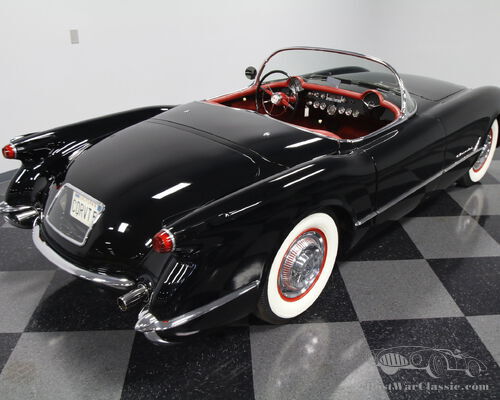
1954 Chevrolet Corvette C1
Fully restored 1954 C1 Corvette in Black. Stunningly beautiful car, feels like driving a sculptural work of Art. Known to be the oldest Corvette on t..
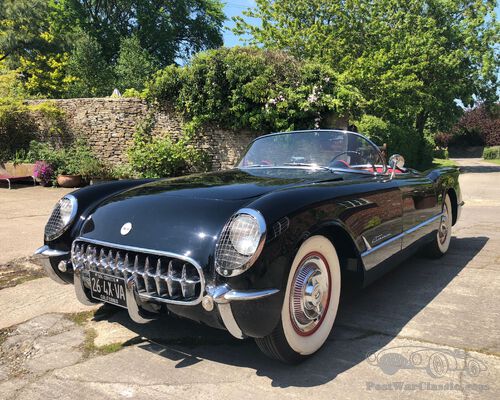
1954 Corvette C1 - SUPER RARE Black!!
Looking for her next lover, my classy 1954 Corvette C1. She's a beautiful sculpture. Never have i had so many adoring comments as when drivi..

Alfa Romeo Barchetrta Bianchi Prototype 600 Kg 150CV
1 of 1. Never repeated. 1985 Alfa Romeo Barchetta "by Bianchi" Built by hand in Argentina. 600kg. 150hp. Twin Webers. Alfa 2300 heart. Tubular stee..