The global magazine and marketplace for classic car enthusiasts, by enthusiasts.


The Market; all post-war cars and bikes for sale
Overview of related ads to ad 1955 SILVER WRAITH HOOPER EMPRESS
-

1959 Citroën 2CV | Bicester Heritage 23rd September 2023 Sale | Historics Auctioneers
The 1959 Citroën 2CV, affectionately known as the ‘Deux Chevaux’ was an iconic and revolutionary car. Designed for post-war France, it boasted a simple yet functional design, capable of traversing rough roads with ease. Its air-cooled 425cc engine generated a modest 9hp, but its lightweight construction and advanced suspension system provided unpar.. -
1959 Cadillac Series 62 Convertible | Bicester Heritage 23rd September 2023 Sale | Historics Auctioneers
Although Cadillac had invented the tailfin in 1948, by the late 1950s, others were offering their own take on the theme. In fact, the 1959 Cadillac fins were a response by Cadillac to the 1957 Chrysler line, which had borrowed Cadillac’s own idea and took it one step further. According to the late David Holls, former design director at GM, the famo.. -
1958 Austin Healey 100/6 | Bicester Heritage 23rd September 2023 Sale | Historics Auctioneers
The Austin Healey 100 was built between 1953 and 1956 by the British Motor Corporation. It was developed by Donald Healey to be produced in-house by Healey's small car company in Warwick and based on Austin A90 Atlantic mechanicals. Healey built a single 'Healey Hundred' for the 1952 London Motor Show and the design impressed Leonard Lord, Managing.. -
2012 Rolls-Royce Phantom Coupé | Bicester Heritage 23rd September 2023 Sale | Historics Auctioneers
A historic model in the continuing history of the Rolls-Royce marque, the Phantom was the first all-new design to be introduced by the company following its takeover by BMW. Produced at a new factory near Goodwood in Sussex, the Phantom revived a great name from Rolls-Royce's past, which had always been synonymous with unrestrained luxury. In keepi.. -
1995 Rolls-Royce Flying Spur | Bicester Heritage 23rd September 2023 Sale | Historics Auctioneers
The Rolls-Royce advertising logo of making the best cars in the world was certainly relevant when the Flying Spur model was launched. This model was not just the fastest or most expensive Rolls-Royce saloon to appear on the price list but was also the most exclusive, only produced for the 1995 model year, a total of 134 were produced, 92 in left ha.. -
1986 Rolls-Royce Silver Spirit Hearse | Bicester Heritage 23rd September 2023 Sale | Historics Auctioneers
Before David Plastow left his senior position at Rolls-Royce following the take-over of Vickers PLC, he had been responsible for a series of models, amongst which was the Rolls-Royce Silver Spirit. The Silver Spirit was unveiled in October 1980 as a replacement for the Rolls-Royce Silver Shadow. The coachwork of the Silver Spirit had been designed .. -
1992 Rolls-Royce Silver Spur II Limousine | Bicester Heritage 23rd September 2023 Sale | Historics Auctioneers
Before David Plastow left his senior position at Rolls-Royce following the take-over of Vickers plc, he had been responsible for a series of models, amongst which was the Rolls-Royce Silver Spirit. It was unveiled in October 1980 as a replacement for the Rolls-Royce Silver Shadow. The coachwork of the Silver Spirit had been designed at the in-house.. -
1981 Rolls-Royce Camargue | Bicester Heritage 23rd September 2023 Sale | Historics Auctioneers
With plenty of money at the top of the market in the early 1970s, Rolls-Royce decided to try and conquer a little bit more of it by building a range-topping coupé to slot in above the Corniche in the model range. Using the Silver Shadow underpinnings and enlisting Pininfarina to style them, Rolls-Royce came up with the Camargue - Britain's most exp.. -
1959 Jaguar Mk. VIII | Bicester Heritage 23rd September 2023 Sale | Historics Auctioneers
The Jaguar Mk. VIII was introduced at the 1956 London Motor Show and shared its 10-foot wheelbase with its predecessor, the Jaguar Mk. VII, which outwardly it closely resembled. However, the interior fittings were more luxurious than those of the Mk. VII. Distinguishing visually between the models is facilitated by changes to the front grille, the .. -
1961 Rolls-Royce Silver Cloud II | Bicester Heritage 23rd September 2023 Sale | Historics Auctioneers
The release of the Rolls-Royce Silver Cloud and Bentley ‘S’ series in 1955 was surely one of the main reasons behind the demise of most of the few remaining coachbuilders still producing bodies for Rolls-Royce and Bentley chassis. The Silver Cloud with a beautifully proportioned body, was a car which looked so ‘right’ that there was little incentiv..


Featured
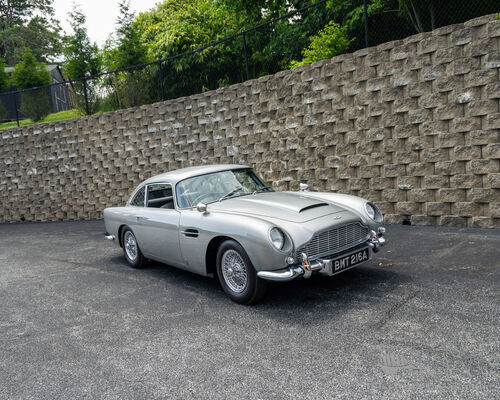
2020 Aston Martin DB5 Goldfinger Continuation | RM Sotheby's | The Monterey Auction
To Be OFFERED AT AUCTION at RM Sothebys' The Monterey Auction event, 13 - 15 August 2026. $1,000,000 - $1,500,000 USD One of 25 examples co..
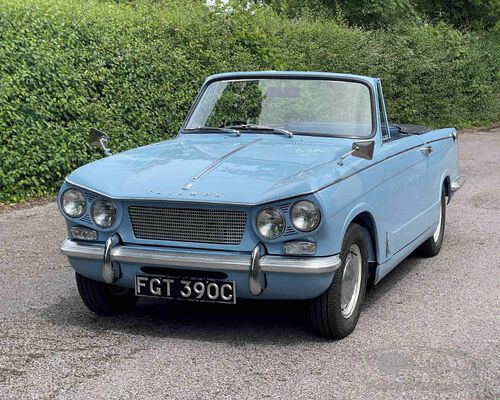
Triumph Vitesse 6 Convertible
Technical SpecificationsMark & Model: Triumph Vitesse 6 ConvertibleYear: 1965Registration plate: UK registered
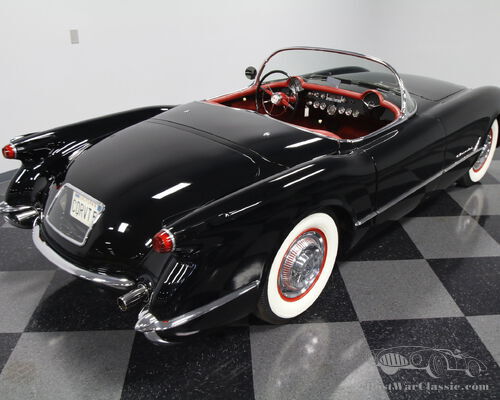
1954 Chevrolet Corvette C1
Fully restored 1954 C1 Corvette in Black. Stunningly beautiful car, feels like driving a sculptural work of Art. Known to be the oldest Corvette on t..