The global magazine and marketplace for classic car enthusiasts, by enthusiasts.


The Market; all post-war cars and bikes for sale
Overview of related ads to ad 2012 Audi R8 V10
-

2004 Porsche 996 GT3 | Amelia Island 2022 | Gooding & Co | March 4
Introduced in 1999, the 996 GT3 continued Porsche’s tradition of producing lightweight, performance-oriented 911s that were equally at home on the track or the road. Developed to homologate the 911 GT3 RS and RSR race cars for motor sports competition, enthusiasts residing in North America had to wait until the 2004 and 2005 model years to purch.. -
1997 Porsche 993 Carrera 2S | Amelia Island 2022 | Gooding & Co | March 4
Introduced for the 1997 model year in North America, the Carrera 2S was one of the rarer Porsche 993 variants. The only rear-wheel drive model built with the wider bodywork of the Turbo, the 2S was powered by a 3.6-liter, 282 hp flat-six engine, and featured a unique split-rear grille that paid homage to the 1962 356 B “Twin Grille” Roadster. -
1996 Porsche 993 Carrera 4S | Amelia Island 2022 | Gooding & Co | March 4
Launched in 1994, the 993-generation 911 ushered in sleeker bodywork, a six-speed manual transaxle, and a multi-link rear axle. For 1996, Porsche introduced a VarioRam variable-length intake system that increased power, and an all-wheel drive 4S model that utilized the Turbo’s bodywork minus the wing, but was powered by a 282 hp, naturally aspir.. -
1997 Porsche 993 Carrera 4S | Amelia Island 2022 | Gooding & Co | March 4
The 993 was the fourth generation of Porsche’s seminal 911 sports car. The model spawned several variants including a 4S which shared the Turbo’s wider body shell and all-wheel drive, but was powered by the naturally aspirated 3.6-liter flat-six. One of 937 models exported to North America for the 1997 model year, this Porsche 993 Carrera 4S is .. -
2005 Porsche Carrera GT | Amelia Island 2022 | Gooding & Co | March 4
The Carrera GT was first unveiled to the world as a concept car at the Paris Motor Show in 2000. More exotic than any road model Porsche had previously built, high interest from would-be consumers of the model encouraged Stuttgart to commit to a limited-production run in 2003, with a total of 1,270 examples of the ultra-performing Carrera GT bui.. -
1993 Porsche 964 Carrera RS 3.8 Clubsport | Amelia Island 2022 | Gooding & Co | March 4
In the early 1990s, Jürgen Barth proposed an all-new 964-based racing car, one that would return the Porsche 911 to the pinnacle of GT racing. Unveiled in 1993, the new Carrera RSR 3.8 was an instant success. Not only did it capture class wins at Le Mans, Daytona, and Sebring, the RSR also delivered overall victories in the 24-hour races at Nürb.. -
2017 Ferrari 488 GTB 70th Anniversary Edition | Amelia Island 2022 | Gooding & Co | March 4
The evolutionary Ferrari 488 was conceived as a replacement for the triumphant 458 preceding it. While it built on years of steady development, the 488 was a technological leap forward for Ferrari. Powered by the first production turbocharged engine since the F40, its new 3.9-liter V-8 produced 661 hp, shifting through a seven-speed, automated m.. -
1988 Mercedes-Benz 560 SL | Amelia Island 2022 | Gooding & Co | March 4
The Mercedes-Benz 560 SL was the final and most refined of the revered R107 models, having benefited from years of incremental development since its initial unveiling in 1971. Launched at the 1985 Frankfurt Motor Show, the 560 SL received a 5.6-liter V-8 producing 272 bhp, new brakes, and revised front suspension. The R107’s enduring design has .. -
2018 Mercedes-Benz AMG G65 | Amelia Island 2022 | Gooding & Co | March 4
The Mercedes-Benz Geländewagen – a nearly unstoppable utility vehicle – was first developed for military use beginning in 1972, when it was able to successfully make the transition into civilian life and become an icon of both off-road prowess and total luxury. The Geländewagen used body-on frame construction with front and rear live axles, and .. -
1980 Mercedes-Benz 450 SL | Amelia Island 2022 | Gooding & Co | March 4
Introduced in 1971, the Mercedes-Benz 450 SL replaced its previous two-seater personal luxury car, the 280 SL. Sporty but understated, the new Mercedes-Benz convertible quickly became the automobile to signal to society that you had arrived. Preferred by professional athletes and Hollywood celebrities, the car was featured prominently in televis..


Featured
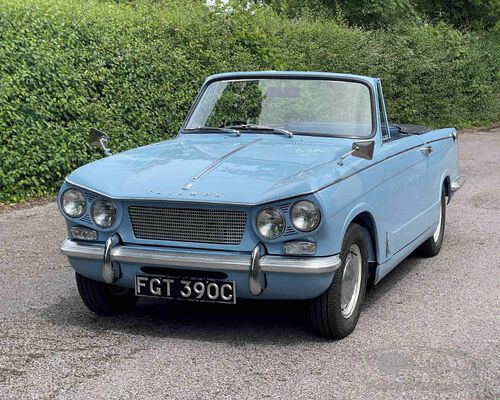
Triumph Vitesse 6 Convertible
Technical SpecificationsMark & Model: Triumph Vitesse 6 ConvertibleYear: 1965Registration plate: UK registered
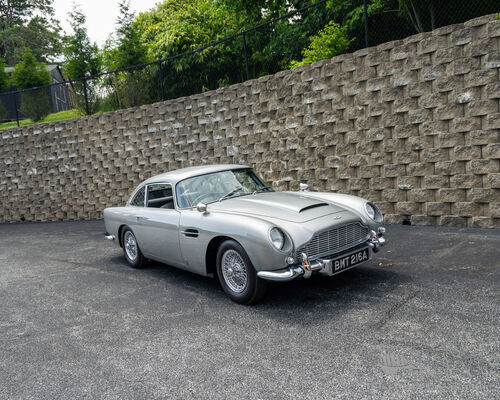
2020 Aston Martin DB5 Goldfinger Continuation | RM Sotheby's | The Monterey Auction
To Be OFFERED AT AUCTION at RM Sothebys' The Monterey Auction event, 13 - 15 August 2026. $1,000,000 - $1,500,000 USD One of 25 examples co..

Alfa Romeo Barchetrta Bianchi Prototype 600 Kg 150CV
1 of 1. Never repeated. 1985 Alfa Romeo Barchetta "by Bianchi" Built by hand in Argentina. 600kg. 150hp. Twin Webers. Alfa 2300 heart. Tubular stee..