The global magazine and marketplace for classic car enthusiasts, by enthusiasts.


The Market; all post-war cars and bikes for sale
Overview of related ads to ad 1955 Aston Martin DB2/4 MK1 Mille Miglia eligible
-

1957 Land Rover Series I 107 Pick-Up | Historic Auctioneers | Farnborough International | 11th May 2024
Built between 1949 and 1958, the Series I Land Rover was available in no fewer than five different wheelbase lengths ranging from 80 to 109. The original 1.6-litre petrol engine was soon superseded by a 2.0-litre unit (for 1952) and the company set about developing its own diesel, which was first offered in 1956. Ruggedly built and simple in constr.. -
1957 Land Rover Series I SWB | Historic Auctioneers | Farnborough International | 11th May 2024
In the aftermath of the Second World War, Rover's chief engineer Maurice Wilks used a ‘demobbed' Willys Jeep around his farm in Anglesey and was impressed with its abilities. Eventually, it wore out and he was keen to replace it with a British vehicle, however, nothing remotely similar was available. Coincidentally, his brother Spencer, who was Man.. -
1958 Mercedes-Benz 190 SL | Historic Auctioneers | Farnborough International | 11th May 2024
Together with the 300 SL, the Mercedes-Benz 190 SL made history at the New York International Motor Sports Show in February 1954 by being the first new production Mercedes-Benz to be unveiled outside of Germany. The striking impression given by the 190 SL, sitting alongside the bigger 300 SL, was neat, sporty and with dashing lines - signatures of .. -
1956 Bentley S1 | Historic Auctioneers | Farnborough International | 11th May 2024
Successor to the R-Type, the Bentley S1 was introduced in 1955 with a whole new chassis; the car's wheelbase had been extended 3 to 123, and the luggage compartment was expanded. The S1 had softer suspension than the R-Type, with electrically controlled rear shock absorbers. Brakes had been improved, and the steering was lighter. This model marked .. -
1995 Aston Martin DB7 i6 Coupé | Historic Auctioneers | Farnborough International | 11th May 2024
Introduced in 1993 to the public, the handsome new DB7 was Aston Martin's first six-cylinder model since production of the DB6 Mk. II had finished in 1971. Styled by Ian Callum, its lines were evocative of earlier Aston Martin models and elements of the DB4/5/6 could be seen in its design. Arguably one of the most attractive looking cars ever produ.. -
1950 Jaguar XK120 Roadster | Historic Auctioneers | Farnborough International | 11th May 2024
The Jaguar XK120 was manufactured between 1948 and 1954 and was Jaguar's first post-war sports car succeeding the SS100 which ceased production in 1940. It was launched in roadster form at the 1948 London Motor Show as a test bed and show car for the new Jaguar XK engine and caused a sensation, persuading William Lyons to put it into production. Th.. -
1995 Aston Martin DB7 | Historic Auctioneers | Farnborough International | 11th May 2024
Introduced in 1993 to the public, the handsome new DB7 was Aston Martin's first six-cylinder model since production of the DB6 Mk. II had finished in 1971. Styled by Ian Callum, its lines were evocative of earlier Aston Martin models and elements of the DB4/5/6 could be seen in its design. Arguably one of the nicest looking cars ever produced by As.. -
1953 Ford F100 Pick-Up | Historic Auctioneers | Farnborough International | 11th May 2024
The F-Series is a range of full size pick-up trucks from Ford which have been sold continuously for over six decades. The second generation F-series was introduced in 1953. The F1 became the F100 because of the popular culture influence of the North American F100 Super Sabre, the first supersonic fighter which first flew 1953. Increased dimensions,.. -
2007 Aston Martin V8 Vantage | Historic Auctioneers | Farnborough International | 11th May 2024
The Aston Martin V8 Vantage was first introduced in 2005 as a successor to the DB7. It features a sleek and aerodynamic design, with a powerful V8 engine and a six-speed manual transmission. Under the bonnet, the Vantage is powered by a 4.3-litre V8 engine that produces 380bhp and 302 lb-ft of torque. It can accelerate from 0-60 mph in just 4.9 sec.. -
1954 MG TF 1250 | Historic Auctioneers | Farnborough International | 11th May 2024
Originally launched at the 1953 Motor Show, the MG TF was greeted with mixed reactions from enthusiasts and journalists alike. To the Abingdon engineers, led by Cecil Cousins, it was a model that was sufficiently different from its predecessors and yet continued the traditional T-Series classic lines and the result was very pleasing to the eye. Int..


Featured
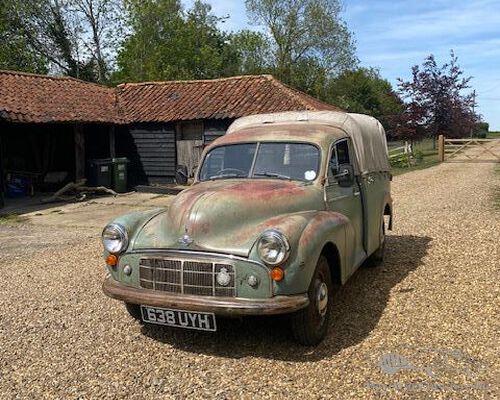
1954 Morris Minor Series II Pick Up
Morris Minor Series II Pick-Up, first registered 15th Jan 1954. Exported from new to Australia, returned to the UK in 2014. Swansea documentation r..
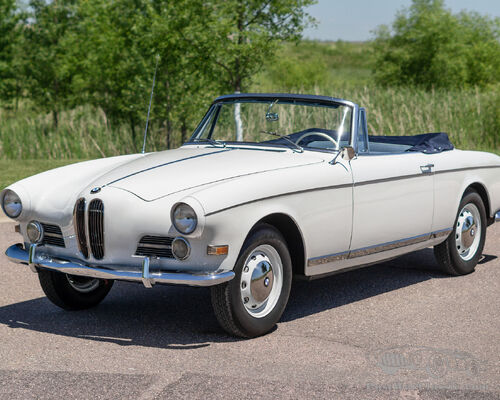
1957 BMW 503 Cabriolet (V8) 1 of 13 Built for US Market #Matching Example
1957 BMW 503 Cabriolet Series 1 Original Aluminum V8 # Matching Original Aluminum Body with Factory Stampings 1 of ..