The global magazine and marketplace for classic car enthusiasts, by enthusiasts.


The Market; all post-war cars and bikes for sale
Overview of related ads to ad 1955 Aston Martin DB2/4 MK1 Mille Miglia eligible
-

1954 MG TF | Bicester Heritage 23rd September 2023 Sale | Historics Auctioneers
Originally launched at the 1953 Motor Show, the MG TF was greeted with mixed reactions from enthusiasts and journalists alike. To the Abingdon engineers, led by Cecil Cousins, it was a model that was sufficiently different from its predecessors and yet continued the traditional T-Series classic lines and the end result was very pleasing to the eye... -
2002 Aston Martin DB7 Vantage Volante | Bicester Heritage 23rd September 2023 Sale | Historics Auctioneers
Introduced in 1993 to the public, the handsome new DB7 was styled by Ian Callum, its lines were evocative of earlier Aston Martin models and elements of the DB4/5/6 could be seen in its design. Arguably one of the most attractive looking cars ever produced by Aston Martin, the DB7 was well received and attracted new customers worldwide with its tra.. -
1958 Austin Healey 100 / 6 | Bicester Heritage 23rd September 2023 Sale | Historics Auctioneers
The 1958 Austin Healey 100/6 is an iconic British sports car that epitomises the golden age of motoring. Featuring a sleek, timeless design, this two-seater roadster captured the hearts of enthusiasts worldwide. Under its elegant bonnet, the 100/6 housed a robust 2.6 litre inline-six engine, producing 117 horsepower, providing exhilarating accelera.. -
1953 Jaguar XK120 SE Roadster | Bicester Heritage 23rd September 2023 Sale | Historics Auctioneers
The Jaguar XK120 was manufactured between 1948 and 1954; Jaguar's first sports car since the SS100, which ceased production in 1940. The XK120 was launched in roadster form at the 1948 London Motor Show as a show car for the new Jaguar XK engine. It caused a sensation thus persuading Jaguar founder and design boss William Lyons to put the car into .. -
2007 Aston Martin Vanquish S Ultimate Edition | Bicester Heritage 23rd September 2023 Sale | Historics Auctioneers
These extremely rare, limited edition, Aston Martins were made to celebrate the end of the production of the last handbuilt car to be produced at Newport Pagnell in July 2007 after 49 years of operations. Aston Martin took the decision to produce the Vanquish S Ultimate Edition, fittingly called the Ultimate Edition. Aston Martin announced that the.. -
1953 Land Rover Series I (86 inch) *WITHDRAWN* | Bicester Heritage 23rd September 2023 Sale | Historics Auctioneers
DUE TO CIRCUMSTANCES BEYOND OUR CONTROL, THIS LOT HAS BEEN WITHDRAWN FROM THE AUCTIONIn the aftermath of the Second World War, Rover's chief engineer Maurice Wilks used a ‘demobbed' Willys Jeep around his farm in Anglesey and was impressed with its abilities. Eventually, it wore out and he was keen to replace it with a British vehicle, however, not.. -
1959 Citroën 2CV | Bicester Heritage 23rd September 2023 Sale | Historics Auctioneers
The 1959 Citroën 2CV, affectionately known as the ‘Deux Chevaux’ was an iconic and revolutionary car. Designed for post-war France, it boasted a simple yet functional design, capable of traversing rough roads with ease. Its air-cooled 425cc engine generated a modest 9hp, but its lightweight construction and advanced suspension system provided unpar.. -
1959 Cadillac Series 62 Convertible | Bicester Heritage 23rd September 2023 Sale | Historics Auctioneers
Although Cadillac had invented the tailfin in 1948, by the late 1950s, others were offering their own take on the theme. In fact, the 1959 Cadillac fins were a response by Cadillac to the 1957 Chrysler line, which had borrowed Cadillac’s own idea and took it one step further. According to the late David Holls, former design director at GM, the famo.. -
1966 Aston Martin DB6 Vantage Mk. I | Bicester Heritage 23rd September 2023 Sale | Historics Auctioneers
The Aston Martin DB6 was launched at the London Motor Show in 1965, following on from the highly successful DB5, immortalised by the 1964 James Bond film 'Goldfinger'. The front of the DB6 was visually similar to the DB5 but closer inspection revealed quite a different car. The wheelbase was lengthened allowing additional passenger space in the rea.. -
1958 Austin Healey 100/6 | Bicester Heritage 23rd September 2023 Sale | Historics Auctioneers
The Austin Healey 100 was built between 1953 and 1956 by the British Motor Corporation. It was developed by Donald Healey to be produced in-house by Healey's small car company in Warwick and based on Austin A90 Atlantic mechanicals. Healey built a single 'Healey Hundred' for the 1952 London Motor Show and the design impressed Leonard Lord, Managing..


Featured
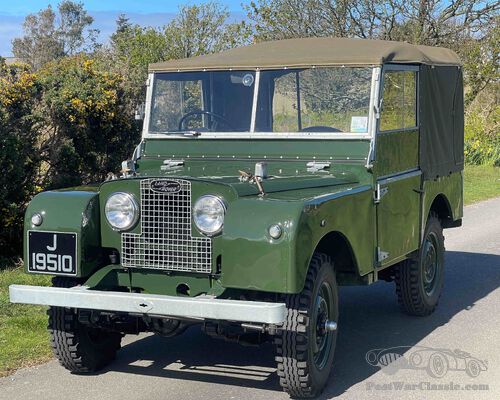
1952 Land Rover Series 1
Technical Specifications:Mark & Model: Land Rover Series 1Year: 1952Registration plate: Jersey registered
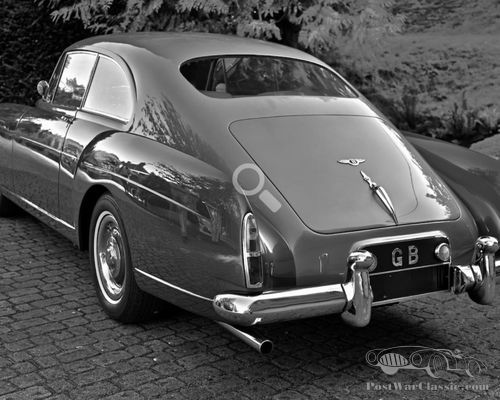
1957 Bentley S1 Fastback by H.J. Mulliner.
1957 Bentley S1 Fastback by H.J. Mulliner.A freshly restored award winning car in like new condition. A later car with Power assited steerin..
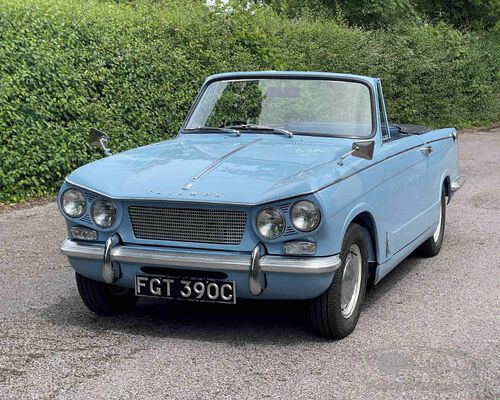
Triumph Vitesse 6 Convertible
Technical SpecificationsMark & Model: Triumph Vitesse 6 ConvertibleYear: 1965Registration plate: UK registered