The global magazine and marketplace for classic car enthusiasts, by enthusiasts.


The Market; all post-war cars and bikes for sale
Overview of related ads to ad 1955 Aston Martin DB2/4 MK1 Mille Miglia eligible
-

1976 Aston Martin AM Vantage Coupé | Mercedes Benz Worlds Brooklands sale - November 2023 | Historics Auctioneers
The Aston Martin AM Vantage was the first model produced by the new Aston Martin team after their purchase of the company from David Brown. Numerous improvements were made to the DBS6 on which the car was based, the most significant of these being the change in the frontal styling to incorporate single headlamps rather than the twin headlight set u.. -
2005 Aston Martin Vanquish S | Mercedes Benz Worlds Brooklands sale - November 2023 | Historics Auctioneers
A total of 1,086 Vanquish S models were manufactured between 2005 and 2007 and were debuted at the 2004 Paris Motor Show. Offering a power increase from 460bhp to 520bhp, other changes included new wheels, a slightly different nose shape, new raised boot lid with a larger integrated spoiler and the addition of a small front splitter for aerodynamic.. -
1998 Aston Martin V8 Volante Long Wheelbase | Mercedes Benz Worlds Brooklands sale - November 2023 | Historics Auctioneers
The Aston Martin Volante LWB is a classic convertible that is known for its elegant design and luxurious features. The LWB (Long Wheelbase) model was introduced in 1996 and was designed to provide more legroom for rear passengers. It was based on the DB7 platform and was produced until 2003. The exterior of the Volante LWB is timeless and sophistic.. -
2002 Aston Martin DB7 Vantage Volante | Mercedes Benz Worlds Brooklands sale - November 2023 | Historics Auctioneers
Completed in the November of 1992 the prototype for the DB7 was unveiled at the Geneva Motor Show in March 1993. The DB7 was engineered in Kidlington, Oxfordshire, by Tom Walkinshaw Racing on behalf of Aston Martin. The engines continued to be built in Kidlington during the production run of the vehicle. In March 1999 a totally revised DB7 Vantage .. -
2001 Aston Martin DB7 Vantage | Mercedes Benz Worlds Brooklands sale - November 2023 | Historics Auctioneers
Launched at the Geneva Motor Show in 1993, the Ian Callum styled DB7 began production in 1994 at a new factory in Bloxham, Oxfordshire. It was engineered in conjunction with Tom Walkinshaw’s TWR group who built the new supercharged six-cylinder engine. In 1999, the new DB7 Vantage with a V12 engine was revealed. It didn’t just bring a new powertrai.. -
1955 Lotus Mk. VI | Mercedes Benz Worlds Brooklands sale - November 2023 | Historics Auctioneers
Noted driver and motoring writer, Andrew Willis, called this example, “the original thoroughbred racer” going on to say that it was entirely representative of the late, great Colin Chapman’s ethos who was behind the sprightly design and, like most early Lotus models, his hand is very much evident when you take a walk around this racetrack weapon.. -
1968 Aston Martin DB6 Mk. I | Mercedes Benz Worlds Brooklands sale - November 2023 | Historics Auctioneers
Obviously the DB6 is a more advanced version of Aston's DB5 to include more wind-tunnel development, improved airflow through the air oil cooler as well as a few more external styling cues such as the bumpers. Mechanically, the engine was similar with three SU carburettors fitted as standard as well as a number of items that a customer could specif.. -
1955 Land Rover Series I (86”) | Mercedes Benz Worlds Brooklands sale - November 2023 | Historics Auctioneers
Originally registered in 1955 to the Halesowen Engineering Company who converted vehicles for military contracts, it then began life as a Column Commander’s vehicle for the British Army whose job it was to lay communications cables across strategic territories. It eventually left the MoD before being restored in 2018. It was stripped and rebuilt.. -
1956 Rolls-Royce Silver Cloud I | Mercedes Benz Worlds Brooklands sale - November 2023 | Historics Auctioneers
The Rolls-Royce Silver Cloud was the core model of the Rolls-Royce Motor Cars range from April 1955 until March 1966. It replaced the Silver Dawn and was, in turn, replaced by the Silver Shadow. The J.P. Blatchley design was a major change from the pre-war models and the highly derivative Silver Dawn. As part of a range rationalisation, the Bentley.. -
1958 Bentley S1 | Mercedes Benz Worlds Brooklands sale - November 2023 | Historics Auctioneers
Successor to the R-Type, the Bentley S1 was introduced in 1955 with a whole new chassis; the car's wheelbase had been extended three inches to 123”, and the luggage compartment was expanded. The S1 had softer suspension than the R-Type, with electrically controlled rear shock absorbers. Brakes had been improved, and the steering was lighter, even m..


Featured
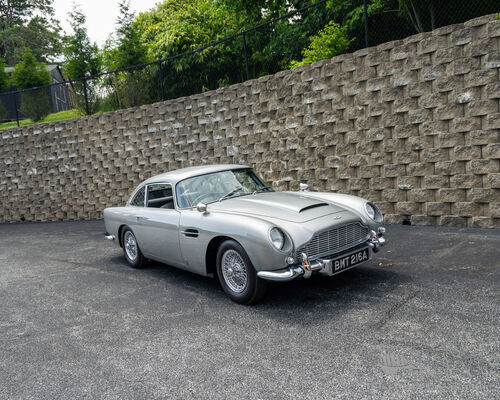
2020 Aston Martin DB5 Goldfinger Continuation | RM Sotheby's | The Monterey Auction
To Be OFFERED AT AUCTION at RM Sothebys' The Monterey Auction event, 13 - 15 August 2026. $1,000,000 - $1,500,000 USD One of 25 examples co..
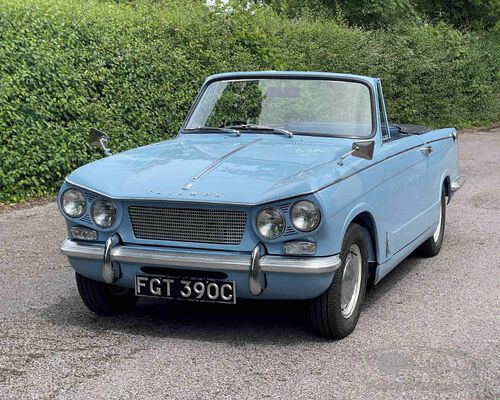
Triumph Vitesse 6 Convertible
Technical SpecificationsMark & Model: Triumph Vitesse 6 ConvertibleYear: 1965Registration plate: UK registered
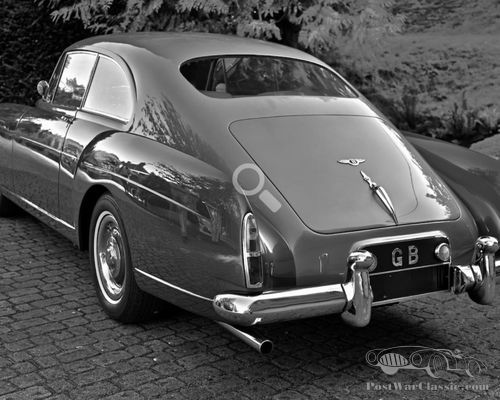
1957 Bentley S1 Fastback by H.J. Mulliner.
1957 Bentley S1 Fastback by H.J. Mulliner.A freshly restored award winning car in like new condition. A later car with Power assited steerin..