The global magazine and marketplace for classic car enthusiasts, by enthusiasts.


The Market; all post-war cars and bikes for sale
Overview of related ads to ad 1971 Jaguar E-TYPE COUPE' 5.3 V12
-

1969 Jaguar E-Type Series II 2+2 Coupé (4.2 Litre) | Historic Auctioneers | Farnborough International | 11th May 2024
The Jaguar E-Type was initially designed and shown to the public as a grand tourer in two-seater coupé form and as a convertible roadster. Open headlights without glass covers, a wrap-around rear bumper, re-positioned and larger front indicators and taillights below the bumpers, better cooling aided by an enlarged 'mouth' and twin electric fans, to.. -
1968 Jaguar E-Type Series I 2+2 Coupé (4.2 litre) | Historic Auctioneers | Farnborough International | 11th May 2024
Introduced in 3.8 litre form in 1961, the Jaguar E-Type caused a sensation when it appeared with instantly classic lines and 150mph top speed. While, inevitably, the car's stupendous straight-line performance and gorgeous looks grabbed the headlines, there was a lot more to the E-Type beneath the skin. The newcomer's design owed much to that of the.. -
1960 Jaguar Mk. II (3.8 Litre) | Historic Auctioneers | Farnborough International | 11th May 2024
Synonymous with the swinging ‘60’s and the hit TV series, Inspector Morse, the Jaguar Mk. II Saloon has been used as a vehicle to transport everyone from dignitaries and politicians to bank robbers and the criminal select. Desirable due to being a well-balanced saloon car with space for four adults and a good size boot, it also boasted engine optio.. -
2004 Jaguar XJR | Historic Auctioneers | Farnborough International | 11th May 2024
The first XJ was launched in 1968 and the designation has been used for successive Jaguar flagship models since then. The original model was the last Jaguar saloon to have had the input of Sir William Lyons, the company's founder. A number of incarnations of this extremely robust and admired saloon appeared over the years finishing up in September .. -
1987 Jaguar XJS Coupé (5.3 Litre) | Historic Auctioneers | Farnborough International | 11th May 2024
The Jaguar XJS was a luxury grand tourer produced from 1975 through to 1996 and replaced the E-Type. Although it never had quite the same sporting image, the XJS was actually more aerodynamic with the last one being produced on 4th April 1996; at that stage 115,413 had been produced during a 21 year production life. Originally, power came from the .. -
1973 Triumph Stag | Historic Auctioneers | Farnborough International | 11th May 2024
Launched in 1970, the Triumph Stag was a luxury grand tourer. Envisioned as a luxury sports car, it was designed to compete directly with the Mercedes-Benz SL class models. All Stags were four-seater convertible coupés but for structural rigidity and to meet new American rollover standards at the time, the Stag required a B-pillar 'roll bar' hoop c.. -
1996 Jaguar XJS Celebration Convertible | Historic Auctioneers | Farnborough International | 11th May 2024
1975 saw the launch of the Jaguar XJS. In a year that Margaret Thatcher was made the leader of the Conservative Party and petrol was 70 pence per gallon, the new grand tourer from Jaguar was introduced as the replacement for the iconic E-Type. During an astonishing build run of 21 years, 115,413 units were produced by the Coventry manufacturer at t.. -
1991 Jaguar XJS Le Mans | Historic Auctioneers | Farnborough International | 11th May 2024
The Jaguar XJS was a luxury grand tourer produced from 1975 through to 1996 and replaced the E-Type. Although it never had quite the same sporting image, the XJS was a competent grand tourer and actually more aerodynamic than the E-Type. The last XJS was produced on 4th April 1996 ending its 21 year production life. The specifications of the XJS co.. -
1976 Rolls-Royce Silver Shadow | Historic Auctioneers | Farnborough International | 11th May 2024
The Rolls-Royce Silver Shadow was a luxury saloon car built from 1965 through to 1980 and was the first Rolls-Royce to be constructed using a monocoque chassis and, to date, has the largest production volume of any Rolls-Royce. The original Shadow was 3½ inches narrower and seven inches shorter than its predecessor, the Silver Cloud, but managed to.. -
1972 Fiat Gamine Vignale | Historic Auctioneers | Farnborough International | 11th May 2024
Frixos Demetriou was a successful casino owner in Cyprus and the owner of the Olympic Gaming Club in London. While in Milan his flight to Athens was diverted, he spotted an unusual looking car by the airport and on enquiry discovered that it was a Fiat 500 Gamine Vignale. The Gamine was a small two-seater roadster produced by Carozzeria Vignale fro..


Featured
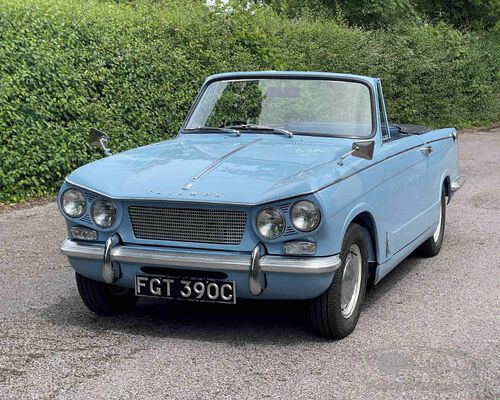
Triumph Vitesse 6 Convertible
Technical SpecificationsMark & Model: Triumph Vitesse 6 ConvertibleYear: 1965Registration plate: UK registered
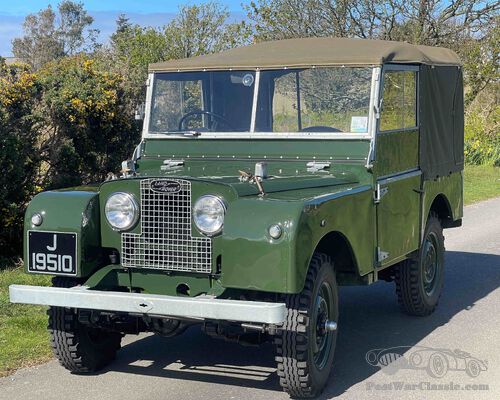
1952 Land Rover Series 1
Technical Specifications:Mark & Model: Land Rover Series 1Year: 1952Registration plate: Jersey registered
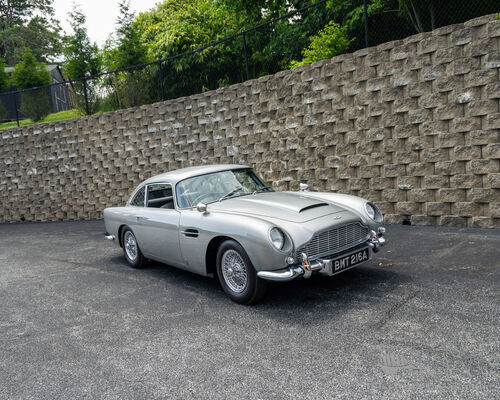
2020 Aston Martin DB5 Goldfinger Continuation | RM Sotheby's | The Monterey Auction
To Be OFFERED AT AUCTION at RM Sothebys' The Monterey Auction event, 13 - 15 August 2026. $1,000,000 - $1,500,000 USD One of 25 examples co..