The global magazine and marketplace for classic car enthusiasts, by enthusiasts.


The Market; all post-war cars and bikes for sale
Overview of related ads to ad 1951 MGTD
-

1969 MG B Roadster | Windsor View Lakes Sale - July 2023 | Historics Auctioneers
The MGB was launched in May 1962 to replace the MGA and was introduced as a four-cylinder roadster with a coupé added in 1965. It was a relatively modern design at the time of its introduction, utilising a monocoque structure instead of the traditional 'body-on-frame' construction used on both the MGA and MG T-types. The lightweight design reduced .. -
1955 Morgan Plus 4 | Windsor View Lakes Sale - July 2023 | Historics Auctioneers
The 1955 Morgan Plus 4 is a classic British sports car which features a 2.1 litre, four-cylinder engine that delivers around 90 horsepower and a four-speed manual transmission. The Plus 4 was introduced in 1950 and was an evolution of the earlier Morgan 4/4 model. The Plus 4 had a longer wheelbase and a wider track than its predecessor, which made .. -
1950 Morgan 4/4 Drophead Coupé by Ellis Brothers | Windsor View Lakes Sale - July 2023 | Historics Auctioneers
The Morgan Plus 4 was the Morgan Motor Company's first car with four wheels, introduced in 1936 following the end of production of the famed three wheeled motorcycle engine model. In 1950, the new Plus 4 appeared, with a 2,088cc Standard (later Triumph) engine producing 68bhp and delivering an 85mph top speed. The Plus 4 also featured a stiffer fra.. -
2004 MG X-Power SV | Windsor View Lakes Sale - July 2023 | Historics Auctioneers
MG's striking SV was designed by Peter Stevens, Royal College of Art Designer who had been responsible for McLaren’s F1 and was based on the platform of the Qvale Mangusta. Prior to the demise of MG Rover, a team has been working on a project to return the company to the forefront of motorsport competition via sports and touring racing which includ.. -
1971 MG B Roadster | Windsor View Lakes Sale - July 2023 | Historics Auctioneers
The MGB is a classic British sports car manufactured in numbers to cater for the insatiable appetite for open top motoring in the 1960s and 1970s. Built with rugged mechanics and powered by the un-burstable, all-iron BMC B-Series, 1800cc engine, the MGB was of lightweight monocoque construction and incorporated crumple zones designed to protect the.. -
1984 MG Metro Turbo | Windsor View Lakes Sale - July 2023 | Historics Auctioneers
The MG Metro was introduced in October 1982 some six months after the launch of the MG Metro 1300. The MG Metro Turbo was a leader for its day with the Lotus Engineering assisted design for the very comprehensive changes that were done to the engine which was very capable of handling the modest 93 bhp the standard engine was quoted at, although man.. -
1959 Jaguar XK150 Fixedhead Coupé | Windsor View Lakes Sale - July 2023 | Historics Auctioneers
This lovely right hand drive car is presented in its original colour of Old English White with red interior, on its original number plate 692 BTT. The car's originality is supported by a Jaguar Heritage Certificate, certified copy of the Devon Archives, and inspected by the London XK specialist from the Jaguar Enthusiasts Club. This example also re.. -
1955 Austin Healey 100/4 BN1 | Windsor View Lakes Sale - July 2023 | Historics Auctioneers
The result of a partnership signed in 1952 between the head of BMC, Leonard Lord, and successful automotive engineer and Donald Healey, the '100' – so named for its top speed capability – was unveiled at the 1952 Earl's Court Motor Show as a more sporting alternative to the rather stodgy Austin A90 Atlantic convertible. The 100 was simple and stron.. -
1954 Jaguar XK120 SE Roadster | Windsor View Lakes Sale - July 2023 | Historics Auctioneers
The Jaguar XK120 was manufactured between 1948 and 1954; Jaguar's first sports car since the SS100, which ceased production in 1940. The XK120 was launched in roadster form at the 1948 London Motor Show as a show car for the new Jaguar XK engine. It caused a sensation thus persuading Jaguar founder and design boss William Lyons to put the car into .. -
1959 Andrews Greyhound Slipper Launch | Windsor View Lakes Sale - July 2023 | Historics Auctioneers
The first slipper launch was designed and built by John Andrews at his father’s boatyard in Maidenhead in 1913. Incorporating a steering wheel and gearbox for easy manoeuvrability it was stylistically similar to the British sports cars of the day. With its distinctive shape, his first customer named the original boat ‘Merk’ after his Mercedes-Benz ..


Featured

Alfa Romeo Barchetrta Bianchi Prototype 600 Kg 150CV
1 of 1. Never repeated. 1985 Alfa Romeo Barchetta "by Bianchi" Built by hand in Argentina. 600kg. 150hp. Twin Webers. Alfa 2300 heart. Tubular stee..
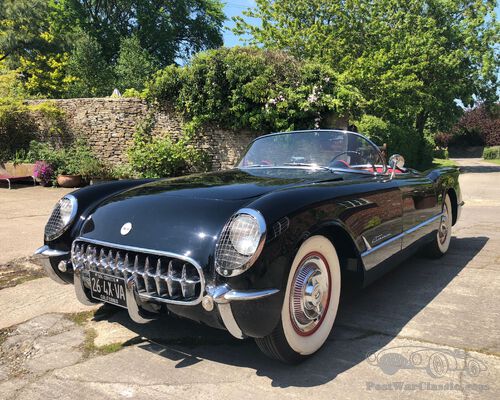
1954 Corvette C1 - SUPER RARE Black!!
Looking for her next lover, my classy 1954 Corvette C1. She's a beautiful sculpture. Never have i had so many adoring comments as when drivi..
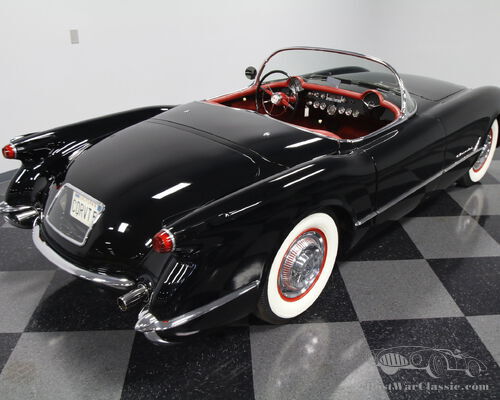
1954 Chevrolet Corvette C1
Fully restored 1954 C1 Corvette in Black. Stunningly beautiful car, feels like driving a sculptural work of Art. Known to be the oldest Corvette on t..