The global magazine and marketplace for classic car enthusiasts, by enthusiasts.


The Market; all post-war cars and bikes for sale
Overview of related ads to ad Mini 850
-

1975 Porsche 930 | Amelia Island 2022 | Gooding & Co | March 4
Following its domination of the Can-Am racing series in 1972 and 1973, Porsche used its experience with turbocharging technology gained from motor sports for serial sports car production. Introduced at the 1974 Paris Motor Show, the Type 930 was distinguished by a 3.0-liter turbocharged flat-six engine, flared wheel arches, uprated suspension, a.. -
1977 Chevrolet IROC Camaro | Amelia Island 2022 | Gooding & Co | March 4
Pitting 12 of the era’s most competitive drivers from disciplines including Formula 1, SCCA, IMSA, and NASCAR, the original IROC (International Race of Champions) series debuted to a huge audience on ABC Television’s Wide World of Sports on October 27, 1973. Featuring identically prepared cars, the IROC series was organized by the top r.. -
1974 De Tomaso Pantera L | Amelia Island 2022 | Gooding & Co | March 4
Launched in 1970, the De Tomaso Pantera combined Italian styling with the power of an American-made V-8 engine. With wedge styling credited to Tom Tjaarda of Ghia, and a steel unibody monocoque chassis devised by former Lamborghini engineer Gian Paolo Dallara, final assembly transpired at Ghia’s factory in Vignale, Italy. Early impressions were .. -
1971 BMW 2002 tii Touring | Amelia Island 2022 | Gooding & Co | March 4
The BMW 02 Series is well known worldwide as a revolutionary model that changed the landscape for small luxury sport coupes. Long the purview of the Porsche and Alfa Romeo, this class of automobile became incredibly popular in the 1960s, and BMW’s tasteful design resonated with a youthful subset of professionals that prized brand recognition, st.. -
1973 Porsche 911 Carrera RS 2.7 Lightweight | Amelia Island 2022 | Gooding & Co | March 4
Although Porsche had reached the pinnacle of international motor sports by sweeping the FIA World Sportscar Championship for three years beginning in 1970, FIA rule changes after 1972 rendered the marque’s fearsome 917 sports prototypes obsolete. It was then that a new “works” competition program aimed at the Group 4 GT class commenced at Porsch.. -
1973 Porsche 911 T | Amelia Island 2022 | Gooding & Co | March 4
Porsche debuted the 911 series in 1964 after the long and successful run of the 356. Instead of a 4-cylinder, the new model featured a 2-liter air-cooled flat-six and was smoother, more powerful, and quieter than the outgoing 356. Since then, the timeless design of the 911 has been built upon year after year. By 1973, the 911 had been f.. -
1977 Porsche 930 | Amelia Island 2022 | Gooding & Co | March 4
For 1976, Porsche introduced the 930 to the US market, bearing the “Turbo Carrera” nameplate underneath its distinctive whale tail. Featuring a 3.0-liter flat-six, it utilizes a single KKK turbocharger, pushing out 256 bhp. Following its success in 1976, Porsche revised key details for the 1977 model year, including adding power brakes, 16” Fuch.. -
1979 Porsche 935 | Amelia Island 2022 | Gooding & Co | March 4
The early 1970s marked the culmination of Porsche’s dominance during the prototype era and the beginning of a works racing program based on the 911. In 1973, the 911 Carrera RSR won the Targa Florio outright, defeating factory-entered sports racing prototypes. The following year, an experimental RSR Turbo entered by the Porsche Martini works tea.. -
1979 Porsche 935 | Amelia Island 2022 | Gooding & Co | March 4
The 1970s marked the culmination of Porsche’s dominance in the prototype era and the beginning of a works racing program based on the 911. Introduced for the 1976 season, the 934 was Porsche’s highly anticipated Group 4 variant of the all-new turbocharged 930 – a factory-built racing machine that maintained close ties to its road car counterpart.. -
1977 Porsche 934/5 | Amelia Island 2022 | Gooding & Co | March 4
Developed during the mid-1970s under Wolfgang Berger and Norbert Singer, Porsche’s 934 was the raucous FIA-homologated Group 4 racing version of the turbocharged 930 road car. Given the importance of racing success in America to sales, the 934 prototype was submitted for inspection by IMSA’s John Bishop for inclusion into the Camel GT series in ..


Featured
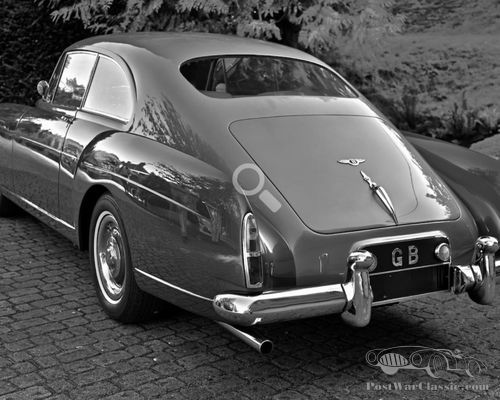
1957 Bentley S1 Fastback by H.J. Mulliner.
1957 Bentley S1 Fastback by H.J. Mulliner.A freshly restored award winning car in like new condition. A later car with Power assited steerin..
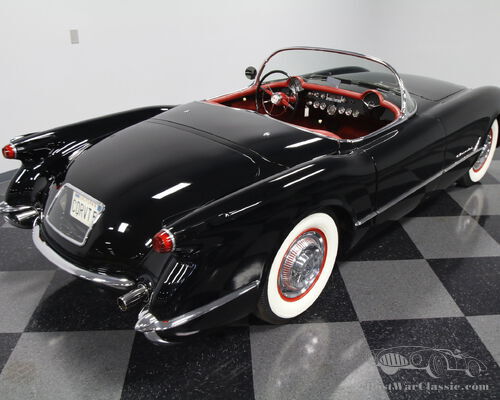
1954 Chevrolet Corvette C1
Fully restored 1954 C1 Corvette in Black. Stunningly beautiful car, feels like driving a sculptural work of Art. Known to be the oldest Corvette on t..

Alfa Romeo Barchetrta Bianchi Prototype 600 Kg 150CV
1 of 1. Never repeated. 1985 Alfa Romeo Barchetta "by Bianchi" Built by hand in Argentina. 600kg. 150hp. Twin Webers. Alfa 2300 heart. Tubular stee..