The global magazine and marketplace for classic car enthusiasts, by enthusiasts.


The Market; all post-war cars and bikes for sale
Overview of related ads to ad 1972 Citroen DS 23 PALLAS
-

1980 Citroen Méhari | Selections from the Mullin Collection Auction | Gooding & Company | April 26, 2024
Named after a swift dromedary camel, Citroën’s Méhari was an elemental and lightweight recreational and utility vehicle, based on the chassis and mechanicals of the 2CV and quite similar in concept to BMC’s Mini-derived Moke. The Méhari was designed by French WWII flying ace Count Roland de la Poype, head of the French company SEAB (Société d'Et.. -
1971 Citroen DS21 Pallas | Selections from the Mullin Collection Auction | Gooding & Company | April 26, 2024
The Citroën DS is undoubtedly one of the most ambitious, influential, and distinctive automobiles ever produced. Introduced for 1956, nearly 1.5 million examples were built through 1973, comprising the DS19, DS21, and DS23. Universally praised by auto magazine road testers and owners, the DS earned consistent accolades throughout production for .. -
2009 Citroen C3 Pluriel 1.4i Charleston | Selections from the Mullin Collection Auction | Gooding & Company | April 26, 2024
Now enjoying its fourth generation in production, Citroën’s C3 “supermini” car replaced the Saxo and entered production in April 2002. Initially a practical five-door hatchback, the design was also marketed as the premium level DS3. The innovative Pluriel debuted in July 2003, adding a unique, multi-configuration convertible to the C3 model line.. -
1964 Citroen Ami 6 Berline | Selections from the Mullin Collection Auction | Gooding & Company | April 26, 2024
Launched in 1961 as “the world’s most comfortable medium class car,” the Citroën Ami 6 was styled by longtime Citroën engineer Flaminio Bertoni, who played leading roles in the design of such legends as the Traction Avant, 2CV, and DS. Featuring ultra-modern styling, the Ami 6 was offered in two main body styles – a berline or notchback sedan an.. -
1982 Citroen 2CV Charleston | Selections from the Mullin Collection Auction | Gooding & Company | April 26, 2024
While initially introduced as a simplistic and utilitarian automobile, Citroën’s 2CV went on to outlive several of its intended successors and became fashionable among younger, especially under-35, buyers by the 1980s. Featuring Art Deco-inspired two-tone paint schemes, the 2CV Charleston was introduced in October 1980 and added to the Citroën m.. -
1966 Citroen 2CV Sahara | Selections from the Mullin Collection Auction | Gooding & Company | April 26, 2024
Having earned a near-mythical reputation for its ruggedness and ability to go virtually anywhere, these capabilities of the Citroën 2CV inspired the Sahara, a low-production, dual-engine 4x4 variant. Introduced for the 1958 model year, the Sahara was fitted with one 425 cc flat-twin engine placed up front driving the front wheels and another 425.. -
1973 Citroen HY78 Van | Selections from the Mullin Collection Auction | Gooding & Company | April 26, 2024
Always innovating and developing practical vehicles to suit the diverse needs of Europeans, Citroën developed and produced the first front-drive lightweight utility van prior to the outbreak of WWII in Europe. While only an estimated 2,000 examples were built, the TU-B inspired its postwar successor, the Type H, which debuted at the 1947 Paris M.. -
1967 Citroen ID21F Break | Selections from the Mullin Collection Auction | Gooding & Company | April 26, 2024
In addition to its groundbreaking design and engineering, based on that of the DS19, Citroën’s strong-selling ID19, and its variants, proved exceptionally adaptable and versatile. Introduced in 1958, the ID-based wagons saw production of nearly 94,000 examples, yet they are extremely rare in the US today. Simply known as the “Wagon” in North Ame.. -
1963 Citroen DS19 Concorde | Selections from the Mullin Collection Auction | Gooding & Company | April 26, 2024
Undoubtedly one of the most ambitious, influential, and distinctive postwar automobiles ever produced, the Citroën DS was styled by Flamino Bertoni, who also penned the groundbreaking prewar Citroën Traction Avant. The DS showcased a host of advanced features including front-wheel drive, self-leveling hydropneumatic independent suspension, high-.. -
1970 Citroen M35 Prototype | Selections from the Mullin Collection Auction | Gooding & Company | April 26, 2024
Following Citroën’s remarkable postwar successes with the 2CV, DS/ID 19 and 21, Ami 6, and Ami 8, company management decided to explore the possibilities afforded by the revolutionary Wankel rotary engine during the late 1960s. Based upon a heavily modified Ami 8 platform with distinctive hand-built bodywork by Heuliez, the M35 was powered by a ..


Featured
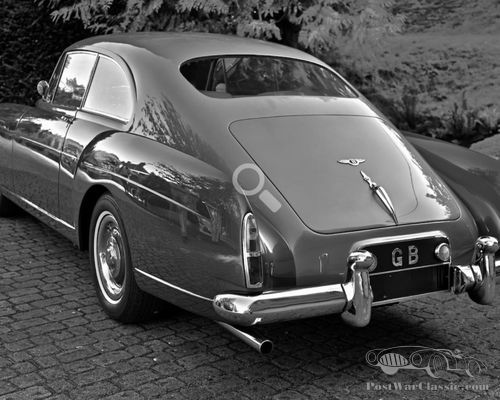
1957 Bentley S1 Fastback by H.J. Mulliner.
1957 Bentley S1 Fastback by H.J. Mulliner.A freshly restored award winning car in like new condition. A later car with Power assited steerin..
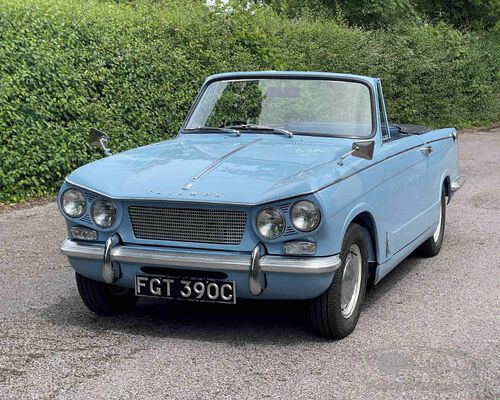
Triumph Vitesse 6 Convertible
Technical SpecificationsMark & Model: Triumph Vitesse 6 ConvertibleYear: 1965Registration plate: UK registered
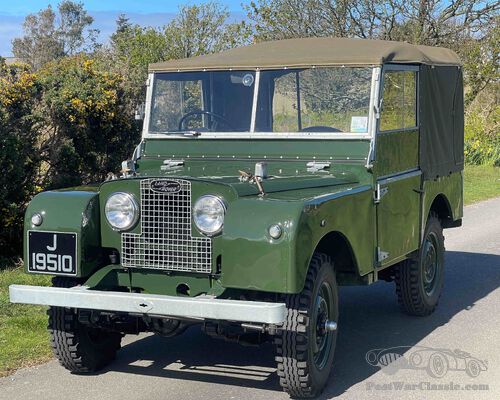
1952 Land Rover Series 1
Technical Specifications:Mark & Model: Land Rover Series 1Year: 1952Registration plate: Jersey registered