The global magazine and marketplace for classic car enthusiasts, by enthusiasts.


The Market; all post-war cars and bikes for sale
Overview of related ads to ad 1976 Alfa Romeo Sports Coupé by Autotecnica del Lario | RM Sotheby's | The Woodcote Park Auction
-

1960 MG A Twin Cam Roadster | Historics Auctioneers
The high performance twin cam model of the famous MGA was added to the range in 1958. Available in both fixedhead and roadster versions, the new model could be visually identified by the fitment of knock-on Dunlop wheels and scuttle-mounted badges proclaiming 'Twin Cam'. The new engine boasted a cross flow cylinder head in aluminium alloy, larger S.. -
1967 Volkswagen Type 2 Split Screen Campervan | Historics Auctioneers
The Volkswagen Type 2 was introduced in 1950 as a multi-variant utility vehicle, known as the Transporter, Kombi or Microbus (depending on body type), and was devised as an evolution of the Volkswagen Type 1, the original Beetle. The first generation of these versatile vehicles (named the T1) was produced with distinctive split-screens from 1950 un.. -
1963 Vauxhall VX 4/90 Works Rally | Historics Auctioneers
Heralding Vauxhall's entry into the international rally scene, three VX 4/90’s represented three Works-supported cars that competed in the 1963/64 Monte Carlo, RAC, Tulip and Welsh rallies as well as the 1963 Rally of the Midnight Sun and the 1963 Spa-Sofia-Liege.The chassis numbers were 2 FTM, 3 FTM and 4 FTM. The middle car was believed lost duri.. -
1963 Vauxhall VX 4/90 Works Rally Replica | Historics Auctioneers
Heralding Vauxhall's entry into the international rally scene, three VX 4/90’s represented three Works-supported cars that competed in the 1963/64 Monte Carlo, RAC, Tulip and Welsh rallies as well as the 1963 Rally of the Midnight Sun and the 1963 Spa-Sofia-Liege.The chassis numbers were 2 FTM, 3 FTM and 4 FTM. The middle car was believed lost duri.. -
1964 Mercedes-Benz SL 230 Pagoda | Historics Auctioneers
The Mercedes-Benz W113 roadsters, designed by Paul Bracq, were produced from 1963 through to 1971 and were known as the 'pagoda roof' SL. All models boast an inline six cylinder engine with multi-port fuel injection. Rear wheel drive configuration was complemented by independent rear suspension, a feature that greatly improved road handling. The 23.. -
1969 Jaguar E-Type Series II Roadster | Historics Auctioneers
From its launch in 1961 to the end of its production in 1975, the Jaguar E-Type went from design revelation to motoring icon in a generation. Based on Jaguar’s three time Le Mans winning D-Type and known internationally for its beautiful sleek lines and a top speed of 150mph, this revolutionary car had three significant series changes during its 14.. -
1965 Ford Mustang GT350 Tribute | Historics Auctioneers
The brainchild of Lee Iacocca, the Ford Mustang was branded as the first 'Pony Car' and was born out of a need to compete with the flood of European sports cars coming into the USA in the Sixties. The first production Mustang rolled off the assembly line in Dearborn, Michigan on March 9th, 1964 and was introduced to the public at the New York World.. -
1968 MG C Roadster | Historics Auctioneers
The MGC was the first 'high performance' version of the MGB. From early in the design stages of the MGB there was an intention to create high performance variants, using a range of Vee engines that did not make it to production. The MGC was much more than a tuned MGB, in fact it was a completely re-engineered car, but retained many visual connectio.. -
1964 Mercedes-Benz 230SL Pagoda | Historics Auctioneers
The Mercedes-Benz W113 roadsters, designed by Paul Bracq, were produced from 1963 through to 1971 and were known as the 'pagoda roof' SL. All models boast an inline six-cylinder engine with multi-port fuel injection. Rear-wheel drive configuration was complemented by independent rear suspension, a feature that greatly improved road handling. The 23.. -
1967 Riva Junior | Historics Auctioneers
The Riva Junior was introduced in 1966 to replace the Florida. Conceived for utility use and ease of maintenance, both for fishing and water skiing, it was typified by a large cockpit that could be walked round, protected by the bulwarks, around the engine cover and driving seat. Its distinctive features include the open design of the cockpit and s..


Featured
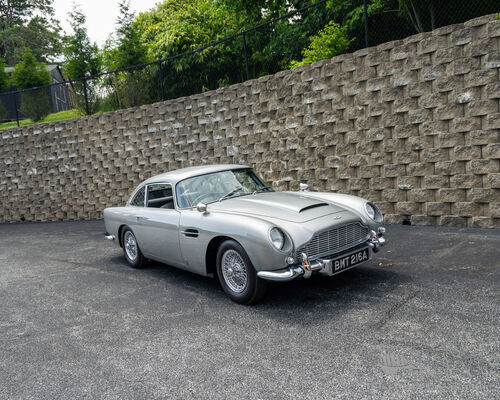
2020 Aston Martin DB5 Goldfinger Continuation | RM Sotheby's | The Monterey Auction
To Be OFFERED AT AUCTION at RM Sothebys' The Monterey Auction event, 13 - 15 August 2026. $1,000,000 - $1,500,000 USD One of 25 examples co..
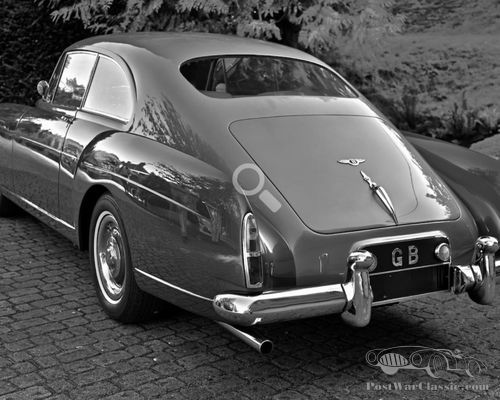
1957 Bentley S1 Fastback by H.J. Mulliner.
1957 Bentley S1 Fastback by H.J. Mulliner.A freshly restored award winning car in like new condition. A later car with Power assited steerin..
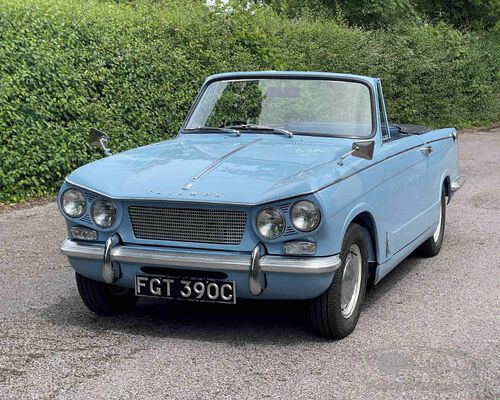
Triumph Vitesse 6 Convertible
Technical SpecificationsMark & Model: Triumph Vitesse 6 ConvertibleYear: 1965Registration plate: UK registered