The global magazine and marketplace for classic car enthusiasts, by enthusiasts.


The Market; all post-war cars and bikes for sale
Overview of related ads to ad 1976 Jeep COMANDO
-

1979 Aston Martin V8 Series 4 Oscar India | Historics Auctioneers
The Aston Martin V8 engine had begun development in the mid-sixties when it was first used in a Lola Sports racing car with a view to replacing the six cylinder unit which had been in production since the DB4 in 1958. Although always intended to house the new Tadek Marek-designed V8, the DBS first appeared with the 4 litre six of the concurrently p.. -
1971 Rolls-Royce Corniche Convertible | Historics Auctioneers
Rolls-Royce Motors formed Mulliner Park Ward by the 1961 merger of two Rolls-Royce subsidiaries: Park Ward of Willesden, London, a Rolls-Royce subsidiary since 1939 and H. J. Mulliner & Co. of Chiswick, a Rolls-Royce subsidiary since 1959. Mulliner Park Ward continues to operate as the vehicle customisation division of Bentley Motors Limited, t.. -
1977 Porsche 911 3.0 Litre Turbo | Historics Auctioneers
The 911 Turbo, introduced in 1975 would remain in production until 1989, and was sufficiently different from previous versions to earn a new 930 model number. These were proper ‘Supercars’, amongst the fastest production cars available at the time, and are now felt by many to be the cars that defined the early eighties. Developed initially for homo.. -
1975 Range Rover Suffix ‘D’ | Historics Auctioneers
Right from the beginning, the Range Rover represented something of a lifestyle movement. Although considered rudimentary by today’s standards, the ‘Suffix A’ was billed as a ‘Four-In-One’ car. It was a luxury car, a performance car, an estate and, of course, a cross-country car. They were launched with the ubiquitous Rover V8 engine which delivered.. -
1979 Rolls-Royce Corniche | Historics Auctioneers
The Corniche was Rolls-Royce's coupé and convertible version of the Silver Shadow produced between 1971 and 1996. The Corniche was named 'Silver Shadow Mulliner Park Ward two door fixed head coupé' before 1971 when the Corniche name was applied. The exterior design was by John Polwhele Blatchley. The independent coach maker James Young had already .. -
1973 Jaguar E-Type Series III Roadster | Historics Auctioneers
The E-Type would be one of the last great sports cars developed directly from a successful competition ancestor. Just as in the D-Type, a monocoque tub formed the main body/chassis structure for the E-Type while a tubular space frame extended forwards to support the engine. As the E-Type evolved so did customers needs, Jaguar had developed the twel.. -
1974 BMW 2002Tii Cabriolet | Historics Auctioneers
BMW's director of product planning, Helmut Werner Bönsch and Alex von Falkenhausen, the designer of the BMW M10 engine, had both been owners of a 1600-2 (1602) and, subsequently, had both installed a two-litre engine in their respective cars. Following the realisation that they had both made the same modification, they prepared a joint proposal to .. -
1972 Mercedes-Benz 280 SE Coupé (3.5 Litre) | Historics Auctioneers
In the summer of 1965, Mercedes-Benz launched its new replacements for both W 111 and W 112 saloons, the W 108 and W 109 respectively. In a bizarre twist of fate, this car's design was based on the W 111 coupé but widened and squared off as the fintail fashion was quickly fading by the mid 1960s. However, both W 111 and W 112 models were modernised.. -
1973 Jaguar E-Type Series III Roadster | Historics Auctioneers
The E-Type Series III was introduced in 1971, with a new 5.3 litre, V12 engine, uprated brakes and standard power steering. Optionally, an automatic transmission, wire wheels and air conditioning were available. The brand new V12 engine came with four Zenith carburettors and was claimed to produce 272bhp, more torque, and a 0-60mph acceleration of .. -
1976 Lancia Fulvia 1.3S | Historics Auctioneers
The Lancia Fulvia was introduced at the Geneva Motor Show in 1963 with production running all the way through to 1976. Fulvia’s are notable for their role in motor racing history, including winning the International Rally Championship in 1972. On testing it in 1967, Road and Track summed up the Fulvia as ‘a precision motorcar, an engineering tour d..





Featured
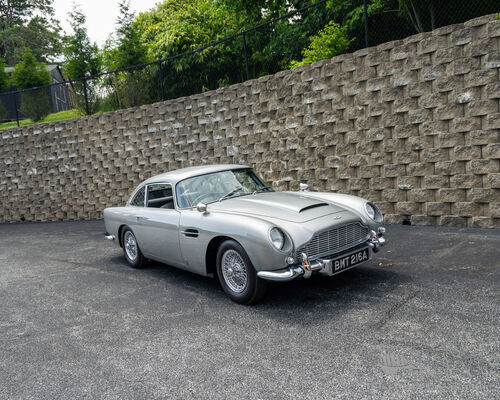
2020 Aston Martin DB5 Goldfinger Continuation | RM Sotheby's | The Monterey Auction
To Be OFFERED AT AUCTION at RM Sothebys' The Monterey Auction event, 13 - 15 August 2026. $1,000,000 - $1,500,000 USD One of 25 examples co..
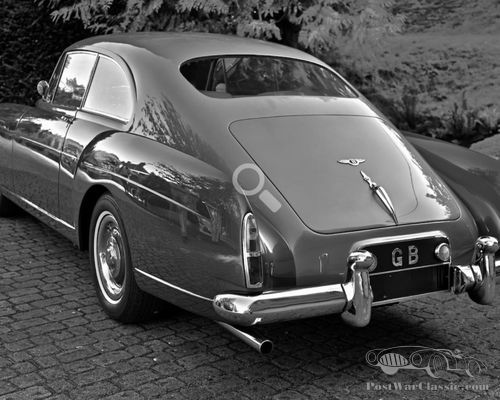
1957 Bentley S1 Fastback by H.J. Mulliner.
1957 Bentley S1 Fastback by H.J. Mulliner.A freshly restored award winning car in like new condition. A later car with Power assited steerin..
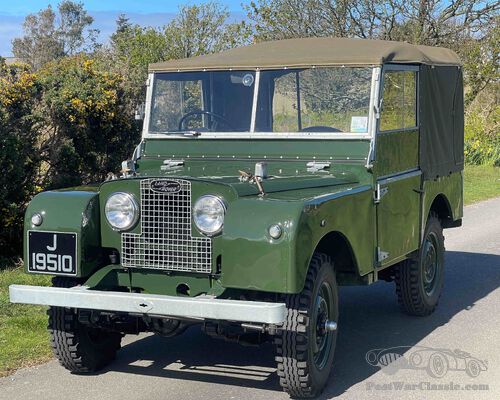
1952 Land Rover Series 1
Technical Specifications:Mark & Model: Land Rover Series 1Year: 1952Registration plate: Jersey registered