The global magazine and marketplace for classic car enthusiasts, by enthusiasts.


Make a choice:
- Cars
-
Make >>
-
Year >>
-
- Bikes
-
Make >>
-
Year >>
-
-
Location >>
- Parts & more
-
Make of car >>
-
Manufacturer >>
-
Category >>
-
Countries


The Market; all post-war cars and bikes for sale
Overview of related ads to ad 1949 Alfa Romeo 6C 2500 Super Sport Cabriolet by Pinin Farina | RM Sotheby's | The Woodcote Park Auction
-

1965 Alfa Romeo Giulia Sprint GTA | Amelia Island Auctions | Gooding & Co | March 2-3, 2023
The 1960s saw a second golden age in the competition history of Alfa Romeo. Models such as the SZ, TZ, and TZ2, along with the Tipo 33 sports racing prototypes, made Alfa Romeo a potent force on the world’s circuits. The exciting production racing classes were not ignored either, with the 105-series Giulia Sprint GT providing the base for a high..1965Alfa RomeoGiulia Sprint GTASOLD -
1993 Alfa Romeo Spider Veloce | Amelia Island Auctions | Gooding & Co | March 2-3, 2023
Following up on the Spider 1750 Veloce and Spider 2000, Alfa Romeo’s svelte and desirable Pininfarina-designed Spider Veloce remains a definitive Italian sports car with a lusty and sonorous DOHC two-liter, four-cylinder powerplant, five-speed manual gearbox, and four-wheel disc brakes. Built with thoughtfully updated details, the Spider Veloce ..1993Alfa RomeoSpider VeloceSOLD -
1955 Alfa Romeo 1900C SSZ | Amelia Island Auctions | Gooding & Co | March 2-3, 2023
Alfa Romeo’s first all-new postwar model introduced innovations that influenced the Italian automaker’s next half-century of sports car production. The 1900 series paired modern unibody construction with a twin-cam, inline four-cylinder engine featuring an aluminum head with hemispherical combustion chambers. Variants were constructed by Italy’s..1955Alfa Romeo1900C SSZSOLD -
1963 Alfa Romeo Giulia Spider | Amelia Island Auctions | Gooding & Co | March 2-3, 2023
Having previously built large, expensive cars, Alfa Romeo found their bearings for mass production postwar in spectacular fashion by introducing the Giulietta in 1954. It was smaller than its forebear but gave up nothing to earlier Alfa Romeos in terms of technical sophistication or aesthetic character. Compared to the 6C, the Giulietta cost con..1963Alfa RomeoGiulia SpiderSOLD -
1963 Alfa Romeo Giulia Sprint | Amelia Island Auctions | Gooding & Co | March 2-3, 2023
In 1962, Alfa Romeo updated its 101-Series Giulietta Sprint Coupe. While appearing nearly identical to its predecessor, the new model was rebadged “Giulia” and received a number of improvements. A redesigned dashboard incorporated revamped heating controls and the car featured a three-spoke Bakelite steering wheel and vinyl-covered door panels. ..1963Alfa RomeoGiulia SprintSOLD -
1966 Alfa Romeo Giulia Sprint GT Veloce | Amelia Island Auctions | Gooding & Co | March 2-3, 2023
Launched in 1963, the Alfa Romeo Giulia Sprint GT was designed by Giorgetto Giugiaro for Bertone. The well-proportioned 2+2 coupe carried a distinctive scalino – or “stepnose” – front end where the hood’s leading edge sat above the nose. Largely borrowed from the 105-series sedan, underpinnings included a 1.6-liter, DOHC engine, taut chassis, in..1966Alfa RomeoGiulia Sprint GT VeloceSOLD -
1953 Alfa Romeo 1900C Sprint | Amelia Island Auctions | Gooding & Co | March 2-3, 2023
Presented at the 1950 Paris Motor Show, the Alfa Romeo 1900 was designed by Orazio Satta, a one-time understudy to 1930s Grand Prix engineer Wilfredo Ricart. The marque’s first assembly line-built model, the 1900 utilized unitary construction that specifically allowed coachbuilders to re-body it. Advertised as “the family car that wins races,” t..1953Alfa Romeo1900C SprintSOLD -
1973 Alfa Romeo 1600 Junior Zagato | Amelia Island Auctions | Gooding & Co | March 2-3, 2023
Designed by Zagato’s Ercole Spada and debuted at the 1969 Torino Motor Show, the Junior Zagato satisfied Alfa Romeo’s desire for a more sophisticated and upscale alternative to the Giulia GT coupe. Initially powered by a 1,300 cc engine, the 1,600 cc derivative was launched for the 1972 model year, allowing use of the entire Giulia Spider floor ..1973Alfa Romeo1600 Junior ZagatoSOLD -
1995 Alfa Romeo 155 D2 Superturismo | Amelia Island Auctions | Gooding & Co | March 2-3, 2023
The Italian Superturismo Championship was started in 1987 as Italy’s national motor sports series for touring cars. Originally run using FIA’s Group A specification, the series shifted to the new Superturismo category of cars in the early 1990s. Alfa Romeo brought its rich history in racing to the Superturismo series with a variant of its 155 se..1995Alfa Romeo155 D2 SuperturismoSOLD -
1949 Alfa Romeo 6C 2500 Super Sport Cabriolet | Amelia Island Auctions | Gooding & Co | March 2-3, 2023
The 6C 2500, introduced in 1938, was the final Alfa Romeo model powered by a Vittorio Jano-designed engine. Jano’s six- and eight-cylinder engines, some of the most revered in the automotive world, powered Alfa Romeo’s finest offerings before and after WWII. At the top of the 6C 2500 range was the Super Sport model, or SS, which benefited from a..1949Alfa Romeo6C 2500 Super Sport CabrioletSOLD


Featured
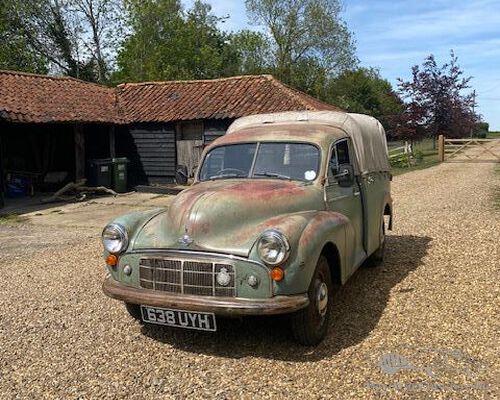
1954 Morris Minor Series II Pick Up
Morris Minor Series II Pick-Up, first registered 15th Jan 1954. Exported from new to Australia, returned to the UK in 2014. Swansea documentation r..
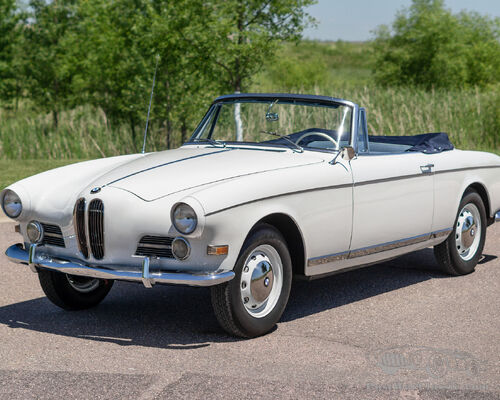
1957 BMW 503 Cabriolet (V8) 1 of 13 Built for US Market #Matching Example
1957 BMW 503 Cabriolet Series 1 Original Aluminum V8 # Matching Original Aluminum Body with Factory Stampings 1 of ..
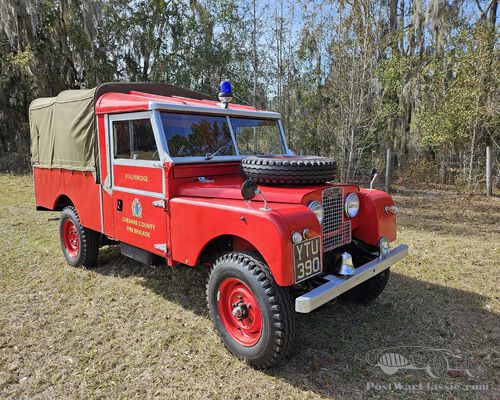
1957 Series 1 Land Rover Fire Engine + Coventry Climax Godiva Fire Pump
Betsy was used by Cheshire Fire Service (UK) from 1957 to 1975. She was based at Hazel Grove and Stalybridge Fire stations. She comes with an exten..