The global magazine and marketplace for classic car enthusiasts, by enthusiasts.


Filter
Make a choice:
- Cars
-
Make >>
-
Year >>
-
- Bikes
-
Make >>
-
Year >>
-
-
Location >>
- Parts & more
-
Make of car >>
-
Manufacturer >>
-
Category >>
-
Countries


BMW’s 507: the beautiful disaster


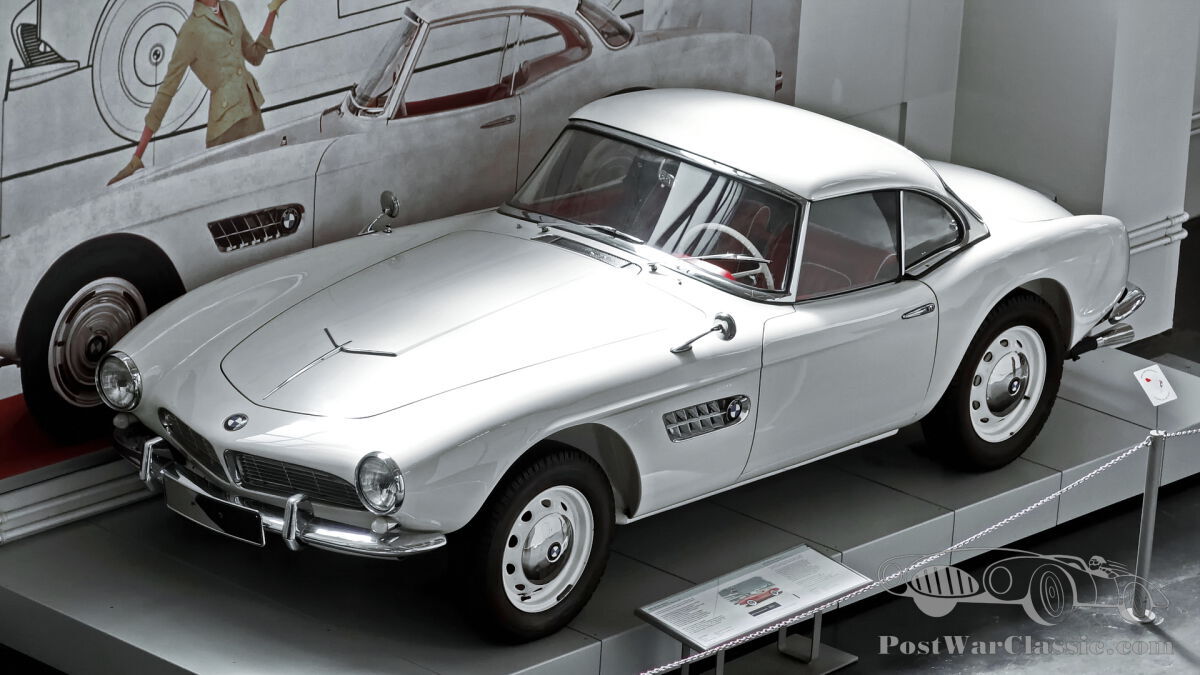


An opulent misfire cast in the shadow of the fuel-guzzling (but undeniably beautiful) Mercedes-Benz 300SL. Yet behind the financial ruin lies a sports car far superior to Mercedes’ gull-winged rival.
Conceived by American importer Max Hoffman, the 507 was intended to fill a gap in the sports-car market: below the expense of the Mercedes-Benz 300SL, but above the smaller, underpowered offerings from MG and Triumph. The rolling chassis of this mid-range luxury machine was devised by BMW engineer Franz Fiedler. Its frame, a shortened variant of the 503’s chassis, was reduced from 2,835 mm to 2,480 mm. The front suspension used parallel double wishbones, while the rear retained a live axle — a choice that gave the 507 a notably soft ride, prioritising cushioned cruising over aggressive sports-car handling.
The sporting intent of the 507 was also apparent in its body design. BMW contracted designer Albrecht von Goertz, whose connections to Studebaker and Raymond Loewy furnished him with a keen understanding of the American market.
A low-slung profile, chrome highlights and a slanted windscreen gave the 507 a silhouette both modest and attractive — tastefully restrained European flair with subtle nods to its sporting ambitions. The body was hand-formed from aluminium panels, meaning no two cars were exactly alike.
This sense of luxury continued inside. The cabin was finished in leather, with multiple colours offered as standard. The driver sat comfortably behind the wheel, with a clear feeling of space. A close-ratio four-speed manual gearbox linked seamlessly to the heart of BMW’s luxury contender: an OHV V8 producing around 150 bhp. Hardly the fastest of its day, yet a respectable 122–127 mph could be wrung from the 507’s V8.
But no amount of craftsmanship or engineering could extend its life. Intended to revive BMW’s sporting image, the 507 instead pushed the firm perilously close to bankruptcy. Celebrity endorsements and American-market promotion only brought the 507 to around 10% of the sales volume achieved by the Mercedes 300SL. BMW lost money on every single unit, with total losses of around 15 million Deutschmarks. By the end of production in 1959, only 252 cars had been built.
A clear failure? Perhaps. Yet its abrupt end only intensified its desirability. Now coveted at auction and praised in automotive design circles, this financial misfire refuses to disappear into the shadow of its rivals. BMW’s 507: understated luxury with carefully considered style.
Words by: Alexander Simmons-Miller
Published:
Tuesday January 6th, 2026
Facebook
LinkedIn
Twitter
WhatsApp
Email
Copy