The global magazine and marketplace for classic car enthusiasts, by enthusiasts.


Filter
Classic Ligier for sale - Ligier cars for sale
-

1954 Aston Martin DB2/4 Left Hand Drive Manual Coupe
1954 Aston Martin DB2/4 Left Hand Drive Manual CoupeRegistration: VL86A (Austrian) 435UYL (UK)Chassis Number: LML/733Engine Number: VB6J/299 This stunning left hand drive DB2/4 was subject to a meticulous complete restoration in 2009. Every aspect of the car was removed and has been re finished to the highest of stand.. -
1953 Bentley R Type Fastback Continental Coupe
1953 Bentley R type Fastback CoupeChassis number: B44ZYRegistration Number: PXL965A physical car ready for immediate delivery.Just completed with 30 miles covered. This car is absolutely as brand new & in simply perfect condition. The car is finished in the darkest shade of metallic blue: Bentley Black Sapphire .. -
1957 Bentley S1 Continental Park Ward Drophead Coupé Adaptation
1957 Bentley S1 Continental Park Ward Drophead Coupé Adaptation Chassis Number: BC49CH Registration Number: 161XUL 1 of just 45 RHD S1 Continental chassis bodied by Park Ward to its Design Number 701, this car was Subject to an extensive restoration which included conversion to .. -
1956 Jaguar XK140MC Special Equipment OTS RHD
1956 Jaguar XK140MC Special Equipment OTS RHDChassis Number: S812408Registration Number: WAF560 (To be retained by Owner.)Nut & bolt restored 5 years ago to as new. Since then the car has covered just over 1000 miles per year bringing the total up to 6431 miles since restoration. The works undertaken are needless to sa.. -
1947 Delahaye 135 M Cabriolet "Vedette" by Chapron | RM Sotheby's | The Monterey Auction
To Be OFFERED AT AUCTION at RM Sothebys' The Monterey Auction event, 13 - 15 August 2026. $700,000 - $1,000,000 USD Sam Mann’s first coachbuilt French automobile; part of the collection for 39 yearsWinner of the Grand Prix d’Honneur and Grand Prix at the Grand Concours d’Élégances Automobiles de Paris in June 1948Driven.. -
1975 Lancia Stratos HF Stradale by Bertone | RM Sotheby's | The Woodcote Park Auction
To Be OFFERED AT AUCTION at RM Sothebys' The Woodcote Park Auction event, 8 July 2026. £485,000 - £550,000 GBP One of only 492 examples of the legendary Lancia Stratos builtIncredibly authentic; features original body panels and the majority of the original paintCompleted in January 1975 ahead of being delivered new in .. -
MGB GT Limited Edition
Technical Specifications:Mark & Model: MGB GT Limited EditionYear: 1981Registration plate: UK registeredChassis Number: GVGEJ1AG522198Engine Number: 39512Engine Capacity: 1798 ccTransmission: 4-speed manual + overdriveMileage: 26,461Body style: 2-door CoupeInterior .. -
Fantastic Alfa Romeo Montreal 2.6 liter from 1975 with Low Mileage
ALFA Romeo MONTREAL from 1975Chassisnumber: AR1427868This beautiful Alfa Romeo Montreal looks immaculate for a car that is 51 years old. A fine example from 1975 in very lovely condition car for any collector. Low mileage, sparingly used with only 24.870 km on its odometer.Powerful V8 2.6L engine which delivers 200 hp, you.. -
Rolls Royce 1983 Silver Spur LWB 8.05 meter Limousine
Rolls-Royce Silver Spur 8.05 meter Stretch limousine in silver blue metellics with blue leather interior. This Rolls-Royce has a German Kraft Fahrzeugbrief. For more information please contact me Frank Kennis phone: 00.31.622.420.766 or mail me: info@KennisCars.NL Frank Kennis Phone: 00.31.622.420.766 or mail me: info@KennisCars.NL www.KennisC.. -
1953 Fiat 8V Coupe by Vignale | RM Sotheby's | The Monterey Auction
To Be OFFERED AT AUCTION at RM Sothebys' The Monterey Auction event, 13 - 15 August 2026. $750,000 - $1,000,000 USD Please check back soon as our dedicated cataloguing team is preparing the description for this lot. To view this car and others currently consigned to this auction, please visit the RM website at rmsothebys.com/auctions/mo26/


Ligier
France, 1969 to date
Automobiles Ligier, Vichy, Allier
Guy Ligier, head of a large construction company, Rugby Football international and F1 racing privateer, laid down his original series of lightweight competition Ligier car coupés in 1969. The prototype Ligier car raced during 1970, using a 1.8-litre Cosworth FVC engine and a Y-shaped backbone chassis, and it was intended to market similar road Ligier cars. This original design was dubbed the Ligier JS1, in memory of Ligier’s great friend and team-mate Jo Schlesser, killed during the 1968 French GP. In 1971 the Ligier JS2 appeared, designed by Michel Tetu, and the shapely fiberglass GT body style of the Ligier car housed a 2.6-litre German Ford V6, fuel-injected to 165bhp and in unit with a 5-speed Citroën SM transmission. It was intended to produce about 100 JS2 Ligier cars annually, at about £3.800 (or $9.300). Top speed of the Ligier car was 150mph. In 1972 the Ligier JS3 sports-prototype also appeared, using a mid-mounted Cosworth-Ford DFV Grand Prix engine of 3-litres, and the Ligier car raced successfully at Le Mans.
Source: Georgano, encyclopedia of motorcar; DCN
The information is written with the greatest of care. However, if you have any suggested amendments please contact us at office@postwarclassic.com


Featured
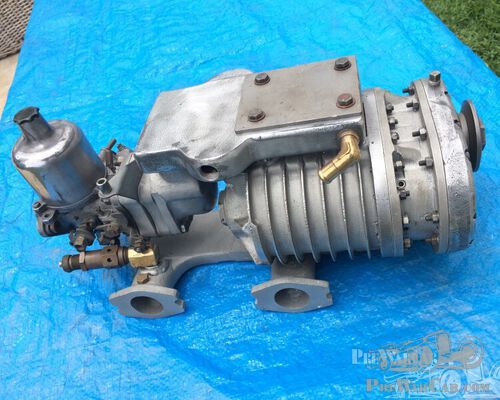
Blower / Compressor / Supercharger - Godfrey Marshall - A Series BMC Engine
SuperchargerA Godfrey Marshall cabin blower Type Mk22 converted to vehicle use by Barry Ekins of Sydney NSW. Ekins created kits for many popula..

BMW 502 V8 3,2L (Barockengel)
6-seater touring sedan, famous from the german television series "Isar 12"Production period: 1955 – 1959, 2,517 unitsV-engine 8 cylin..
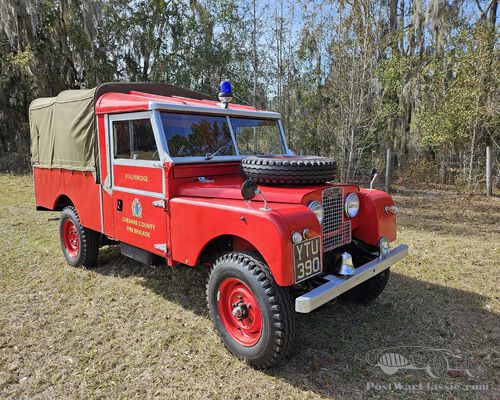
1957 Series 1 Land Rover Fire Engine + Coventry Climax Godiva Fire Pump
Betsy was used by Cheshire Fire Service (UK) from 1957 to 1975. She was based at Hazel Grove and Stalybridge Fire stations. She comes with an exten..