The global magazine and marketplace for classic car enthusiasts, by enthusiasts.


Filter
Classic Mochet for sale - Mochet cars for sale
-

Mercedes-Benz 300 SL Roadster
Open-top elegance from a true legend. The Mercedes-Benz 300 SL Roadster represents the refined, open interpretation of one of the world’s most legendary sports cars. Elegant, confident, and timeless, it combines motorsport heritage with sophisticated open-air touring. This 1958 Roadster is finished in classic .. -
Mercedes-Benz 300 SL Coupé (1956) – Gullwing
An icon that defined automotive history.Few automobiles have shaped the legend of a brand as profoundly as the Mercedes-Benz 300 SL Gullwing. With its unmistakable upward-opening doors and groundbreaking engineering, it remains one of the most celebrated cars of the 20th century. This 1956 example is presented in clas.. -
1962 Lancia Flaminia GT Convertible
Chassis No. 824142014 Engine No. 8260301899 Carrozzeria Touring Body No. 11237 The Flaminia, unveiled at the 1956 Turin Motor Show, marked the inaugural Lancia design under stewardship of Chief Technical Director Antonio Fessia, filling the sizable hole left by Vittorio Jano in 1955. The new grand tourer featured modern technolo.. -
1960 Bentley S2 Continental Flying Spur by H.J. Mulliner
1960 Bentley S2 Continental Flying Spur by H.J. Mulliner Chassis number: BC12HARRegistration number: 864UYE Vintage and Prestige Fine Motor Cars are proud to be offering this 1960 Bentley S2 Continental Flying Spur by H.J. Mulliner for sale. This is lovely rare Bentley S2 Continental Flying Spur. Chassis numb.. -
Triumph Vitesse Mk II Convertible
Technical SpecificationsMark & Model: Triumph Vitesse Mk II ConvertibleYear: 1969Registration plate: Jersey registeredChassis Number: HC55569CVEngine Number: HC56429HEEngine Capacity: 1998 ccTransmission: 4-speed manualMileage: 47,830Body style: 2-door ConvertibleInterior .. -
Chrysler 1987 Le Baron Convertible
Chrysler 1987 Le Baron Convertible Frank Kennis Phone: 00.31.622.420.766 or mail me: info@KennisCars.NL www.KennisCars.NL Classic Car Dealer for Europe Cadillac ; Mercedes ; Rolls-Royce ; Delage ; Bugatti ; Bentley ; Dodge ; Opel ; Corvette ; Talbot-Lago ; Chrysler ; Delahaye ; Zagato ; Alfa-Romeo ; Pininfarina ; Fleetwood ; Allard ; Ferrari ;.. -
1957 Aston Martin DB2/4 MKII
Details: Oldtimer Australia is delighted to offer for sale this very rare and highly desirable 1957 Aston Martin DB2/4 MKII.The factory records on file confirm that this is an Australian delivered, factory right hand drive example that was delivered new to the Penfold family in South Australia. The car was delivered through Aston Martin a.. -
1954 Corvette C1 - SUPER RARE Black!!
Looking for her next lover, my classy 1954 Corvette C1. She's a beautiful sculpture. Never have i had so many adoring comments as when driving this vehicle. An utter pleasure to have cared deeply for, its time for her new owner to step in. Be quick and caring. Located in the UK at present. •Only 4 Black, C1 53-55 Corvettes,.. -
1954 Chevrolet Corvette C1
Fully restored 1954 C1 Corvette in Black. Stunningly beautiful car, feels like driving a sculptural work of Art. Known to be the oldest Corvette on the UK Classic Corvette register, this originally White car (virtually all were White) was nut / bolt restored in the US by a private collector. Finished in extremely rare Black, only 4 cars were thoug.. -
CADILLAC 75 Fleetwood Sedan - 1951
CADILLAC Series 75 Fleetwood Sedan limousine year 1951. The car slept for many years in a large European museum, so it was well preserved from the sun and bad weather.It is now a discovery, a bit like a barn find which is offered for sale. This is a fairly rare Cadillac intended for the Swiss market delivered b..


Mochet
France, 1951 – 1958
Charles Mochet, Puteaux, Seine
Charles Mochet, who had built the C.M. cyclecar from 1924 to 1930, introduced another minicar in 1951, the Mochet car. His Mochet CM125 represented true minimal motoring and could be conducted without a driving licence. The simple tubular frame of the Mochet car was crab-tracked, the front wheels were independently sprung, and the Mochet car rode on bicycle-type wheels, of which only the rear ones were brakes. Bodywork of the Mochet car was austered with a front end reminiscent of the early flat-twin Tatras. Power of the Mochet car came from a 3½bhp 2-stroke single-cylinder 125cc Ydral engine mounted at the rear. Mochet was able to sell 40 of these little Mochet cars a month, and there was a more ambitious development in 1953, in the shape of a 4-speed version of the Mochet car with hydraulic brakes and a 750cc C.E.M.E.C. flat-twin engine. By 1957 the Mochet car company was making a 175cc 4-seater roll-top convertible with full electrics (including wiper and trafficators), which Mochet car offered 37mph and 65mpg for the equivalent of £315, but rising prosperity in Europe sounded the death-knell of the cyclecar and the Mochet cars disappeared from the market.
Source: Georgano, encyclopedia of motorcar; MCS
The information is written with the greatest of care. However, if you have any suggested amendments please contact us at office@postwarclassic.com


Featured
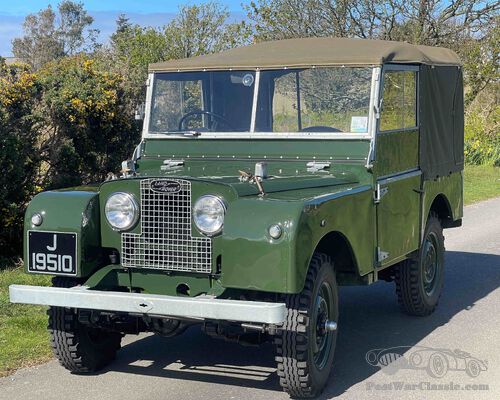
1952 Land Rover Series 1
Technical Specifications:Mark & Model: Land Rover Series 1Year: 1952Registration plate: Jersey registered
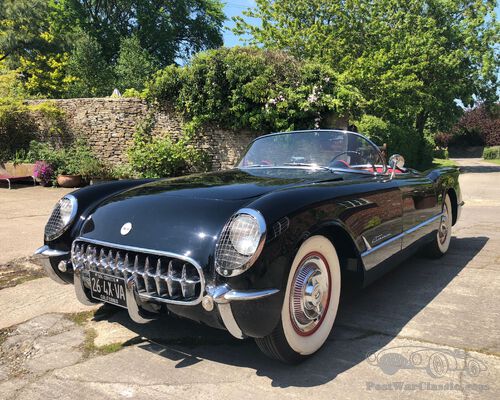
1954 Corvette C1 - SUPER RARE Black!!
Looking for her next lover, my classy 1954 Corvette C1. She's a beautiful sculpture. Never have i had so many adoring comments as when drivi..
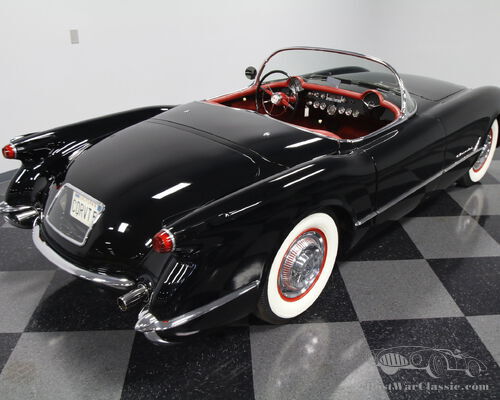
1954 Chevrolet Corvette C1
Fully restored 1954 C1 Corvette in Black. Stunningly beautiful car, feels like driving a sculptural work of Art. Known to be the oldest Corvette on t..