The global magazine and marketplace for classic car enthusiasts, by enthusiasts.


Filter
Classic Panhard for sale - Panhard cars for sale
-

Coming soon -1961 Jaguar E Type Series 1 LHD Flat Floor outside bonnet lock
Coming soon - 1961 Jaguar E Type Series 1 LHD Flat Floor outside bonnet lock Registration Number: OAGP008 (Belgium) Chassis Number: 875340 Arriving soon from a prominent European collection. EEC Registered & EEC taxes paid Full de.. -
1957 Mercury Monterey Convertible | RM Sotheby's | The Hershey Auction
To Be OFFERED AT AUCTION at RM Sothebys' The Hershey Auction event, 7 - 8 October 2026. $50,000 - $60,000 USD Please check back soon as our dedicated cataloguing team is preparing the description for this lot. To view this car and others currently consigned to this auction, please visit the RM website at rmsothebys.com/auctions/hf26/. -
1953 Packard Caribbean | RM Sotheby's | The Hershey Auction
To Be OFFERED AT AUCTION at RM Sothebys' The Hershey Auction event, 7 - 8 October 2026. $60,000 - $80,000 USD Please check back soon as our dedicated cataloguing team is preparing the description for this lot. To view this car and others currently consigned to this auction, please visit the RM website at rmsothebys.com/auctions/hf26/. -
An icon: Morgan 3 Wheeler with Krazy Horse Specs from 2016
The Morgan 3 Wheeler has become a cornerstone in the Morgan’s Malvern enterprise's history. This three-wheeled cyclecars first produced in 1910, has become an icon since it was launched at the Geneva Motor Show in 2011. This vehicle has its own personality. An impressive fast car that balances between modern look and performance and old-f.. -
2017 Citroen DS3 Prestige Cabriolet 1.6 litre THP S/S Manual.
2017 Citroen DS3 Prestige Cabriolet 1.6 litre THP S/S Vin Number: VF7SB5GZMHW502159 Registration Number: WM66VJJ Manual 6 speed Gear box. A really nice example with the higher power high pressure turbo engine that was jointly designed with BMW & is renown.. -
Alvis TE 21 Park Ward Coupe
BARN Find , this verry rare Alvis TE 21 Park Ward Coupefrom 1965. Between 1963 and 1966 there have only been produced 352 these special Park Ward Coupe's. You can recognise the Park Ward Coupe on his headlights two above each other. The Alvis has a six cylinder engine of 3000 cc which produces 130 HP which could reach a top of 170 km an hour. Th.. -
1984 Lamborghini Countach 5000 S | The Quail Auction 2026
Chassis No. ZA9C00500ELA12736 The Lamborghini Miura, the world's first supercar, was a nearly insurmountable act to follow. Its successor needed to be a forward-thinking purpose-built sports car, oozing futuristic design cues and cutting-edge engineering. Under Lamborghini's orders, no holds were barred for the new "LP112" project, which wou.. -
1965 Porsche 911 | The Quail Auction 2026
Chassis No. 300718 Engine No. 900893 Transmission No. 223981 (See Text) Porsche 911 chassis number 300718 was completed the same day as its sibling-The Quail Auction 2026 Lot 296-and was likewise delivered new via Porsche Car Northwest. It was sold to Pacific Northwest drag-racing champion John Schmauder and remained in the regio..


Panhard
France, 1889 – 1967
(1) Panhard et Levassor, Paris, 1889 – 1898
(2) Société des Anciens Etablissements Panhard et Levassor, Paris, 1899 – 1965
(3) SA André Citroën, Paris, 1965 – 1967
One of the greatest names in the history of motoring, Panhard et Levassor car sprang from a woodworking-machinery firm founded by Périn and Pauwels in 1845, which passed into the hands of René Panhard and Emile Levassor on Périn’s death in 1886. In the same year Levassor’s friend Edouard Sarazin acquired the Daimler patents rights for France; he died in 1887 and his widow subsequently married Levassor.
A Panhard et Levassor car with a centrally-mounted V-twin Daimler engine was running successfully in 1891, and after experiments with rear engines the partnership settled for what was to become the classic automobile layout – engine at the front, gearbox amidships, and driven rear hweels, though as yet the gears were exposed, and final drive was by central chain. These early Panhard Levassor cars had 4 speeds forward and reverse, and sold for 3.500fr. Solid rubber tyres were adopted on Panhard Levassor cars in 1892, and in 1894 a Panhard Levassor car was fitted with a Maybach float-feed carburetor in place of the surface type, an improvement standardized in 1895. A Panhard Levassor car was awarded joint 1st place (with Peugeot) in the 1894 Paris-Rouen Trial, and the following year enclosed gearboxes were used for the first time on the Panhard Levassor car. Emile Levassor was the moral (if not the technical) victor of the Paris-Bordeaux-Paris Race that year with a Panhard Levassor car, when wheel steering and the 2.4-litre vertical-twin Phénix engine also made their appearance. On all Panhard Levassor cars up to 1900 the side-brake was inter-connected with the clutch. 4-cylinder engines were used in 1896 Panhard Levassor racers, and made available to the public in 1898; the Panhard Levassor car marque’s win in the Paris-Marseilles-Paris Race was, however, clouded by Emile Levassor’s death as the result of a spull during the race.
Gradually the classic Panhard Levassor car configuration took shape; aluminium gearbox casings were first seen in 1897, as was the rear-mounted G and A radiator. Wheel steering and pneumatic tyres came into general use on Panhard Levassor cars in 1898, and frontal tubular radiators in 1899. By 1900 the touring Panhard Levassor car had crystallized into the archetype of the medium-sized Panhard Levassor car: armoured-wood frame, quadrant change, automatic inlet valves, drip-feed lubrication, final drive by side chains, plus such features as piano-type pedals (dropped in 1907), and cylindrical controls on the steering-wheel (still founded in 1911). Makers like MMC and Star in Britain, and Dürkopp in Germany produced near- Panhard Levassor cars, and Montague Napier installed his first car engine of 1899 in a Panhard Levassor car chassis. In 1899 Commandant Krebs of the Panhard Levassor car company’s board produced a rear-engined single-cylinder voiturette of retrogressive design, with centre-pivot steering, but the licence was quietly sold to Clément.
So far only Mors had challenged Panhard Levassor cars racing supremacy. 1898 victories included the Marseilles-Nice Race, Paris-Amsterdam-Paris and the Paris-Bordeaux Race, in which last Charron averaged 26.9mph with a Panhard Levassor car. A year later Girardot (later to partner Charron in the CGV venture) was averaging 32.5mph with a Panhard Levassor car to win the Paris-Ostend Race. Though 1900 was a Mors year apart from Charron’s victory in the first Gordon Bennett Cup with a Panhard Levassor car, and in 1901 was little better, apart from the exploits of the voitures légères with 3.1-litre 4-cylinder engines, Panhard Levassor cars did well under the 1.000-kilogram formula of 1902 with their 13.7-litre 70: this Panhard Levassor car retained automatic inlet valves and the flitch-plate frame, but recorded wins in the Circuit des Ardennes and the Circuit du Nord. Mechanically-operated inlet valves were seen on the 1903 racer Panhard Levassor cars, while in 1904 the Panhard Levassor car firm was using 15.4-litre engines, vast V-radiators, and shaft drive on their competition Panhard Levassor cars, being awarded with victories in the Circuit des Ardennes and the Vanderbilt Cup, the driver of the Panhard Levassor car in both races being the American, George Heath, Mercedes, Brasier, and FIAT were, however, in the ascendant, and though Panhard Levassor car continued to race up to 1908 (trying dashboard radiators in 1907) they never regained their former position.
The same conservatism permeated their touring Panhard Levassor cars. In 1900 the Hon. C.S. Rolls’s Panhard Levassor car was by far the fastest machine in the 1.000-Miles Trial, and the 1.7-litre 7hp twin Panhard Levassor car of 1901 (still with tube as well as low tension electric ignition) was a good seller at £340. That year brought the Krebs automatic carburetor and the Centaure engine governed on the inlet, while the Panhard Levassor car company briefly took up the manufacture of the De Boisse 3-wheeler. Tube ignition was still available as a standby on a Panhard Levassor car in 1902, in which year Dr. Lehwess tried to drive round the world in a 25hp Panhard Levassor omnibus weighing 3 tons – he got no further than Nizhni Novgorod. Sales were still a respectable 1.200 Panhard Levassor cars in 1904, but the Panhard Levassor cars were hard to sell, and the Hon. C.S. Rolls gave up his London agency for this reason. A chain-driven 3-cylinder 8/11hp Panhard Levassor car with a 1.8-litre engine at £425 was hardly the answer (though this Panhard Levassor car was still catalogued in 1908), but in 1904 the bigger Panhard Levassor cars went over to shells for their tubular radiators, mechanically operated inlet valves, and high-tension magneto ignition.
At the top end of the range in 1905/ 1906 were the Model Q Panhard Levassor car, a 50hp 4-cylinder of 10.5-litres with 5-bearing crankshaft at £1.580, and an even bigger 11-litre 6-cylinder with a bonnet 5ft long which sold for £1.400 in 1906. Multiplate clutches arrived on Panhard Levassor cars in 1907, and shaft drive (on the smaller Panhard Levassor cars) in 1908, in which year compressed-air starters were alo available, and the range of Panhard Levassor cars included a 1.2-litre twin and a 5-litre chain-drive six. Pressed-steel frames at last ousted armoured wood, and though a monstrous chain-driven 4-cylinder Panhard Levassor cars could still be bought in 1909, a true sign of the times was a monobloc 2.4-litre 12/16 with high tension magneto ignition. Gate change was standard on Panhard Levassor cars in 1910, and the biggest model Panhard Levassor car was not a chain-driven 6-cylinder 6-litre. 1911 was the last year of the twin, and also the first production year for the Knight sleeve-valve engine introduced on a 4.4-litre 25hp Panhard Levassor car with separate cylinders, a choice of chain or shaft drive, and a chassis price of £580. 42bhp and 59mph were claimed for this, and a smaller Knight-engined 2.6-litre 15hp Panhard Levassor car was available in 1912, when Panhard Levassor cars had all their brakes on the rear wheels, the classic V-radiator (used Panhard Levassor cars until 1936) made its appearance on de luxe versions, and wire wheels were available. V-radiators and 4-cylinder engines were universal in 1914; only the small Panhard Levassor cars had poppet valves, and the big sleeve-valve 4.8-litre and 7.4-litre Panhard Levassor cars were seen with skiff-type bodywork of great elegance.
Though 2.2-litre poppet-valve Panhard Levassor cars were made from 1919 to 1922, Panhard Levassor settled down to a long association with the Knight engine, and managed to extract some performance from it by the use of light steel sleeves from the middle 1920s. Other oddities on Panhard Levassor cars were expanding-band brakes, a push-on handbrake, and a peculiar X-gate gear change which took some learning. In 1922 the sleeve-valve range on Panhard Levassor cars was extended at both ends by a rather ponderous 1.2-litre ten with central change, left-hand drive, thermo-syphon cooling and a cone clutch instead of the usual wet-plate, and by a big 6.3-litre straight-8 Panhard Levassor car with front-wheel brakes, twin magnetos, and twin carburetors, which Panhard Levassor car was made until 1930.
All 1924 Panhard Levassor cars had front-wheel brakes, dynamotos, and 4-speed gearboxes and the smaller ones had splash lubrication. The 4.8-litre 4-cylinder Panhard Levassor car was quite a fast car which took the World Hour Record at 115.3mph in 1925, and in its 5.3-litre 1929 form the Panhard Levassor car could exceed 90mph. The straight-8 Panhard Levassor cars with bored-out 7.9-litre engines also had a long career in record work which did not until 1934, but another aspiring record-breaker – an ultra-narrow 1½-litre single-seater Panhard Levassor car steered by a hoop around the cockpit – came to nothing.
The first 6-cylinder sleeve-valve Panhard Levassor car was the 3.4-litre Panhard Levassor 20/60 of 1927, soon followed by the 1.8-litre 16/45 and the 2.3-litre twin-carburettor Panhard Levassor 18/50. Silent-3rd gearboxes were adopted on Panhard Levassor cars in 1929, and a year later an all-silent type had been evolved – in 1931 this was fitted to 3.5-litre 6-cylinder Panhard Levassor car and 5-litre 8-cylinder cars were centralized chassis lubrication coil ignition, a sheet steel platform between the rear cross-members of the frame, but still having wood wheels and the X-gate. This Panhard Levassor car range continued until 1936, though later Panhard Levassor cars had free wheels, automatic clutches and wrap-round windscreens reminiscent of the Arrol-Johnstons of the early 1920s; the Panhard Levassor cars were expensive, the big 8-cylinder Panhard Levassor 8DSR costing 95.000fr or 15.000fr more than the most luxurious Renault.
For 1937 there was the startling Panhard Levassor Dynamic, still a sleeve-valve six (it came in 2.5-litre, 2.7-litre and 3.8-litre sizes) but this Panhard Levassor car was with backbone chassis, hydraulic brakes, worm drive, and all-round rosion bar independent suspension. Faired-in headlamps, wheel spats front and rear, and a central driving position completed a bizarre ensemble, though a reversion to left-hand drive was made with the 1939 Panhard Levassor cars.
There was a complete volte face after 1945, and the Panhard Levassor car became a utility car of considerable performance with the advent of the Dyna series. These Panhard Levassor cars were air-cooled front wheel drives flat-twins of 610cc based on a Grégoire design, in which torsion bars served as valve springs for the ohv gear; the light alloy bodywork of the Panhard Levassor car was by Facel-Métallon, front suspension was independent, rear suspension by a live axle and torsion bars, and the 4-speed gearbox had an overdrive top and dashboard change. The original version of this Panhard Levassor car was followed by a 32bhp 750cc version in 1950, and two years later there was an 850cc 5CV Panhard Levassor car as well. Specialist cars using Panhard mechanical elements were D.B. (from 1948), Veritas (1950), Marathon (1954), and Arista (1957). Even faster Dyna Panhard Levassor cars were evolved and the special Monopole of Hémard and de Montrémy won the index of Performance at le Mans three years in succession (1950-1952); further wins in this category were scored in 1953 (with a Panhard Levassor car works-sponsored streamliner designed by Riffard) and again in 1963. Rally successes of Panhard Levassor cars included a Coupe des Alpes in the 1952 Alpine Rally, a class win in the 1954 Monte Carlo Rally, and an outright win in 1961. The Panhard Levassor car company offered their own sports variant, the Panhard Levassor Junior, in 1953; this 38bhp roadster was followed a year later by a supercharged Panhard Levassor car, the 62bhp version.
Far more ambitious was the 1954 Panhard Levassor Dyna saloon, a bulbous and ugly machine in alloy (no castings were used). Both the engine-transmission group and the dead rear axle were removable as units, a petrol heater was standard, and the Panhard Levassor car could carry six people at 80mph with a 40mpg petrol consumption. The Panhard Levassor car was expensive in England at £1.055, but it pushed sales up from around 14.000 in 1951 to 30.000 Panhard Levassor cars in 1957, and it survived in the range for ten years. All-steel bodywork was standardized on the Panhard Levassor car in 1958, and from 1961 there was a high-performance (over 90mph) version, the 60bhp Panhard Levassor Tigre at £1.127. Over 100mph was claimed from the hotter Panhard Levassor 24CT and CD sports coupés introduced for 1964. In 1955 Citroën took an interest in the Panhard Levassor car company, and ten years later the old-established Panhard Levassor car concern was fully integrated into the SA André Citroën, thus giving its new owners greater factory space. In 1967, Panhard Levassor cars last year, only the coupé versions of the Dyna were being manufactured, in 50bhp and 60bhp 850cc forms, the 24CT with all-round disc brakes.
Source: Georgano, encyclopedia of motorcar; MCS
The information is written with the greatest of care. However, if you have any suggested amendments please contact us at office@postwarclassic.com


Featured
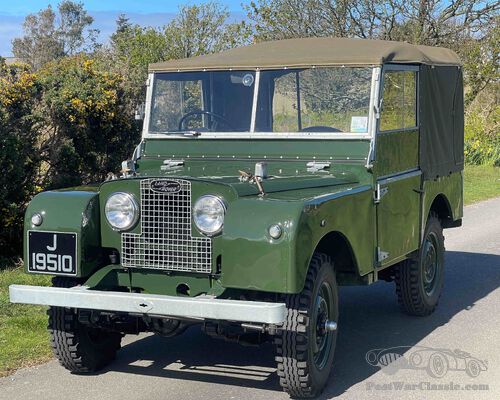
1952 Land Rover Series 1
Technical Specifications:Mark & Model: Land Rover Series 1Year: 1952Registration plate: Jersey registered
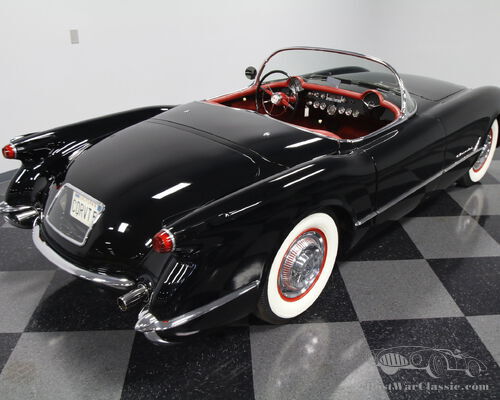
1954 Chevrolet Corvette C1
Fully restored 1954 C1 Corvette in Black. Stunningly beautiful car, feels like driving a sculptural work of Art. Known to be the oldest Corvette on t..
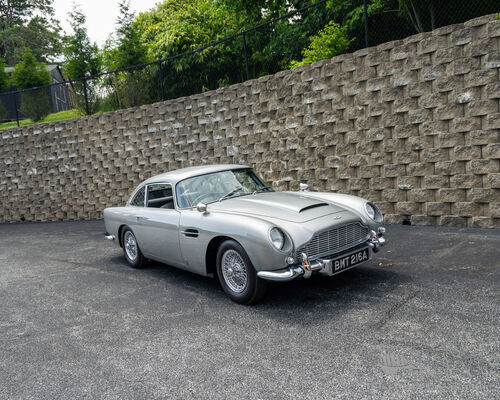
2020 Aston Martin DB5 Goldfinger Continuation | RM Sotheby's | The Monterey Auction
To Be OFFERED AT AUCTION at RM Sothebys' The Monterey Auction event, 13 - 15 August 2026. $1,000,000 - $1,500,000 USD One of 25 examples co..