The global magazine and marketplace for classic car enthusiasts, by enthusiasts.


Filter
Classic Praga for sale - Praga cars for sale
-

2013 RUF Rt35 | The Quail Auction 2026
Chassis No. W09BB2388DPR06169 Rt35 Anniversary No. 06/35 RUF's story began not as a car manufacturer but as a small repair garage in the Bavarian town of Pfaffenhausen, established by Alois Ruf Sr. nearly eight decades ago. His son, Alois Ruf Jr., later built the family business into one of Porsche's most respected independent partners.. -
2006 Ferrari 575 GTZ by Zagato | The Quail Auction 2026
Chassis No. ZFFBT55J000134936 Engine No. 79716 Limitation No. 02/06 Founded in Milan in 1919 by Ugo Zagato, Carrozzeria Zagato clothed some of the most memorable competition Ferraris of the 1950s. Among its most celebrated commissions were the five 250 GT "Tour de France" berlinettas bodied between 1956 and 1959, cars distinguish.. -
2015 Porsche 918 Spyder | The Quail Auction 2026
Chassis No. WP0CA2A1XFS800590 918 Spyder No. 590 Seven years on from unveiling the breathtaking Carrera GT at the 2003 Geneva Motor Show, Porsche again selected Geneva to debut its latest concept born from an endurance race car-this time powered by the 3.4-liter V8 that propelled the American Le Mans Series RS Spyder. Dubbed the 918 Sp.. -
1990 RUF BTR III Cabriolet | The Quail Auction 2026
While the history of RUF has been etched into the minds of enthusiasts since the introduction of the BTR 3.4 in 1984 as the first model to wear the vaunted W09 chassis number-and into the consciousness of nearly everyone else following the Yellowbird's unforgettable appearance in Faszination-the marque's model hierarchy can seem surprisingly opaque.. -
1994 Porsche 911 RUF RCT EVO Speedster | The Quail Auction 2026
Chassis No. WP0ZZZ96ZRS455477 Owning-or even just driving-a Speedster is a dream deeply rooted in the imagination of automotive enthusiasts around the world, whether first experienced seated on a childhood road play rug or later while standing in a garage already home to an impressive collection of exceptional automobiles. But a Speedster tr.. -
1995 RUF RCT EVO | The Quail Auction 2026
Chassis No. W09TB0366TPR06001 Engine No. 62N80624 Transmission No. G6451 2 006650 When Alois Ruf's CTR Yellowbird crested 211 mph in 1987, it announced the small Pfaffenhausen manufacturer as king among those challengers competing for the title of the fastest car in the world. Two years later, Porsche introduced the 964-generatio.. -
Coming soon -1961 Jaguar E Type Series 1 LHD Flat Floor outside bonnet lock
Coming soon - 1961 Jaguar E Type Series 1 LHD Flat Floor outside bonnet lock Registration Number: OAGP008 (Belgium) Chassis Number: 875340 Arriving soon from a prominent European collection. EEC Registered & EEC taxes paid Full de.. -
1957 Mercury Monterey Convertible | RM Sotheby's | The Hershey Auction
To Be OFFERED AT AUCTION at RM Sothebys' The Hershey Auction event, 7 - 8 October 2026. $50,000 - $60,000 USD Please check back soon as our dedicated cataloguing team is preparing the description for this lot. To view this car and others currently consigned to this auction, please visit the RM website at rmsothebys.com/auctions/hf26/.


Praga
Austria, Czechia, 1907 – 1947
(1) Prazská Továrna na Automobily, Prague, 1907 – 1929
(2) Ceskomoravská – Kolben – Danek, Prague, 1929 – 1947
The firm Praga cars of general engineers took out a manufacturing licence for Isotta Fraschinis, and also built some 2- and 4-cylinder Praga cars on Renault and Charron lines. In 1911, however, Frantisek Kec joined the Praga car company as chief engineer, being responsible for all subsequent private-car types. His idiom was straightforward: sv monobloc engines, 4-speed gearboxes and semi-elliptic springing. He laid down three basic Praga car models: the 1.128cc Praga Alfa; the 2.3-litre Praga Mignon; and the 3.8-litre, 45bhp Praga Grand. The change for Praga cars of national status after World War 1 brought no radical change of design of the Praga car, though in 1924 Praga introduced a baby four-seater Praga car, the 707cc Praga Piccolo. This Praga car was enlarged to 824cc in 1925, and to 856cc in 1927, when Kec turned to multi-cylinderism with a new 1.496cc 6-cylinder Praga Alfa (which Praga car had 4-wheel mechanical brakes and a hydraulic servo) and a straight-8 Praga Grand of 3.4-litres.
In 1929 Praga car company merged with the Breitfeld and Danek aero-engine firm, and their products now embraced motorcycles, aero-engines and complete aircraft as well as cars and trucks. The 1930 Praga Grands had hydraulic brakes and 4.4-litre, 90bhp engines, and the Praga Alfa grew up to 1.8-litres and the Praga Piccolo to 995cc. In 1934 deliveries of 2.250 Praga cars made the Praga a national best-seller, thanks to the Piccolo’s successor, the Praga Baby, which combined the existing engine of the Praga car with a forked backbone frame (as used on subsequent small cars), all-independent suspension, and a 3-speed synchromesh gearbox. It sold for the equivalent of £180. Less successful was the 1.660cc Praga Super-Piccolo with coil independent front suspension, and aerodynamic saloon bodywork with countersunk headlamps and spats to all four wheels, which Praga car grew up into the more conventionally styled Praga Lady of like capacity.
In 1935 the Praga Grand was replaced by a big six Praga car, the 3.9-litre Praga Golden; this Praga car had a hypoid rear axle, a synchromesh gearbox, and transverse-leaf independent front suspension, and could be had with an electrically-selected Cotal box. Also in the immediate pre-war Praga car range were a 2½-litre Praga Alfa on similar lines, and a new 1.128cc Praga Piccolo based on the 1934 Praga Baby. Then in 1938 Kec at long last essayed ohv with a sports two-seater edition of the Praga Lady for the Czechoslovak Thousand-Mile Race.
After World War 2 the Praga car company concentrated on trucks powered by the Golden’s 6-cylinder engine, though a few private Praga cars of this type were made for ministerial use in 1946 and 1947. The Praga car factory’s current products are light commercial vehicles based on French Saviem-Renault designs.
Source: Georgano, encyclopedia of motorcar; MCS
The information is written with the greatest of care. However, if you have any suggested amendments please contact us at office@postwarclassic.com


Featured
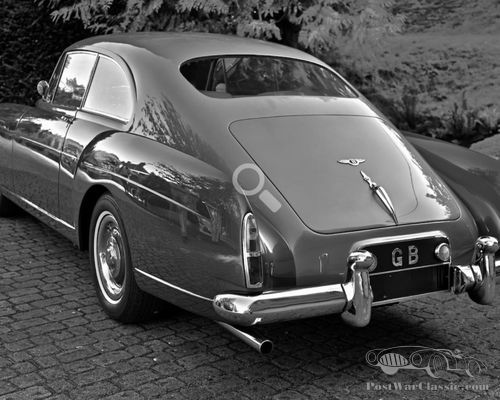
1957 Bentley S1 Fastback by H.J. Mulliner.
1957 Bentley S1 Fastback by H.J. Mulliner.A freshly restored award winning car in like new condition. A later car with Power assited steerin..
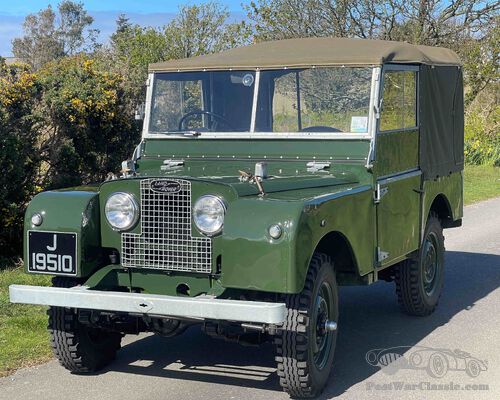
1952 Land Rover Series 1
Technical Specifications:Mark & Model: Land Rover Series 1Year: 1952Registration plate: Jersey registered
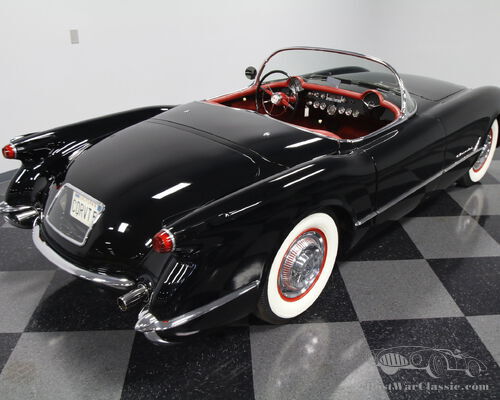
1954 Chevrolet Corvette C1
Fully restored 1954 C1 Corvette in Black. Stunningly beautiful car, feels like driving a sculptural work of Art. Known to be the oldest Corvette on t..