The global magazine and marketplace for classic car enthusiasts, by enthusiasts.


Filter
Classic Studebaker, Bentley for sale - Studebaker, Bentley cars for sale
-

1948 Bentley W.O. Style Mark VI special.
1948 Bentley W.O. Style Mark VI special. Chassis Number: B149CD Registration Number: MZ1598 A beautifully constructed special finished 4 years ago & built at the behest of a long time onwer of multiple W.O. Cricklewood Bentleys as his last car. At the age of 83 he now wishes.. -
Bentley Continental SII Flying Spur LHD
1962 Bentley Continental Flying Spur LHD - Factory Display Car London Motor Show 1962, ex Bill Harrah - Chassis BC49LCZ Engine C48BC (matching) Body H.J. Mulliner #6442 - One of only 55 LHD examples built from 1960-1962. Desirable factory options - Lightweight, aluminium bo.. -
1962 LHD Bentley S3 Four Door Sports Saloon B92LCN
A rare left-hand drive version in lovely condition, nicely finished in Shell grey and Tudor grey, with Parchment leather and excellent veneers, headlining and carpet all harmonising very well. Under the bonnet, the engine bay is fabulously presented, almost to concours standard & looks spectacular! The car is in good, sound condition structu.. -
1960 Bentley S2 Continental Flying Spur by H.J. Mulliner
1960 Bentley S2 Continental Flying Spur by H.J. Mulliner Chassis number: BC12HARRegistration number: 864UYE Vintage and Prestige Fine Motor Cars are proud to be offering this 1960 Bentley S2 Continental Flying Spur by H.J. Mulliner for sale. This is lovely rare Bentley S2 Continental Flying Spur. Chassis numb.. -
1958 Bentley S1 Drophead Coupe by H.J. Mulliner | RM Sotheby's | Sealed June
To Be OFFERED AT AUCTION at RM Sothebys' Sealed June event, Bidding Closes 24-26 June 2026. $400,000 - $450,000 USD One of five left-hand-drive S1 chassis bodied to Mulliner’s seductive design number 7409Originally delivered to noted philanthropist Edith du Pont RiegelLater owned by leading abstract expressionist Robert.. -
1947 Bentley Mark VI Windovers Drop Head Coupe
1947 Bentley Mark VI Windovers DHC.Chassis Number: B-108-AKRegistartion number: JFO394Chassis number B108AK was completed in August of 1947 to the order of Sir Alexander Rogers KBE. The Bentley was bodied as a drophead coupe by the respected coachbuilding firm of Windovers. Founded in 1856 in Huntingdon but from 1924 based in North West London, .. -
1956 Bentley S1 Continental H.J. Mulliner Fastback
1956 Bentley S1 Continental H.J. Mulliner FastbackRegistration number: TBAUnder long term ownership for several decades, this car is a low mileage example having covered a scant 66,000 miles. It is a very early example with single master cylinder having been registered first in January of 1956. We will be properly photographing i.. -
1958 BENTLEY S1 CONTINENTAL PARK WARD DHC
1958 Bentley S1 Continental Park Ward DHC Chassis Number & Registration available on request to qualified buyers. Please call Richard Biddulph for details. Coming to us from one of the UK's most prominent collections along with a sister car a Bentley S1 fastback. This car is in impeccable.. -
1958 Bentley S1 Continental Fastback Highline Flared Arch
1958 Bentley S1 Continental Fastback Chassis Number & Registration available on request to qualified buyers. Please call Richard Biddulph for details. Recipeint of a full P & A wood restoration under previous ownership & thus in impeccable condition thoughout with a simply massive..


Studebaker
US/ CDN, 1902 – 1966
(1) Studebaker Corp, South Bend, Indiana, 1902 – 1954
(2) Studebaker-Packard Corp, South Bend, Indiana, 1954 – 1964
(3) Studebaker Corp of Canada Ltd, Hamilton, Ontario, 1964 – 1966
The brothers Henry and Clem Studebaker opened a blacksmith’s and wagon-building shop in South Bend in 1852, horse-drawn vehicles of their construction serving in both the American Civil War and World War 1, and production continuing until 1919. Their first Studebaker cars were electrics, made in modest numbers from 1902 to 1912: these Studebaker carwere joined in 1904 by the Model-C petrol Studebaker car, a typically American 16hp flat-twin with amidships engine, 2-speed gearbox, and chain drive. This Studebaker carwas followed a year later by a vertical 4 on more European lines, this Studebaker car was selling for $3.000. For the next few seasons, however, Studebaker electred to act as selling gents for Studebaker cars built to their order, and their more expensive offerings of Studebaker cars were built by Garford of Elyria. The cheaper machines were the EMF and Flanders built by the Everitt-Metzger-Flanders Co, and these two makes accounted for 9.700 Studebaker cars in 1910. 1913 saw a brace of Studebaker cars made at South Bend, both with sv monobloc engines, dual ignition, and electric lighting and starting: the 3-speed gearboxes on the Studebaker cars were mounted in unit with the back axles, and the 6-cylinder Studebaker car was claimed to be the first such car to retail in the USA for less than $2.000. In 1914 there was a smaller, 15/20hp Studebaker car with 3.2-litre 4 with coil ignition only. Studebaker sold over 45.000 Studebaker cars in 1915, and their sixth position in 1916 US sales was matched by a seventh place in 1920. 1919 was the last year for 4-cylinder Studebaker cars, and the 1920 Studebaker cars, while retaining separate gearboxes, abandoned the transaxle layout. Studebaker carmodels available were 6s of 4.7-litres and 5.8-litres, the latter establishing a line of really large 6-cylinder Studebaker cars which survived until 1928. An inexpensive 3.3-litre Studebaker Light 6 joined the range in 1921, and 1923 Studebaker cars had all-metal bodies with welded steel pressings. Balloon tyres were standardized on Studebaker cars in 1925, in which year contracting-type hydraulic front wheel brakes were an option: open Studebaker cars were made with permanent tops of the ‘California’ type and detachable side-curtains. Front wheel brakes were standard on the Studebaker carin 1926, but the Studebaker carcompany reverted to mechanical actuation in 1927, in which year a ‘compact’, the Studebaker Erskine, was marketed. Studebaker cars went after stock-car records in a big way in the later 1920s, an outstanding performance of a Studebaker car being 25.000 miles in 25.000 minutes. The 1929 range Studebaker cars consisted of two 6s, the ‘Studebaker Dictator’ and ‘Studebaker Commander’ (at $1.265 and $1.495 respectively), and a brace of straight-eights of 4-litres’ and 5.5-litres’ capacity. Pierce-Arrow was acquired by the Studebaker car company in 1928, but regained its independence five years later. In 1930 Studebaker cars, with Plymouth, pioneered the free wheel, offered initially on 8-cylinder Studebaker cars alone, but available throughout the range by the latter part of the year, when the cheapest Studebaker car, the Light 6, could be bought in England for £295.
Another compact Studebaker carappeared under the Rockne nameplate in 1932. Special versions of the ‘Studebaker President 8’ distinguished themselves in the Indianapolis 500-Mile Race. Cliff Bergere’s Studebaker Special finishing 3rd, while in 1933 6th to 12th places were filled by similar Studebaker cars. Studebaker cars went into receivership in 1933, but came back strongly in 1934 with an unattractively-styled three-model range of Studebaker cars – the 3.4-litre ‘Studebaker Dictator 6’, the 3.6-litre ‘Studebaker Commander 8’, and the 4.1-litre ‘Studebaker President 8 ‘, all with synchromesh, free wheel, and X-braced frames. Subsequent evolution of Studebaker cars followed accepted American lines: transverse independent front suspension, automatic overdrive, and hydraulic brakes once more in 1935: a hill-holder (modernized version of the sprag) in 1936: headlamps half-faired into the wings of the Studebaker car in 1938: and column change in 1939, when Raymond Loewy became responsible for the Studebaker car Corporation’s styling. 1939 was also the first year for one of America’s longest-lived modern economy cars, the 2.7-litre 6-cylinder sv ‘Studebaker Champion’ selling at $765. Fluid couplings was available on the 1942 Studebaker car range, which included Studebaker cars last straight-8s. The revolutionary post-war ‘coming or going’ style with wrap-around rear window on Studebaker cars was launched by Loewy on the 1946/ 1947 Studebaker cars with 2.8-litre and 3.7-litre 6-cylinder engines. Sales climbed to 239.000 Studebaker cars in 1949, and the inevitable ohv V8 – a relatively small one of 3.8-litres – replaced the bigger 6 in 1951 Studebaker cars. Studebaker car companys answer to the big battalions was the low and elegant line of the 1953 Studebaker cars, which unfortunately became more cluttered down the years, and finances were not impoved by the merger of the Studebaker car company with Packard in 1954. An interesting departure was the sporting ‘Studebaker Hawk’ coupé powered by Packard’s V8 engine and Ultramatic transmission in 1956: 1957 versions had blown Studebaker car engines, the only example of a factory-equipped super-charger (save the 1954 Kaiser) since the Graham. The Studebaker car company managed to get their ‘Studebaker Lark’ compact sedan tooled and into production in ten months in 1959, and this descendant of the old sv ‘Champion’ was the only Studebaker car now offered with the exception of the ‘Studebaker Hawk’. The small 6 Studebaker car achieved ohv at long last in 1961, and 1962 saw the exciting fiberglass-bodied ‘Studebaker Avanti’ coupé with disc brakes on the front wheels, a 4-speed gearbox, and optional supercharger. The Studebaker car annexed 29 stock-car records, including a flying mile at 168.15mph, but neither this nor the continuing ‘Lark’ range could save Studebaker cars. A wide choice of Studebaker car models – two 6s and three 8s – was listed for 1964, but early in the season South Bend stopped making Studebaker cars, and production was transferred to the Canadian plant which had been assembling Studebaker cars since 1912. Even as an ‘import’, the Studebaker car did not sell well: the last examples of the Studebaker car marque had 3.2-litre 6-cylinder and 4.7-litre 8-cylinder Chevrolet engines, but even these were abandoned in the spring of 1966. Production of the ‘Studebaker Avanti’ was continued on a small scale by an independent factory in South Bend.
Source: Georgano, encyclopedia of motorcar; MCS
The information is written with the greatest of care. However, if you have any suggested amendments please contact us at office@postwarclassic.com
Bentley
GB, 1920 to date
(1) Bentley Motors Ltd, Cricklewood, London N.W.2., 1920 – 1931
(2) Bentley Motors (1931) Ltd, Derby, 1933 – 1945
(3) Bentley Motors (1931 Ltd, Crewe, Cheshire, 1946 to date
W.O. Bentley was already well-known as the importer of the D.F.P. car, a pioneer of aluminium pistons and a designer of successful rotary aircraft engines when his first Bentley 3-litre car for sale appeared at the 1919 London Show. This Bentley model, indelibly imprinted in the layman’s mind as the archetype of the Vintage sports car, had a long-stroke (80x149mm) single ohc engine with fixed head and dual magneto ignition developing about 70bhp in its early form. The Bentley 3-litre was at its best in long-distance events; a team of Bentley 3-litres with flat radiators (the only instance of this apart from the same year’s Indianapolis car) finished 2nd, 3rd, and 5th in the 1922 T.T., and the model accounted for the first two of the marque’s Le Mans wins, those of Duff/ Clement in 1924 and Davis/ Benjafield in 1927 on the badly damaged ‘Bentley Old No. 7’ – one of the legends of motor-racin history. Up to 1929 1.630 3-litres Bentley motorcars were made. 1924 saw the introduction of front wheel brakes and also the famous sports four-seater ‘Bentley Speed Model’ by Vanden Plas. Bentley cars are popularly known by the colours of the enamel on their radiator badges – ‘Bentley Red Label’ signifying a Speed Model short-chassis 3-litre, ‘Bentley Blue Label’ the early short, and long chassis which could and sometimes did carry limousine coachwork, and ‘Bentley Green Label’, a special 100mph Bentley type made in very small numbers.
In 1926 the Bentley company made a bid for the carriage trade with a big Bentley 6½-ltre six for sale on similar lines. A chassis cost £1.450, but the Bentley image made no impression in this market. However, the model was developed into the 180bhp ‘Bentley Speed 6’ of 1929, considered by many to be the best of the old-school Bentleys for sale, and responsible for the firm’s last two Le Mans wins – Barnato/ Clement in 1929, and Barnato/Kidston in 1930. In 1927 the Bentley 3-litre was developed into the Bentley 4½-litre, still with four cylinder, but with a 100bhp engine which was giving 130bhp by the time production ended. This admirable car could exceed 90mph in standard form, and was used by Barnato and Rubin to win LeMans in 1928. A supercharged version was listed in 1930; it had 182bhp, and did not have the approval of Bentley himself, but it was an excellent if thirsty road car, and won Sir Henry Birkin an unexpected 2nd place in the formule libre French G.P. of 1930. Bentley finances were always shaky, and even Woolf Barnato’s aid of 1927 did not last long; the Bentley company went down in the early summer of 1931 to the accompaniment of a splendid gesture – a 220bhp ohc Bentley 8-litre six, made in two wheelbase lengths, 12ft and 13ft. Only 100 of these eight-litres Bentleys were made, plus 50 examples of a rather uninspired inlet over exhaust valve 4-litre car.
Napier made an unsuccessful bid for the assets of the Bentley company, but were beaten by Rolls-Royce, who introduced their version of the Bentley at Olympia in 1933. This was an entirely different type, based on Derby’s contemporary 3.7-litre ohv push-rod ’20-25’. It had a 4-speed synchromesh gearbox, Rolls-Royce servo brakes, and sold for £1.460 with saloon bodywork. In this form, it could reach 90mph and merited its slogan ‘The Silent Sports Car’. It was not raced, of course, apart from E.R. Hall’s three consecutive second places in the T.T. (1934, 1935 and 1936). By 1936 it had grown into a Bentley 4¼-litre, the increase of capacity being necessitated by the rising weight of bespoke coachwork. An overdrive gearbox was standardized in 1939, and the 1940 Bentley Mk V had independent front suspension, though only a handful were made because of the war. The Derby Bentley car’s swansong was a creditable 6th place by H.S.F. Hay at Le Mans in 1949, on a ten-year-old machine with 60.000 road miles behind it. Cylinder capacity was unchanged at 4.257cc in 1946, but independent front suspension, was standard, and Bentely, like Rolls-Royce, had gone over to inlet over exhaust valves. Prices for the Bentley motorcars for sale rose from £2.997 to £4.474 in 1951 for the standard steel saloon, the first Rolls-Royce product to have a regular series-produced factory body.
Thereafter the Rolls-Royce and Bentley identities merges, though in 1952 there was a special ‘Bentley Continental’ version of the latter with fastback 2-door saloon body by H.J. Mulliner which gave 120mph on a 3.077:1 top gear. Capacity went up to 4.6 litres in 1952 and 4.9 litres in 1955. Automatic transmissions, already optional, became standard that year; power-assisted steering and air conditioning followed In 1957, and for 1960 the old six at long last gave way to a 6.2-litre V8 with full overhead valves, by which time only the radiator style distinguished one make from the other. The ‘Bentley Continental’ with separate chassis was discontinued at the end of 1966; 1972 Bentleys were the 6.745cc Bentley T saloon and the Bentley Corniche 2-door saloon and convertible. Even the price differential between the two sister makes was now a thing of the past, the Bentley T-series selling for the same £10.455 as the Rolls-Royce Silver Shadow.
Source: Georgano, encyclopedia of motorcar; MCS
The information is written with the greatest of care. However, if you have any suggested amendments please contact us at office@prewarcar.com


Featured
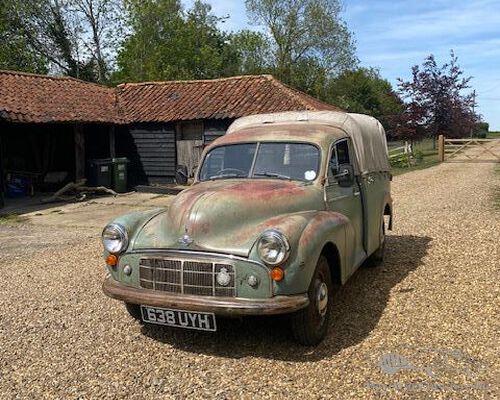
1954 Morris Minor Series II Pick Up
Morris Minor Series II Pick-Up, first registered 15th Jan 1954. Exported from new to Australia, returned to the UK in 2014. Swansea documentation r..
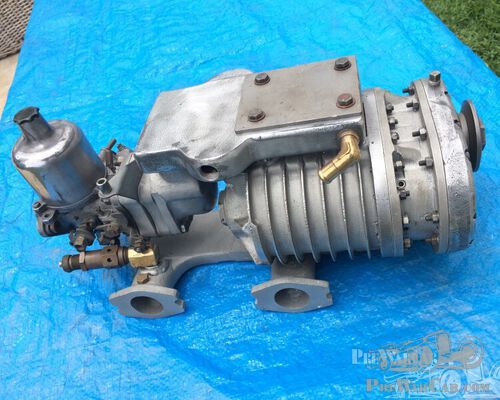
Blower / Compressor / Supercharger - Godfrey Marshall - A Series BMC Engine
SuperchargerA Godfrey Marshall cabin blower Type Mk22 converted to vehicle use by Barry Ekins of Sydney NSW. Ekins created kits for many popula..

Rolls-Royce
Rolls-Royce Silver Wraightlinks gestuurd, automatic, stuurbekrachtigingkleur antraciet grijs, lopende auto op Nederlands kenteken