The global magazine and marketplace for classic car enthusiasts, by enthusiasts.


Filter
Classic Bianchi for sale - Bianchi cars for sale
-

1954 Corvette C1 - SUPER RARE Black!!
Looking for her next lover, my classy 1954 Corvette C1. She's a beautiful sculpture. Never have i had so many adoring comments as when driving this vehicle. An utter pleasure to have cared deeply for, its time for her new owner to step in. Be quick and caring. Located in the UK at present. •Only 4 Black, C1 53-55 Corvettes,.. -
1954 Chevrolet Corvette C1
Fully restored 1954 C1 Corvette in Black. Stunningly beautiful car, feels like driving a sculptural work of Art. Known to be the oldest Corvette on the UK Classic Corvette register, this originally White car (virtually all were White) was nut / bolt restored in the US by a private collector. Finished in extremely rare Black, only 4 cars were thoug.. -
CADILLAC 75 Fleetwood Sedan - 1951, sortie de musée.
CADILLAC Series 75 Fleetwood Sedan limousine année 1951. La voiture a dormi de longues années bien au sec dans un grand musée Européen, elle a donc été bien préservée du soleil et des intempéries.C’est maintenant une découverte, un peu comme une sortie de grange qui est proposée à la vente.Il s’agit d’une Cadillac ass.. -
1947 Bentley Mark VI Windovers Drop Head Coupe
1947 Bentley Mark VI Windovers DHC.Chassis Number: B-108-AKRegistartion number: JFO394Chassis number B108AK was completed in August of 1947 to the order of Sir Alexander Rogers KBE. The Bentley was bodied as a drophead coupe by the respected coachbuilding firm of Windovers. Founded in 1856 in Huntingdon but from 1924 based in North West London, .. -
1956 Bentley S1 Continental H.J. Mulliner Fastback
1956 Bentley S1 Continental H.J. Mulliner FastbackRegistration number: TBAUnder long term ownership for several decades, this car is a low mileage example having covered a scant 66,000 miles. It is a very early example with single master cylinder having been registered first in January of 1956. We will be properly photographing i.. -
1965 Austin-Healey 3000 Mk III BJ8
Body No. 72940 As the final iteration of the "Big Healey" 3000 Mk III rolled onto the scene, the legendary British sports car manufacturer successfully retained the DNA of its classic curvaceous long hood/short deck sports roadster, while tweaking the cockpit to accommodate 2+2 seating and adding amenities directed towards the booming North .. -
1958 Rolls-Royce Silver Cloud 1 LWB
1958 Rolls-Royce Silver Cloud 1 LWB Chassis number: BLC7Registration Number: 877CGD06 (swiss) Kept in underground parking & Chauffeur driven in Switzerland for the last few decades. This car was purchased as a very low mile example in the 1970's from noted dealers Frank Dale & Stepsons. A chauffeurs .. -
1988 Jaguar Daimler Double Six Series 3 RHD
1988 Jaguar Daimler Double Six Series 3 Vin Number: SAJDDRLW3CA479661Registration Number: E897NOW Just 8645 Miles from new!!! This car is so pristine it still has its original plastic protective film on the sill plates. We sourced this car in 2016 from a prominent Japanese collection & supplied it to t.. -
1987 FERRARI TESTAROSSA LHD
1987 Ferrari Testarossa Vin Number: ZFFA17B000067981Registration Number: D138BSA Supplied new to Japan & with just 16,581Kms covered from new. The current Portugese owner is the second owner of the car & we supplied it to him as part of his collection in 2016. We purchased it in Japan from the first o.. -
1958 BENTLEY S1 CONTINENTAL PARK WARD DHC
1958 Bentley S1 Continental Park Ward DHC Chassis Number & Registration available on request to qualified buyers. Please call Richard Biddulph for details. Coming to us from one of the UK's most prominent collections along with a sister car a Bentley S1 fastback. This car is in impeccable..


Bianchi
Italy, 1899 – 1939, 1957 to date
(1) Edoardo Bianchi, Milan, 1899 – 1905
(2) Fabbrica Automobili e Velocipedi Edoardo Bianchi, Milan, 1905 – 1939
(3) Autobianchi SpA, Milan, 1957 – 1968
(4) Fiat SpA (Sezione Autobianchi), Milan, 1968 to date
Edoardo Bianchi was a cycle manufacturer who graduated to cars via the inevitable motor tricycle, his earlies efforts being in the De Dion Bouton idiom with single-cylinder De Dion engines and tubular frame. A 942cc unit featured in his 1903 Bianchi models, but serious manufacturer dates from the company reorganization of 1905. Inevitably large and expensive machines in the classical Italian idiom were produced, with 4-cylinder engines (Bianchi never made a six, apart from a few staff cars built for the Italian army in the late 1930s), side valves in a T-head, it magneto ignition, multi-disc clutches, 4-speed gearboxes and side-chain drive. Capacities of the first types Bianchi cars for sale were 4½ litres and 7.4 litres respectively. However, the Bianchi company’s bid for honours in the 1907 Kaiserpreis led to some more sporting models, such as the enormous 11.4-litre 70hp Autobianchi E-type with hight-tension ignition, standardized on the smaller Bianchis by 1908; they were also available with shaft drive. New for 1908 was a modern L-head Monobloc four; initially this Bianchi Tipo G had three forward speeds, the extra ratio being added in 1910, when Bianchi delivered 450 cars. Further Monobloc fours followed, with 2.1-litre and 4.4-litre engines, though alongside these was a traditional chain-driven sports model, the ohv 8-litre Bianchi 60/75hp that survived until 1915. A remarkable development for an Italian manufacturer was the Bianchi Tipo S of 1914, an inexpensive 1.244cc 3-speed affair available in only one body style and one colour. Electrics were an optional extra, but were standard on Bianchi’s wartime newcomer, the orthodox 3.3-litre Bianchi B type of 1915. The Bianchi S for sale was enlarged to 1460cc in 1916, but disappeared shortly after the end of World War 1 in favour of a one-model policy based on the 1693cc Bianchi Tipo 12 for sale.
Vintage Bianchi cars typified the more conservative strain in Italian design, with little sporting flavor, if an abortive contender for the 2-litre Bianchi GP formula laid down in 1922 is excepted. Its dohc 4-cylinder engine had dual magneto ignition and 90bhp was claimed. By 1923 the Bianchi Tipo 12 for sale had given way to Bianchi Tipo 16 for sale with detachable cylinder head, and at the same time the company marketed the 2-litre pushrod Bianchi Tipo 18, a solid family machine popular with British specialist coachbuilders of the period. Four-wheel brakes arrived in 1924 on the 2.3-litre Bianchi Tipo 20 with 59bhp engine: so did the Rolls-Royce style of radiator, used by the firm until 1931. In 1925 came Bianchi’s answer to the Fiat 509, the 1.3-litre ohv Bianchi S4 with four-wheel brakes and 4-speed gearbox; this sold steadily for nine years, acquiring coil ignition in its Bianchi S5 version (for sale in 1928), and growing up to 1452cc and 40bhp in 1932. Less fortunate was a medium-sized luxury straight-8 Bianchi unveiled in 1928; initially of the 2.7 litres’ capacity, it was enlarged to 2.9 litres in 1930. Wheelbase was 10ft 10in and features of the pushrod engine were mechanical pump feed and dry-sump lubrication; a short-wheelbase sports version, the Bianchi S8bis for sale in 1933, was said to do 85mph.
In 1934 Bianchi reverted to a one-model programme with the Bianchi S9, a pretty little 1½-litre sports saloon with 5-bearing crankshaft. Brakes were still mechanical, but by 1936 this successor to the Bianchi S5 had acquired hydraulics and synchromesh, though unusually for a cheap Italian car it rode on beam axles all round and wore Rudge-type wire wheels. A Bianchi six/seven-seater long-wheelbase version did duty as a taxicab in Italy. Production was on a modest scale and had petered out (in favour of trucks and motorcycles) by the time Italy entered World War 2 in 1940.
These engaged Bianchi’s attention in the immediate post-war years, a projected Bianchi S9 replacement only reaching the prototype stage in 1950. The revival of a private-car production resulted from an infusion of Fiat and Pirelli capital in 1955, and when the Autobianchi Bianchina appeared at the 1957 Turin Show it was revealed as a deluxe rolltop convertible edition of Fiat’s new 2-cylinder air-cooled 500. By 1963 quite a wide range of bodies was available on the Bianchina chassis, but Fiat were now in sole command, and henceforward Autobianchi’s role was to be that of a forcing house for new Fiat ideas.
.
Source: Georgano, encyclopedia of motorcar; MCS
The information is written with the greatest of care. However, if you have any suggested amendments please contact us at office@prewarcar.com


Featured
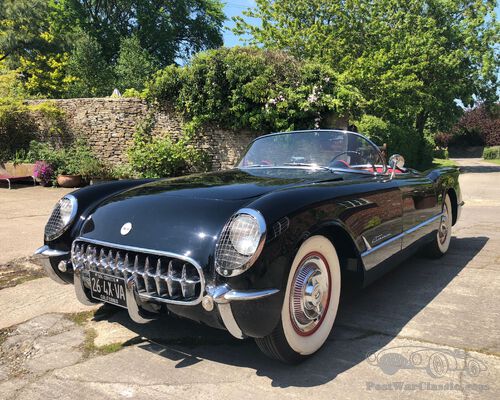
1954 Corvette C1 - SUPER RARE Black!!
Looking for her next lover, my classy 1954 Corvette C1. She's a beautiful sculpture. Never have i had so many adoring comments as when drivi..
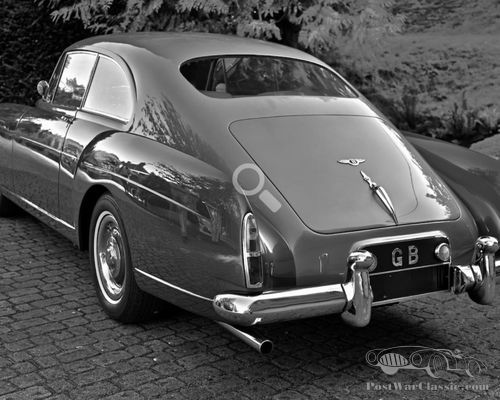
1957 Bentley S1 Fastback by H.J. Mulliner.
1957 Bentley S1 Fastback by H.J. Mulliner.A freshly restored award winning car in like new condition. A later car with Power assited steerin..
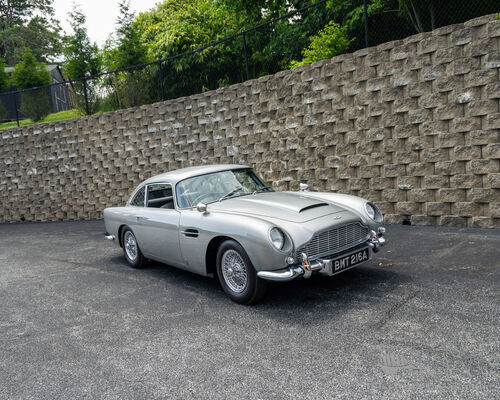
2020 Aston Martin DB5 Goldfinger Continuation | RM Sotheby's | The Monterey Auction
To Be OFFERED AT AUCTION at RM Sothebys' The Monterey Auction event, 13 - 15 August 2026. $1,000,000 - $1,500,000 USD One of 25 examples co..