The global magazine and marketplace for classic car enthusiasts, by enthusiasts.


Filter
Classic Brabham for sale - Brabham cars for sale
-

1954 Corvette C1 - SUPER RARE Black!!
Looking for her next lover, my classy 1954 Corvette C1. She's a beautiful sculpture. Never have i had so many adoring comments as when driving this vehicle. An utter pleasure to have cared deeply for, its time for her new owner to step in. Be quick and caring. Located in the UK at present. •Only 4 Black, C1 53-55 Corvettes,.. -
1954 Chevrolet Corvette C1
Fully restored 1954 C1 Corvette in Black. Stunningly beautiful car, feels like driving a sculptural work of Art. Known to be the oldest Corvette on the UK Classic Corvette register, this originally White car (virtually all were White) was nut / bolt restored in the US by a private collector. Finished in extremely rare Black, only 4 cars were thoug.. -
CADILLAC 75 Fleetwood Sedan - 1951, sortie de musée.
CADILLAC Series 75 Fleetwood Sedan limousine année 1951. La voiture a dormi de longues années bien au sec dans un grand musée Européen, elle a donc été bien préservée du soleil et des intempéries.C’est maintenant une découverte, un peu comme une sortie de grange qui est proposée à la vente.Il s’agit d’une Cadillac ass.. -
1947 Bentley Mark VI Windovers Drop Head Coupe
1947 Bentley Mark VI Windovers DHC.Chassis Number: B-108-AKRegistartion number: JFO394Chassis number B108AK was completed in August of 1947 to the order of Sir Alexander Rogers KBE. The Bentley was bodied as a drophead coupe by the respected coachbuilding firm of Windovers. Founded in 1856 in Huntingdon but from 1924 based in North West London, .. -
1956 Bentley S1 Continental H.J. Mulliner Fastback
1956 Bentley S1 Continental H.J. Mulliner FastbackRegistration number: TBAUnder long term ownership for several decades, this car is a low mileage example having covered a scant 66,000 miles. It is a very early example with single master cylinder having been registered first in January of 1956. We will be properly photographing i.. -
1965 Austin-Healey 3000 Mk III BJ8
Body No. 72940 As the final iteration of the "Big Healey" 3000 Mk III rolled onto the scene, the legendary British sports car manufacturer successfully retained the DNA of its classic curvaceous long hood/short deck sports roadster, while tweaking the cockpit to accommodate 2+2 seating and adding amenities directed towards the booming North .. -
1958 Rolls-Royce Silver Cloud 1 LWB
1958 Rolls-Royce Silver Cloud 1 LWB Chassis number: BLC7Registration Number: 877CGD06 (swiss) Kept in underground parking & Chauffeur driven in Switzerland for the last few decades. This car was purchased as a very low mile example in the 1970's from noted dealers Frank Dale & Stepsons. A chauffeurs .. -
1988 Jaguar Daimler Double Six Series 3 RHD
1988 Jaguar Daimler Double Six Series 3 Vin Number: SAJDDRLW3CA479661Registration Number: E897NOW Just 8645 Miles from new!!! This car is so pristine it still has its original plastic protective film on the sill plates. We sourced this car in 2016 from a prominent Japanese collection & supplied it to t.. -
1987 FERRARI TESTAROSSA LHD
1987 Ferrari Testarossa Vin Number: ZFFA17B000067981Registration Number: D138BSA Supplied new to Japan & with just 16,581Kms covered from new. The current Portugese owner is the second owner of the car & we supplied it to him as part of his collection in 2016. We purchased it in Japan from the first o.. -
1958 BENTLEY S1 CONTINENTAL PARK WARD DHC
1958 Bentley S1 Continental Park Ward DHC Chassis Number & Registration available on request to qualified buyers. Please call Richard Biddulph for details. Coming to us from one of the UK's most prominent collections along with a sister car a Bentley S1 fastback. This car is in impeccable..


Brabham
GB, 1962 to date
(1) Brabham Racing Developments Ltd, New Haw, Weybridge, Surrey, 1962 – 1966
(2) Motor Racing Developments Ltd, New Haw, Weybridge, Surrey, 1966 to date
The meteoric rise and continued ascendancy of the Brabham was one of the most marked features of racing in the mid-sixties. Jack Brabham’s world championships for Cooper in 1959 and 1960 were underlined by a further triumph in his own Brabham car in 1966, and by his driver Hulme in 1967. Advertising less power than their rivals, the Brabham scored on reliability, achieved by steady, logical development. For the 1½-litre Formula 1, Coventry-Climax V8 engines were used in the Brabham, the great American driver Dan Gurney scoring two victories in the 1964 ‘grandes épreuves’. For the new formula a sohc. V8, developed by Brabham’s partner R. Tauranac from a Buick design, was produced in conjunction with the Australian Repco concern. As on all Brabham cars, a small-diameter tubular steel space-rame was retained, in an era when other contenders were following the monocoque fashion set by Lotus.
Success attended Brabham in whatever class he entered, the last year of Formula Junior (1963) being dominated by his products, usually driven by F. Gardner or D. Hulme, whilst Hulme sensationally won the 1965 Tourist Trophy in a Brabham BT8 sports car, with Coventry-Climax engine of only 2 litres. The record in the junior formula was equally impressive, mastery of Formula 3 class being achieved by 1965. In Formula 2 the Brabham marque won the majority of races in 1964, and the Honda-engined model completely swept the board in 1966.
The model numbering had reached Brabham BT21 by the beginning of 1967, this being a typically Brabham F3 car with Cosworth-Ford engine, Hewland Mark VI gearbox, tubular space frame, and three-piece glassfibre body. Total production passed the 300 mark during 1967.
The 1968 and 1969 seasons were less fruitful for Brabham, despite a developed version of the Repco engine and eventual adoption of the Cosworth unit in Formula 1. Some consolidation was achieved in increasing sales of single-seaters Brabham cars for sale, noted for their handling qualities, in the lesser formulae. The Brabham firm’s first monocoque was for Inidanapolis in 1968, but others did not appear until 1970, when the Brabham BT33 Formula 1 cars had more success, and Tony Trimmer took the Formula 3 Shell Championship with a Brabham BT28 space-framed machine. Its successor, the Brabham BT35, had as much success in hill-climbs as on the circuits.
During 1971 and 1972 the quasi-works Rondel Racing (who included ex-World Champion Graham Hill) and other Formula 2 teams did quite well with the Brabham BT36 space-framed cars. Carlos Reutemann started 1972 by earning pole position in his first Grand Prix, but this was not fully followed up. He used a ‘lobster-claw’ Brabham BT34 with separate frontal radiators, and similar rear suspension to the earlier Brabham BT33.
The Brabham BT38 Formula 2, 3, B or Atlantic car of 1972 was the first Tauranac-designed ‘for sale’ monocoque, though shortly afterwards Ron Tauranac followed Brabham’s lead in leaving the firm, and control passed to a group headed by financer Bernard Ecclestone. A further ‘lobster-claw’ Formula 1 model, the Brabham BT39, was developed form this design for the V12 Weslake engine. New production models for 1973 were the Brabham BT40 (F2), Brabham BT40B (F Atlantic) and Brabham BT41 (F3).
Source: Georgano, encyclopedia of motorcar; DF
The information is written with the greatest of care. However, if you have any suggested amendments please contact us at office@prewarcar.com


Featured
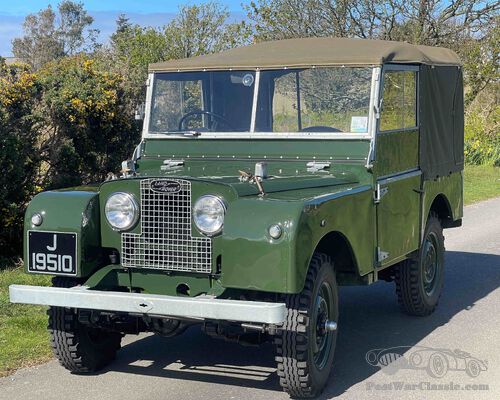
1952 Land Rover Series 1
Technical Specifications:Mark & Model: Land Rover Series 1Year: 1952Registration plate: Jersey registered
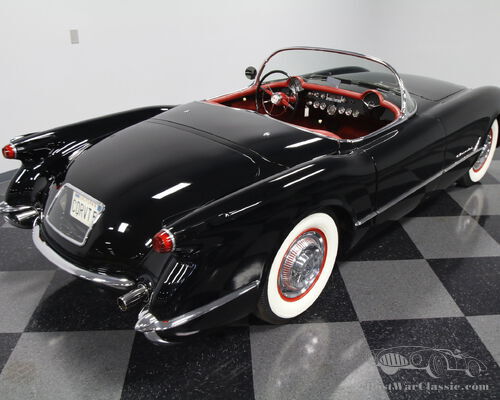
1954 Chevrolet Corvette C1
Fully restored 1954 C1 Corvette in Black. Stunningly beautiful car, feels like driving a sculptural work of Art. Known to be the oldest Corvette on t..
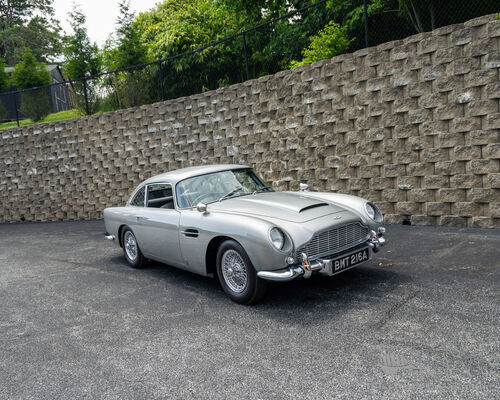
2020 Aston Martin DB5 Goldfinger Continuation | RM Sotheby's | The Monterey Auction
To Be OFFERED AT AUCTION at RM Sothebys' The Monterey Auction event, 13 - 15 August 2026. $1,000,000 - $1,500,000 USD One of 25 examples co..