The global magazine and marketplace for classic car enthusiasts, by enthusiasts.


Filter
Classic Bristol, HWM for sale - Bristol, HWM cars for sale
-

1975 BMW 3.0 CSi | The Quail Auction 2026
Chassis No. 4340803 Engine No. 4340803 Please check back for more information shortly. -
1975 Chevrolet Caprice Classic Convertible | RM Sotheby's | The Hershey Auction
To Be OFFERED AT AUCTION WITHOUT RESERVE at RM Sothebys' The Hershey Auction event, 7 - 8 October 2026. Offered Without Reserve | $40,000 - $60,000 USD Please check back soon as our dedicated cataloguing team is preparing the description for this lot. To view this car and others currently consigned to this auction, please visit the RM website a.. -
1966 Cadillac DeVille Convertible | RM Sotheby's | The Hershey Auction
To Be OFFERED AT AUCTION WITHOUT RESERVE at RM Sothebys' The Hershey Auction event, 7 - 8 October 2026. Offered Without Reserve | $40,000 - $50,000 USD Please check back soon as our dedicated cataloguing team is preparing the description for this lot. To view this car and others currently consigned to this auction, please visit the RM website a.. -
1954 Cadillac Series 62 Eldorado | RM Sotheby's | The Hershey Auction
To Be OFFERED AT AUCTION WITHOUT RESERVE at RM Sothebys' The Hershey Auction event, 7 - 8 October 2026. Offered Without Reserve | $100,000 - $140,000 USD One of only 2,150 produced in the second year of Eldorado productionAttractive older concours restoration, in excellent running orderFinished in its original Alpine Wh.. -
1979 Buick Electra Park Avenue Coupe | RM Sotheby's | The Hershey Auction
To Be OFFERED AT AUCTION WITHOUT RESERVE at RM Sothebys' The Hershey Auction event, 7 - 8 October 2026. Offered Without Reserve | $28,000 - $35,000 USD Please check back soon as our dedicated cataloguing team is preparing the description for this lot. To view this car and others currently consigned to this auction, please visit the RM website a.. -
1970 Buick Gran Sport Stage 1 Convertible | RM Sotheby's | The Hershey Auction
To Be OFFERED AT AUCTION WITHOUT RESERVE at RM Sothebys' The Hershey Auction event, 7 - 8 October 2026. Offered Without Reserve | $160,000 - $200,000 USD Please check back soon as our dedicated cataloguing team is preparing the description for this lot. To view this car and others currently consigned to this auction, please visit the RM website.. -
1954 Buick Skylark | RM Sotheby's | The Hershey Auction
To Be OFFERED AT AUCTION WITHOUT RESERVE at RM Sothebys' The Hershey Auction event, 7 - 8 October 2026. Offered Without Reserve | $150,000 - $200,000 USD Please check back soon as our dedicated cataloguing team is preparing the description for this lot. To view this car and others currently consigned to this auction, please visit the RM website.. -
Citroën 2CV Type A – 1953
Highlights Rare early Type A modelFully restored, clean and healthy exampleMechanically sound and ready to enjoyExcellent value for a 1953 2CVIdeal for collectors or enthusiasts Fully restored – Excellent condition – Rare early Type AThis early 1953 Citroën 2CV Type A, re.. -
Ferrari 250 GT 2+2 (GTE) Series II
1962 Ferrari 250 GTE Series II VIN 3857 GT. Matching numbers engineMatching coloursMassini reportSame German owner for the last 22 yearsFull history from new (US, Switzerland, Germany)Comprehensive service historyElegant, early version with three tail lights .. -
Bentley Continental SII Flying Spur LHD
1962 Bentley Continental Flying Spur LHD - Factory Display Car London Motor Show 1962, ex Bill Harrah - Chassis BC49LCZ Engine C48BC (matching) Body H.J. Mulliner #6442 - One of only 55 LHD examples built from 1960-1962. Desirable factory options - Lightweight, aluminium bo..


Bristol
GB, 1947 to date
(1) Bristol Aeroplane Co Ltd, Filton, Bristol, 1947 -1960
(2) Bristol Cars Ltd, Filton, Bristol, 1960 to date
The first Bristol 400 was an anglicized version of the well-liked German 2-litre BMW featuring a 6-cylinder ohv push-rod engine developing 85bhp in standard form, transverse independent front suspension, rack and pinion steering, and centralized chassis lubrication. The Bristol for sale was expensive at £2.375, and was supplemented by the ‘Bristol 401’ saloon and ‘Bristol 402’cabriolet with Italian styling. Bristols were strictly fast touring cars, and a ‘Bristol 400’ took 3rd place in the 1949 Monte Carlo Rally, though a team of aerodynamic Bristol coupés ran in the 1953 and 1954 Le Mans 24 Hour Races. The engines, however, were supplied to Frazer-Nash, A.C. and Cooper as well as numerous smaller specialist constructors, while the American Arnolt was a sporting version produced for a Chicago importer. By 1955 the Bristol had grown into a 4-door saloon with battery and spare wheel housed in the front wings, and overdrive as standard; this model, the ‘Bristol 405’ acquired disc brakes in 1958. Its successor, the ‘Bristol 406’ had a 2.2-litre engine, and was even more expensive (£4.493 as against £3.189 for the ‘Bristol 405’); production was down to a trickle. The old 6-cylinder unit finally gave way in 1962 to a 250bhp ohv Chrysler V8 and Torqueflite automatic gearbox, and by 1968 this Bristol 407 had evolved into the Bristol 410 with minor styling improvements and a gear selector on the floor in place of the older push buttons. Since 1970 Bristol have made the 6.277cc Bristol 411 on similar lines; in 1973 form it offered 335bhp and 138mph, with such refinements as dual-circuit dis brakes, power-assisted steering, and through-flow ventilation.
Source: Georgano, encyclopedia of motorcar; DF, MCS
The information is written with the greatest of care. However, if you have any suggested amendments please contact us at office@prewarcar.com
H.W.M.
GB, 1950 – 1956
H.W. Motors Ltd, Walton-on-Thames, Surrey
John Heath and George Abecassis supported Formula 2 racing energetically in the 1950 – 1953 period with Alta-powered 2-litre and 2½-litre HWM cars, and did much for Britain’s prestige at a time when the national livery was seldom seen on the circuits. These HWM cars had twin ohc 4-cylinder engines, all-round independent suspension and preselector (later, Jaguar synchromesh) gearboxes. In 1952 a 1-2-3 victory was achieved with HWM cars in the International Trophy at Silverstone, but in spite of frequent HWM successes and Paul Frère’s win, with an HWM car, in the Grand Prix des Frontieres at Chimay, the HWM car company lacked the finance to compete on even terms with the Italians. Very few HWM cars were sold, though the HWM company later made and raced larger sports HWM cars with such engines as the 3.4-litre 240bhp Jaguar D engine, tubular ladder-type frame and a De Dion rear axle. The manufacture of HWM cars ceased with John Heath’s death in 1956.
Source: Georgano, encyclopedia of motorcar; MCS
The information is written with the greatest of care. However, if you have any suggested amendments please contact us at office@postwarclassic.com


Featured

Rolls-Royce
Rolls-Royce Silver Wraightlinks gestuurd, automatic, stuurbekrachtigingkleur antraciet grijs, lopende auto op Nederlands kenteken
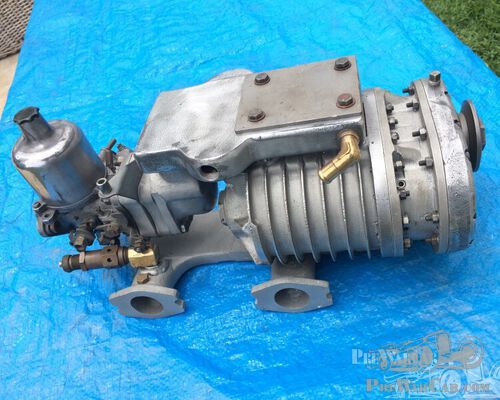
Blower / Compressor / Supercharger - Godfrey Marshall - A Series BMC Engine
SuperchargerA Godfrey Marshall cabin blower Type Mk22 converted to vehicle use by Barry Ekins of Sydney NSW. Ekins created kits for many popula..
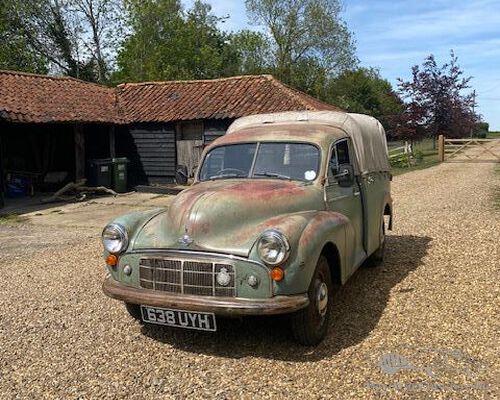
1954 Morris Minor Series II Pick Up
Morris Minor Series II Pick-Up, first registered 15th Jan 1954. Exported from new to Australia, returned to the UK in 2014. Swansea documentation r..