The global magazine and marketplace for classic car enthusiasts, by enthusiasts.


Filter
Classic Bristol for sale - Bristol cars for sale
-

1957 LHD Aston Martin DB MKIII Saloon. AM300/3/1344
A rare, left-hand drive example, in very smart and sound condition, unusually and very attractively finished in cream, with contrasting deep red leather and wire wheels – a colour scheme that works surprisingly well, suiting the car nicely in many ways. The paintwork is to a high standard and has a 'warm' feel to it, and the interior is lovely, .. -
1994 Aston Martin Virage Volante Wide Body RHD.
1994 Aston Martin Virage Volante Wide Body RHD.Chassis number: SCFDAM2C2PBR60114Registration number: L871SUAJust 45,350 miles have been covered in this car since new. Additionally it comes to us with massive service history bills from the likes of HWM Aston Martin, Davron, Desmond Smail, Trinity Engineering etc etc attestin.. -
1986 Ferrari Testarossa | RM Sotheby's | Private Sales
Asking | €320,000 EUR Said to be one of just six examples of the Testarossa 'Monospecchio' delivered in Argento Metallizzato over a red interiorFerrari Classiche certified in January 2026, retains its original chassis, engine, and gearboxRecipient of a comprehensive engine and gearbox service by Toni Auto in November 202.. -
Alfa Romeo 1750 GTV - LHD
Technical Specifications:Mark & Model: Alfa Romeo 1750 GTV - LHDYear: 1970Registration plate: Jersey registeredChassis Number: AR1377920Engine Number: AR00548 H9992Engine Capacity: 1779 ccTransmission: 5-speed manualMileage: 57,935 kmsBody style: 2-door CoupeInterior color.. -
Multiple Concours Winner: Stunning Austin Healey 100-4/BN2 from 1955
Austin Healey 100-4/BN2 from 1955-In outstanding state and condition-Multiple concours winner-Ex UK-Registration: VFO 398-Ready and eligible for Mille Miglia-A very desirable British Classic Sportscar The Austin-Healey 100-4 BN1 and also the BN2 Series cars are considered the “most wanted” .. -
1963 VW T1 Westfalia SO33 Camper with pop up roof.
1963 VW T1 Westfalia SO33 Camper Vin Number: 1142211 Registration Number: 63D120003 This 1963 VW T1 Westfalia SO33 Camper completely restored to concourse condition by VW experts in The Netherlands in 2015 to original VW ‘Westfalia’ specifications. This VW German factory built .. -
1948 Bentley W.O. Style Mark VI special.
1948 Bentley W.O. Style Mark VI special. Chassis Number: B149CD Registration Number: MZ1598 A beautifully constructed special finished 4 years ago & built at the behest of a long time onwer of multiple W.O. Cricklewood Bentleys as his last car. At the age of 83 he now wishes.. -
1949 Triumph Roadster
1949 Triumph 2000 Roadster Registration Number: 435YUX Restored beautifully over a 15 year period by a fastidious owner with some useful modern upgrades included. This Triumph Roadster ie resplendent in pale metallic Blue with the paint being pristine & having been the winner of var.. -
1975 BMW 3.0 CSi | The Quail Auction 2026
Chassis No. 4340803 Engine No. 4340803 Please check back for more information shortly. -
1975 Chevrolet Caprice Classic Convertible | RM Sotheby's | The Hershey Auction
To Be OFFERED AT AUCTION WITHOUT RESERVE at RM Sothebys' The Hershey Auction event, 7 - 8 October 2026. Offered Without Reserve | $40,000 - $60,000 USD Please check back soon as our dedicated cataloguing team is preparing the description for this lot. To view this car and others currently consigned to this auction, please visit the RM website a..


Bristol
GB, 1947 to date
(1) Bristol Aeroplane Co Ltd, Filton, Bristol, 1947 -1960
(2) Bristol Cars Ltd, Filton, Bristol, 1960 to date
The first Bristol 400 was an anglicized version of the well-liked German 2-litre BMW featuring a 6-cylinder ohv push-rod engine developing 85bhp in standard form, transverse independent front suspension, rack and pinion steering, and centralized chassis lubrication. The Bristol for sale was expensive at £2.375, and was supplemented by the ‘Bristol 401’ saloon and ‘Bristol 402’cabriolet with Italian styling. Bristols were strictly fast touring cars, and a ‘Bristol 400’ took 3rd place in the 1949 Monte Carlo Rally, though a team of aerodynamic Bristol coupés ran in the 1953 and 1954 Le Mans 24 Hour Races. The engines, however, were supplied to Frazer-Nash, A.C. and Cooper as well as numerous smaller specialist constructors, while the American Arnolt was a sporting version produced for a Chicago importer. By 1955 the Bristol had grown into a 4-door saloon with battery and spare wheel housed in the front wings, and overdrive as standard; this model, the ‘Bristol 405’ acquired disc brakes in 1958. Its successor, the ‘Bristol 406’ had a 2.2-litre engine, and was even more expensive (£4.493 as against £3.189 for the ‘Bristol 405’); production was down to a trickle. The old 6-cylinder unit finally gave way in 1962 to a 250bhp ohv Chrysler V8 and Torqueflite automatic gearbox, and by 1968 this Bristol 407 had evolved into the Bristol 410 with minor styling improvements and a gear selector on the floor in place of the older push buttons. Since 1970 Bristol have made the 6.277cc Bristol 411 on similar lines; in 1973 form it offered 335bhp and 138mph, with such refinements as dual-circuit dis brakes, power-assisted steering, and through-flow ventilation.
Source: Georgano, encyclopedia of motorcar; DF, MCS
The information is written with the greatest of care. However, if you have any suggested amendments please contact us at office@prewarcar.com


Featured
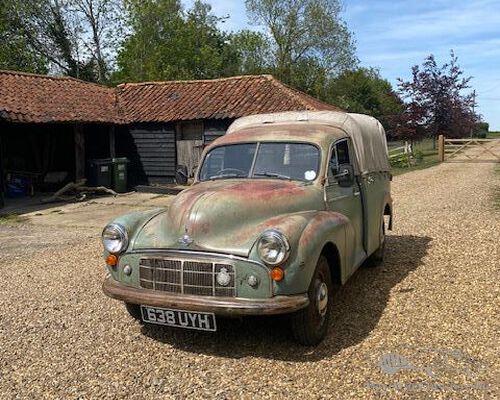
1954 Morris Minor Series II Pick Up
Morris Minor Series II Pick-Up, first registered 15th Jan 1954. Exported from new to Australia, returned to the UK in 2014. Swansea documentation r..
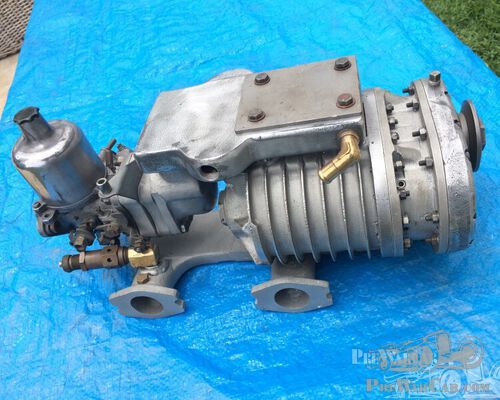
Blower / Compressor / Supercharger - Godfrey Marshall - A Series BMC Engine
SuperchargerA Godfrey Marshall cabin blower Type Mk22 converted to vehicle use by Barry Ekins of Sydney NSW. Ekins created kits for many popula..
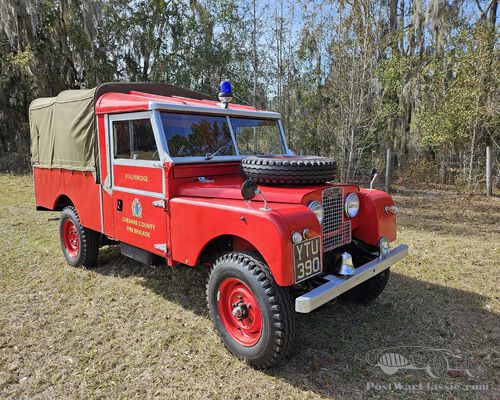
1957 Series 1 Land Rover Fire Engine + Coventry Climax Godiva Fire Pump
Betsy was used by Cheshire Fire Service (UK) from 1957 to 1975. She was based at Hazel Grove and Stalybridge Fire stations. She comes with an exten..