The global magazine and marketplace for classic car enthusiasts, by enthusiasts.


Filter
Classic Cadillac for sale - Cadillac cars for sale
-

CADILLAC 75 Fleetwood Sedan - 1951
CADILLAC Series 75 Fleetwood Sedan limousine year 1951. The car slept for many years in a large European museum, so it was well preserved from the sun and bad weather.It is now a discovery, a bit like a barn find which is offered for sale. This is a fairly rare Cadillac intended for the Swiss market delivered b.. -
1951 Cadillac Series 62 Convertible.
1951 Cadillac Series 62 Convertible. Chassis number: 516260152Registration Number: PXS375 A stunning car in brand new condition having been the recipient of a nut & bolt rebuild in the USA. Perfect cars such as this need but few words: The car is finished in its original colours of Mist Gray M.. -
1957 Cadillac Series 70 Eldorado Brougham
Body No. 256 The 1957 Cadillac Eldorado Brougham set a new standard for exclusivity and opulence-an achievement that remains legendary today. For years, Cadillac proudly proclaimed itself "The Standard of the World," and with the no-compromise Series 70 Eldorado Brougham, that declaration was fully realized. Priced at an astounding $13,074-t.. -
1956 Cadillac Series 62 Coupe Deville
1956 Cadillac Series 62 Coupe Deville Body Number: 19186 Registration Number: 476XVY A rare Cadillac series 62 coming to us from a private collection. This car has had a huge restoration & is in really fine condition. Exterior paintwork is dark red with a white roof & in.. -
1957 Cadillac Eldorado Biarritz Convertible
FAMOUS CAR! This beauty was previously owned by John Entwistle, the bass player of the legendary rock band the WHO. He played with Ringo Star’s band as well.Copies of registration come with the car.Fully loaded car including rare FACTORY AIRCONDITIONINGOlder complete restoration holding up really well,;car shows great in an.. -
1976 Cadillac Eldorado Convertible | The Quail Auction 2026
Chassis No. 6L67S6Q182037 Cadillac entered the mid-1970s firmly established as the standard-bearer of American luxury, with the Eldorado Convertible occupying the pinnacle of the marque's lineup. Long, elegant, and effortlessly powerful, it embodied the confidence and theatricality that had long defined Cadillac. Even as the automotive lands..


Cadillac
US, 1903 to date
(1) Cadillac Automobile Co, Detroit, Mich., 1903 – 1905
(2) Cadillac Motor Car Co, Detroit, Mich., 1905 to date
The ‘Standard of the World’ started humbly as a single-cylinder car selling for $750. Henry M. Leland, its creator, had been associated with Henry Ford and has also built engines for Oldsmobile. The Model-A Cadillac was markedly similar to the early Fords in having a horizontal underfloor engine, 2-speed planetary transmission and central chain drive via a spur-type differential, but Cadillac’s 1½-litre inlet over exhaust power unit had one cylinder where Ford used two. There was no bonnet on the early Cadillac models. This very successful design remained in production until 1908, later improvements including rack-and-pinion steering, transverse front suspension and a dummy bonnet. The Cadillac marque was introduced to Britain by F.S. Bennett, who in 1908 conducted a ‘standardization test’ at Brooklands. Three single-cylinder Cadillac cars were dismantled and the parts mixed up – they were then reassembled and the vehicles run on the track. The R.A.C. awarded Cadillac the Dewar Trophy for this achievement.
A 30hp 4-cylinder Cadillac car with separate cylinders and copper jackets was announced for 1906 and 75.000 of this type Cadillac were sold before it was discontinued in 1914. The original planetary transmission gave way first to a conventional 3-speed box, and finally in 1914 to a 3-speed box with 2-speed back axle. Cadillac was one of the firms organized into the General Motors group in 1909 by W.C. Durant, and in 1910, when a 4-cylinder Cadillac tourer could be bought for $1600, the company was claiming that tolerance on 112 parts of the car were accurate to one-thousandth of an inch. 1912 saw a most important Cadillac innovation: the standardization of the Delco system of electric lighting and starting on the Cadillac, now of 5½-litres capacity and capable of 60mph. The first left-hand drive Cadillac of 1915 was also the first of the company’s V8s, to become as much a hallmark of the breed as were Buick’s overhead valves. Inspired by the De Dion Bouton of 1910 it had 5.1-litre engine and sold for $2700. 13.000 V8 Cadillac cars were sold in the first year of production and the model was widely used by the U.S. Army in World War 1. Cylinder heads were detachable from 1917 on, and 1924 Cadillac versions had Duco cellulose finish and front wheel brakes.
In 1927, when 47.000 Cadillac cars were sold, a less expensive companion make, La Salle appeared, and the cars were restyled in 1928. The synchromesh gearbox made its world debut with the 1929 Cadillac models, which also featured chromium plating and safety glass, with a price range from $3.295 to $5.995. 1930 saw the advent of the ohv Cadillac V16 of 7.4-litres, which gave 185bhp and had a wheelbase of 12ft 4in. This sold at an average rate of 500 Cadillac cars a year for eight seasons in the $6.000-$9.000 price backet. It was joined in 1931 by an equally impressive ohv 6-litre V12 Cadillac for sale. Improvements over the next few years included power brakes (1931), ride control (1932), no-draught ventilation (1933), Dubonnet type independent front suspension (1934) and ‘turret-top’ all-steel bodies (for sale in 1935). 1938 Cadillac models had column change as standard, a year ahead of other GM products, while the V12 and V16 were dropped in favour of a side-valve short-stroke Cadillac 16-cylinder model which was made until 1940. Another new model for Cadillac in 1938, the 8-cylinder Cadillac Sixty Special, anticipated GM’s 1940 styling with its absence of running boards and 4-light sedan bodywork. 5.7-litre side-valve V8s in three wheelbase lengths made up the 1941 Cadillac range, on which Hydramatic transmission was optional for the first time.
The post-war era was to see Cadillac outstrip all its competitors in the top-price class and become an international symbol of wealth. Sales climbed from 66.000 cars in 1941 to 103.857 Cadillac cars in 1950, and to a new record of 165.959 Cadillac cars in 1964. Tail fins made their first appearance on Cadillac’s 1948 fastback coupé, and in 1949 Cadillac, along with Oldsmobile, adopted overhead valves and oversquare cylinder dimensions, their new 5.4-litre engine developing 160bhp. Cadillacs were raced at Le Mans in 1950 by Briggs Cunningham and the Cadillac engine was also used in export editions of Britain’s J2. Allard. Power output increased steadily: 190bhp in 1952 (by which time manual transmission was no longer offered), 210bhp in 1953 (when a 12-volt electric system was standardized), and 230bhp in 1954, the year when panoramic wrap-around windscreens and power-assisted steering became standard on the Cadillac for sale.
The expensive Cadillac Eldorado Brougham of 1957 (it cost over $13.000) was the first car to have air suspension (dropped after a few seasons) as standard equipment, while Cadillac, along with Lincoln, started the fashion for four headlamps, that later became universal in the USA. 1966 Cadillac cars featured GM’s perimeter-type chassis frame, a 340bhp 7-litre engine, variable-rate power steering, full air conditioning, electric door locks and seat controls, a time switch for the headlamps and a six-position steering wheel. Prices started at $4.650. In 1967 Cadillac set a new sales record of 213.161 cars, bettered in 1969 with 266.798/ They introduced a fwd car on Oldsmobile Toronado lines, the Fleetwood Cadillac Eldorado with torsion-bar ifs, self-levelling suspension, and front disc brakes, these last being applied to the more expensive Cadillac Fleetwoods with conventional drive, and to all the 1969 Cadillac range. Capacity of the Cadillac V8 engine was increased – to 7.735cc in 1968 and to 8.2 litres in 1970, but otherwise there were no major changes. In 1973 Cadillac were one of the few firms offering a nine-seater limousine: the Cadillac 75 with a wheelbase of 12ft 7½in and an overall length of 20ft 8in.
Source: Georgano, encyclopedia of motorcar; MCS
The information is written with the greatest of care. However, if you have any suggested amendments please contact us at office@postwarclassic.com


Featured
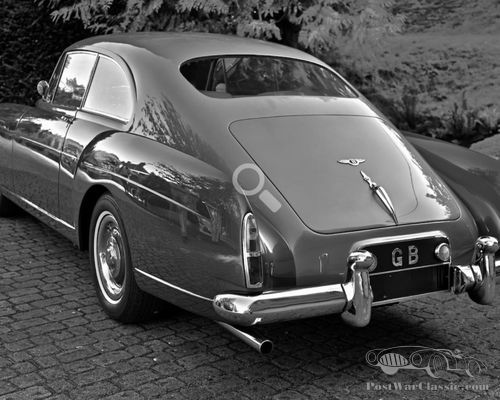
1957 Bentley S1 Fastback by H.J. Mulliner.
1957 Bentley S1 Fastback by H.J. Mulliner.A freshly restored award winning car in like new condition. A later car with Power assited steerin..

Alfa Romeo Barchetrta Bianchi Prototype 600 Kg 150CV
1 of 1. Never repeated. 1985 Alfa Romeo Barchetta "by Bianchi" Built by hand in Argentina. 600kg. 150hp. Twin Webers. Alfa 2300 heart. Tubular stee..
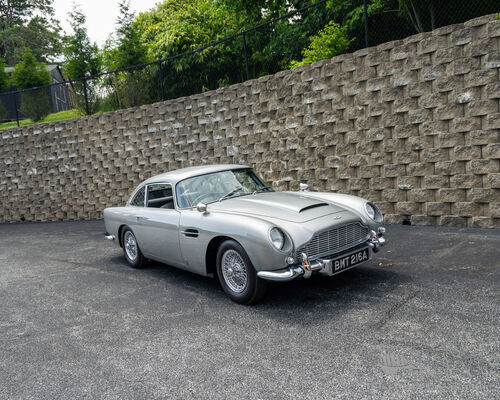
2020 Aston Martin DB5 Goldfinger Continuation | RM Sotheby's | The Monterey Auction
To Be OFFERED AT AUCTION at RM Sothebys' The Monterey Auction event, 13 - 15 August 2026. $1,000,000 - $1,500,000 USD One of 25 examples co..