The global magazine and marketplace for classic car enthusiasts, by enthusiasts.


Filter
Classic Cooper for sale - Cooper cars for sale
-

1959 Cooper-Climax Type 51, 2-Litre
The pioneering rear engined Cooper-Climax Formula racing cars of the Type 43/45/51 family stand alongside cars such as the Alfa Romeo Tipo B and Lotus 79 as designs that truly revolutionized the world of Grand Prix racing. Customers flocked to Cooper's garage door to buy their revolutionary rear-engined racing cars. Then in 1955 the centre-seat ..

Cooper
GB, 1948 – 1969
Cooper Car Co Ltd, Surbiton, Surrey, 1948 – 1969, Byfleet, Surrey, 1966 – 1969
John Cooper, with his father Charles Cooper, commenced car construction with 500cc single-seaters. Two Cooper cars were built in 1946, using Fiat Topolino parts and Speedway JAP engines, for himself and Eric Brandon. These proving successful in 1947, commercial production was commenced with the Cooper Mark II version the following year. Amongst the first drivers were Sir Francis Samuelson, R.M. Dryden, and an unknown youth called Stirling Moss, who drew attention to the Cooper marque and to himself by notching 11 wins in the first season. A sports car was built using a JAP engine, but the first production 2-seater type Cooper was the 1442cc Vauxhall-engined model of 1949, using a ‘500’ type chassis but front engine location. The MG-engined versions, especially that of Cliff Davis, were successful in racing.
The 500cc Cooper cars were developed at the rate of approximately a Mark per year up to the end of the old Formula 3 in 1958. From 1950 to 1953 there were serious threats from Kieft and J.B.S., but apart from some interference from Staride, Arnott and some specials on isolated occasions, Cooper otherwise dominated the class for tis entire life-span. The standard specification embraced independent suspension by transverse leaf springs, and at first a box-section frame. The 1952 Cooper Mark VI employed a multi-tubular chassis, and another new frame was seen in the Cooper Mark VIII of 1954. Disc brakes appeared with the Cooper Mark IX the following year. By 1956 some 360 Cooper cars had been made in all, but thereafter interest in the class tailed off. In the latter years the ‘double-knocker’ twin overhead camshaft Norton engine was almost ubiquitous, though some races were held especially for JAP-engined machines.
Spike Rhiando in 1948 was the first to put a 1000cc JAP V-twin in a Cooper. Such machines, when driven with care, made their presence felt in the shorter Formula 2 races, but it was in hill-climbs that these Cooper cars became quite invincible. They dominated the British Championships for many years from 1951, in the hands of Wharton, Boshier-Jones, Marsh and most other serious contenders. In the record-breaking field, Formula 3-based cars achieved 56 class records between 1951 and 1956, mostly at Montlhéry and Monza.
In 1952 the Cooper Mark V chassis was modified, with a front-mounted 2-litre Bristol engine, tuned at first to 135bhp and ultimately to over 150bhp. Mike Hawthorn’s phenomenal achievements in one of the first of these Cooper cars earned him recognition as a top-flight driver, and a place in the Ferrari works team. The 1953 version used a tubular frame, and alternative engines used by private owners included Alta, E.R.A. and Maserati. A Cooper sports model was also made, retaining the earlier box-section chassis, but with 141bhp for a weight of 1316lb. The last front-engined Cooper sports models for sale were the multi-tubular space-framed cars designed for P.N. Whitehead in 1954 with ‘C’-type Jaguar engine, and the following year’s Cooper Mark II version with ‘D’-type engine.
The real milestone was the 1098cc Coventry-Climax-engined Cooper sports model, with rear engine and central drving position. A space-frame was used, retaining transverse leaf suspension, transmission being via a reversed Citroën gearbox. The aluminium all-enveloping body pioneered the ‘shovel-snout-Kamm tail’ profile that became almost universal amongst sports-racing cars of the 1960’s. The dozen Cooper cars made in 1955 achieved immediate success in their class, and in the class above. One of these Cooper models, fitted with a full-width single-seater body and BS4 Bristol engine, provided a British Grand Prix entry for Jack Brabham. Cars finished at Le Mans that year and in 1956, in which year the 1460cc FWB Coventry-Climax engine was adopted.
The next step was the introduction of a Formula 2 version, which achieved some success, mainly because it appeared earlier than its rivals. The 1957 Cooper car model employed the 1475cc FPF engine with dohc, and in 1958 coil front suspension at last replaced the traditional leaf spring. Ten out of thirteen Formula 2, Borgward engines were used with success. The 1960 Cooper GP machine was lower, adopted coil rear suspension and a 5-speed gearbox, and retained the honours. Formula Juniors Marks 1 and 2 appeared, with BMC engines, and gave John Surtees his first racing on four wheels.
1961 brought the new 1½-litre formula, but no Coventry-Climax engines sufficiently powerful to stave off the Ferraris. Brabham, however, showed a portent of things to come by finishing 9th at Indianapolis with only 2¾-litres in his offset, modified Cooper Formula 1 car. Meanwhile, the Cooper cars had been budy on ‘Minis’, and in 1961 BMC announced the ‘Mini-Cooper’ sports saloon for sale, with engine stretched to 997cc, two HS2 SU carburetors and disc front brakes. During the following years there were a number of developments, of 970. 998, 1071, 1275 and 1293cc and countless racing and rally successes, culminating in the European Rally Championships held by the incomparable BMC team of Aaltonen, Hopkirk and Makinen. Scarcely ever have Cooper themselves employed a less than outstanding driver, and works racing exponents have included, in addition to those mentioned elsewhere, Banks, Brown, Bueb, Fitzpatrick, Handley, Hill, Leston, Lewis-Evans, Love, Rhodes, Rindt, Rodriguez, Russell and Sir John Whitmore.
By 1962 the Formula 1 V8 Coventry-Climax was ready, and McLaren and Cooper achieved a little success. A new car (the Cooper Type 66) with 6-speed gearbox was made for 1963, but most success came in the sports class, headed by Salvadori, BMC ‘hydrolastic’ suspension was tried on the Formula Junior machines. For 1964 new tubular space-frames were re-inforced to Cooper cars by ‘semi-monocoque’ bodies, but it was only in Formula 3 – where Stewart’s Cooper Type 72 won twelve of the seventeen races – that success was found.
1965 saw suspension and other improvements and for the 3-litre Formula 1 of 1966 onwards a new monocoque was designed by Robinson for the V12 Maserati engine.
The Cooper company’s financial standing was strengthened by backing from the Chipstead Motors group from 1965, and between 1964 and 1967 over 60 Formula 2 and Formula 3 monopostes were sold. From then on they suffered a further and fatal decline, accelerated by misfortunes and bad engine choices in Formula 1. A final attempt was made to cash in on the new Formula 5000 with a modification of the Formula 1 car, but though the Cooper T90 was among the first vehicles built from this formula, its performance was quickly exlipsed by later designs. When British Leyland rationalized their Mini range for 1972, the Cooper name disappeared entirely from the manufacturers’ catalogues.
Source: Georgano, encyclopedia of motorcar; DF
The information is written with the greatest of care. However, if you have any suggested amendments please contact us at office@postwarclassic.com


Featured
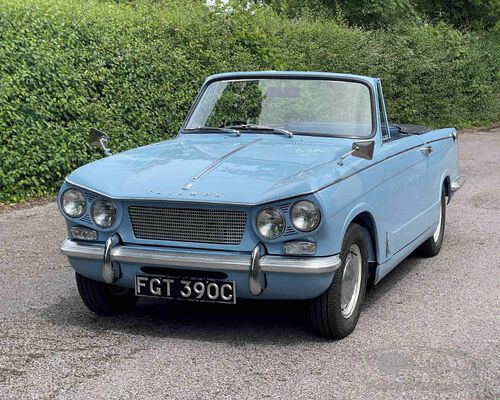
Triumph Vitesse 6 Convertible
Technical SpecificationsMark & Model: Triumph Vitesse 6 ConvertibleYear: 1965Registration plate: UK registered
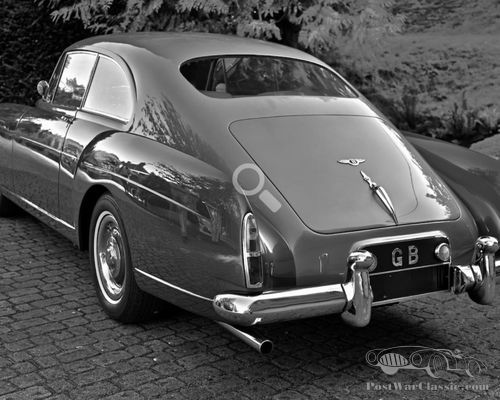
1957 Bentley S1 Fastback by H.J. Mulliner.
1957 Bentley S1 Fastback by H.J. Mulliner.A freshly restored award winning car in like new condition. A later car with Power assited steerin..
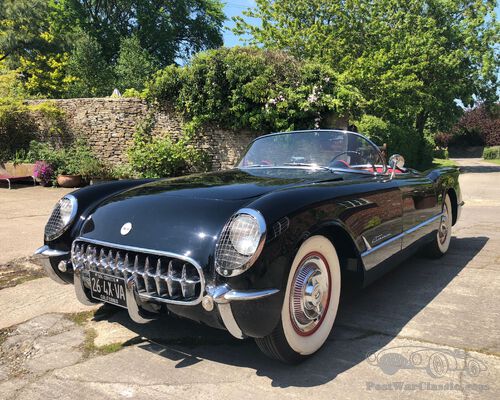
1954 Corvette C1 - SUPER RARE Black!!
Looking for her next lover, my classy 1954 Corvette C1. She's a beautiful sculpture. Never have i had so many adoring comments as when drivi..