The global magazine and marketplace for classic car enthusiasts, by enthusiasts.


Filter
Classic HRG, Frazer Nash for sale - HRG, Frazer Nash cars for sale
-

HRG 1500cc
1951 HRG 1500cc – Chassis W211, Engine C1334S Originally registered on 4th August 1951 as PPL370, this HRG features coachwork by St Leonard’s Engineering, which was completed in July 1951.The first owner was Alfred Temple of Surrey, and originally finished in cream with a red interior. At this time HRG gave two engine option.. -
1948 Frazer Nash 'High Speed' Le Mans Replica | RM Sotheby's | The Woodcote Park Auction
To Be OFFERED AT AUCTION at RM Sothebys' The Woodcote Park Auction event, 8 July 2026. £280,000 - £360,000 GBP The first post-war Frazer Nash competition modelShown at the 1948 Earls Court Motor ShowOriginally purchased by Czechoslovakian racer Frantisek Dobry Participant in period events, including the 1949 Gr.. -
1956 Jaguar XK140 based Frazer Nash LHD Le Mans Rep For Sale
1956 Jaguar XK140 based Frazer Nash Le Mans For Sale. Built without regard to expense for the Gene Ponder collection in the USA but now located in the UK. This car is absolutly brand new condition with a scant 56 shakedown miles covered from new. A stunning recreation with beautiful aluminium.. -
1952 Frazer Nash Targa Florio
Following three years of post-war racing with several international successes including overall victory in the 1952 Sebring 12 Hours, Frazer Nash introduced the Targa Florio incorporating many new design features including the lightweight '200' series chassis. The Targa Florio was designed to appeal to those who were looking for a fast touring c..


H.R.G.
GB, 1936 – 1956
HRG Engineering Co Ltd, Tolworth, Surrey
The initials of the HRG car stand for E.A. Halford, G.H. Robins, and H.R. Godfrey (the ‘G’ of GN. Their HRG car was intended to carry on the Frazer Nash tradition of a vintage-style sporting machine without frills, though the HRG used bevel drive and not chains. The engine of the HRG car was the well-tried 1.496cc ohv 4-cylinder Meadows 4ED, ignition was by magneto, suspension was quarter-elliptic at the front and semi-elliptic at the rear, and the body a straight forward slab-tank two-seater. The HRG car sold for £395 and with a weight of about 1.570lb it was capable of some 90mph. In 1938 an HRG car was the highest-placed British car at LeMans, and the following year HRG won the 1½-litre class there. For 1939 pump-cooled ohc Singer engines were adopted on HRG car models, an ‘1100’ using that firm’s 9hp unit joining the 1½-litre. Synchromesh gearboxes and coil ignition were introduced, but magnetos were still optional until the demise of the traditional HRG cars at the end of 1955. A solitary HRG coupé used a Triumph engine.
There were few changes when the HRG cars reappeared on the market in 1946, though there was a short-lived HRG Aerodynamic 1500 with full-width bodywork. A distinguished competition record with HRG cars included Coupes des Alpes in 1948 and 1951 Alpine Rallies (a little-known HRG innovation was the provision of a works van to support drivers of the HRG cars in the 1949 event, forerunners of today’s rally ‘circuses’), class wins in the 1949 and 1950 Production Car Races at Silverstone, and a clean sweep of the 1½-litre class in the 1949 Belgian 24-Hour Race. Curiously enough, the zenith of the HRG cars competition career coincided with a drop in sales: approximately 40 HRG cars were delivered in 1948, 25 in 1949 and only 11 in 1950. The traditional HRG car, however, survived until 1955; a twin-cam head announced in 1953 was never actually offered on this model, but the last 12 HRG WS-types (all of which were exported) had the short-stroke Singer engine and hydraulic brakes in place of the cable-operated type used since 1936. An altogether more modern 1½-litre HRG car prototype (the ‘1100’ had been dropped around 1950) with all-round independent suspension, disc brakes, twin ohc engine and aerodynamic body work, made its appearance in 1955, but this was not produced in series and HRG concentrated on general engineering until the HRG company closed down in 1966. A few months before the end a last HRG car prototype had appeared, using the Vauxhall VX 4/90 engine. Not more than 240 HRG cars of all types were made.
Source: Georgano, encyclopedia of motorcar; MCS
The information is written with the greatest of care. However, if you have any suggested amendments please contact us at office@postwarclassic.com
Frazer-Nash
GB, 1924 – 1960
(1) Frazer Nash Ltd, Kingston on Thames, Surrey, 1924 – 1925
(2) William G. Thomas & Frazer Nash Ltd, Kingston on Thames, Surrey, 1925 – 1926
(3) A.F.N. Ltd, Isleworth, Middlesex, 1926 – 1960
After Captain A. Frazer Nash left GN Ltd, the company he had helped to found, he at first made orthodox family Frazer Nash cars with shaft drive and water-cooled 4-cylinder engines of Deemster extraction. However, only a handful of light cars were made before Frazer Nash reverted to type. His new Frazer Nash car of 1924 was based largely on the GN, retaining its dog-clutch gear-change, separate chains for each of the three forward speeds, solid rear axle, hard quarter-elliptic suspension and high ratio steering. After the Plus-Power engine, Frazer Nash adopted the sv water-cooled 4-cylinder 1½-litre Anzani unit, giving 40bhp. Thus the GN’s combination of simplicity, strength, modest price, low weight and high powere were combined in a still brisker sporting machine. The Frazer Nash, together with the Aston-Martin, was Britain’s nearest answer to importe sports cars in the Bugatti Brescia class. It was so popular that the Frazer Nash remained in production, basically unchanged for 15 years, even though clutches and chain drive had been outmoded when the Frazer Nash was first introduced.
The principal alternations were to the power unit. A Meadows engine of the same size, but with overhead valves, and giving 50bhp, supplemented and then replaced the Anzani from 1929 and four forward speeds were provided on the Frazer Nash. Alternatively available from 1934 was the 1½-litre single ohc Frazer Nash engine, known as the Gough after its designer. This unit normally delivered 60bhp, but was also available supercharged in the Frazer Nash Shelsley or Frazer Nash TT replica chassis which had cantilever front springs. The Frazer Nash model names applied to the chassis, which could be fitted with any engine. Thus some Frazer Nash Shelsleys were equipped with the twin ohc 1.675cc 6-cylinder Blackburne, which was a smoother, more flexible unit.
It was clear that such a fundamentally primitive design could not last for ever, however efficient. H.J. Aldington, who had gained control of AFN Ltd in 1929, sought an alternative by importing the German BMW from 1934 – the BMW Type 319 engine was used in the chain-driven Frazer Nash chassis. The last Frazer Nash of the old pattern was made in 1939, but the Frazer Nash name re-appeared 8 years later attached to a thoroughly up-to-date car. Its power unit was developed jointly by AFN and Bristol, using the pre-war BMW Type 328 engine modified for higher output. In the Frazer Nash the 2-litre cross-push-rod operated ohv unit developed from 75 to 135bhp, depending on the stage of tune required. It was installed in a tubular chassis with transverse leaf independent front suspension and torsion bar rear suspension. There was a normal synchromesh gearbox and live axle. The Frazer Nash car was light – the chassis weighed 1.176lb – and held the road extremely well. The Frazer Nash High Speed Model of 1948 was developed into the Frazer Nash Le Mans Replica which gained a 3rd place in that race in 1949, as well as being the only British car to win the Targa Florio, in 1951. From 1953 a De Dion-type rear axle was used in some Frazer Nash cars, including the Frazer Nash Competition Model. When BMW began making a 2.6-litre V8 engine, this was put in the Frazer Nash Competition Model and in a new two-seater coupé, the Frazer Nash Continental. This was very expensive at £3.751. Only the BMW unit was available from 1957, increased to 3.2-litres in 1959. This was the last year at which Frazer Nash cars were seen at the Earls Court Motor Show and production of Frazer Nash ceased soon after that.
Source: Georgano, encyclopedia of motorcar; TRN
The information is written with the greatest of care. However, if you have any suggested amendments please contact us at office@postwarclassic.com


Featured
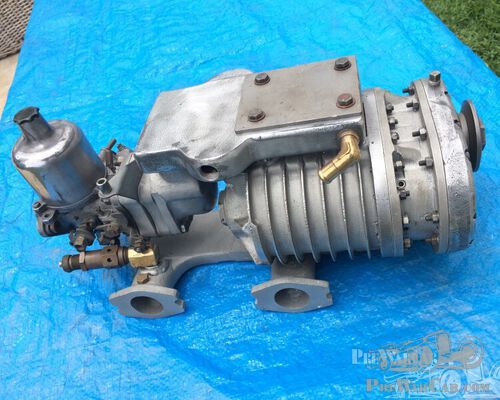
Blower / Compressor / Supercharger - Godfrey Marshall - A Series BMC Engine
SuperchargerA Godfrey Marshall cabin blower Type Mk22 converted to vehicle use by Barry Ekins of Sydney NSW. Ekins created kits for many popula..
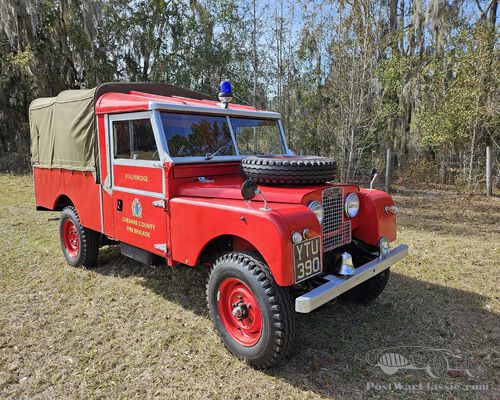
1957 Series 1 Land Rover Fire Engine + Coventry Climax Godiva Fire Pump
Betsy was used by Cheshire Fire Service (UK) from 1957 to 1975. She was based at Hazel Grove and Stalybridge Fire stations. She comes with an exten..
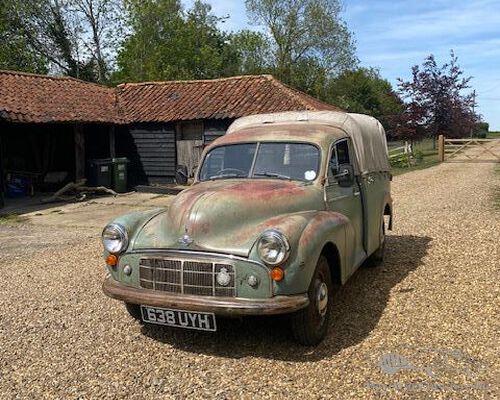
1954 Morris Minor Series II Pick Up
Morris Minor Series II Pick-Up, first registered 15th Jan 1954. Exported from new to Australia, returned to the UK in 2014. Swansea documentation r..