The global magazine and marketplace for classic car enthusiasts, by enthusiasts.


Filter
Classic Glas for sale - Glas cars for sale
-

Coming soon -1961 Jaguar E Type Series 1 LHD Flat Floor outside bonnet lock
Coming soon - 1961 Jaguar E Type Series 1 LHD Flat Floor outside bonnet lock Registration Number: OAGP008 (Belgium) Chassis Number: 875340 Arriving soon from a prominent European collection. EEC Registered & EEC taxes paid Full de.. -
1957 Mercury Monterey Convertible | RM Sotheby's | The Hershey Auction
To Be OFFERED AT AUCTION at RM Sothebys' The Hershey Auction event, 7 - 8 October 2026. $50,000 - $60,000 USD Please check back soon as our dedicated cataloguing team is preparing the description for this lot. To view this car and others currently consigned to this auction, please visit the RM website at rmsothebys.com/auctions/hf26/. -
1953 Packard Caribbean | RM Sotheby's | The Hershey Auction
To Be OFFERED AT AUCTION at RM Sothebys' The Hershey Auction event, 7 - 8 October 2026. $60,000 - $80,000 USD Please check back soon as our dedicated cataloguing team is preparing the description for this lot. To view this car and others currently consigned to this auction, please visit the RM website at rmsothebys.com/auctions/hf26/. -
An icon: Morgan 3 Wheeler with Krazy Horse Specs from 2016
The Morgan 3 Wheeler has become a cornerstone in the Morgan’s Malvern enterprise's history. This three-wheeled cyclecars first produced in 1910, has become an icon since it was launched at the Geneva Motor Show in 2011. This vehicle has its own personality. An impressive fast car that balances between modern look and performance and old-f.. -
2017 Citroen DS3 Prestige Cabriolet 1.6 litre THP S/S Manual.
2017 Citroen DS3 Prestige Cabriolet 1.6 litre THP S/S Vin Number: VF7SB5GZMHW502159 Registration Number: WM66VJJ Manual 6 speed Gear box. A really nice example with the higher power high pressure turbo engine that was jointly designed with BMW & is renown.. -
Alvis TE 21 Park Ward Coupe
BARN Find , this verry rare Alvis TE 21 Park Ward Coupefrom 1965. Between 1963 and 1966 there have only been produced 352 these special Park Ward Coupe's. You can recognise the Park Ward Coupe on his headlights two above each other. The Alvis has a six cylinder engine of 3000 cc which produces 130 HP which could reach a top of 170 km an hour. Th.. -
1984 Lamborghini Countach 5000 S | The Quail Auction 2026
Chassis No. ZA9C00500ELA12736 The Lamborghini Miura, the world's first supercar, was a nearly insurmountable act to follow. Its successor needed to be a forward-thinking purpose-built sports car, oozing futuristic design cues and cutting-edge engineering. Under Lamborghini's orders, no holds were barred for the new "LP112" project, which wou.. -
1965 Porsche 911 | The Quail Auction 2026
Chassis No. 300718 Engine No. 900893 Transmission No. 223981 (See Text) Porsche 911 chassis number 300718 was completed the same day as its sibling-The Quail Auction 2026 Lot 296-and was likewise delivered new via Porsche Car Northwest. It was sold to Pacific Northwest drag-racing champion John Schmauder and remained in the regio..


Glas
D, 1955 – 1968
Hans Glas GmbH, Isaria Maschinenfabrik, Dingolfing
An old-established manufacturer of agricultural machinery, Glas cars started production of the Goggo, the German-designed scooter, in 1951. The Goggomobil small cars were built from 1955 and were available with 250cc, 300cc and 400cc 2-cylinder 2-stroke engines, mounted in the rear. In 1958 the larger Glas Isar model appeared with 600cc and 700cc front-mounted 2-cylinder 4-stroke engines. Since 1961 a range of Glas cars characterized by 4-cylinder 4-stroke engines with 5-bearing crankshafts and overhead camshafts with cogged belt-drive has been offered: the ‘Glas 1004’ (993cc), ‘Glas 1204’(1.189cc), ‘Glas 1304’(1.289cc) and ‘Glas 1700’(1.682cc), all available with different engine outputs. Models Glas 1300GT and Glas 1700GT were two-seater sports versions with twin-carburettor engines developing 75bhp and 100bhp respectively. In 1965 the ‘Glas 2600’ was introduced with a 2.6-litre V8 engine of 140bhp and a Frua-designed body.
The Goggomobils were phased out during 1966 after some 250.000 Glas cars had been built. BMW’s acquisition of Glas in 1967 led at first to a rationalization (1700s and V8s were sold under the BMW name) and ultimately to the disappearance of the marque.
From 1962 to 1966 Goggomobil saloons and commercial vehicles were built in Spain by Munguia Industrial SA of Bilbao.
Source: Georgano, encyclopedia of motorcar; HON
The information is written with the greatest of care. However, if you have any suggested amendments please contact us at office@postwarclassic.com


Featured
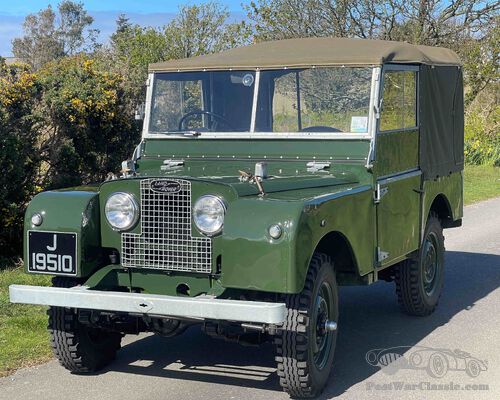
1952 Land Rover Series 1
Technical Specifications:Mark & Model: Land Rover Series 1Year: 1952Registration plate: Jersey registered
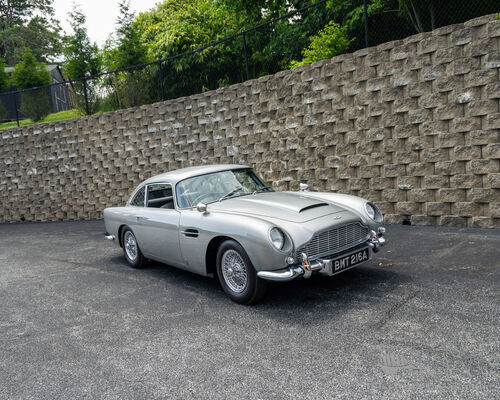
2020 Aston Martin DB5 Goldfinger Continuation | RM Sotheby's | The Monterey Auction
To Be OFFERED AT AUCTION at RM Sothebys' The Monterey Auction event, 13 - 15 August 2026. $1,000,000 - $1,500,000 USD One of 25 examples co..
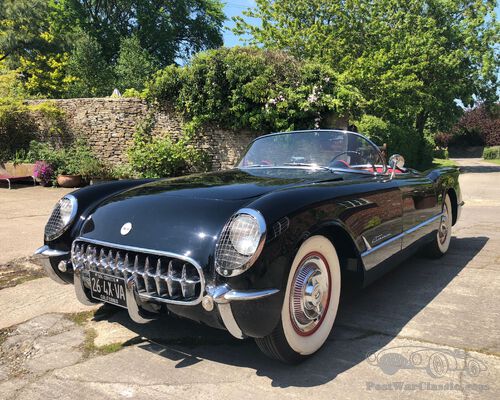
1954 Corvette C1 - SUPER RARE Black!!
Looking for her next lover, my classy 1954 Corvette C1. She's a beautiful sculpture. Never have i had so many adoring comments as when drivi..