The global magazine and marketplace for classic car enthusiasts, by enthusiasts.


Filter
Classic Healey, HWM for sale - Healey, HWM cars for sale
-

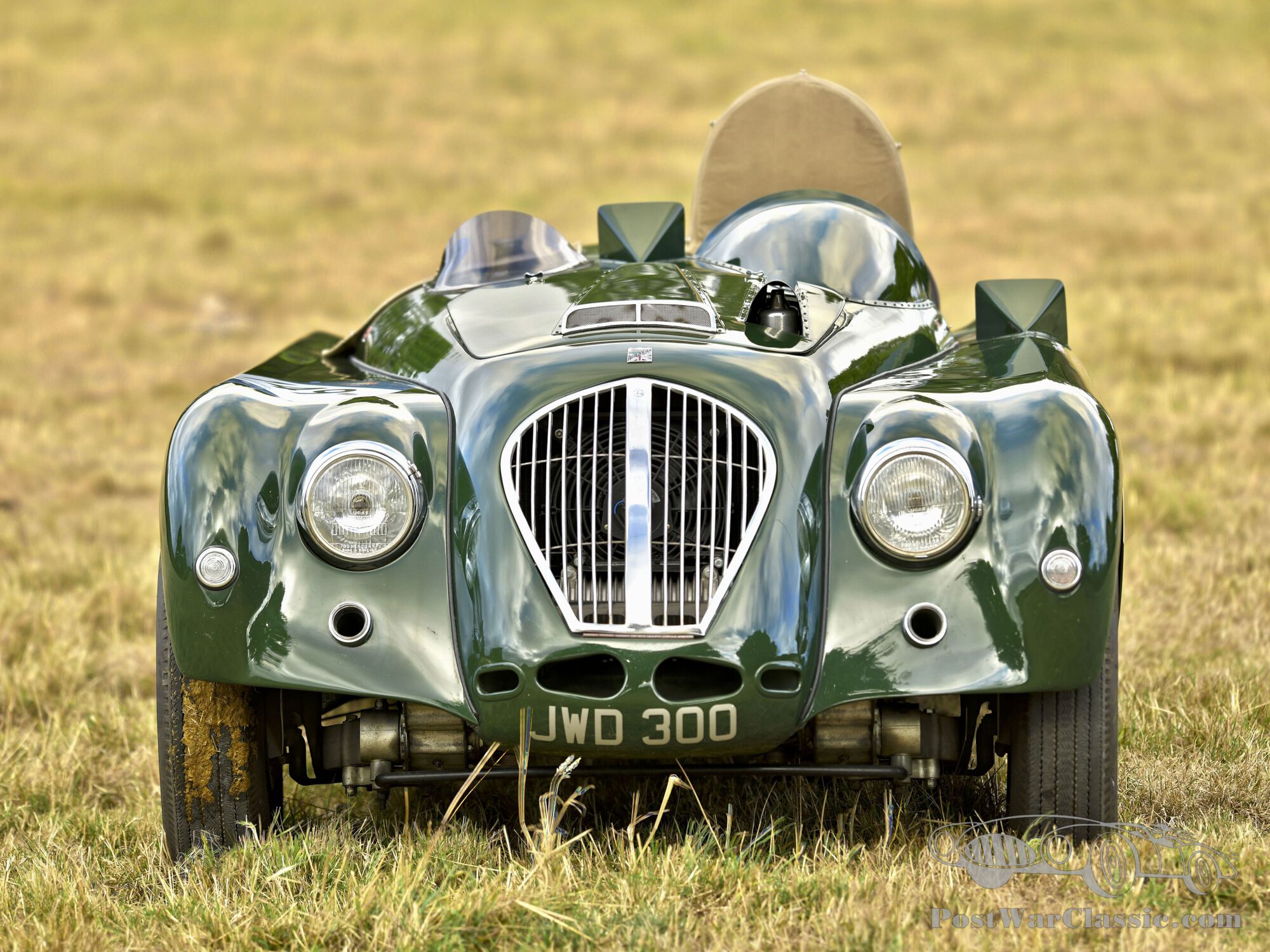
1950 Prototype Nash Healey Silvertone Lemans/Mille Miglia car. LHD
1950 Prototype Nash Healey Silvertone Lemans/Mille Miglia car. LHD Chassis number: X5Registration Number: JWD300 (original plate.) In December of 1949 Donald Healey was on his way to the USA to meet up with Ed Cole of General Motors to try and secure a deal for the new Cadillac V8 Motor for his Healey motor car.. -
Healey Woodie Estate
Healey's production records indicate that some 123 were sold purely as rolling chassis with a whole range of different bodies fitted. Most were English and included saloons, tourers and even station wagons or shooting brakes as the British like to call them.The London coach-builder Hobbs produced shooting brakes that featured a heavy use ..

Healey
GB, 1946 – 1954
Donald Healey Motor Co Ltd, Warwick
Donald Healey’s first production Healey car used a welded-up chassis and trailing-arm type independent front suspension, power being provided by the well-tried 2.4-litre 4-cylinder ohv Riley engine. At the time of its introduction the Healey car was the world’s fastest series-production saloon (104.7mph for the flying-start mile) and cost £1.598. Early competition successes of Healey cars included class victories in the 1947 and 1948 Alpine Rallies, a second place overall in the 1949 event, and a win in the touring-car class of the 1949 Mille Miglia. This Healey car model was made in small numbers until 1954, later versions including the lightweight Healey Silverstone two-seater of 1950, and some roomier Healey car saloons and convertibles by Tickford. A 1950 export-only version of the Healey car for sale by Nash had that firm’s 3.8-litre ohv 6-cylinder engine, and took 4th place at Le Mans in the same year. Only 506 of these Healey cars were sold. A home-market version used the 3-litre Alvis power unit. In 1952 Healey sought to reach a wider market with a 2.7-litre Austin-engined sports two-seater, manufacture of which was taken over by Austin. With the delivery of the last Nash-Healey cars in August 1954, production at Warwick came to an end.
Source: Georgano, encyclopedia of motorcar; MCS
The information is written with the greatest of care. However, if you have any suggested amendments please contact us at office@postwarclassic.com
H.W.M.
GB, 1950 – 1956
H.W. Motors Ltd, Walton-on-Thames, Surrey
John Heath and George Abecassis supported Formula 2 racing energetically in the 1950 – 1953 period with Alta-powered 2-litre and 2½-litre HWM cars, and did much for Britain’s prestige at a time when the national livery was seldom seen on the circuits. These HWM cars had twin ohc 4-cylinder engines, all-round independent suspension and preselector (later, Jaguar synchromesh) gearboxes. In 1952 a 1-2-3 victory was achieved with HWM cars in the International Trophy at Silverstone, but in spite of frequent HWM successes and Paul Frère’s win, with an HWM car, in the Grand Prix des Frontieres at Chimay, the HWM car company lacked the finance to compete on even terms with the Italians. Very few HWM cars were sold, though the HWM company later made and raced larger sports HWM cars with such engines as the 3.4-litre 240bhp Jaguar D engine, tubular ladder-type frame and a De Dion rear axle. The manufacture of HWM cars ceased with John Heath’s death in 1956.
Source: Georgano, encyclopedia of motorcar; MCS
The information is written with the greatest of care. However, if you have any suggested amendments please contact us at office@postwarclassic.com


Featured

One of one 1955 Mercedes-Benz 300 B with Durham coachwork and floor shift manual transmission
One owner from new, this 1955 Mercedes Benz 300 B sedan carries custom coachwork by Durham and is equipped with its original factory four speed flo..
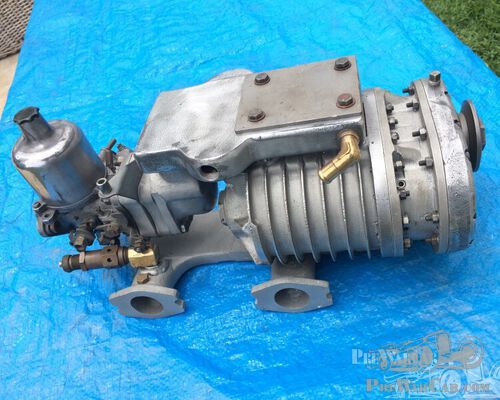
Blower / Compressor / Supercharger - Godfrey Marshall - A Series BMC Engine
SuperchargerA Godfrey Marshall cabin blower Type Mk22 converted to vehicle use by Barry Ekins of Sydney NSW. Ekins created kits for many popula..

Rolls-Royce
Rolls-Royce Silver Wraightlinks gestuurd, automatic, stuurbekrachtigingkleur antraciet grijs, lopende auto op Nederlands kenteken