The global magazine and marketplace for classic car enthusiasts, by enthusiasts.


Filter
Classic Honda for sale - Honda cars for sale
-

1991 Honda NSX | RM Sotheby's | The London Auction
To Be OFFERED AT AUCTION at RM Sothebys' The London Auction event, 31 October 2026. £500,000 - £800,000 GBP Retained by three-time Formula 1 Drivers' World Champion Ayrton Senna for personal use in PortugalThe famous ‘hosepipe’ car; featured in the Ayrton Senna: Racing Is In My Blood documentary and driven by Senna to the..


Honda
Japan, 1962 to date
Honda Motor Co Ltd, Tokyo
The world’s biggest and most successful motorcycle manufacturer Honda turned to light vans and cars in 1962, exhibiting a small sports Honda car model at that year’s Tokyo Show. This open two-seater Honda car had a dohc 4-cylinder 4-carburettor engine with hemispherical combustion chambers that could run up to 8.000rpm. Other features on these Honda cars were a ladder-type frame, 5-speed gearbox, and separate chain final drive to each rear wheel. Initially 360cc and 500cc power units were used, the latter developing 40bhp, but the production version, the Honda S800, had a 791cc engine and four forward speeds. The Honda car managed 100mph on 70bhp, but never became a best-seller and was discontinued in 1969. In 1964 Honda became the first Japanese contender for Formula 1 honours, trying a 1.500cc V12 Honda car capable of 12.000rpm that eventually won the 1965 Mexican GP. The 430bhp air-cooled Honda RA 302 V8 was a disaster, and was responsible for the Honda company’s withdrawal from Formula 1 at the end of that year. Later in the twenty first century, Honda was more successful in Formula 1 racing with their partnership with Red Bull Racing.
More successful in earlier days was Honda cars second touring-car design, announced at the end of 1966 and still in production in 1972. This Honda car was a mini-like baby saloon with transversely-mounted air-cooled ohc vertical-twin engine driving the front wheels. The Honda car also featured electric pump feed, a synchromesh bottom gear, and semi-elliptic rear suspension. A Honda-designed automatic gearbox was an option, and there were two choices of engine in Honda cars, with capacities of 356cc and 589cc. There was a move to bigger things in 1969 with the 4-cylinder Honda 77, on similar basic lines and still air-cooled, but with a 5-bearing 1.298cc unit developing 96bhp, a sump-mounted gearbox, front disc brakes, and swing-axle rear suspension. Honda coupé versions had four carburetors and 110bhp. In 1971 the minicar theme was developed further with the Honda Vamos, a rear-engined jeep-type vehicle using a platform frame, and the egg-shaped Honda Z coupé, this Honda car was available on the home market with the 356cc engine in various stages of tune, options including a twin-carburettor 36bhp variant, the Honda TS, and a 5-speed gearbox. For export the bigger engine was used in Honda cars, and standard colour was a vivid orange. However, though Honda sold over 315.000 Honda cars in 1970 their impact on world markets never matched that of the Honda motorcycles. For 1973 the Honda car company reverted to water cooling on the Honda Civic, a challenger to models such as the Renault 5 and Fiat 127. Only 11ft 2in long, this Honda car used an ohc 1.169cc transverse engine in an all-independently sprung structure. GT versions had 69bhp and front disc brakes.
Source: Georgano, encyclopedia of motorcar; MCS
The information is written with the greatest of care. However, if you have any suggested amendments please contact us at office@postwarclassic.com


Featured

Alfa Romeo Barchetrta Bianchi Prototype 600 Kg 150CV
1 of 1. Never repeated. 1985 Alfa Romeo Barchetta "by Bianchi" Built by hand in Argentina. 600kg. 150hp. Twin Webers. Alfa 2300 heart. Tubular stee..
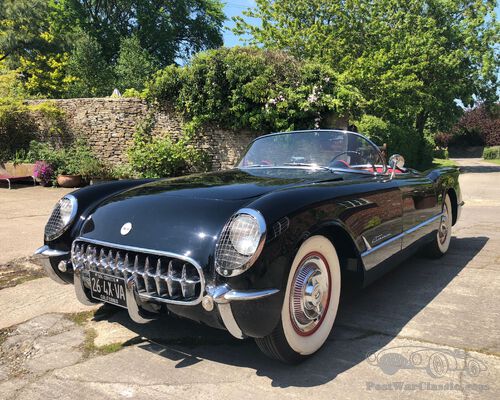
1954 Corvette C1 - SUPER RARE Black!!
Looking for her next lover, my classy 1954 Corvette C1. She's a beautiful sculpture. Never have i had so many adoring comments as when drivi..
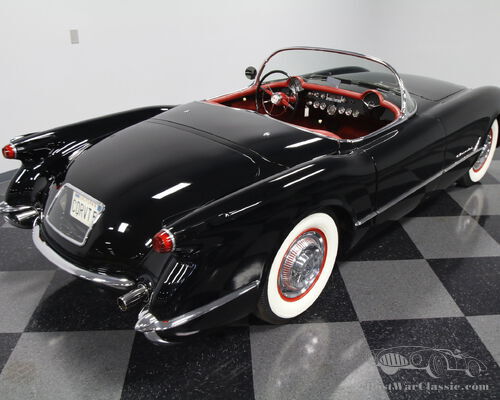
1954 Chevrolet Corvette C1
Fully restored 1954 C1 Corvette in Black. Stunningly beautiful car, feels like driving a sculptural work of Art. Known to be the oldest Corvette on t..