The global magazine and marketplace for classic car enthusiasts, by enthusiasts.


Filter
Classic HRG for sale - HRG cars for sale
-

HRG 1500cc
1951 HRG 1500cc – Chassis W211, Engine C1334S Originally registered on 4th August 1951 as PPL370, this HRG features coachwork by St Leonard’s Engineering, which was completed in July 1951.The first owner was Alfred Temple of Surrey, and originally finished in cream with a red interior. At this time HRG gave two engine option..

H.R.G.
GB, 1936 – 1956
HRG Engineering Co Ltd, Tolworth, Surrey
The initials of the HRG car stand for E.A. Halford, G.H. Robins, and H.R. Godfrey (the ‘G’ of GN. Their HRG car was intended to carry on the Frazer Nash tradition of a vintage-style sporting machine without frills, though the HRG used bevel drive and not chains. The engine of the HRG car was the well-tried 1.496cc ohv 4-cylinder Meadows 4ED, ignition was by magneto, suspension was quarter-elliptic at the front and semi-elliptic at the rear, and the body a straight forward slab-tank two-seater. The HRG car sold for £395 and with a weight of about 1.570lb it was capable of some 90mph. In 1938 an HRG car was the highest-placed British car at LeMans, and the following year HRG won the 1½-litre class there. For 1939 pump-cooled ohc Singer engines were adopted on HRG car models, an ‘1100’ using that firm’s 9hp unit joining the 1½-litre. Synchromesh gearboxes and coil ignition were introduced, but magnetos were still optional until the demise of the traditional HRG cars at the end of 1955. A solitary HRG coupé used a Triumph engine.
There were few changes when the HRG cars reappeared on the market in 1946, though there was a short-lived HRG Aerodynamic 1500 with full-width bodywork. A distinguished competition record with HRG cars included Coupes des Alpes in 1948 and 1951 Alpine Rallies (a little-known HRG innovation was the provision of a works van to support drivers of the HRG cars in the 1949 event, forerunners of today’s rally ‘circuses’), class wins in the 1949 and 1950 Production Car Races at Silverstone, and a clean sweep of the 1½-litre class in the 1949 Belgian 24-Hour Race. Curiously enough, the zenith of the HRG cars competition career coincided with a drop in sales: approximately 40 HRG cars were delivered in 1948, 25 in 1949 and only 11 in 1950. The traditional HRG car, however, survived until 1955; a twin-cam head announced in 1953 was never actually offered on this model, but the last 12 HRG WS-types (all of which were exported) had the short-stroke Singer engine and hydraulic brakes in place of the cable-operated type used since 1936. An altogether more modern 1½-litre HRG car prototype (the ‘1100’ had been dropped around 1950) with all-round independent suspension, disc brakes, twin ohc engine and aerodynamic body work, made its appearance in 1955, but this was not produced in series and HRG concentrated on general engineering until the HRG company closed down in 1966. A few months before the end a last HRG car prototype had appeared, using the Vauxhall VX 4/90 engine. Not more than 240 HRG cars of all types were made.
Source: Georgano, encyclopedia of motorcar; MCS
The information is written with the greatest of care. However, if you have any suggested amendments please contact us at office@postwarclassic.com


Featured
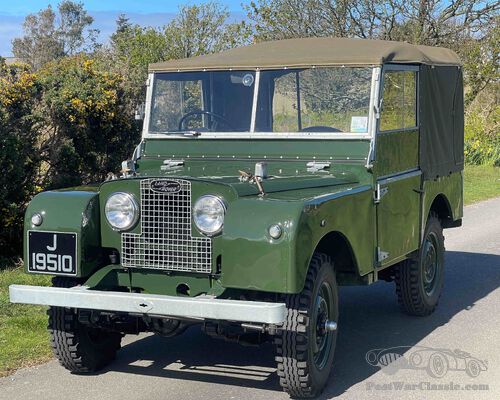
1952 Land Rover Series 1
Technical Specifications:Mark & Model: Land Rover Series 1Year: 1952Registration plate: Jersey registered
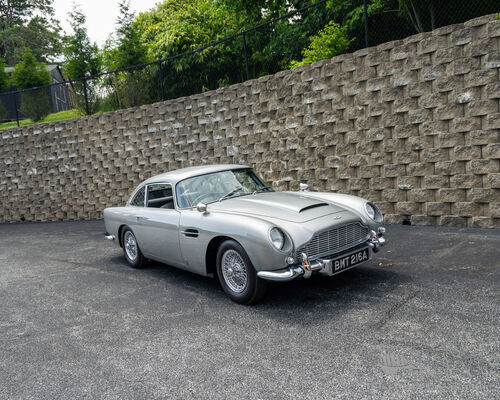
2020 Aston Martin DB5 Goldfinger Continuation | RM Sotheby's | The Monterey Auction
To Be OFFERED AT AUCTION at RM Sothebys' The Monterey Auction event, 13 - 15 August 2026. $1,000,000 - $1,500,000 USD One of 25 examples co..
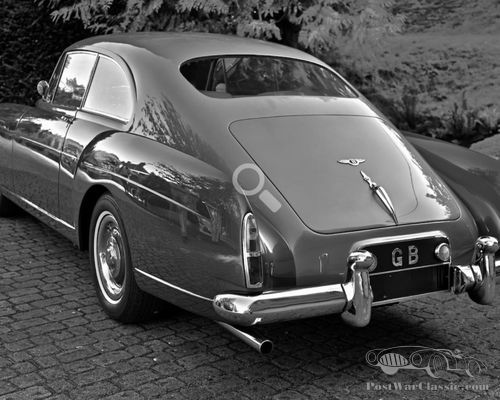
1957 Bentley S1 Fastback by H.J. Mulliner.
1957 Bentley S1 Fastback by H.J. Mulliner.A freshly restored award winning car in like new condition. A later car with Power assited steerin..