The global magazine and marketplace for classic car enthusiasts, by enthusiasts.


Filter
Classic Hudson, Kaiser for sale - Hudson, Kaiser cars for sale
-

1978 Rolls Royce Corniche FHC Left Hand Drive.
1978 Rolls Royce Corniche FHC Left Hand Drive. Vin Number: CRX30976 Registration Number: GD-779-TK French. Just 3 owners from new & in amazing conditon. This Left Hand Drive Corniche fixed head coupe was supplied new to the Netherlands & has covered just 108000 KMs, or 6.. -
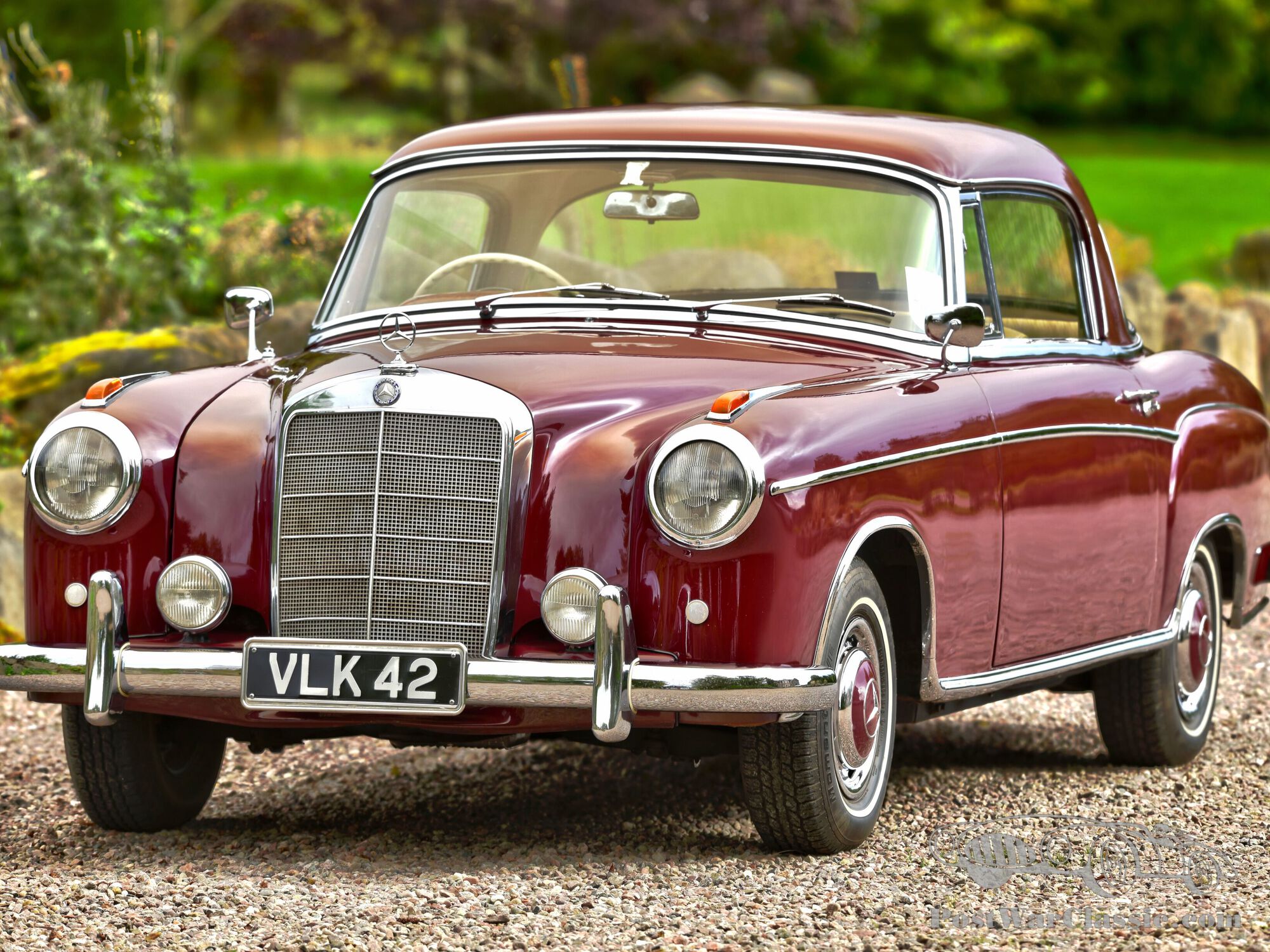
1958 Mercedes 220S Ponton Coupe RHD
1958 Mercedes 220S Ponton Coupe RHD Registration number: VLK42 As rare as hens teeth; just 23 of these coupes were built in Right hand drive form, most of which have faded away into obscurity. This car was preserved in beautiful order by dint of being supplied new to South Africa & residing in the corrosion free Transva.. -
1965 Ford GT40
Engine Block No. C6FE-6015-E Cylinder Head No. C6FE-6090-A ZF Transmission Type: 5-DS25-0 The story of Ford's breakthrough victory at the 24 Hours of Le Mans in 1966 is essential canon for any motorsport enthusiast. Retold across documentaries, literature, and even on the silver screen, it is a thrilling saga rife with innovation.. -
1955 Jaguar D-Type
1955 Jaguar D-type #XKD-518 Chassis number XKD 518: the famous ex-Peter Blond carExtensive period race history in the UK and continental EuropePresented with original body and matching-numbers 3.4-litre engineContinuous ownership history from new The 1950s were a halcyon period for sport.. -
1962 Shelby 260 Cobra
1962 Shelby 260 Cobra – The “T” Car CSX 2005 - the 6th Cobra ever made and the first Cobra offered publicly for saleLeased by Shelby American to Universal Studios for ‘The Killers’ (1964)Trainer car at Shelby's School; pupils included James Garner before ‘Grand Prix’ and Steve McQueen before ‘Le Mans’Concou.. -
1958 Lotus XV Le Mans
1958 Lotus XV Works entry for 1958 Le Mans 24 Hours, driven by Graham Hill and Cliff AllisonExtensive race history in Kenya from 1958-1970Original Le Mans 2-litre Climax FPF engine and chassisRecently restored from the ground up and offered with FIA HTP and a truly stunning history file -
1961 Jaguar E-Type
1961 Jaguar E-Type FIA Competition (ex- Daytona 24 Hours and Sebring 12 Hours) Outstanding period competition history includes three endurance racing appearances in the Daytona 24 Hours, four in the Sebring 12 Hours including a class win at the latterEarly flat floor coupe chassis 885096 delivered new to Florida, then rebuil.. -
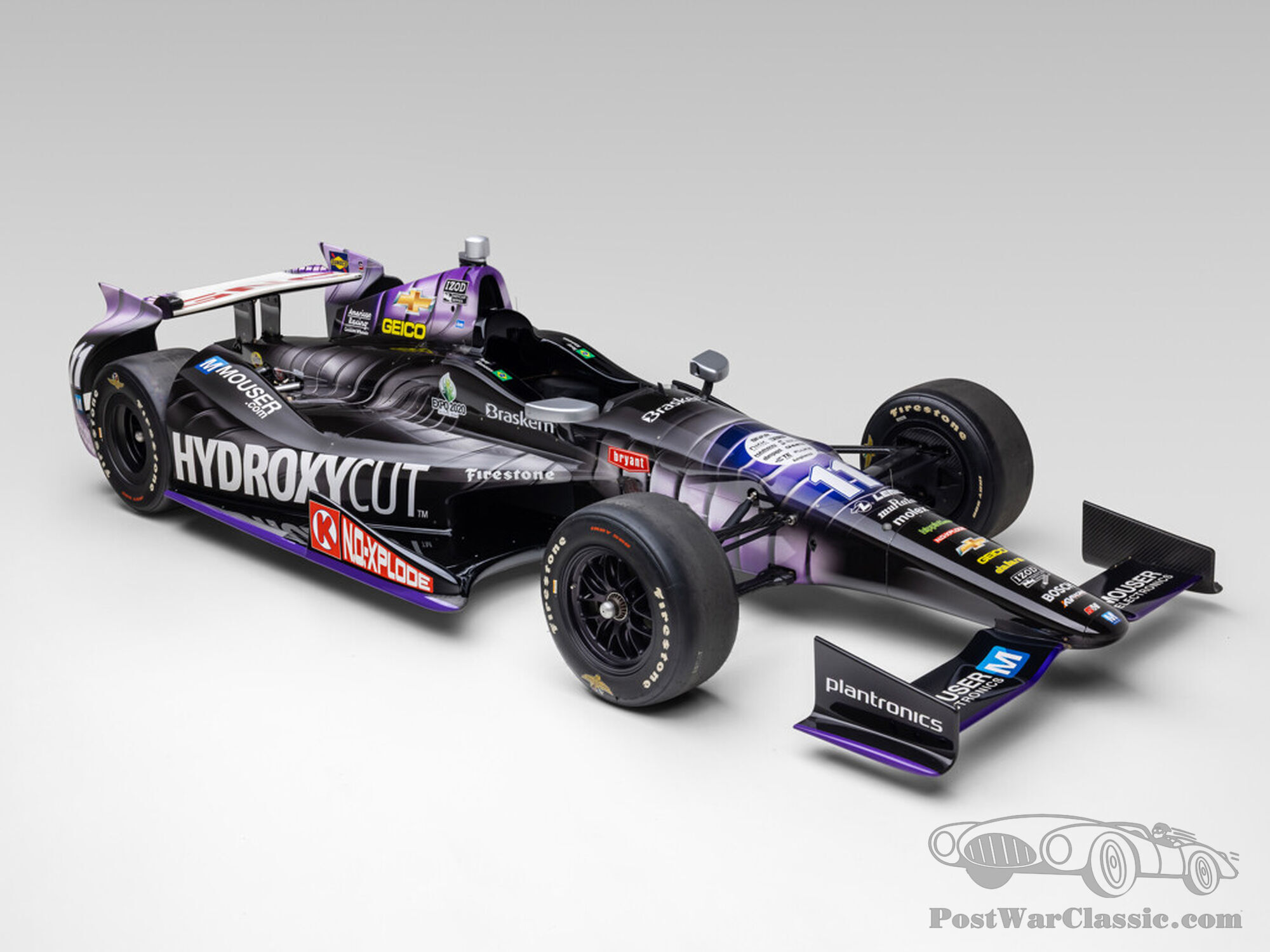
2013 Dallara DW12 | RM Sotheby's | The Monterey Auction
To Be OFFERED AT AUCTION at RM Sothebys' The Monterey Auction event, 13 - 15 August 2026. $900,000 - $1,200,000 USD Please check back soon as our dedicated cataloguing team is preparing the description for this lot. To view this car and others currently consigned to this auction, please visit the RM website at rmsothebys.com/auctions/mo26/ -
1952 Jaguar C-Type
1952 Jaguar C-Type, Chassis XKC 019 Fantastic European history throughout its lifeEntrant of some of the period’s most important International race meetings3rd place at the 1953 Spa-Francorchamps 24 HoursComing from almost two decades of ownershipEligible for Goodwood, Le Mans Classic, Monaco Histo.. -
1961 Aston Martin DB4 GT
1961 Aston Martin DB4 GT, #0159/R Owned and raced by David Skailes during the 1960sSubjected to multiple RS Williams upgrades in recent yearsOne of only 75 Touring-bodied DB4GTsPerfectly suited to the world’s finest tours The Aston Martin DB4GT is one of the definitive all-rounder..





Hudson
US, 1909 – 1957
(1) Hudson Motor Car Co., Detroit, Mich., 1909 – 1954
(2) American Motors Corp., Kenosha, Wisc., 1954 – 1957
The Hudson car was created by Roy D. Chapin, and financed by J.L. Hudson, head of Detroit’s famous department store of that name. The first product was a 20hp 4-cylinder Hudson car of conventional design, capable of 50mph, of which 4.000 Hudson cars were sold in its first season. These fours, one of which was entered in the 1914 Tourist Trophy were first supplemented and then supplanted by a 6-cylinder line. The first of these Hudson cars was the heavy (3.696lb) and fairly expensive $2.350) Hudson Model 54 with a 4-speed overdrive gearbox, but the 4½-litre Hudson Super Six of 1916, with its high-compression sv engine, really made the Hudson company’s name, and marked the first of a line of engines of this type which lasted almost to the end of Hudson car production, giving generous outputs while still burning commercial-grade petrol. A Hudson Super Six made the first two-way transcontinental trip – New York to San Fransisco and back – in 1916; Ira Vail took 9th place with a Hudson car in the Indianapolis 500 Mile Race in 1919, and this Hudson car formed the backbone of New Zealand’s ‘service car’ network in the 1920s.
Though Hudson’s booming sales in the 1920s were largely due to the inexpensive companion make the Essex, the Hudson car company also pioneered modestly-priced closed Hudson cars, and in 1922 their ‘coach’ (a 2-door saloon) sold for only $100 more than a tourer. Until 1929, the Hudson Super Six remained the staple Hudson car model, and during its last three years of production the Hudson car was powered by a 4.7-litre ioe unit derived from the original Essex Four of 1918. In 1930 this Hudson car was replaced by a 3½-litre straight-8, later increased to 4.168cc in 1932 – this tough and well-liked unit remained in production until 1952, and powered such Anglo-Americans as the Railton and Brough Superior. These firms also used Hudson’s 3½-litre six.
The 1930s were less facrouable to Hudson cars, except in Britain, where the breed’s popularity warranted the manufacture of a small-bore 2.7-litre ‘export’ six rated at only 16.9hp, which was still being made for Hudson cars in 1940. The regular Hudson Six was a bigger machine of 3.455cc and was offered with independent front suspension in 1934 and 1935; in the latter year Electric Hand gear change became available on Hudson cars. Fencer’s mask radiator grilles followed in 1936, and steering-column change in 1939. The first post-war Hudson cars were a continuation of the 1942 models, but 1948 brought the revolutionary Hudson Step-Down series with the Hudson car company’s high-compression sv in-line engines. These low-built Hudson cars had unitary construction of chassis and body, rear wheels mounted inside the chassis frame, and coil-spring independent front suspension. The 5-litre 145bhp 6-cylinder Hudson Hornet engine introduced for 1951, proved a great success in stock-car events, but before this the Hudson car company had reached its post-war sales peak, with nearly 145.000 Hudson cars delivered in 1950. Competition in the medium-price bracket was too strong, and Hudson’s venture in the compact car market in 1953, with the 3.3-litre 6-cylinder Hudson Jet at $1.833 (this was also the first Hudson to abandon the wet-plate clutch) was not successful.
In 1954 Hudson amalgamated with Nash to form the American Motors Corporation. Though all production was transferred from Detroit to Kenosha, and the Hudson car range now shared its utinized hulls with the bigger Nash models, sales did not prosper. These last Hudson cars had initially the old sv 6-cylinder units or Packard-built V8s, while both Nash’s Rambler and the Austin-built Metropolitan were sold by Hudson agents. The Hudson car name was dropped at the end of the 1957 season.
Source: Georgano, encyclopedia of motorcar; GNG, MCS
The information is written with the greatest of care. However, if you have any suggested amendments please contact us at office@postwarclassic.com
Kaiser
US, 1946 – 1954
(1) Kaiser-Frazer Corporation, Willow Run, Mich., 1946 – 1953
(2) Kaiser-Willys Sales Corp, Toledo, Ohio, 1954
The Kaiser car was the most successful post-war ‘invasion’ of the American automobile industry, the creation of a combine headed by shipbuilder Henry J. Kaiser and Jospeh W. Frazer of Graham-Paige. Howard Darrin styled the original prototype Kaiser car, but it was much revised by KF Styling under Robert Cadwallader. Frazer had rented, and KF later bought, the huge Willow Run plant built by Henry Ford for wartime manufacture of the B24 Liberator bomber. Early plans called for a low-medium-priced Kaiser car and a more expensive ‘custom’ Frazer. The Kaiser car prototype shown to the public in 1946 displayed unit construction, torsion-bar suspension and front-wheel drive, and its (and Frazer’s) new straight-through side styling set a trend on Kaiser cars that all the industry would follow. Complications and costs precluded these mechanical ideas from the production Kaiser Special, however, which had conventional box-section frame, hypoid rear drive and coil-spring independent rear suspension. The engine of the Kaiser car was an improvement on the pre-World War 2 Continental design, a sv 6-cylinder 3.7-litre unit developing 100bhp. This Kaiser car was gradually stepped up to 112, 118 and finally 140bhp in the supercharged Kaiser Manhattan for 1954 – 1955. But try as they might, the Kaiser car company could not permanently maintain their position, though they ranked eighth and built about 140.000 Kaiser cars during both 1947 and 1948, to lead all the other American independents including Studebaker, Hudson and Nash.
The Kaiser car is remembered for its novel ideas and innovations. Among these, along with the first through-fenderline for 1947, were the Kaiser Traveler and Kaiser Vagabond utility models that looked like sedans but opened up at the rear like station wagons, and these Kaiser cars had large flat beds created by drop-down seats; one of the first hardtops in the 1949 4-door Kaiser Virginian; the first (with Frazer) post-war 4-door convertible; the Kaiser Dragon line of luxuriously trimmed, padded-top sedans of 1951 – 1953; and of course the brilliant 1954 – 1955 line of Kaiser Manhattans and Kaiser Specials with concave grille designed by A.B. Grisinger and ‘safety-glo’ tail lights, styled by Herbert Weissinger, extending up along the rear fenders, along with Darrin’s novel sliding-door Kaiser Darrin roadster. The 1951 – 1955 ‘anatomic design’ Kaiser car was among the most inspired US sedan designs of the period.
Altogether Kaiser-Frazer produced over 747.000 cars and Kaiser-Willys combined for 25.000 more in 1954 – 1955. Of these, about 500.000 or more were Kaiser cars. The Kaiser car make was phased out in 1955, when only 260 Kaiser car left-overs were sold as 1955 models and 1.006 Manhattans were exported to Argentina, where they were soon to be manufactured as the ‘Kaiser Carabela’ from 1958 to 1962.
Source: Georgano, encyclopedia of motorcar; HON, RML
The information is written with the greatest of care. However, if you have any suggested amendments please contact us at office@postwarclassic.com


Featured
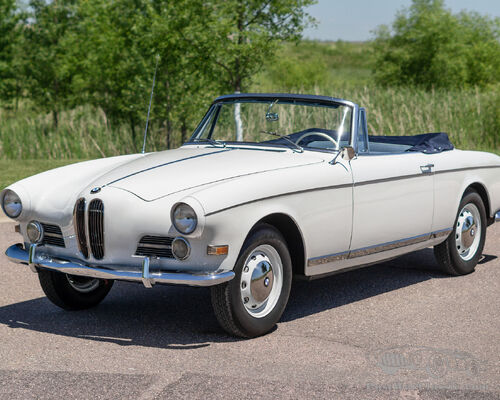
1957 BMW 503 Cabriolet (V8) 1 of 13 Built for US Market #Matching Example
1957 BMW 503 Cabriolet Series 1 Original Aluminum V8 # Matching Original Aluminum Body with Factory Stampings 1 of ..
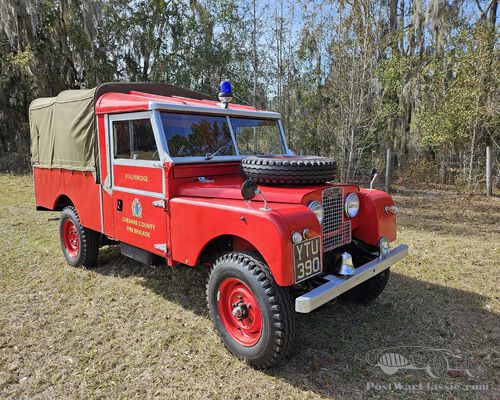
1957 Series 1 Land Rover Fire Engine + Coventry Climax Godiva Fire Pump
Betsy was used by Cheshire Fire Service (UK) from 1957 to 1975. She was based at Hazel Grove and Stalybridge Fire stations. She comes with an exten..
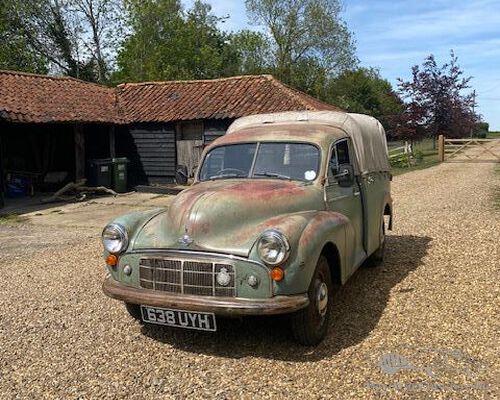
1954 Morris Minor Series II Pick Up
Morris Minor Series II Pick-Up, first registered 15th Jan 1954. Exported from new to Australia, returned to the UK in 2014. Swansea documentation r..