The global magazine and marketplace for classic car enthusiasts, by enthusiasts.


Filter
Classic Invicta for sale - Invicta cars for sale
-

1957 Aston Martin DB2/4 MKII
Details: Oldtimer Australia is delighted to offer for sale this very rare and highly desirable 1957 Aston Martin DB2/4 MKII.The factory records on file confirm that this is an Australian delivered, factory right hand drive example that was delivered new to the Penfold family in South Australia. The car was delivered through Aston Martin a.. -
1954 Corvette C1 - SUPER RARE Black!!
Looking for her next lover, my classy 1954 Corvette C1. She's a beautiful sculpture. Never have i had so many adoring comments as when driving this vehicle. An utter pleasure to have cared deeply for, its time for her new owner to step in. Be quick and caring. Located in the UK at present. •Only 4 Black, C1 53-55 Corvettes,.. -
1954 Chevrolet Corvette C1
Fully restored 1954 C1 Corvette in Black. Stunningly beautiful car, feels like driving a sculptural work of Art. Known to be the oldest Corvette on the UK Classic Corvette register, this originally White car (virtually all were White) was nut / bolt restored in the US by a private collector. Finished in extremely rare Black, only 4 cars were thoug.. -
CADILLAC 75 Fleetwood Sedan - 1951, sortie de musée.
CADILLAC Series 75 Fleetwood Sedan limousine année 1951. La voiture a dormi de longues années bien au sec dans un grand musée Européen, elle a donc été bien préservée du soleil et des intempéries.C’est maintenant une découverte, un peu comme une sortie de grange qui est proposée à la vente.Il s’agit d’une Cadillac ass.. -
1947 Bentley Mark VI Windovers Drop Head Coupe
1947 Bentley Mark VI Windovers DHC.Chassis Number: B-108-AKRegistartion number: JFO394Chassis number B108AK was completed in August of 1947 to the order of Sir Alexander Rogers KBE. The Bentley was bodied as a drophead coupe by the respected coachbuilding firm of Windovers. Founded in 1856 in Huntingdon but from 1924 based in North West London, .. -
1956 Bentley S1 Continental H.J. Mulliner Fastback
1956 Bentley S1 Continental H.J. Mulliner FastbackRegistration number: TBAUnder long term ownership for several decades, this car is a low mileage example having covered a scant 66,000 miles. It is a very early example with single master cylinder having been registered first in January of 1956. We will be properly photographing i.. -
1965 Austin-Healey 3000 Mk III BJ8
Body No. 72940 As the final iteration of the "Big Healey" 3000 Mk III rolled onto the scene, the legendary British sports car manufacturer successfully retained the DNA of its classic curvaceous long hood/short deck sports roadster, while tweaking the cockpit to accommodate 2+2 seating and adding amenities directed towards the booming North .. -
1958 Rolls-Royce Silver Cloud 1 LWB
1958 Rolls-Royce Silver Cloud 1 LWB Chassis number: BLC7Registration Number: 877CGD06 (swiss) Kept in underground parking & Chauffeur driven in Switzerland for the last few decades. This car was purchased as a very low mile example in the 1970's from noted dealers Frank Dale & Stepsons. A chauffeurs .. -
1988 Jaguar Daimler Double Six Series 3 RHD
1988 Jaguar Daimler Double Six Series 3 Vin Number: SAJDDRLW3CA479661Registration Number: E897NOW Just 8645 Miles from new!!! This car is so pristine it still has its original plastic protective film on the sill plates. We sourced this car in 2016 from a prominent Japanese collection & supplied it to t.. -
1987 FERRARI TESTAROSSA LHD
1987 Ferrari Testarossa Vin Number: ZFFA17B000067981Registration Number: D138BSA Supplied new to Japan & with just 16,581Kms covered from new. The current Portugese owner is the second owner of the car & we supplied it to him as part of his collection in 2016. We purchased it in Japan from the first o..


Invicta
GB, 1925 – 1938, 1946 – 1950
(1) Invicta Cars, Cobham, Surrey, 1925 – 1933
(2) Invicta Cars, Chelsea, London S.W.3, 1933 – 1938
(3) Invicta Car Development Co Ltd, Virginia Water, Surrey, 1946 – 1950
In 1925 Noel Macklin and Oliver Lyle, both of them with experience of motor design and Macklin a former manufacturer as well (Eric Campbell, Silver Hawk) introduced a type of car, the Invicta car, that was quite new to the British market. The idea behind the Invicta car was to combine in an assembled car the American concept of flexibility and performance with British quality and road-holding, thus getting the best of both worlds. The engine in the Invicta car, the Meadows 2½-litre, 6-cylinder engine had push-rod overhead valves. Its low-speed torque permitted the Invicta car to accelerate from a walking pace to 60mph in top gear, but a four-speed gearbox was provided, all the same, and the Invicta car make’s sustained high-speed cruising capabilities became legendary after winning the Dewar Trophy for long-distance reliability runs in 1927 and 1929. In outward appearance the first Invicta car was very staid, and it was marred by the fact that the brakes on the Invicta car were poor. The rivets down the bonnet were copied from the Rolls-Royce. During 1926, an engine with a bigger bore, providing 3 litres, was offered on Invicta cars alongside the original unit, and by 1927 was the only one sold. In that year real speed arrived for the fist time in the shape of the 4½-litre Invicta car. This Invicta car had a larger bore still, with an 85mph maximum and really shattering acceleration in spite of pulling a 3.9:1 axle ratio. By late 1929, the 3-litre Invicta car had been dropped. The 1931 4½-litre came in two types: the Invicta 4½-litre high-chassis, and the Invicta 4½-litre ‘100-mph’ low-chassis model. The latter Invicta car was lowered by underslinging the rear springs. This invicta car was capable of 95mph.
Unfortunately the splendid Invicta car was always expensive, and its roadholding reputation was damaged among sportsmen, who were by now its most important customers, by a highly-publicized accident to S.C.H. Davis at Brooklands in 1931. In spite of a win in the Monte Carlo Rally of an Invicta car, a Coupe des Glaciers in the Alpine Trial that year and almost equal success in the same events in 1932, only about 1.000 Invicta cars were made before production ceased in 1935. Invicta tried to stave off the end by introducing a small Invicta car for a more popular market in 1932. This Invicta 12/45 was not a success because the single overhead-camshaft 6-cylinder engine, amade by Blackburne, was of only 1½-litres’ capacity. However efficient this Invicta car was, it could not cope with its heavy chassis without the aid of an axle ratio of 6:1. This gave the famed flexibility, but not the performance you would expect on an Invicta car. The 12/45 was supplemented in 1933 by the supercharged Invicta 12/90, but only a handful were made. Both Invicta cars were seen with Wilson self-changing gearbox, the weight of which cannot have helped. After Invicta ended, Macklin went on to make the Railton, a machine with the traditional Invicta car performance characteristics allied to low price. For 1938, three new Invicta cars, in 2½-, 3- and 4-litre form, were planned. All these Invicta cars were to have 6-cylinder, overhead-valve engines, all-synchromesh gearboxes, and independent front suspension by transverse spring. Nothing was seen of these Invicta cars, the chassis of which seem to have been disguised Darracqs and the bodies similar to those of the 3-litre D670 Delage.
The old Invicta name was revived briefly after World War 2, when it was attached to a luxury car called the Invicta Black Prince, powered by a 6-cylinder Meadows engine of three litres, with two overhead camshafts and two plugs per cylinder. This unit produced 120bhp at 5.000rpm. Unlike earlier Invicta cars, the car’s other characteristics were highly unconventional. There was no gearbox in the Invicta car; instead, a Brockhouse hydrokinetic turbo transmitter that provided automatic transmission on any ratio between 15:1 and 4,27:1. Suspension was independent all round, by torsion bars. But the new Invicta car was another horribly expensive car, although plans envisaged an output of 250 a year, it met the same fate as its predecessors after only a score or so had been made. AFN Ltd, manufacturers of the Frazer Nash, acquired the assets of the dead firm.
Source: Georgano, encyclopedia of motorcar; TRN
The information is written with the greatest of care. However, if you have any suggested amendments please contact us at office@postwarclassic.com


Featured
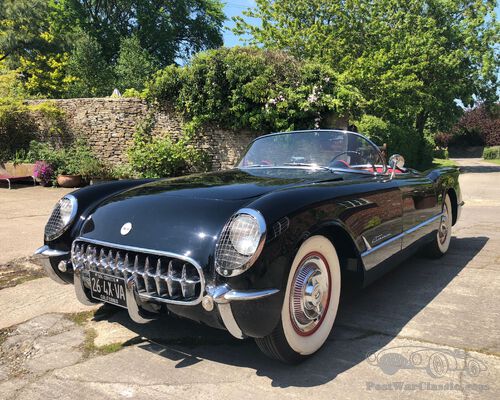
1954 Corvette C1 - SUPER RARE Black!!
Looking for her next lover, my classy 1954 Corvette C1. She's a beautiful sculpture. Never have i had so many adoring comments as when drivi..
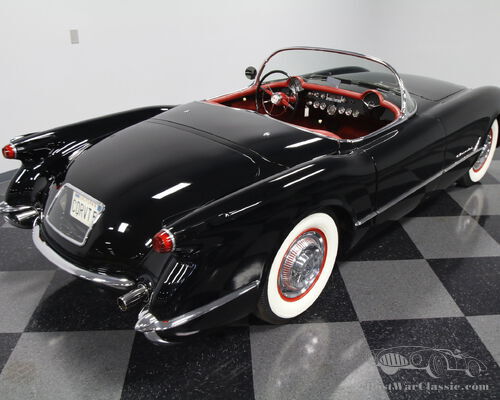
1954 Chevrolet Corvette C1
Fully restored 1954 C1 Corvette in Black. Stunningly beautiful car, feels like driving a sculptural work of Art. Known to be the oldest Corvette on t..
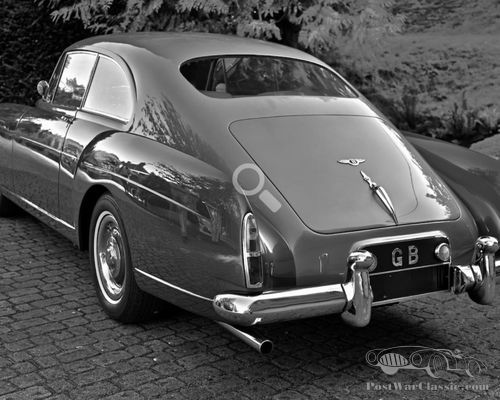
1957 Bentley S1 Fastback by H.J. Mulliner.
1957 Bentley S1 Fastback by H.J. Mulliner.A freshly restored award winning car in like new condition. A later car with Power assited steerin..