The global magazine and marketplace for classic car enthusiasts, by enthusiasts.


Filter
Classic ISO for sale - ISO cars for sale
Change your filters to get results, or show all
Sorry, there are no results with your filters Cars
.
ISO
Italy, 1962 to date
Iso’s second effort at a 4-wheeler might be described as the antithesis of the antithesis of the Isetta of 11953 and was one of the new race of Euro-American GT saloons typified by the Facel Vega in France and the Gordon-Keeble in England. Iso used the ohv V8 Chevrolet Corvette engine in 5.4-litre, 260bhp form and mounted this on a platform chassis designed by Bizzarrini with 4-wheel disc brakes (inboard at the rear) coil and wishbone independent front suspension, De Dion rear axle, limited-slip differential and centre-lock wire wheels. There was a 4-speed all-cynchromesh gearbox (automatic transmission was optional in 1966) and when the car came on the British marked it sold at £3.999. Its top speed was 142mph. From 1963 there was an alternative model to the original Iso Rivolta in the shape of the Iso Grifo, a two-seater GT coupé available with 365bhp or 410bhp Chevrolet engines, and a top speed of 162mph, mounted on a shorter wheelbase. This car has considerable affinities with the GT Strada 5300 produced by Bizzarrini’s own factory. A 4-door saloon, the Fidia, was introduced for 1968; coachwork was by Ghia. By 1969 the Grifo was available with a 7-litre 390bhp engine and there was a Rivolta rplacement, the Lele four-seater saloon. The 1972 versions of this car had 5.735cc power units and retailed at 7.000.000 lire, or a million less than he least expensive Lamborghini. Ford V8 engines were used in 1973 Leles.
Source: Georgano, encyclopedia of motorcar; MCS
The information is written with the greatest of care. However, if you have any suggested amendments please contact us at office@postwarclassic.com


Featured

One of one 1955 Mercedes-Benz 300 B with Durham coachwork and floor shift manual transmission
One owner from new, this 1955 Mercedes Benz 300 B sedan carries custom coachwork by Durham and is equipped with its original factory four speed flo..
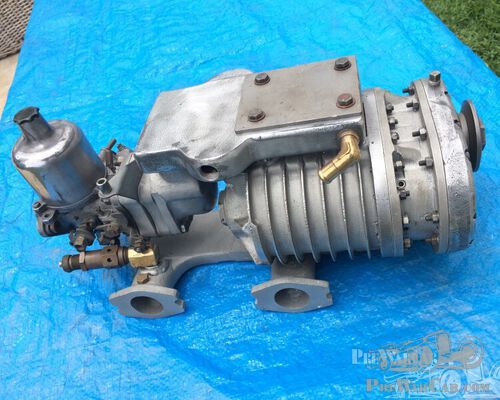
Blower / Compressor / Supercharger - Godfrey Marshall - A Series BMC Engine
SuperchargerA Godfrey Marshall cabin blower Type Mk22 converted to vehicle use by Barry Ekins of Sydney NSW. Ekins created kits for many popula..
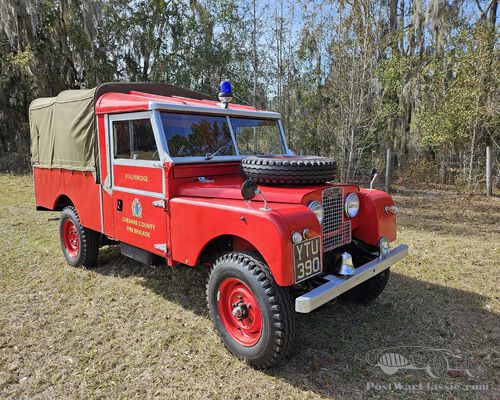
1957 Series 1 Land Rover Fire Engine + Coventry Climax Godiva Fire Pump
Betsy was used by Cheshire Fire Service (UK) from 1957 to 1975. She was based at Hazel Grove and Stalybridge Fire stations. She comes with an exten..