The global magazine and marketplace for classic car enthusiasts, by enthusiasts.


Filter
Classic Jensen for sale - Jensen cars for sale
-

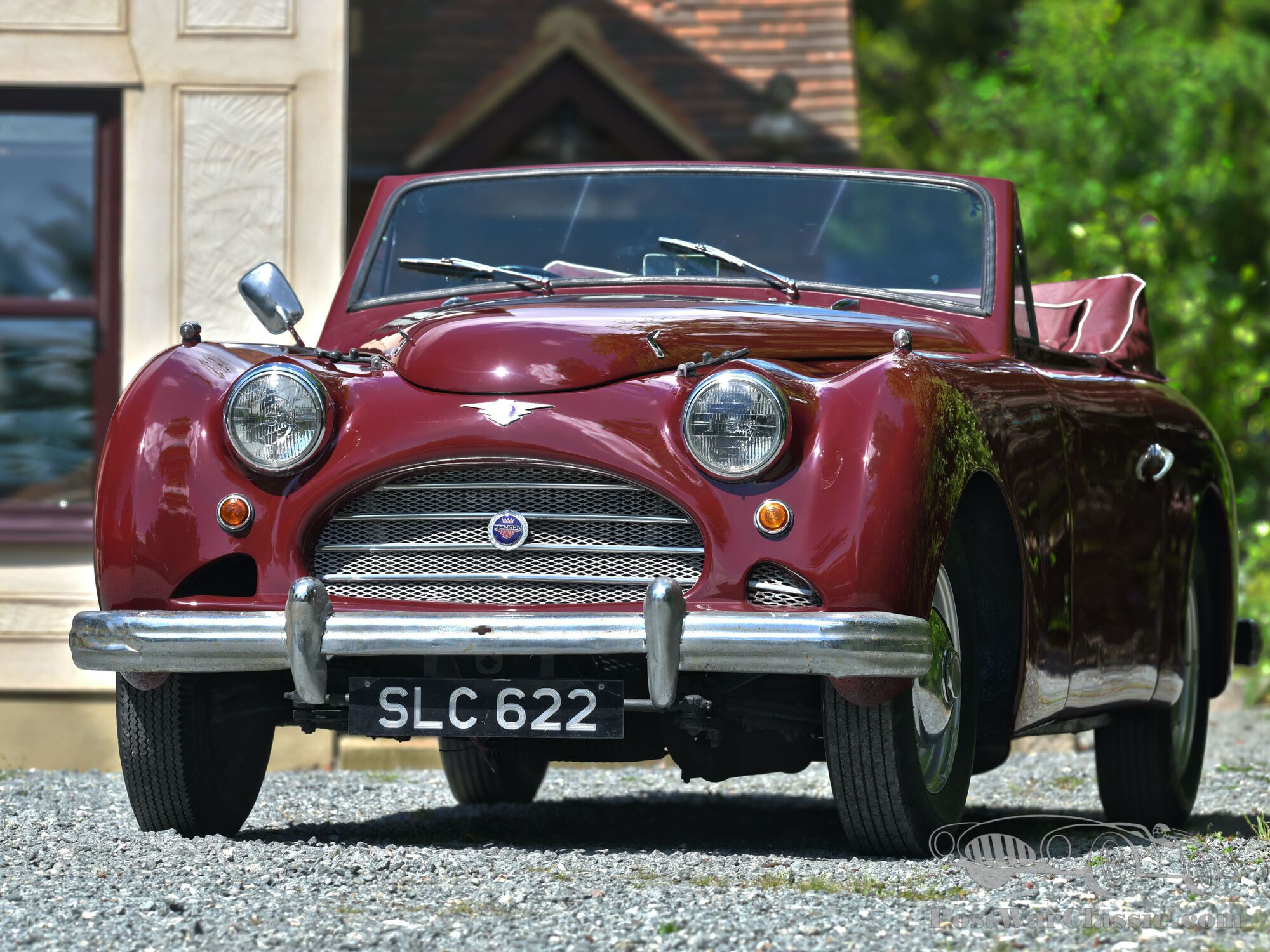
1956 Jensen (Early) Interceptor Convertible
Chassis Number: INT79533Reg: SLC622Vintage & Prestige are proud to offer this very unique 1956 Jensen Early interceptor convertible, probably the most unsung hero of British Motoring.If you, like us, like unusual cars, this will be the perfect motor for you. Only 88 produced in total of which only 32 were co.. -
For sale: 1974 Jensen Interceptor III Convertible.
1974 JENSEN INTERCEPTOR III CONVERTIBLE The Jensen Interceptor III Convertible represented the West Bromwich manufacturer's highest aspirations at the time of its arrival in 1974. Year of construction: 1974 Color body: Metallic blue Color interior: Beige Color roof: Beige Engine: Chrysler 440 7.2 liter Gearbox: Chrysler Torqueflit..

Jensen
1936 to date
Jensen Motors Ltd, West Bromwich, Staffs.
The brothers Richard and Allan Jensen made their names as body stylists in the early 1930s, being responsible for the Avon Standards, well as coachwork fo such chassis as the Wolseley Hornet and the Ford V8. Their 1937 3½-litre Jensen car was a luxurious and elegant Anglo-American powered by the 3.6-litre Ford V8 engine and noted for its Columbia two-speed back axle, giving six forward speeds. Later additional Jensen car models were marketed with the small 2.2-litre Ford V8 and 4.2-litre straight-8 ohv Nash engines, while individual Jensen cars had Steyr and Lincoln Zephyr units. A post-war Jensen car with Meadows-engined 3.9-litre ohv straight-8 with overdrive gearbox and coil-and-wishbone independent front suspension never reached production, but the design led to a series of hand-built Jensen cars in the 1939 tradition, with high gearing and big, lazy engines. The saloon and Interceptor cabriolet of 1950s Jensen cars used an Austin 4-litre 6-cylinder A135 engine, and its styling anticipated the sports model of the Austin A40 (for which Jensen cars built the bodies). This Jensen car was supplemented in 1954 by the very successful fiberglass-bodied ‘Jensen 541’ saloon, a big GT capable of 115mph with a modest fuel consumption. In 1957 Jensen cars became one of the first producers to fit disc brakes all round as standard equipment. The ‘Jensen 541S’ series of 1961 used the Rolls-Royce Hydramatic gearbox. Jensen were also responsible for the bodies on the bigger Austin-Healeys and (initially) for those of Volvo’s P1800 coupé. There was a reversion to American power units in 1963 on Jensen cars with a 5.9-litre 305bhp V8 Chrysler engine in the Jensen CV8, which offered a choice of manual or automatic transmission. By 1966 330bhp was available from a 6.3-litre engine and the Jensen car company broke new ground with the ‘Jensen FF’ with Ferguson-type hypoid final drive to all four wheels and disc brakes incorporating the Dunlop ‘Maxaret’ anti-skid device. When this model Jensen car and the standard Jensen cars appeared in 1967, they had been completely redesigned with steel bodywork to Vignale specifications. Automatic transmission only was available on the 4-wheel drive Jensen cars and prices were high: £3.743 in basic form, and £5.340 for the ‘Jensen FF’ model. A new Jensen car came in 1969 with the Jensen Director, intended as a mobile office for executives and equipped with such luxuries as a portable television set, a typewriter and a radio telephone. Air conditioning was optional on 1970 Jensen car models. A high-performance 385bhp Jensen SP series appeared in 1972, when the FF was discontinued and the Jensen car company announced their Lotus-powered Jensen-Healey two-seater. Jensen Interceptor production continued at the rate of 25 Jensen cars a week.
Jensen Healey
GB, 1972 to date
Jensen Motors Ltd, West Bromwich, Staffs.
The Jensen Healey car was conceived by Kjell Qvale and Donald Healey to fill the gap left by the demise of the Austin-Healey 3000. The Jensen Healey car is a sports two-seater powered by a 1.970cc Lotus 4-cylinder engine with twin belt-driven overhead cam. Chrysler UK made the 4-speed all-synchromesh gearbox for the Jensen Healey car and the suspension (by independent coils and wishbones at the front and by coils and by live axle at the rear) and steering are by Vauxhall. There are front disc brakes on all Jensen Healey cars.
Source: Georgano, encyclopedia of motorcar; MCS
The information is written with the greatest of care. However, if you have any suggested amendments please contact us at office@postwarclassic.com


Featured

One of one 1955 Mercedes-Benz 300 B with Durham coachwork and floor shift manual transmission
One owner from new, this 1955 Mercedes Benz 300 B sedan carries custom coachwork by Durham and is equipped with its original factory four speed flo..

Triumph Spitfire 1500
This stunning Triumph Spitfire 1500 is a Dutch-delivered example with only two previous owners. In its early years, the first owner carefully prepa..

Rolls-Royce
Rolls-Royce Silver Wraightlinks gestuurd, automatic, stuurbekrachtigingkleur antraciet grijs, lopende auto op Nederlands kenteken