The global magazine and marketplace for classic car enthusiasts, by enthusiasts.


Filter
Classic Kaiser for sale - Kaiser cars for sale
-

1952 MG TD
Technical SpecificationMark & Model: MG TD Year: 1952Engine Capacity: 1250ccTransmission: ManualBody style: Open 2 seater sportsInterior colour: Black leatherExterior colour: Clipper BlueSeating capacity: 2Wheels and Tyres: Painted Wi.. -
1972 MGB Roadster
Technical Specification Mark & Model: MGB RoadsterYear: 1972Registration plate: Jersey registeredChassis Number: GHN5280128GEngine Number: 18V582FM6120Engine Capacity: 1798 ccTransmissions: 4-speed manual with overdriveMileageBody style: 2-door convertibleInterior color: .. -
DKW IFA F8 Exportcabrio Bj. 1955
IFA F8 Exportcabrio Bj. 1955 Wir bieten Ihnen ein sehr schönes IFA F8 Export-Cabrio von 1955 zum Restaurieren an. Der Wagen wurde 1955 nach Dänemark ausgeliefert und einige Jahre dort genutzt. Während der Nutzung wurde er einmal in rot lackiert. Sonst sind keine Veränderungen vorgenommen wurden. Der Km-Stand beträgt: 35.259km (abgelesen)... -
Peel Trident | 1965
This great microcar is a Peel Trident from 1965. It weighs just over 90kg and has a small 49cc moped engine with a top speed of 61 kilometers an hour (38mph). The car (with a car number plate) is easy to drive and make a lot of fun. Are you afraid you won’t fit in? Don’t worry, I’m 1.88 meters long and I fit in. The car has a one-d.. -
1996 Rolls-Royce Silver Spirit
Technical Specification Mark & Model: Rolls Royce Silver SpiritYear: 1996Registration plate: Guernsey registeredChassis Number: SCAZS12C5TCH57844Engine Number: 86136L410MNITEngine Capacity: 6750 ccTransmissions: 4-speed automaticMileage: 40,900Body style: 4-door sa.. -
Saab 96 V4
The Saab 96 was a model manufactured by Saab from 1960 until January 1980. During these twenty years, more than 540,000 cars of all versions were produced. The cars became famous in rally races. The roots of the 96 model go back to the car marked 92 from 1945, which was designed in connection with the Saab Group’s efforts to expand its productio.. -
Rolls-Royce Silver Wraith Park Ward saloon
Rolls-Royce Silver Wraith #WCB45 was delivered in January 1949 to Mr. E.W. Collinson from Halifax, Yorkshire, in the United Kingdom with registration KLE790. Mr. Collinson, born in 1879, was the owner and general manager of T. Collinson & Sons Ltd. a famous tea and coffee purveyor which was established in 1835 in Halifax. Unfortunately Mr. C.. -
1989/2017 Jaguar Royale Automatic Special Coupe.
A striking car, beautifully constructed in 2017 to a very high standard using a 3.6 litre XJS as a basis, built on a custom made chassis frame with a hand built fibreglass coupe body. All mechanical items overhauled, and the quality of the finish to paintwork, upholstery, etc, is second to none and has to be seen. The car is wonderfully tight an.. -
Pegaso Z-102 Berlinetta Touring 1955 for sale
Very nice Z-102 with period racing history. Please call or email for details. -
Lancia Aprilia
Postwar french built Lancia Aprilia/ Ardennes,Bodywork repaired recently and in good condition, Further restoration required but sound and complete.


Kaiser
US, 1946 – 1954
(1) Kaiser-Frazer Corporation, Willow Run, Mich., 1946 – 1953
(2) Kaiser-Willys Sales Corp, Toledo, Ohio, 1954
The Kaiser car was the most successful post-war ‘invasion’ of the American automobile industry, the creation of a combine headed by shipbuilder Henry J. Kaiser and Jospeh W. Frazer of Graham-Paige. Howard Darrin styled the original prototype Kaiser car, but it was much revised by KF Styling under Robert Cadwallader. Frazer had rented, and KF later bought, the huge Willow Run plant built by Henry Ford for wartime manufacture of the B24 Liberator bomber. Early plans called for a low-medium-priced Kaiser car and a more expensive ‘custom’ Frazer. The Kaiser car prototype shown to the public in 1946 displayed unit construction, torsion-bar suspension and front-wheel drive, and its (and Frazer’s) new straight-through side styling set a trend on Kaiser cars that all the industry would follow. Complications and costs precluded these mechanical ideas from the production Kaiser Special, however, which had conventional box-section frame, hypoid rear drive and coil-spring independent rear suspension. The engine of the Kaiser car was an improvement on the pre-World War 2 Continental design, a sv 6-cylinder 3.7-litre unit developing 100bhp. This Kaiser car was gradually stepped up to 112, 118 and finally 140bhp in the supercharged Kaiser Manhattan for 1954 – 1955. But try as they might, the Kaiser car company could not permanently maintain their position, though they ranked eighth and built about 140.000 Kaiser cars during both 1947 and 1948, to lead all the other American independents including Studebaker, Hudson and Nash.
The Kaiser car is remembered for its novel ideas and innovations. Among these, along with the first through-fenderline for 1947, were the Kaiser Traveler and Kaiser Vagabond utility models that looked like sedans but opened up at the rear like station wagons, and these Kaiser cars had large flat beds created by drop-down seats; one of the first hardtops in the 1949 4-door Kaiser Virginian; the first (with Frazer) post-war 4-door convertible; the Kaiser Dragon line of luxuriously trimmed, padded-top sedans of 1951 – 1953; and of course the brilliant 1954 – 1955 line of Kaiser Manhattans and Kaiser Specials with concave grille designed by A.B. Grisinger and ‘safety-glo’ tail lights, styled by Herbert Weissinger, extending up along the rear fenders, along with Darrin’s novel sliding-door Kaiser Darrin roadster. The 1951 – 1955 ‘anatomic design’ Kaiser car was among the most inspired US sedan designs of the period.
Altogether Kaiser-Frazer produced over 747.000 cars and Kaiser-Willys combined for 25.000 more in 1954 – 1955. Of these, about 500.000 or more were Kaiser cars. The Kaiser car make was phased out in 1955, when only 260 Kaiser car left-overs were sold as 1955 models and 1.006 Manhattans were exported to Argentina, where they were soon to be manufactured as the ‘Kaiser Carabela’ from 1958 to 1962.
Source: Georgano, encyclopedia of motorcar; HON, RML
The information is written with the greatest of care. However, if you have any suggested amendments please contact us at office@postwarclassic.com


Featured

Triumph Spitfire 1500
This stunning Triumph Spitfire 1500 is a Dutch-delivered example with only two previous owners. In its early years, the first owner carefully prepa..
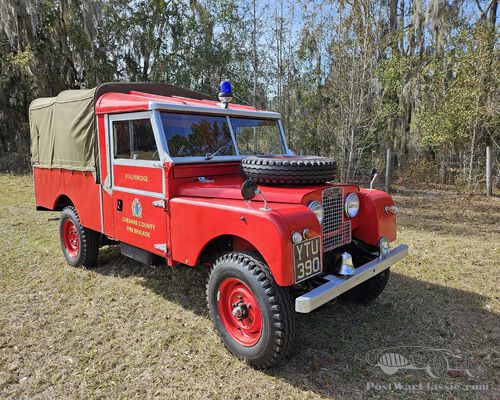
1957 Series 1 Land Rover Fire Engine + Coventry Climax Godiva Fire Pump
Betsy was used by Cheshire Fire Service (UK) from 1957 to 1975. She was based at Hazel Grove and Stalybridge Fire stations. She comes with an exten..

BMW 502 V8 3,2L (Barockengel)
6-seater touring sedan, famous from the german television series "Isar 12"Production period: 1955 – 1959, 2,517 unitsV-engine 8 cylin..