The global magazine and marketplace for classic car enthusiasts, by enthusiasts.


Filter
Classic Lancia for sale - Lancia cars for sale
-

1975 Lancia Stratos HF Stradale by Bertone | RM Sotheby's | The Woodcote Park Auction
To Be OFFERED AT AUCTION at RM Sothebys' The Woodcote Park Auction event, 8 July 2026. £485,000 - £550,000 GBP One of only 492 examples of the legendary Lancia Stratos builtIncredibly authentic; features original body panels and the majority of the original paintCompleted in January 1975 ahead of being delivered new in .. -
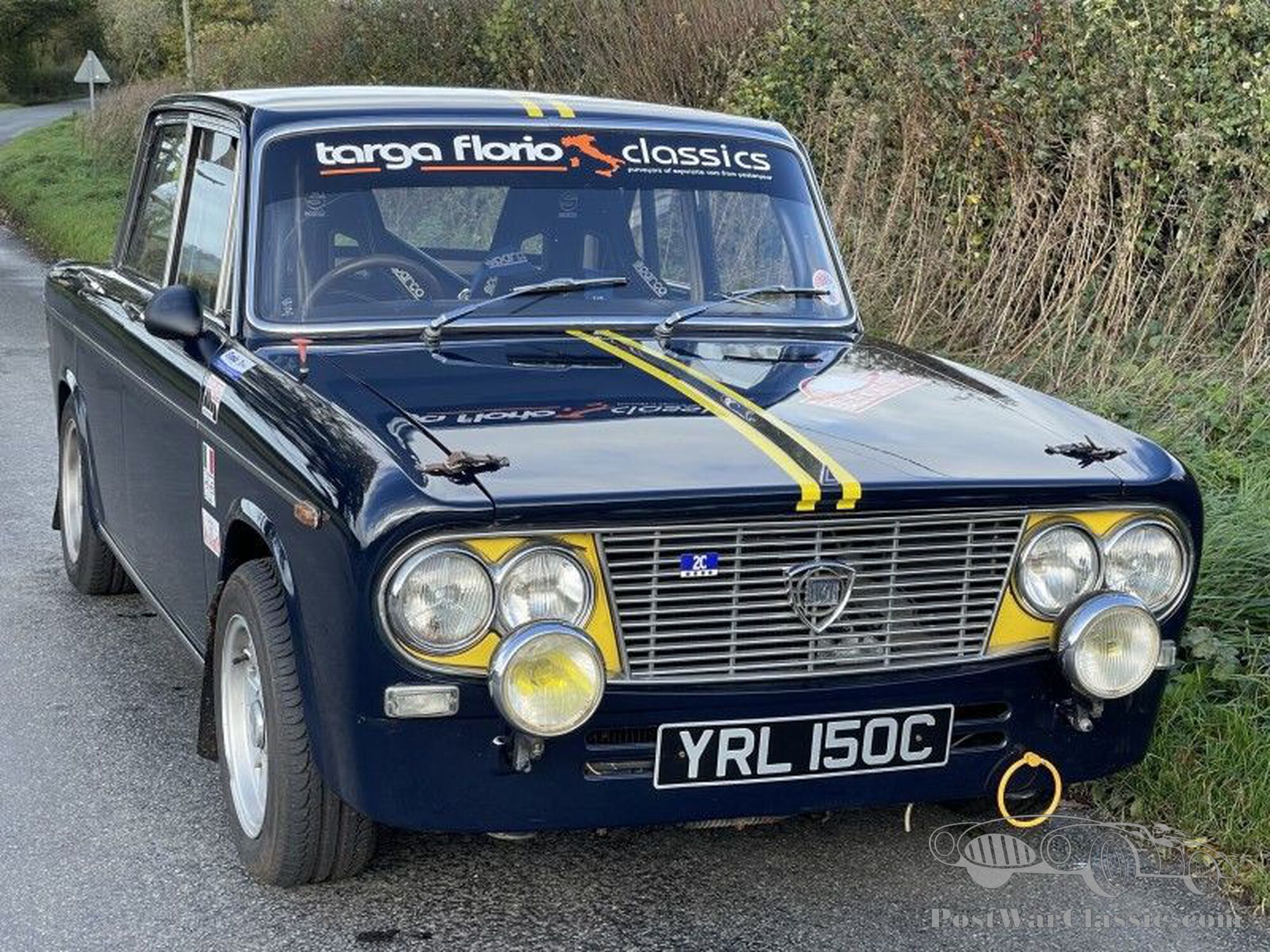
1965 Lancia Fulvia Berlina 2C
Technical Specification Mark & Model: Lancia Fulvia Berlina 2CYear: 1965Registration plate: UK registeredChassis Number: 818101 041543Engine Number: 818101Engine Capacity: 1091 ccTransmission: 4-speed manualMileage: 70,219 kmsBody style: 4-door saloonInterior colour.. -
1966 Lancia Flaminia Super Sport Zagato 2.8 3C
Italian industrialist Carlo Pesenti inherited the family cement company Italcementi in 1946. Pesenti was also a car enthusiast and took over the Lancia company from the Lancia family in June 1956 whilst the Aurelia was in production.A new generation of engineers arrived with the Pesenti era which sidelined the great Vittorio Jano. Pesenti.. -
Lancia Aprilia Berlina 2nd series 1947, 1486 cc,dark green, biscuit leather for sale
Dutch registration after import from the UK. Therefore registered in Sweden.Car in good condition, rustfree, starts on the button. Drives and brakes correctly. Aprilias are modern cars for their period. cruising easily at 100 km/h , maximum about 125 km/h, very well performing in modern traffic. This a good car, well maintained a.. -
1958 Lancia Aurelia B24S Convertible by Pinin Farina | RM Sotheby's | The Monterey Auction
To Be OFFERED AT AUCTION WITHOUT RESERVE at RM Sothebys' The Monterey Auction event, 13 - 15 August 2026. Offered Without Reserve | $225,000 - $300,000 USD A quintessential late-production Series VI; the ultimate evolution of the B24 lineOne of just 371 examples constructedRetains its numbers-matching engine per officia.. -
1961 Lancia Flaminia Sport Zagato 2nd Series
Italian industrialist Carlo Pesenti inherited the family cement company Italcementi in 1946. Pesenti was also a car enthusiast and took over the Lancia company from the Lancia family in June 1956 whilst the Aurelia was in production. A new generation of engineers arrived with the Pesenti era which sidelined the great Vittorio Jano. Pesenti taske..




Lancia
Italy, 1906 to date
Fabbrica Automobili Lancia e Cia, Turin, 1906 to date
Vincenzo Lancia, the son of a wealthy soup manufacturer, was apprenticed to Ceirano in 1898 and went on to FIAT as chief inspector when that company took over the Ceirano factory in 1899. In July 1900 Lancia drove in his first race at Padua. Thereafter Lancia was a member of the FIAT team until 1908, making the running in the 1905 Gordon Bennett Cup and taking 2nd place in the 1906 Vanderbil Cup and the 1907 Targa Florio; but in 1906 he formed his own Lancia car company. Production of the first Lancia cars was halted by fire at the Lancia car factory in February 1907, but during the year the Alfa appeared as a 2½-litre 4-cylinder shaft-driven car with side valves in an L-head, a 4-speed gearbox and three-quarter elliptic rear suspension. A Lancia car chassis cost £400 in England. In 1908 there was a companion 3.8-litre 6-cylinder, the Di-Alfa, of which only 23 were made: Lancia was not to produce another Lancia car with a six for 42 years. Suprisingly enough, he did not race his Lancia cars, though Hilliard’s Lancia car won the 1908 Savannah race in America and two years later Billy Knipper won the Tiedeman Trophy on the same circuit with a Lancia car. These circumstances led to the introduction of a near-Lancia car, the SGV, to the American market in 1911: this Lancia car was sponsored by CV Tangeman, the former FIAT concessionaire in New York. Monobloc-engined Lancia cars made their début in 1909 with the 3.1-litre Lancia Beta, while capacity increased to 3.5-litres with the Lancia Gamma of 1910 and to 4.1-litres with the Lancia Delta of 1911, which had its waterpump mounted in one of the engine brackets. There was also a 2.6-litre 15hp Lancia car with a 4-speed rear-axle-mounted gearbox. Electric lighting was available on the 4.1-litre Lancia Eta at £757 in 1913. A year later full electrics (Lancia car company claimed to be the first standardized installation by a European manufacturer) came on the 4.9-litre Lancia Theta: the use of foot operation for the starter together with a cut-out gave the Lancia car five pedals, but in other respects it followed regular Lancia car practice with its 4 forward speeds and a dry multi-disc clutch. From 1911 the Lancia cars had 4-spoke steering wheels, and also the symbolic emblem of a lance, designed by Count Carlo Biscaretti di Ruffia for the Lancia car. During the World War 1 years, Lancia Theta derivatives served the Allied armed forces.
After the war the first Lancia car to came was the Lancia Kappa, an improved 90bhp development of the Lancia Theta with detachable head, but the shape of things to come was visible in an abortive 12-cylinder ohc 6-litre Lancia car which appeared at the 1919 Shows, though this Lancia car proved uneconomic to produce. The use of a very narrow-angle V of 22 degrees made a monobloc casting possible for Lancia cars. Though the Lancia Kappa gave place to the ohv Lancia Dikappa and to a 4.6-litre ohc V8, the Lancia Trikappa with conventional chassis, Vincenzo Lancia’s revolutionary Lancia Lambda was running in 1921, on show in 1922 and the Lancia Lambda was in full production by 1923. This Lancia car used once again a very narrow-angle V-type engine and overhead camshaft (though this time with only 4 cylinders, Lancia cars with the V4) which gave plenty of room for bodywork. Unitary construction was used for the standard torpedo body style of the Lancia car, this being available with a detachable hard top. The Lancia cars had independent front suspension of vertical-coil type, found on all Lancia cars until 1956 and persisting in the Lancia car range until 1963. Alloy blocks, pump cooling, full-pressure lubcrication, vacuum feed and 4-wheel brakes were also featured. 13.000 of these Lancia Lambda, in nine series, were sold up to 1931. Capacity of the Lancia Lambda went up to 2.4-litres in 1926 with the Lambda Seventh Series and again to 2.6-litres and 69bhp with the Lancia Lambda Eighth in 1928/ 1929. 4-speed gearboxes were standardized on the Lancia Lambda 5th series (1925). Separate chassis became an option with the Lancia Lambda 7th Series, being standardized on the Lancia Lambda 8th series and Lancia Lambda 9thseries; this last Lancia car series had coil ignition. Separate chassis have always been available as an option on subsequent chassisless Lancia cars. Though looked upon as a sports car in export markets by virtue of its superior handling, the Lambda Lambda car was never intended as such, and the later ‘long’ Lancia Lambda cars (11ft 2 7/8in wheelbase) made excellent taxicabs.
From 1929 Lancia marketed a series of ohc Lancia cars with separate chassis and hypoid final drive, of which the first was the Lancia Dilambda with a narrow-angle ohc V8 engine, electrically-welded frame, centralized chassis lubrication, fuel feed by twin electric pumps and (on later Lancia cars) servo brakes. Nearly 1.700 Lancia cars were made up to 1932. An 11ft 5in wheelbase was available for formal coachwork and a saloon Lancia car cost £1.295 in England.
To replace the Lancia Lambda in 1931 came two variations on this theme, the modest 1.9-litre 54bhp Lancia Artena, and the Lancia Astura, a small, 2.6-litre 73bhp V8 with silent 3rd gearbox, which had grown up by 1934 to 3 litres with servo brakes. By 1939 the Lancia car had acquired hydraulic actuation for these, had attracted some very elegant bodies from specialist coachbuilders and was the recognized transport for dignitaries of Mussolini’s Italy. A return to unit construction came with the little 1.2-litre Lancia Augusta late in 1932: this Lancia car was the usual ohc V4 with hypoid rear axle, but hydraulic brakes were standard on Lancia cars and its roadholding abilities compensated for a 65mph top speed and un-inspired looks. From 1933 to 1937 the Lancia Augusta was made in a French factory at Bonneuil, under the name Lancia Belna. Bodies were by French coach builders including Paul Née and Pourtout. In 1937 came Vincenzo Lancia’s last creation (he died that year), the 1.352cc Lancia Aprilia, which carried the Augusta formula of Lancia cars one step further, with independent torsion-bar rear suspension, a well-streamlined saloon body on the Lancia car, low weight (1.804lb) and engine output increased from 35 to 47bhp. No synchromesh was provided, but with a top speed of over 80mph and a fuel consumption of 30mpg this Lancia car became the exemplar of European light-car design. Capacity of the Lancia car went up to 1½-litres in 1939. The last Lancia Aprilia was made ten years later. Just before World War 2 came the 903cc Lancia Ardea, a miniature 29bhp version of the Lancia Aprilia with semi-elliptic rear suspension. Ten years later this Lancia car was given a 5-speed gearbox.
The first entirely new Lancia car since the founder’s death appeared in 1950. The Lancia Aurelia, the work of Vittorio Jano (late of Alfa-Romeo) and Gianni Lancia, retrained the hull, suspension and basic styling of earlier Lancia cars, but overhead camshafts had given way to a 1.754cc 56bhp push-rod V6, and the top 3 ratios of the back-axle gearbox were synchronized. 1951 Lancia cars were available with an optional 70bhp 2-litre engine and that year the first of the classic short-chassis Lancia GT coupé versions also appeared, with 2-litres and 80bhp. This Lancia car collected both 2nd place in the Mille Miglia and a class win at Le Mans. A 3rd in the Mille Miglia and a 1-2-3 victory in the Targa Florio followed in 1953. Rally wins recorde by later Lancia GT Aurelias included the Liège-Rome-Liège (1953), the Monte Carlo (1954) and the Acropolis as late as 1958. In 1953 Lancia car touring versions were available with 90bhp engines and there was also a seven-seater saloon Lancia car, the Lancia B15, on a 10ft 8in wheelbase, not to mention a 2½-litre 118bhp Lancia GT, which had acquired a De Dion rear axle by the end of the year. Steering-column change was standard on all coupés to the end of production in 1959, only the open Lancia Spyders coming with factory-fitted floor change. Meanwhile in 1953 the Lancia Ardea had given place to the 1.100cc Lancia Appia, a scaled-down Lancia Aurelia with a 38bhp engine. The cylinder block of the Lancia car was only 9½in long, a 2-bearing crankshaft being unusual with a 4-cylinder unit by this time. Though the Lancia Appia could exceed 75mph, the Lancia car was hardly competitive (at the equivalent of £780) with FIAT’s equally new 1.100-103 at £572. Encouraged by the success of the GT Lancia Aurelias, Lancia built some ohc sports-racing Lancia carversion which evolved into the 3.3-litre Lancia D24. Results were encouraging, a failure at Le Mans being balanced by a 3rd in the Targa Florio and a 1-2-3 victory in the Carrera Panamericanan (1953), and wins of Lancia cars in both the Targa Florio and the Mille Miglia in 1954. Less successful were the Jano-designed 2.5-litre Lancia D50s for Formula 1. These Lancia cars had 4-ohc oversquare V8 engines, space frames, double wishbone independent front suspension and 5-speed gearboxes mounted at the side of the differentials; their best performance was a 2nd place at Pau in 1955 and after Alberto Ascari was killed the whole Lancia car operation was disposed of to Ferrari. At the same time the Lancia family lost control of the Lancia car company.
Good seller though the Lancia Aurelia was, Lancia cars were no longer competitive with Fiat or the state-subsidized Alfa Romeo factory, and their 1958 sales were 8.794 Lancia cars to Fiat’s 169.532. 1956 had brought a revolution in the form of the Lancia Flaminia, still a 2.5-litre V6 with rear-axle gearbox and hypoid final drive, but incorporating not only a revised form of unitary construction but also coil-and-wishbone independent front suspension. The 6-light saloon bodywork of the Lancia car derived from the Lancia Aurelia-based Florda exhibited by Pininfarina at Turin in 1955. Standard engines in the Lancia car gave 98bhp, but by 1958 there were short-chassis GT versions with 125bhp and disc brakes were fitted on all Lancia Flaminia cars. Capacity of the Lancia car again went up to 2.8-litres in 1964, when the 3C sports coupé had 152bhp. Even more revolutionary was the Lancia Flavia of 1961, which Lancia car was the work of Dr. Fessia, designer both of the pre-war Fiat Topolino and of the CEMSA-Caproni, from which both its front wheel drive layout and ohv flat-4 engine were derived. Disc brakes, a 4-speed all-synchromesh gearbox and semi-elliptic rear suspension also featured in the specification of this Lancia car, and a 92bhp GT coupé model was available in 1962. 1.700cc bored-out versions of the Lancia car were already being offered by Nardi and in 1963 Lancia themselves offered an alternative 1.8-litre unit in their Lancia car. In 1964 the long-established Lancia Appia gave way to the Lancia Fulvia, which had much in common with the Lancia Flavia, though there was a reversion to an 1.100cc Lancia V4 engine. Sports Lancia car versions developed 71bhp and 106mph was claimed from the Lancia Fulvia GT. The 1967 Lancia Car Programme included standard and sporting models of the Lancia Fulvia. Flavia and Flaminia, with Kügelfischer fuel injection available on the Flavia. There was continuing support for GT racing and rally Lancia cars, the works team’s record in the latter field including two successive wins for Källström and Häggbom with Lancia cars (1969 and 1970) in the RAC Rally, and victories in the 1972 Monte Carlo and Moroccan events. A Lancia car specially designed for rallies was the Lancia Stratos HF coupé, powered by a mid-mounted Fiat 132 or Dino engine. A small production run of these Lancia cars was built in 1973. The Lancia Flaminia was not offered after 1970, but 1969 brought a 1.991cc version of the Lancia Flavia coupé with 131bhp and dual-circuit servo-assisted disc brakes. This Lancia car was followed by a 5-speed saloon model using a miniature replica of the old Lancia car grille. The 2-litre engine was standardized in all 1972 Lancia Flavias. Fulvias were available with 1.3-litre and 1.6-litre units, outputs of the Lancia car ranging from 85 to 114bhp.
Lancia – a firm which has the reputation of never having made a bad Lancia car- made a remarkable recovery in the early 1960s, and built 40.000 Lancia cars in 1966, but mounting debts forced them to sell out to Fiat in November 1969.
The first signs of integration of Lancia cars appeared in the new Lancia Beta model at the end of 1972. This fwd saloon was available with dohc 4-cylinder Fiat engines of 1.4, 1.6 or 1.8 litres, and LX versions of the Lancia car had automatic headlamp beam levellings.
Source: Georgano, encyclopedia of motorcar; MCS
The information is written with the greatest of care. However, if you have any suggested amendments please contact us at office@postwarclassic.com


Featured

Rolls-Royce
Rolls-Royce Silver Wraightlinks gestuurd, automatic, stuurbekrachtigingkleur antraciet grijs, lopende auto op Nederlands kenteken

Triumph Spitfire 1500
This stunning Triumph Spitfire 1500 is a Dutch-delivered example with only two previous owners. In its early years, the first owner carefully prepa..
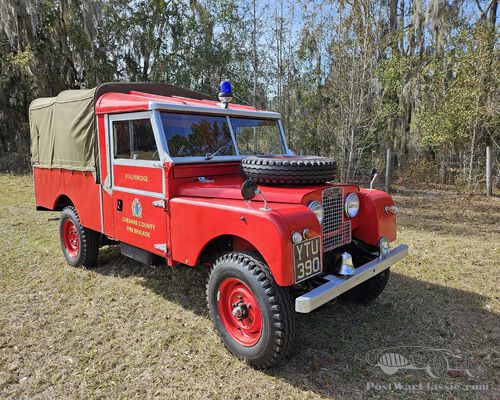
1957 Series 1 Land Rover Fire Engine + Coventry Climax Godiva Fire Pump
Betsy was used by Cheshire Fire Service (UK) from 1957 to 1975. She was based at Hazel Grove and Stalybridge Fire stations. She comes with an exten..