The global magazine and marketplace for classic car enthusiasts, by enthusiasts.


Filter
Classic Lotus for sale - Lotus cars for sale
-

1962 Lotus Elite Series 2
Technical Specification:Mark & Model: Lotus Elite Series 2Year: 1962Registration plate: Jersey registeredChassis Number: EB2021681Engine Number: FW 400-2 11032Engine Capacity: 1216 ccTransmissions: 4-speed manualMileage: 31,491Body style: 2-door coupeInterior color:.. -
1958 Lotus XV Le Mans
1958 Lotus XV Works entry for 1958 Le Mans 24 Hours, driven by Graham Hill and Cliff AllisonExtensive race history in Kenya from 1958-1970Original Le Mans 2-litre Climax FPF engine and chassisRecently restored from the ground up and offered with FIA HTP and a truly stunning history file


Lotus
GB, 1952 to date
(1) Lotus Engineering Co, Hornsey, London N., 1952 – 1959
(2) Lotus Cars Ltd, Lotus Components Ltd, Cheshunt, Herts., 1959 – 1966
(3) Lotus Cars Ltd, Hethel, Norwich, 1966 to date
Possibly no man since World War 2 has done more towards launching hopeless manufacturing projects than Colin Chapman. Stirred by his ‘fairy-tale’ success story, countless imitators of the Lotus car essayed production of racing or kit-built sports cars on limited capital, and fell by the wayside, lacking Chapman’s inimitable combination of determination, engineering knowledge, business acumen and luck.
The first Lotus car was a tuned Austin Seven, re-bodied on functional rather than aesthetic principles. The Lotus Mark 2 of 1949, when fitted with a Ford 10 engine, was successful in hill and speed trials. Public notice for the Lotus car came in 1951, when the Austin Seven engine of the Lotus Mark 3 was fitted with steel strips to ‘de-siamese’ the inlet ports. With independent front suspension and a very light aluminium body, this Lotus car ran faster even on three cylinders than its adversaries could manage on the full complement.
For 1952, Chapman formed the Lotus car company with Michael Allen, moved to premises more commodious than the workshops at Allen’s Wood Green home, and produced the Lotus Mark 3B and the successful Lotus Mark 4 trials car, which Mike Kawson used as a successor to his Mark 2. Mark 5 Lotus car was a stillborn 750 formula car, and Mark 6 the first Lotus car for sale in regular production. Offered in kit form, this Lotus car was based on a multi-tubular frame with stressed aluminium panels, coil suspension and Ford running gear. A Consul engine was first fitted in the Lotus car, de-stroked to bring it within the 1.500cc class. Later successful Lotus cars were also fitted with Ford 10 engines and various MG units, including a 746cc J4, and these vehicles achieved numerous sports-racing successes in their classes over the next few years. A Mark 7 Lotus car was started and abandoned (becoming the Clairmonte Special); the number was later used for an updated version of the Lotus Mark 6. In 1953 a colleague of Chapman’s at De Havilland’s joined the merry part-time band. This was Frank Costin, who designed the efficient aerodynamic body of the 1954 Lotus Mark 8. A complex full-width space frame of the Lotus car accommodated either a 1.497cc MG engine or a 1.098cc FWA Coventry-Climax, and a De Dion type rear axle with inboard brakes. Maintenance of the Lotus car, via the small gaps in the frame tubing, was diabolical. By 1955 Chapman had gained sufficient confidence to work full-time in his Lotus car company. Producing the Lotus Mark 9, an improved version of the Mark 8. The De Dion-axled Lotus car model was the Lotus Le Mans, a cheaper Club version being available with Ford gearbox, and sometimes with Ford 10 engine. The promising aerodynamic Lotus cars won a lot of races, but also suffered a lot of breakdowns – the Mark 6 providing the bread and butter. Notable Lotus exponents of the period included Anthony, Ashdown, Allison, Davis, Coombs, Flockhart, Jopp, Lumsden, MacDowel, Naylor, Scott-Russell, Steed and Chapman himself.
For 1956 the Mark 9 was superseded by the Mark 11 Lotus car, and further names in the roll of honour included Bicknell, Bueb, Hawthorn, Hill, Schell, Scott-Brown, Sopwith, and Stacey. By now all versions of Lotus cars except the ‘Club’ model had disc brakes. Club Lotus developed a fanatical camaraderie, assisting the designer to learn faults and improve detail on the Lotus cars. The reputation of unreliability was not, however, entirely justified – many of the faults could be laid at the door of the assemblers of ‘kit-built’ Lotus cars, and 156 racing wins were recorded in 1956 with the Lotus car. Mackay Fraser also took 1.100cc class records at Monza. In this year the first single-seater Lotus car appeared – the Lotus Mark 12 Formula 2 with FPF Coventry-Climax engine. The multi-tubular frame was fitted with a ZF gearbox/ axle unit, and the ‘Chapman strut’ suspension was introduced. With cast magnesium alloy disc wheels and body similar to the one that Costin had designed for the Vanwall, the Lotus car appearance belied is comparative lack of success.
In 1957 the Lotus 11 adopted the ‘wishbone’ front suspension of the Formula 2 car, and having achieved homologation under Appendix ‘C’ of the international regulations, Ian Walker’s Lotus car won the British ‘Autosport’ series-production ssports-car championship. Total production passed 300 Lotus cars, whilst later in the year two significant new Lotus cars were shown. The Lotus Mark 7 followed the chunky functionality of line of the Mark 6, but employed a similar frame to the Lotus Mark 11. A 100E Ford engine was standard, though a ‘Lotus Super Seven’ was available with Coventry-Climax power and disc brakes. The Ford-engined Lotus car proved the more successful in its class. The other surprise was the Lotus Mark 14, the prototype Elite fibreglass monocoque coupé, using a 1.216cc engine designed by Coventry-Climax for the USA 1.300cc GT class, mated to a BMC ‘B’ gearbox.
1958 saw the introduction of the successful sports-racing Mark 15 Lotus car, with strut suspension at the rear, canted engine, very low lines, and a 5-speed gearbox incorporated with the rear axle. The Coventry-Climax 1.475cc unit was standard, though 2-litre or 2.2-litre versions were also offered in Lotus cars. An improved single-seater Lotus car (the Mark 16) appeared, at first with a horizontal engine layout. The outmoded small sports Mark 11 was replaced by the Mark 17, a light Lotus car using the new-type suspension, but this Lotus car was still no real match for the contemporary Lola in the class.
In 1959 The Mark 16 was given a new frame and nearly upright engine, but the tortuous transmission and other design features gave works drivers Hill and Ireland continual disappointments. However, production of the Lotus Elite was at last commenced, with a new Lotus car company in a new factory. At the end of the year the Mark 18 was announced, as a rear-engined Formula Junior. This Lotus car, Cosworth-Ford powered, swept all before it in 1960 in the hands of Arundell, Clark, Henry Taylor and Trevor Taylor. These successes were overshadowed by the Lotus cars first Formula 1, by Stirling Moss at Monaco in Rob Walker’s Mark 18, strengthened for the 2.495cc Coventry-Climax engine.
Some 125 Mark 18 Lotus cars were sold that year, while even at this early juncture some 400 Lotus Sevens had been made. The Lotus Elite continued to achieve GT class wins, remaining a strong contender even after it had been superseded. As a road car, however, this Lotus car was noisy, lacking in creature comforts and not always reliable – nevertheless final production reached 988 Lotus cars in 1963.
1961 was a Ferrari year in Formula 1, but Moss’s skill earned two major victories for the rather fragile Lotus 18. Meanwhile the Mark 20 had appeared, becoming the leading Formula Junior car. In sports-car racing the Mark 19 Lotus car ousted the Cooper Monaco from its supremacy. Innes Ireland and others also winning most major 1962 races with this Lotus car. A typical Lotus specification of thise period would be a small-diameter tubular space frame, Chapman strut rear suspension with Armstrong coil/damper units, rear-mounted Cosworth-Ford engine driving though an inverted Renault or Volkswagen gearbox, and fiberglass body panels by Williams and Pritchard.
Early in 1962 a surprise replacement Formula Junior Lotus car was announced, with canted engine. Arundell, backed by Spence, continued the winning vein. The Formula 1 Lotus car was the Mark 24, and very promising too. Then came the bombshell – the stressed-skin monocoque Mark 25 Lotus car, which first appeared at Zandvoort in May. This Lotus car was truly an epoch-making design, being eventually copied (as were many of Chapman’s innovations) by nearly all serious racing-car constructors. In its first year, Clark and Lotus cars finished runners-up in the Championships.
Shortly afterwards a European journalist published doubts about the engine capacity of the omnipotent Formula Junior Lotus cars, which gave Chapman an opportunity to show his habitual aptitude for making the very best of a situation. He gained the maximum publicity for Lotus cars and acclaim by laying a wager to repeat the questioned performance, hiring the Monza circuit to do so. Peter Arundell bettered his race speeds in the same Lotus car, which was subsequently checked as complying precisely with the Formula. In September a sports model Lotus car put up a remarkable showing at the Nürburgring, powered by a twin ohc conversion designed by H. Mundy and R. Ansdale of the 5-bearing 1.499cc 116E Ford Classic engine. This unit was fitted to the front-engined road car known as the Mark 26 or Elan. A sheet-steel boxsectioned backbone chassis was employed on this Lotus car, branching at the front to hold the engine, and slightly at the rear for the Chapman strut suspension. Disc brakes were fitted. The body of the Lotus car, styled by J. Frayling, featured retractable headlights operated by a vacuum unit. This Lotus car-model set standards of roadworthiness which enraptured motoring journalists, racing drivers and road enthusiasts alike – a well-known editor called it ‘one of the finest’ “road-clingers” of all time’. With 1.558cc engine and dual twin-choke Weber carburetors fitten to the Lotus car, 105bhp was developed in standard trim. Successive developments included the 1965 fixed-head coupé version (Mark 36), the very successful 1966 Series Two model (Mark 45), and the longer Lotus Plus 2, with extra seating and 118bhp. Sales of Lotus cars were such that a move to more extensive premises was justified by 1966 – even by 1965 Lotus car production was averaging 10 weekly, and in 1967 they passed 5.000 Lotus cars.
Clark won seven of the ten grandes épreuves of 1963 in the Lotus car, annexing the Formula 1 championship for the Coventry-Climax powered 25, and Arundell continued his winning ways with a monocoque Lotus car, the Mark 27 in Formula Junior. This was the first year of the Lotus-Cortina – the Lotus Elan engine and other Major modfications transformed the staid Ford saloon into a 100mph sports car. The positive ‘A’ bracket location put too much torque on the rear axle casing, however, and for this reason the earlier Lotus car models were not always very reliable. Later developments remedied this defect, and the model began to underline its racing successes (in the hands of Clark, Sir. John Whitmore and many others) with wins in tough long-distance rallies (handled by Roger Clark, Elford, Söderström, etc.). The 1967 edition of the Lotus car was slightly ‘softer’ and less Chapman-like in character: this was reflected in a reversal of the name to Cortina-Lotus cars. Mark 25 was superseded by the Mark 33 Lotus car in 1964, with modified rear suspension. Minor troubles robbed Clark of a second Championship victory, and the Mark 32 was trounced by the Brabhams and Coopers in the subordinate classes. Two noteworthy developments, however, were the Indianapolis Lotus cars and the Ford V8 engined Mark 30 sports-racing model.
1965 was a better season for Lotus cars; a Mark 35 in Jim Clark’s hands redeeming the Formula 2 reputation, and Piers Courage securing a ‘first time out’ win in Formula 3 for the Mark 41 Lotus car at the end of the year. This Lotus car surprisingly reverted to the tubular space-frame, in the interests of cheapness and ease of maintenance. Clark won races in every possible category, and besides repeating his 1963 Formula 1 triumphs with the Lotus car, radically upset the American status quo by securing the Indianapolis laurels with the 4.2-litre Ford-engined Mark 38. A new Mark number, 37, was allotted to the perennial Lotus Seven in recognition of major chassis and body improvements of the Lotus car.
The monocoque Mark 43 Formula 1 Lotus car was designed for the disappointing H16 BRM engine of 1966, and Courage and Pike showed potential customers that the Formula 3 Lotus cars could win races. Chapman, of course, generally picked the crest of a wave on which to launch a revolutionary new model, and this duly appeared at the end of the year. Two versions were available: the Lotus Europa for export, with reversed Renault R16 engine, and a Cosworth-Ford-powered Lotus car for racing. Common to both were a back-to-front Elan-type chassis, mid-engine location, and very low drag fiberglass GT body styled by Frayling. Another first-time win Lotus cars was achieved, by J. Miles at Brands Hatch.
Noteworthy single-seater Lotus cars introduced during 1967 included the Mark 51, the first production Formula Ford car, and the Formula 1 Mark 49, with Ford-sponsored engine. This Lotus car was the fastest car in Grand Prix racing. A fruitful association Lotus cars with the tobacco firm of John Player began in 1968, and though Lotus suffered a sad blow with the loss of Clark in a Mark 48 at Hockenheim. Jo Siffert and Graham Hill ensured that the 49B Lotus car carried off the Formula 1 World Championship again.
In 1969 the consistently successful Mark 59 Lotus car was introduced for Formulas 2, 3 and B, and a 4-wheel-drive turbine model, the Mark 56, led at Indianapolis. Developments during 1970 included a Series 4 version of the evergreen Lotus Seven, sold through Caterham Car Sales, with a new platform chassis and fiberglass body; the Mark 69 was the Lotus car for the smaller racing classes; an unsuccessful wedge-shaped Formula 5000 Lotus car (the Mark 70); and the 72 for Formula 1. This model Lotus car regained the World Championship for Lotus, despite the loss of Jochen Rindt at Monza. The following year Emerson Fittipaldi gained more experience with this Lotus car before winning the World Championship in 1972 with the 72D, amazingly the third year of top-level racing for a basically unaltered design of the Lotus car. The Brazilian driver made a good start to the 1973 Formula 1 season, winning the Argentine and Brazilian Grands Prix, still using the 72D. Manufacture of racing Lotus cars for sale had by now ceased, the works John Player Special Lotus cars (as they were now known) alone maintaining the Lotus tradition. Infrequently new racing models still appeared: the Mark 73 of 1972 was a Formula 2 or 3 model with variable rate inboard front suspension and side radiators. Private owners of Lotus cars continued to do well in many classes – during 1972 Keith Garratt’s 69F Formula Ford and John Fletcher’s Modsports Elan were particularly hard to beat.
Steady developments and increasing production were seen with the road Lotus cars. Sales figures in the United States alone exceeded 700 Lotus cars in 1971, when the Lotus Elan Plus 2S 130 received a more powerful ‘big-valve’ engine and the Europa earned a rear body line that improved visibility. An interesting 1972 Lotus car model, possibly inspired by sales of a comparable rival marque, was the Lotus Elan sprint Estate marketed by Hexagon of Highgate and costing some £500 more than the standard product.
Source: Georgano, encyclopedia of motorcar; DF
The information is written with the greatest of care. However, if you have any suggested amendments please contact us at office@postwarclassic.com


Featured
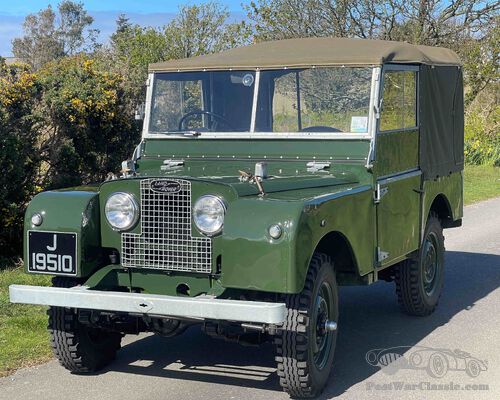
1952 Land Rover Series 1
Technical Specifications:Mark & Model: Land Rover Series 1Year: 1952Registration plate: Jersey registered
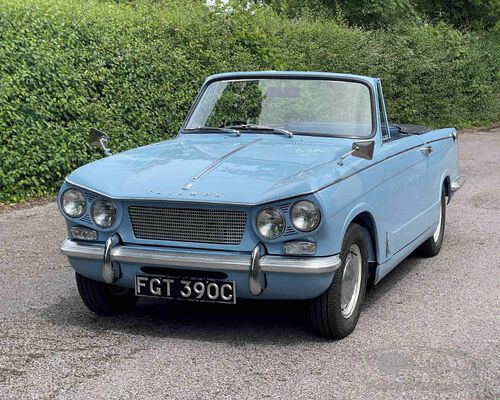
Triumph Vitesse 6 Convertible
Technical SpecificationsMark & Model: Triumph Vitesse 6 ConvertibleYear: 1965Registration plate: UK registered
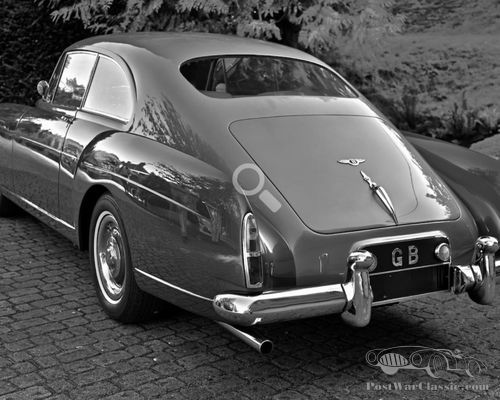
1957 Bentley S1 Fastback by H.J. Mulliner.
1957 Bentley S1 Fastback by H.J. Mulliner.A freshly restored award winning car in like new condition. A later car with Power assited steerin..