The global magazine and marketplace for classic car enthusiasts, by enthusiasts.


Filter
Classic Mercury for sale - Mercury cars for sale
-

1965 Mercury Park Lane Breezeway Sedan 4 door
1965 mercury park lane breezeway sedan 4 door,retractable rear window, v8 6.7, very good condition

Mercury
US, 1938 to date
Ford Motor Co, Detroit, Mich.
The Mercury car, a product of Ford’s Lincoln Division, was intended to rival GM’s Oldsmobile and Buick, and widen Ford penetration of the American market. The Mercury car was in effect an enlarged Model 91 Ford V8 with a 3.9-litre 95bhp engine. At $957 the Mercury car cost $230 more than its smaller sister, but the Mercury car was $40 less than Buick’s cheapest 4-door sedan. Hydraulic brakes were standard from the start on Mercury cars and evolution followed established Ford lines, with no drastic changes until 1949, when the new low silhouette, hypoid rear axle, and coil-spring independent front suspension were incorporated on the Mercury car. Capacity of the engine of the Mercury car went up to 4.2-litres and the front-end styling of the Mercury car emphasized the association with Lincoln. Mercury cars, like Ford, progressed to overhead valves and oversquare cylinder dimensions and in 1955 buyers of the Mercury car had a choice of two V8 engines of 188 and 198bhp. An inexpensive Mercury Medalist series was added in 1956 and in 1957 the standard power unit was a 255bhp. Mercury cars became bigger and more expensive in 1958 and 1959 to avoid clashing with the Edsel range from the same stable, and a 6.3-litre, 360bhp engine was available in Mercury cars.
In 1961 Mercury cars broke with tradition, and offered for the first time something other than a V8; not only was there the option of a 3.6-litre six in the regular Mercury car range, but there was also a semi-compact Mercury car, the 2.4-litre Mercury Comet, a Mercury car with a 9ft 6in wheelbase parallel with Ford’s Falcon. The Mercury Comet sold for $2.084 in 1962, when the largest of the standard V8s was a rather modest 4.8-litre. 1963 saw a return to bigger things on Mercury cars, with 6.4-litre and 6.8-litre engines available in the top-price Mercury Monterey models, which also included a Breezeway sedan with forward-sloped rear window as already used on Ford of Britain’s 1960 Anglia. Though the Mercury Comet was retained for 1966 with a 3.3-litre engine, the biggest Mercury cars looked like Lincoln’s Continental on a reduced scale; the wheelbase of the Mercury car is 10ft 3in, with 6.4-litre, 6.7-litre and 7-litre engines available. For the more sporting motorist there was the Mercury Comet Cyclone with compact dimensions and a 6.4-litre V8 unit. A 1967 sports coupé version, the Mercury Cougar, heralded a return to the waterfall-type radiator grille on the Mercury car so generally popular in the early 1950s.
Subsequent Mercury car developments were aimed at keeping station in the tricky medium-priced market, with the sporting element represented by the Mercury Cyclone and Mercury Cougar coupés (with V8 engines of up to 390bhp) and the luxury sector covered by the Marquis Brougham, which in 1969 form aped the Lincoln with its concealed headlamps, and came with 7-litre V8 unit and automatic as standard. Regular family Mercury cars were the Montego on a 9ft 9in wheelbase, and the stock Mercury car of 10ft 4in. In 1971 there was a Mercury edition of Ford’s Maverick compact, the Comet. Wheelbase was 8ft 7in, and engine options of the Mercury car were sixes of 2.8-litres, 3.3-litres or 4.1-litres, or a small 4.9-litre 210bhp V8. Basic price was a low $2.217, and it was continued into 1972 along with the Cougar, Montego, Monterey, Colony Park and Marquis lines, though new Federal regulations took their toll for Mercury cars, and the most powerful engine option gave only 266bhp, as against 375 in 1970. Mercury Montegos had front disc brakes as standard, as had 1973 Mercury Cougars, which came with a traditional radiator grill in Humber-Sunbeam style. Most of the 1973 improvements on Mercury cars concerned safety (e.g. reinforced bumpers and radial-ply tyres as standard on the big sedans). Ford’s Lincoln-Mercury Division also distributed the German Ford Capri with 2-litre or 2.6-litre engine.
Source: Georgano, encyclopedia of motorcar; MCS
The information is written with the greatest of care. However, if you have any suggested amendments please contact us at office@postwarclassic.com


Featured
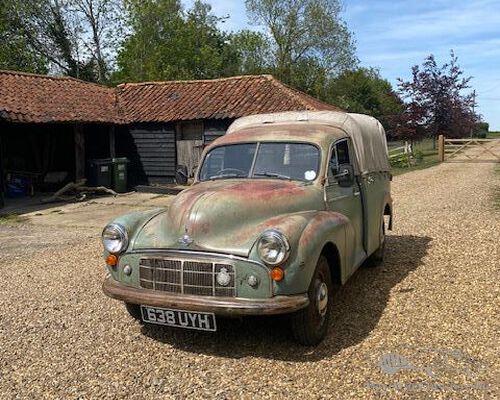
1954 Morris Minor Series II Pick Up
Morris Minor Series II Pick-Up, first registered 15th Jan 1954. Exported from new to Australia, returned to the UK in 2014. Swansea documentation r..
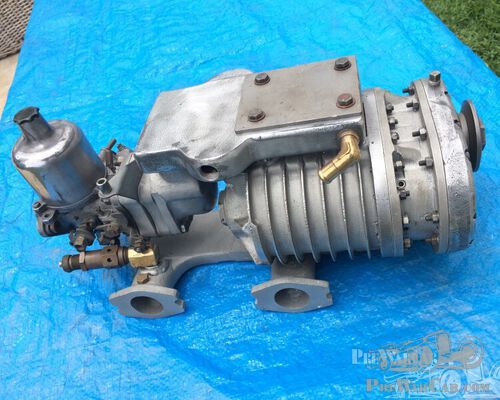
Blower / Compressor / Supercharger - Godfrey Marshall - A Series BMC Engine
SuperchargerA Godfrey Marshall cabin blower Type Mk22 converted to vehicle use by Barry Ekins of Sydney NSW. Ekins created kits for many popula..

Rolls-Royce
Rolls-Royce Silver Wraightlinks gestuurd, automatic, stuurbekrachtigingkleur antraciet grijs, lopende auto op Nederlands kenteken