The global magazine and marketplace for classic car enthusiasts, by enthusiasts.


Filter
Classic MG for sale - MG cars for sale
-

MGB GT
Mark & Model: MGB GT "barnfind"Year: 1972Registration plate: Jersey registeredChassis Number: GHD5 / 270280CEngine Number: 18V581FH1582Engine Capacity: 1798 ccTransmission: 4-speed manualMileage: 88,304Body style: 2-door CoupeInterior color: Tan checkExterior color: Blue -
MGB GT Limited Edition
Technical Specifications:Mark & Model: MGB GT Limited EditionYear: 1981Registration plate: UK registeredChassis Number: GVGEJ1AG522198Engine Number: 39512Engine Capacity: 1798 ccTransmission: 4-speed manual + overdriveMileage: 26,461Body style: 2-door CoupeInterior .. -
MGB GT
Technical Specifications Mark & Model: MGB GTYear: 1972Registration plate: Guernsey registeredChassis Number: GHD5 288524 GEngine Number: 8119Engine Capacity: 1798 ccTransmission: 4-speed manual plus overdriveMileage: 49,314Body style: 2-door CoupeInterior color: Tan leath.. -
MG TD/C MKII
The 1953 MG TD is a classic British sports car that holds a special place in automotive history. It was part of the MG T-series and represented a blend of traditional British design with mechanical innovations aimed at the American market. Here's the story and history behind it: Background: The MG T-SeriesMG.. -
MGA 1600 Roadster
Technical SpecificationsMark & Model: MGA 1600 RoadsterYear: 1959Registration Plate: Guernsey registeredChassis Number: GHN / 75819Engine Number: 16AD-N-L 10244Engine Capacity: 1622 ccTransmission: 4-speed manualMileage: 45,341Body Style: 2-d.. -
1953 MG TD Supercharged Special Left Hand Drive
1953 MG TD Supercharged Special Left Hand Drive Chassis Number: TD25816 Just a few hundered miles covered since a no expense build. In brand new condition. A Spectacular, beautifully executed and very stylish MG TD special. Design inspired by Miles Collier’s MG rac.. -
1954 MG TF Midget
Technical Specifications Mark & Model: MG TF MidgetYear: 1954Registration plate: Guernsey registeredChassis Number: HDP 46 / 3564Engine Number: XPAG / TF / 33756Engine Capacity: 1250 ccTransmission: 4-speed manualMileage:Body style: 2-door ConvertibleInterior color:.. -
1951 MGTD
1951 MGTD Chassis Number: 763172518 Registration number: USU826 A nice patinated car that has come to us from the ownership of a retired engeineer. He has done extensive work over the last year to put the car in tip top running condition. The car is finished in a m.. -
MG TF1500
Are you looking for a charming British classic with a powerful engine and beautiful looks? Then this 1955 MG TF 1500 is exactly what you're looking for!price : €. 16950.-The car in brief:Originally from the USA, imported to the Netherlands in 1991Equipped with the more powerful 1500cc engine – ideal for relaxed tourin..


M.G.
GB, 1924 to date
(1) Morris Garages Ltd, Oxford, 1924 – 1928
(2) MG Car Co Ltd, Abingdon, Berks., 1929 – 1970
(3) Austin-Morris Division, British Leyland Motor Corp Ltd, Abingdon, Berks., 1970 to date
The name MG is synonymous with sports cars, but it has always been borne by more sedate vehicles as well; at first the MG car had no true sporting connotation at all. In the early 1920s Cecil Kimber was in charge of the Morris Garages, the firm from which William Morris’s new empire had sprung and which was the Morris agent in Oxford. It was an extremely common practice for manufacturers of staid, solid touring cars to offer mildly tuned alternatives with more dashing bodywork for the benefit of the man in the street who would pay a little extra for a more sporting vehicle. In 1920 Morris had discontinued his own sporting version of his Cowley, and other Morris dealers had offered their own alternatives independently.
From 1922, Kimber began experimenting with special bodies, and two years later took the new 1.8-litre Oxford and modified it slightly into the MG Super Sports. A lightly-tuned engine, improved handling and handsome aluminium bodies effected the transformation of the MG car. Backed by Morris reliability and service, the MG car was a great success. When Morris went over to a flat radiator in place of the old ‘bullnose’ for 1927, Kimber followed. By this time, he was calling his MG car the 14/40hp, because of the increased power of the MG car compared with the 14/28hp of the standard Oxford. A year later there arrived the 2½-litre Morris Six with overhead camshaft, for which Cecil Kimber designed for his MG car, a completely new cylinder block and head, a light body and a high axle ratio. The resulting 18/80hp MG car was improved in 1930 with a 4-speed gearbox and stiffer chassis. This Mark II 18/80 MG car was a major modification of the Morris recipe. Earlier, when Morris had introduced his new ohc 847cc Morris Minor in 1928, Kimber adopted and adapted it to the MG car style. The Minor chassis and engine were retained, with little alternation other than lowering the suspension and steering on the MG car. The little fabric-bodied, pointed-tail two-seater MG M-type Midget of 1929, with the engine of the MG car tuned to provide 20bhp, 65mph and excellent accerlation, was Britain’s first really cheap and at the same time practical sports car. The sporting cyclecars of former times were too stark and noisy, and the imported French sports cars such as the Amilcan and Salmson were far dearer, and in any case were going out of production. It was true that the M-type MG car retained the Morris Minor’s somewhat uncertain brakes and its wide-ratio 3-speed gearbox, but the performance wanted by a new, wide and undiscriminating market for sports cars was there.
MG cars went in for racing in 1930. The competition MG cars used superchargers, and special wheels, valves and springs, but shared many components with the touring MG cars. This developments on MG cars, began with the MG Double Twelve M-type, so named after works M-types won the team prize in the Brooklands Double Twelve Hour race of 1930, and with the formidable, if short-lived MG 18/100 Tigresse, which was derived from the 18/80 but was a true road-racing MG car, very highly tuned. Much fiercer than the Double Twelve replica MG car was the much better known 746cc MG C-type, which MG car weighed only 1.120lb, but in supercharged form this little MG car was capable of 90mph. The MG car won the 1921 Double Twelve, and the Irish Grand Prix and Ulster Tourist Trophy races of the same year. The MG M-type was developed into the MG J. Like most normal MG cars, from the earliest one onwards, a variety of body styles could be had, but the best known was the MG J2 open two-seater sports of 1932, with its low lines, cutaway doos and slabtank-mounted spare wheel at the rear. The style of this MG car set the fashion for the sports cars of the 1930s. The J-type MG car carried over developments from the racing MG C-type, demonstrating that racing improved the breed – the cylinder head of this race MG car was of a more efficient design, the chassis was stiffer, the brakes were better and there was a 4-speed gearbox available on the MG car. The MG J3 was a supercharged version, while the MG J4 was a fine little blown sports-racing edition of the MG car. The MG J was developed into the slightly more powerful MG P-type, which had a 3-bearing crankshaft.
As far as the general public was concerned, the ultimate development of the little 4-cylinder ohc engine of the MG car was seen in the MG PB sports of 1935, with 939cc, but for out-and-out racing with a MG car there was the supercharged MG Q-type, followed by the very modern 1935 MG R-type. This MG car had wishbone and torsion-bar independent suspension of all four wheels. Apart from being 750cc supercharged instead of 847cc unsupercharged, the basic engine of the MG R-type was almost identical to that of the production MG P-type, and in fact the MG R-type engines carried MG P-type engine serial numbers.
Meanwhile, Kimber had taken the 1930 Wolsely Hornet, a small six (basically a lengthening of the Morris Minor) and turned it into the MG F-type Magna. Again, touring and sports versions of the MG car were offered, with open and closed bodywork. This MG car had a 1.271cc engine. The MG Magna was developed into the supercharged sports-racing MG K3 Magnette, which MG car won its class in the 1933 Mille Miglia race, and triumphed outright in the same year’s Ulster Tourist Trophy race, driven by Tazio Nuvolari. The unsupercharged 1.287cc MG NE Magnette won the next year’s Tourist Trophy. The more ‘touring’ MG Magnettes of the K and N series were designed to take four-seater bodies, though two-seaters were made for the MG car. Larger and heavier, these MG cars were altogether more substantial machines than the Magnas they supplemented. In six competition seasons, the MG cars also won the French d’Or race twice, the Brooklands 500 Miles race twice, the 1.100cc class of the Grand Prix de France twice, and more than two dozen other important first places. Between 1930 and 1959, with and without works support, MG cars also captured many class speed records. In 1931, a special MG car became the first 750cc car to exceed 100mph, and to cover more than 100 miles in the hour. MG cars became Britain’s premier sporting marque.
After 1935, the MG car company officially raced no longer, and no more competition MG cars were made for public sale. MG car-models tended to become bigger, and more comfortable. The 1936 MG Midget’s 4-cylinder, ohc unit gave way to a 1.290cc long-stroke, push-rod ohv engine in the MG TA, which also had hydraulic brakes. This MG car was succeeded by the shorter-stroke, 1¼-litre MG TB in 1939. The 1½-litre MG VA carried roomier bodies. The 6-cylinder MG cars became rather more staid, but the big 2-litre MG SA and 2.6-litre MG WA of the 1936 – 1940 period were handsome, excellent and popular machines, catering for those who wanted an Alvis or a Lagonda but could not afford one. These MG cars were dropped after World War 2 in favour of the MG TC Midget, which was virtually the MG TB with a synchromesh gearbox, and its saloon and touring version, the MG Y-type. The latter was the first touring MG car to have independent front suspension.
The MG TC Midget did more than any other machine to foster and spread the cult of the European sports car in America. The first real modernization in the design of the Midget MG car came in 1949, with the introduction of the MG TD. This MG car had wishbone and coil-spring independent front suspension, a box-section frame and rack-and-pinion steering, but though a little more power had been extracted from the engine, the handling of this MG car was not noticeably improved. The MG TF of 1953 incorporated the MG car firm’s first concessions to aerodynamic principles in a production MG car, but was otherwise a transitional model. A 1½-litre engine became optional in the MG TF, and gave way to an Austin-designed unit of the same capacity in the completely new MGA that succeeded it for 1956. A very rigid chassis greatly improved handling of the MG car, while an efficient aerodynamic shape provided a much higher maximum speed (nearly 100mph) and allowed a higher axle ratio. Both features on the MG car made for fuel economy. A few MGAs were made with twin ohc engines, but in the hands of the average driver, these MG cars were temperamental, and the 1.6-litre, 78bhp push-rod ohv engine that was eventually fitted to all MGAs provided just as much performance with traditional MG dependability. The MGA 1600, like the Twin Cam, had disc brakes on the front wheels. Meanwhile, the boxy Y-type touring MG car contemporary with the MG TC had given way for 1954 to the attractive little 1½-litre MG ZA Magnette; a revival of an old name. This MG car was, however, a 4-cylinder car. Basically, the MG car was a livelier edition of the Wolseley in the BMC range, and the practice of putting an MG car radiator on the Corporation’s smaller family saloons was continued, until now this is done on both the front-wheel-drive 1100 MG car and the 1.6-litre MG Magnette IV.
The MG car company’s basic sports car having developed beyond its MG Midget heredity, a new, true Midget MG car was introduced in 1961 as a cheaper alternative. This MG car was basically the simple little Austin-Healey Sprite. The latest model had unit construction of body and chassis, a 1.275cc, push-rod ohv engine developing 65bhp a 6.000rpm, independent front suspension, and disc front brakes. In 1962 the MGA became the entirely new, unit-construction MGB with 95bhp 1.795cc engine, available as an open two-seater or GT coupé. For 1968 a new 7-main-bearing version of the MG car being called the MGC. An MGC was the first car to be owned by Prince Charles, but the MG car was not a great success, being withdrawn late in 1969 after 9.000 MG cars of this type had been made. Also in 1968 the 1100 gave way to the 1.275cc 1300. However, one of the effects of the British Leyland merger was the elimination of the badge-engineered MG cars. The MG Magnette IV disappeared during 1968, and the last 1300s were built during 1971. The 1970 MGBs had new grilles retaining only a vestige of the traditional shape, but this was the MG car marque’s first 50.000 MG cars year, and the quarter millionth MGB left Abingdon in May 1971. This MG car model and the 1.275cc Midget III were the only MG cars offered in 1972.
Source: Georgano, encyclopedia of motorcar; TRN
The information is written with the greatest of care. However, if you have any suggested amendments please contact us at office@postwarclassic.com


Featured
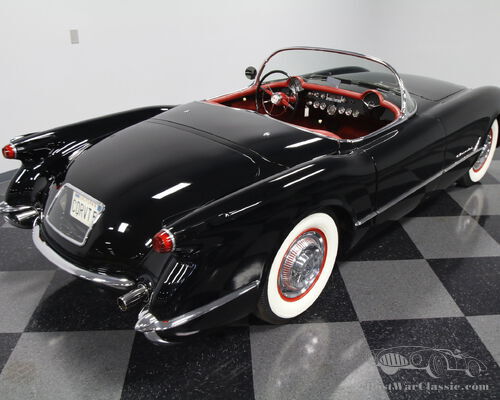
1954 Chevrolet Corvette C1
Fully restored 1954 C1 Corvette in Black. Stunningly beautiful car, feels like driving a sculptural work of Art. Known to be the oldest Corvette on t..
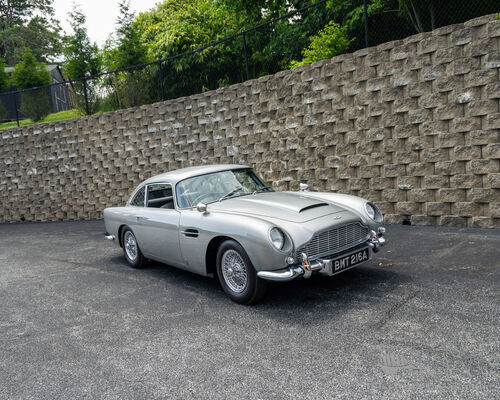
2020 Aston Martin DB5 Goldfinger Continuation | RM Sotheby's | The Monterey Auction
To Be OFFERED AT AUCTION at RM Sothebys' The Monterey Auction event, 13 - 15 August 2026. $1,000,000 - $1,500,000 USD One of 25 examples co..
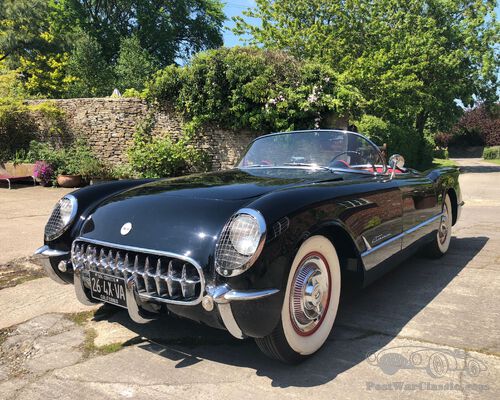
1954 Corvette C1 - SUPER RARE Black!!
Looking for her next lover, my classy 1954 Corvette C1. She's a beautiful sculpture. Never have i had so many adoring comments as when drivi..