The global magazine and marketplace for classic car enthusiasts, by enthusiasts.


Filter
Classic NSU for sale - NSU cars for sale


N.S.U.
D, 1905 to date
(1) Neckarsulmer Fahrradwerke AG, Neckarsulm, 1905 – 1910
(2) Neckarsulmer Fahrzeugwerke AG, Neckarsulm; Heilbronn, 1910 – 1931
(3) NSU-Werke AG, Neckarsulm, 1958 – 1969
(4) Audi NSU Auto Union AG, Neckarsulm, 1969 to date
NSU were already important producers of bicycles and motorcycles when they started NSU car manufacture in 1905 by building Pipes under licence. Cars of their own NSU cardesign appeared in 1906. These were 4-cylinder models of 6/10PS and 15/24PS and in the following years NSU concentrated very successfully on small NSU cars. A very popular NSU car was the NSU 5/12PS 1.132cc model which was produced until 1914 and in improved NSU 5/15PS and NSU 5/20PS forms until after World War 1. There was also a 1.100cc verticle twin NSU car in 1909, and some bigger NSU cars with 2.6-litre and 3.3-litre engines. During the post-war years NSU cars were quite successful in sporting events with the 5/20PS 1.3-litre and 6-cylinder 6/30PS 1.6-litre sv sports NSU cars; the latter NSU car was also available with Roots blower. The newly built NSU car factory at Heilbronn was sold to Fiat in 1930 and production of NSU cars was given up a year later. Production of motor-cycles was carried on in the Neckarsulm factory.
In 1958 NSU decided to take up NSU car production again and presented the NSU Prinz, a small rear-engined NSU car with a 20bhp (later 30bhp) ohc air-cooled vertical twin engine of 598cc, and all wheels were independently sprung. The NSU car was also available as the NSU Sport Prinz with a 30bhp engine and GT coupé body. Larger NSU cars on similar lines were produced during the following years: the 4-cylinder models NSU 1000 (990cc) and NSU 1100 (1.085cc). By 1967 the 1-litre TTS NSU car offered 70bhp and 95mph.
An important NSU development was the first Wankel-engined car. The first NSU car with this rotary engine was the NSU Spider, a roadster version of the NSU Sport Prinz. The Wankel engine developed 50bhp from what was assessed as the equivalent of 500cc capacity. A legal dispute arose between NSU cars and NSU-Fiat after the former’s resumption of car production over the use of the name NSU on cars. A final agreement was reached in 1966 when NSU-Fiat gave up all claims to the designation NSU cars and adopted the name Neckar instead. New for 1968 was the fwd twin-Wankel Ro 80 NSU car saloon with a capacity equivalent to 2-litres. This advanced NSU car featured alternator ignition, a 3-speed semi-automatic gearbox with central change, power-assisted steering, all-independent coil springing, and disc brakes at front and rear. The NSU car was expensive (DM17.300 in 1972), but top speed was 108mph, and over 12.000 NSU cars found buyers in the first 18 months. The NSU K70, a projected development with manual gearbox and orthodox ohc 4-cylinder engine, was shelved, and this NSU car did not reappear until 1971, when it emerged under the Volkswagen emblem. This was the result of the 1969 merger with Audi, which brought the NSU car company under VW control. Development of the older rear-engined types continued; most potent of the 1972 NSU car range was the 1.177cc TT, capable of 96mph, but all these NSU cars were phased out in the latter part of 1972, leaving the NSU RO 80 to carry on a famous name.
Source: Georgano, encyclopedia of motorcar; HON
The information is written with the greatest of care. However, if you have any suggested amendments please contact us at office@postwarclassic.com


Featured
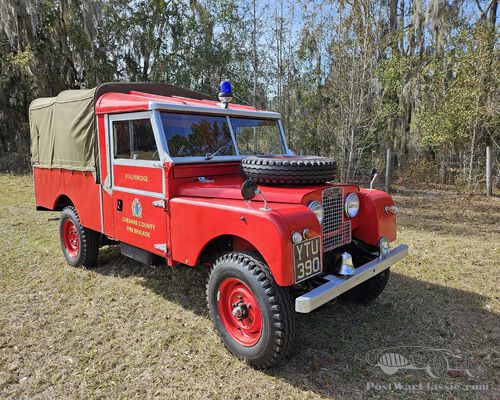
1957 Series 1 Land Rover Fire Engine + Coventry Climax Godiva Fire Pump
Betsy was used by Cheshire Fire Service (UK) from 1957 to 1975. She was based at Hazel Grove and Stalybridge Fire stations. She comes with an exten..
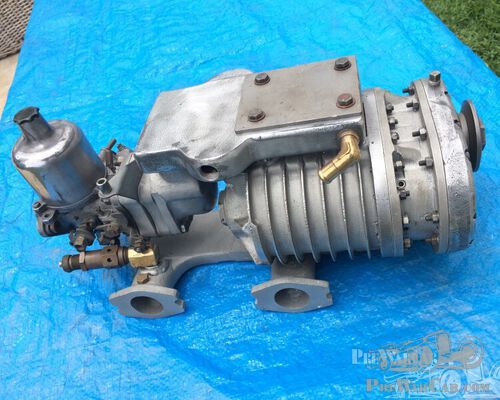
Blower / Compressor / Supercharger - Godfrey Marshall - A Series BMC Engine
SuperchargerA Godfrey Marshall cabin blower Type Mk22 converted to vehicle use by Barry Ekins of Sydney NSW. Ekins created kits for many popula..

BMW 502 V8 3,2L (Barockengel)
6-seater touring sedan, famous from the german television series "Isar 12"Production period: 1955 – 1959, 2,517 unitsV-engine 8 cylin..