The global magazine and marketplace for classic car enthusiasts, by enthusiasts.


Filter
Classic OSCA for sale - OSCA cars for sale
-

1964 Rolls Royce Silver Cloud 3 Flying Spur by H.J. Mulliner
1964 Rolls Royce Silver Cloud 3 Flying Spur by H.J. Mulliner Chassis number: SHS311C Registration Number: 2HKH (By Separate Negotiation.) One of 35 Right Hand Drive examples produced by noted coach builders H.J. Mulliner. This car formed part of the Boros collectio.. -
1957 JAGUAR XK140 MC DHC LEFT HAND DRIVE.
1957 Jaguar XK140 MC DHC Chassis number: S818981Registration Number: GD-81-74 Portugal A rare Jaguar XK140 Drophead coupe with the optional C type head. This car was restored some years ago & has for many years resided in a prominent portugease collection whilst being driven 20kms each month & maintain.. -
Alfa Romeo 1983 Giulietta Berline
Alfa-Romeo Giulietta Berlina with Italian documents. Frank Kennis Phone: 00.31.622.420.766 or mail me: info@KennisCars.NL www.KennisCars.NL Classic Car Dealer for Europe Cadillac ; Mercedes ; Rolls-Royce ; Delage ; Bugatti ; Bentley ; Dodge ; Opel ; Corvette ; Talbot-Lago ; Chrysler ; Delahaye ; Zagato ; Alfa-Romeo ; Pininfarina ; Fleetwood ; .. -
Porsche 356B Carrera II 4-cam
Beautiful original matching numbers Porsche 356B Carrera 2 with the spectacular 4-cam 2000cm3 engine.Full history, only 3 owners from new.Perfectly maintained.Driving this 356 is a experience you will not forget. It's fast and that means: really fast!Don't hesitate to come over and get surprised by this fantastic piec.. -
Rolls Royce Silver Spur
Technical Specifications Mark & Model: Rolls Royce Silver SpurYear: 1981Registration plate: Guernsey registeredChassis Number: SCAZN0005BCH01556Engine Number: 01556Engine Capacity: 6750 ccTransmission: 3-speed AutomaticMileage: 138,675Body style: 4-door SaloonInterior colo.. -
1958 Mercedes Benz 220S Cabriolet
Believed to be one of just 20 built in RHD, with less than half of those remaining. The car is in gorgeous condition, having been subjected to a major body restoration a few years ago to a very high standard, as well as more restoration work, totalling some £175,000 in all! This is all documented with invoices. Also in the file of accompanying ..


OSCA
Italy, 1947 – 1967
Officina Specializzata Costruzione Automobili, Bologna
Nine years after the three surviving Maserati brothers – Ernesto, Ettore and Bindo – had sold out to the Orsi interests in 1938, they returned from Modena to their native Bologna and founded the OSCA car concern on 1 December 1947. In a small factory, initially with minimal equipment, their first OSCA car was a single-ohc 1.100cc sports car which, in Luigi Villoresi’s expert hands, this OSCA car won its second motor race, the Naples Grand Prix of 1948. Thereafter OSCA cars turned out very successful twin-ohc 750, 1.100, 1.500 and 1.600cc sports cars which OSCA cars did well in races, particularly in the Mille Miglia. As late as 1954 a 1.500cc OSCA car, brilliantly driven by Stirling Moss, won the Sebring 12 Hours Race in Florida from many larger-engined cars.
In 1951, OSCA cars built a 4½-litre unsupercharged V12 Formula 1 car which won at Goodwood; they next produced a 2-litre 6-cylinder Formula 2 OSCA car with De Dion rear axle, and in 1959 they built several Fiat-engined Formula Junior OSCA cars which went well but were rather heavy – an OSCA car tendency. That same year Fiat built a 1.6-litre version of the twin-cam Osca engine, putting it in a high performance GT car, and subsequently OSCA cars used the same unit in a GT range of their own, this OSCA cars bodied by Vignale, Zagato or Fissore. Growing, old, and lacking suitable successors, the brothers sold their OSCA car business to Meccanica Verghera, makers of the MV Augusta motorcycle, in 1963. The last OSCA car was the 1.600 PR2 of 1966, for MV decided to close down OSCA cars completely.
Source: Georgano, encyclopedia of motorcar; CP
The information is written with the greatest of care. However, if you have any suggested amendments please contact us at office@postwarclassic.com


Featured
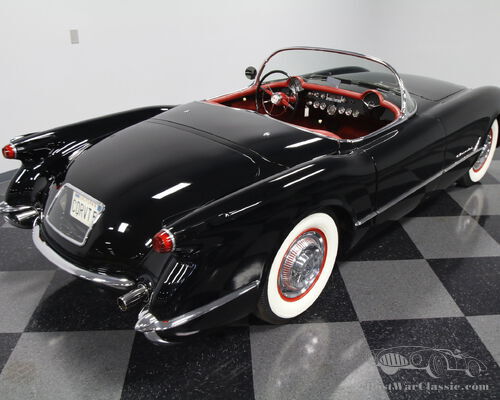
1954 Chevrolet Corvette C1
Fully restored 1954 C1 Corvette in Black. Stunningly beautiful car, feels like driving a sculptural work of Art. Known to be the oldest Corvette on t..
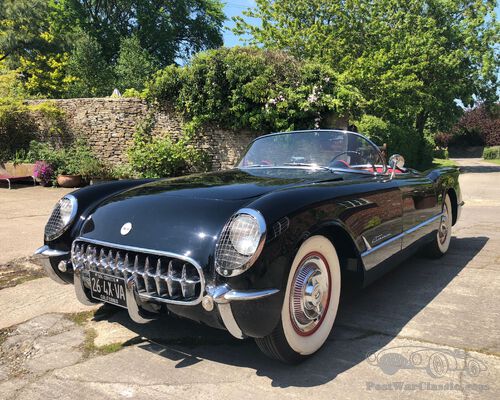
1954 Corvette C1 - SUPER RARE Black!!
Looking for her next lover, my classy 1954 Corvette C1. She's a beautiful sculpture. Never have i had so many adoring comments as when drivi..
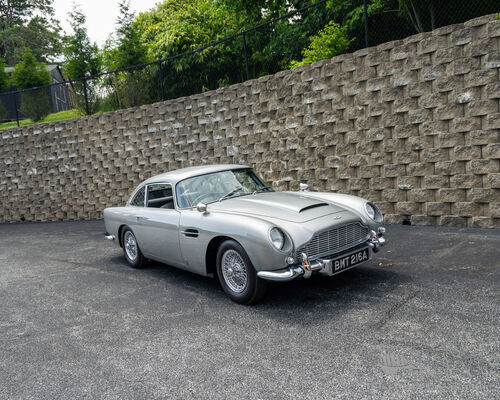
2020 Aston Martin DB5 Goldfinger Continuation | RM Sotheby's | The Monterey Auction
To Be OFFERED AT AUCTION at RM Sothebys' The Monterey Auction event, 13 - 15 August 2026. $1,000,000 - $1,500,000 USD One of 25 examples co..