The global magazine and marketplace for classic car enthusiasts, by enthusiasts.


Filter
Classic Singer, Panhard for sale - Singer, Panhard cars for sale
-

Mercedes-Benz 560SL Roadster - LHD
Technical SpecificationMark & Model: Mercedes-Benz 560SL Roadster Year: 1988 Registration plate: Guernsey Chassis Number: WDBBA48DOKA093621 Engine Number : Engine Capacity: 5547cc Transmission: Automatic Mileage: 70,000 Kms Body style: Roadster with hard top Int.. -
Pontiac Star Chief 8 cylinder convertible
Technical SpecificationMark & Model: Pontiac Star Chief 8-cylinder convertible Year: 1954 Registration plate: Jersey registered Chassis Number: W8XH8998 Engine Number: Engine Capacity : 4.39 litreTransmission: Automatic Mileage: 80,800 Body style: 4-seater convertible In.. -
1973 Jaguar V12 coupe, 2 + 2
Model: V12, 2 + 2 coupé, series 3Colour: silver grey metallicInterior: black leatheretteEngine: V12, 326 cubic inch, 5.3 litres, 272 hpTransmission: automaticCondition: original carPrice € : 59,500,- Description:Very neat mainly original car. The engine runs we.. -
1954 Bentley R Type Continental Automatic H.J.Mulliner Fastback BC38D
MAJOR PRICE DROP A late example of the iconic fastback, benefiting from the 4.9 litre engine, which was only fitted to ‘D’ and ‘E’ series cars. This one also has an automatic gearbox and the larger, better padded seats, making the car very easy, comfortable and enjoyable to drive. The car is in lovely condition and beautifully fini.. -
1970 Aston Martin DB6 MK2 Manual Nr 4257R
A rare and desirable, late MK2 version, which started life as an automatic with fuel injection, but converted in the mid 1980s to Triple Weber carburettors & manual gearbox. These changes are confirmed on the Aston Martin heritage certificate, which leads us to believe that the work was done by the factory or an official agent. The certificate.. -
1952 Rolls-Royce Silver Dawn ‘Big Bore, Small Boot’ Saloon SHD20
A rare, 4½ litre, small boot model, one of few constructed in this desirable configuration. Built to export specification & delivered new to Kenya, before going to the Belgian Congo in 1958. By 1978, the car was in North Carolina and returned to the UK in 1983. It’s early life in kind climates no doubt led to structural preservation from which .. -
1967 Jaguar XKSS Recreation
1967 Jaguar XKSS Recreation. Chassis Number: 1E16062 • Faithful homage to the iconic XKSS • Period-correct features• Superb build quality• All aluminium body • Stunning condition *For information the car will be present at Silverstone Classic Festival 23-25th August 202.. -
1998 Porsche 911 Carrera 4S | The Quail Auction 2026
Chassis No. WP0AA2996WS320886 Please check back for more information shortly.


Singer
GB, 1905 – 1970
(1) Singer & Co Ltd, Coventry, Warwickshire, 1905 – 1936; Birmingham, 1927 – 1936
(2) Singer Motors Ltd, Coventry, Warwickshire, 1936 – 1956; Birmingham, 1936 – 1956
(3) Singer Motors Ltd, Tyton-on-Dunsmore, Warwickshire, 1956 – 1970
The Singer cycle firm acquired the manufacturing rights of the Perks and Birch motor wheel in 1901, and made front-wheel drive Singer tricycles as well as motor bicycles. These gave way to a line of conventional Singer tricars, which were still available as late as 1907 with water-cooling, wheel-steering and 6hp and 9hp engines. Car production started in 1905 with a 15hp 3-cylinder Singer car designed by Alex Craig, and made under licence from Lea-Francis. This Singer car had horizontal cylinders with overhead camshafts and 30in connecting-rods, and final drive was by chain. 2-cylinder versions Singer cars were also made, but the beginning of a new line Singer cars came with a conventional 2.4-litre 4-cylinder in 1906: an experimental 6-cylinder engine was exhibited in a Singer car, but not offered for sale. Only orthodox Singer cars with front vertical engines were listed in 1907, the smaller ones (a short-stroke 900cc twin Singer car, a 1.4-litre 3-cylinder, and a 1.8-litre 4-cylinder) having T-head White and Poppe power units, the larger fours Singer cars of 2.4-litres and 3.7-litres using Aster engines. Thereafter White and Poppe engines were standardized in Singer cars, and in 1909, when the Singer car company was reorganized, there was a 2.5-litre Singer sixteen with 3-speed gearbox and all brakes on the rear wheels, this Singer car selling for £380. L-head fours of 2.6-litres and 3.3-litres were introduced on Singer cars for 1911, in which year the biggest Singer car had worm drive, Sankey steel detachable wheels were featured, and the circular motif in the radiator core was discarded. The White and Poppe-powered Singer cars had quite a brisk performance, G.O. Herbert’s ‘Bunny Junior’ being capable of 3.000rpm, and wresting the Brooklands 16hp class records from Coatalen’s Sunbeam, while a modified 15hp Singer car with lengthened stroke and overhead inlet valves ran in the 1912 Coupe de l’Auto. This year saw the introduction of Singer cars first best-seller, the 1.100cc L-head Singer Ten with pair-cast cylinders and 3-speed gearbox in unit with the back axle. Though qualifying as a cyclecar in terms of weight, the Singer car was in fact one of the first modern baby cars, and sold for £185: Haywood’s tuned Singer car put 72 miles into the hour at Brooklands, and the fortunes of the Rootes brothers’ motor business were founded on the sale of this Singer car. The following year Singer cars own engines spread up the range with a new monobloc 2.4-litre fourteen, this Singer car was available with electric lighting, and fitted with Singer-made shock absorbers. By the outbreak of World War 1 only the big 20hp Singer cars retained the White and Poppe unit, and very few of these Singer cars were made. Singer motorcycle manufacture ceased in 1915, and the few Singer Tens being made to civilian account had a new rounded radiator and electric lighting. Singer Tens were also supplied to the Armed Forces during the war.
The first post-war 1 years saw for Singer cars a concentration on the 10hp model, now with full electrics, but otherwise little changed. A 60mph sports version Singer car cost £500 in 1920, and 33bhp was claimed from a racing Singer car which ran in the 1921 200 Mile Race. In 1922 the gearbox was placed amidships, and by 1923 the Singer car had been completely redesigned with an ohv monobloc engine and unit box. For one reason only (1923) a cheapened Singer car was offered under the Coventry-Premier name, this being a motorcycle and cyclecar concern which the Singer car company had acquired in 1921.
It was in 1921 that a trend towards a complicated Singer car range began which was to bring about the Singer car firm’s subsequent financial difficulties, though in 1928 Singer cars ranked third behind Morris and Austin among all-British private-car manufacturers. Their first production six Singer car was available in 1922, this Singer car being a long-stroke 2-litre with side valves, thermos-syphon cooling, magneto ignition, 3-forward speeds, spiral bevel final drive, and disc wheels, selling for £675. 4-wheel brakes were optional on this Singer car model in 1924, and had spread to the Singer Ten two years later, and a smaller 1.8-litre ohv power unit was introduced in a Singer car in 1927. Also in 1924 fabric bodies were listed for Singer cars, though curiously enough Singer cars avoided these during the late 1920s when fabric was fashionable. By 1927 also the Singer Ten had grown up into a 1.3-litre Subger Senior with plate clutch, and a new and very successful baby Singer car had come on the scene in the shape of the 848cc ohc Singer Junior, initially this Singer car was with 3-speed gearbox and brakes on the rear wheels only. The Singer car was a roomy four-seater with 4 doors, a 7ft 6in wheelbase, and a price of only £418.10s., and this Singer car was made until 1932, as well as being the ancestor of all Singer car models up to the Rootes takeover in 1956. 1928 brought the abandonement of cone clutches in Singer cars, the provision of 4-wheel brakes on the Singer Junior, and the introduction of an improved 42bhp 1.9-litre ohv six with a 7-bearing crankshaft. There was also a short vogue for fully convertible saloon Singer cars with wind-down roofs. 1930 Singer cars had wire wheels and coil ignition, but things became impossibly complicated for Singer cars in the 1931-1933 period, when the Singer car marque went in for ribbon radiator shells, not to mention the ‘Kaye Don’ six with waterfall-style radiator grille and twin carburetors, selling for £480. Eight models Singer cars were listed in 1932: the Singer Junior with 4 speeds and rear tank, a 972cc Singer Junior Special version destined to grow up into the Singer Nine, both Singer cars with overhead camshafts, a sv 1.3-litre 4-cylinder Singer Ten, and four 6-cylinder Singer cars ranging from a short-lived 1½-litre sv 12/6 at £235 up to the big ohv push-rod Singer Kaye Don. Hydraulic brakes were standardized on all Singer cars but the biggest six in 1933, when the first 972cc sports Singer Nine was introduced; these Singer cars challenged MG and did very well in reliability trials, which suited their rather low gearing. In standard form the Singer car offered 70mph and 5.300rpm for £185, though even the 4th place (and best-placed British car) by a Singer car in the 1937 TT failed to make up for the catastrophe of the 1935 race, when the whole Singer car team was eliminated by spectacular steering failures. This unfortunate affair also sounded the death-knell of an excellent 4-bearing 1½-litre sporting six Singer car introduced during 1933.
The permutations went on. Singer cars own ‘perm-mesh’ clutchless change came in 1934, in which year there was also a 1½-litre ohc Singer Eleven with independent front suspension and fluiddrive transmission at £245. This Singer car could be bought with a fullwidth aerodynamic saloon body known as the Airstream. All 1935 Singer cars had ohc engines, fluidrive and independent front suspension being applied also to the de luxe 9hp saloon Singer car and the 2-litre 6-cylinder Singer car model at the top of the range. In 1936 there were six modelsof Singer cars, cheapest of which was the 9hp Bantam Singer car with 3-speed gearbox, electric pump feed and 12-volt electrics, looking very like the Morris 8, and competitively priced at £120 for open models. Enevitably another reorganization of the Singer car company followed, and more models. A 42bhp Singer Twelve with an engine of just over 1½-litres’ capacity sold for £225, this Singer car had an X-frame, and market a reversion to the beam front axle, but a similarly-powered sports model Singer car was almost stillborn, and after 1937 there were no more true sports Singer cars or 6-cylinder models. Instead, a 1.2-litre Singer Ten with the option 3 or 4 forward speeds was listed for 1938 at prices from £168.10s. up, and the Singer car company’s confidence in its ohc power units was reflected in the issue of a bore guarantee with the 1939 Singer cars. The Singer Nine (now of 1.074cc) reverted to mechanical brakes, and a semi-sports roadster style was offered as an alternative to the saloon Singer car on this chassis. 1.100cc and 1½-litre engines were supplied to HRG, who continued to use Singer car power units for the rest of their series-production career.
After World War 2 Singer car production was concentrated at the Birmingham works (opened in 1927), and Singer re-introduced their pre-war types. In 1948, however, the saloon Singer cars were replaced by a full-width, slab-sided 1½-litre model, the Singer SM 1500. This Singer car retained a separate chassis, and featured column change, hypoid final drive, and coil-spring independent front suspension. At £799 the Singer car was more expensive than its rivals, and sales of Singer cars slumped once the era of the seller’s market came to an end. Neither this nor the improved 1951 1½-litre roadster Singer car, also with independent front suspension, could compete against the big manufacturers. None of the Singer car company’s subsequent innovations – the option of twin-carburettor power units in 1953, experiments with a fiberglass-bodied roadster in 1954, or the Singer Hunter saloon of 1955 with conventional radiator grille, fiberglass bonnet to and (on paper, at any rate) a rather expensive twin-ohc engine as an alternative – could save the day for Singer cars. Early in 1956 Rootes Motors purchased Singer car company, and by the end of the year the Hunter had been replaced by a Hillman Minx-based Gazelle retaining Singer’s 52bhp ohc engine. Even this last vestige of the old days had been phased out of production by the end of 1958, and since then the name of Singer cars had been carried by de luxe variants of the basic Hillman types, acquiring such Hillman improvements as optional automatic transmission in 1960 and hypoid final drive in 1961.
At the beginning of 1970 the Singer car range consisted of the rear-engined ohc Chamois (Imp), and the 1.469cc Gazelle and 1.725cc Vogue, both members of the Arrow family corresponding to Hillman’s Minx and Hunter. All these disappeared soon afterwards as part of the rationalization the Chrysler Corporation imposed on the old Rootes Group.
Source: Georgano, encyclopedia of motorcar; MCS
The information is written with the greatest of care. However, if you have any suggested amendments please contact us at office@postwarclassic.com
Panhard
France, 1889 – 1967
(1) Panhard et Levassor, Paris, 1889 – 1898
(2) Société des Anciens Etablissements Panhard et Levassor, Paris, 1899 – 1965
(3) SA André Citroën, Paris, 1965 – 1967
One of the greatest names in the history of motoring, Panhard et Levassor car sprang from a woodworking-machinery firm founded by Périn and Pauwels in 1845, which passed into the hands of René Panhard and Emile Levassor on Périn’s death in 1886. In the same year Levassor’s friend Edouard Sarazin acquired the Daimler patents rights for France; he died in 1887 and his widow subsequently married Levassor.
A Panhard et Levassor car with a centrally-mounted V-twin Daimler engine was running successfully in 1891, and after experiments with rear engines the partnership settled for what was to become the classic automobile layout – engine at the front, gearbox amidships, and driven rear hweels, though as yet the gears were exposed, and final drive was by central chain. These early Panhard Levassor cars had 4 speeds forward and reverse, and sold for 3.500fr. Solid rubber tyres were adopted on Panhard Levassor cars in 1892, and in 1894 a Panhard Levassor car was fitted with a Maybach float-feed carburetor in place of the surface type, an improvement standardized in 1895. A Panhard Levassor car was awarded joint 1st place (with Peugeot) in the 1894 Paris-Rouen Trial, and the following year enclosed gearboxes were used for the first time on the Panhard Levassor car. Emile Levassor was the moral (if not the technical) victor of the Paris-Bordeaux-Paris Race that year with a Panhard Levassor car, when wheel steering and the 2.4-litre vertical-twin Phénix engine also made their appearance. On all Panhard Levassor cars up to 1900 the side-brake was inter-connected with the clutch. 4-cylinder engines were used in 1896 Panhard Levassor racers, and made available to the public in 1898; the Panhard Levassor car marque’s win in the Paris-Marseilles-Paris Race was, however, clouded by Emile Levassor’s death as the result of a spull during the race.
Gradually the classic Panhard Levassor car configuration took shape; aluminium gearbox casings were first seen in 1897, as was the rear-mounted G and A radiator. Wheel steering and pneumatic tyres came into general use on Panhard Levassor cars in 1898, and frontal tubular radiators in 1899. By 1900 the touring Panhard Levassor car had crystallized into the archetype of the medium-sized Panhard Levassor car: armoured-wood frame, quadrant change, automatic inlet valves, drip-feed lubrication, final drive by side chains, plus such features as piano-type pedals (dropped in 1907), and cylindrical controls on the steering-wheel (still founded in 1911). Makers like MMC and Star in Britain, and Dürkopp in Germany produced near- Panhard Levassor cars, and Montague Napier installed his first car engine of 1899 in a Panhard Levassor car chassis. In 1899 Commandant Krebs of the Panhard Levassor car company’s board produced a rear-engined single-cylinder voiturette of retrogressive design, with centre-pivot steering, but the licence was quietly sold to Clément.
So far only Mors had challenged Panhard Levassor cars racing supremacy. 1898 victories included the Marseilles-Nice Race, Paris-Amsterdam-Paris and the Paris-Bordeaux Race, in which last Charron averaged 26.9mph with a Panhard Levassor car. A year later Girardot (later to partner Charron in the CGV venture) was averaging 32.5mph with a Panhard Levassor car to win the Paris-Ostend Race. Though 1900 was a Mors year apart from Charron’s victory in the first Gordon Bennett Cup with a Panhard Levassor car, and in 1901 was little better, apart from the exploits of the voitures légères with 3.1-litre 4-cylinder engines, Panhard Levassor cars did well under the 1.000-kilogram formula of 1902 with their 13.7-litre 70: this Panhard Levassor car retained automatic inlet valves and the flitch-plate frame, but recorded wins in the Circuit des Ardennes and the Circuit du Nord. Mechanically-operated inlet valves were seen on the 1903 racer Panhard Levassor cars, while in 1904 the Panhard Levassor car firm was using 15.4-litre engines, vast V-radiators, and shaft drive on their competition Panhard Levassor cars, being awarded with victories in the Circuit des Ardennes and the Vanderbilt Cup, the driver of the Panhard Levassor car in both races being the American, George Heath, Mercedes, Brasier, and FIAT were, however, in the ascendant, and though Panhard Levassor car continued to race up to 1908 (trying dashboard radiators in 1907) they never regained their former position.
The same conservatism permeated their touring Panhard Levassor cars. In 1900 the Hon. C.S. Rolls’s Panhard Levassor car was by far the fastest machine in the 1.000-Miles Trial, and the 1.7-litre 7hp twin Panhard Levassor car of 1901 (still with tube as well as low tension electric ignition) was a good seller at £340. That year brought the Krebs automatic carburetor and the Centaure engine governed on the inlet, while the Panhard Levassor car company briefly took up the manufacture of the De Boisse 3-wheeler. Tube ignition was still available as a standby on a Panhard Levassor car in 1902, in which year Dr. Lehwess tried to drive round the world in a 25hp Panhard Levassor omnibus weighing 3 tons – he got no further than Nizhni Novgorod. Sales were still a respectable 1.200 Panhard Levassor cars in 1904, but the Panhard Levassor cars were hard to sell, and the Hon. C.S. Rolls gave up his London agency for this reason. A chain-driven 3-cylinder 8/11hp Panhard Levassor car with a 1.8-litre engine at £425 was hardly the answer (though this Panhard Levassor car was still catalogued in 1908), but in 1904 the bigger Panhard Levassor cars went over to shells for their tubular radiators, mechanically operated inlet valves, and high-tension magneto ignition.
At the top end of the range in 1905/ 1906 were the Model Q Panhard Levassor car, a 50hp 4-cylinder of 10.5-litres with 5-bearing crankshaft at £1.580, and an even bigger 11-litre 6-cylinder with a bonnet 5ft long which sold for £1.400 in 1906. Multiplate clutches arrived on Panhard Levassor cars in 1907, and shaft drive (on the smaller Panhard Levassor cars) in 1908, in which year compressed-air starters were alo available, and the range of Panhard Levassor cars included a 1.2-litre twin and a 5-litre chain-drive six. Pressed-steel frames at last ousted armoured wood, and though a monstrous chain-driven 4-cylinder Panhard Levassor cars could still be bought in 1909, a true sign of the times was a monobloc 2.4-litre 12/16 with high tension magneto ignition. Gate change was standard on Panhard Levassor cars in 1910, and the biggest model Panhard Levassor car was not a chain-driven 6-cylinder 6-litre. 1911 was the last year of the twin, and also the first production year for the Knight sleeve-valve engine introduced on a 4.4-litre 25hp Panhard Levassor car with separate cylinders, a choice of chain or shaft drive, and a chassis price of £580. 42bhp and 59mph were claimed for this, and a smaller Knight-engined 2.6-litre 15hp Panhard Levassor car was available in 1912, when Panhard Levassor cars had all their brakes on the rear wheels, the classic V-radiator (used Panhard Levassor cars until 1936) made its appearance on de luxe versions, and wire wheels were available. V-radiators and 4-cylinder engines were universal in 1914; only the small Panhard Levassor cars had poppet valves, and the big sleeve-valve 4.8-litre and 7.4-litre Panhard Levassor cars were seen with skiff-type bodywork of great elegance.
Though 2.2-litre poppet-valve Panhard Levassor cars were made from 1919 to 1922, Panhard Levassor settled down to a long association with the Knight engine, and managed to extract some performance from it by the use of light steel sleeves from the middle 1920s. Other oddities on Panhard Levassor cars were expanding-band brakes, a push-on handbrake, and a peculiar X-gate gear change which took some learning. In 1922 the sleeve-valve range on Panhard Levassor cars was extended at both ends by a rather ponderous 1.2-litre ten with central change, left-hand drive, thermo-syphon cooling and a cone clutch instead of the usual wet-plate, and by a big 6.3-litre straight-8 Panhard Levassor car with front-wheel brakes, twin magnetos, and twin carburetors, which Panhard Levassor car was made until 1930.
All 1924 Panhard Levassor cars had front-wheel brakes, dynamotos, and 4-speed gearboxes and the smaller ones had splash lubrication. The 4.8-litre 4-cylinder Panhard Levassor car was quite a fast car which took the World Hour Record at 115.3mph in 1925, and in its 5.3-litre 1929 form the Panhard Levassor car could exceed 90mph. The straight-8 Panhard Levassor cars with bored-out 7.9-litre engines also had a long career in record work which did not until 1934, but another aspiring record-breaker – an ultra-narrow 1½-litre single-seater Panhard Levassor car steered by a hoop around the cockpit – came to nothing.
The first 6-cylinder sleeve-valve Panhard Levassor car was the 3.4-litre Panhard Levassor 20/60 of 1927, soon followed by the 1.8-litre 16/45 and the 2.3-litre twin-carburettor Panhard Levassor 18/50. Silent-3rd gearboxes were adopted on Panhard Levassor cars in 1929, and a year later an all-silent type had been evolved – in 1931 this was fitted to 3.5-litre 6-cylinder Panhard Levassor car and 5-litre 8-cylinder cars were centralized chassis lubrication coil ignition, a sheet steel platform between the rear cross-members of the frame, but still having wood wheels and the X-gate. This Panhard Levassor car range continued until 1936, though later Panhard Levassor cars had free wheels, automatic clutches and wrap-round windscreens reminiscent of the Arrol-Johnstons of the early 1920s; the Panhard Levassor cars were expensive, the big 8-cylinder Panhard Levassor 8DSR costing 95.000fr or 15.000fr more than the most luxurious Renault.
For 1937 there was the startling Panhard Levassor Dynamic, still a sleeve-valve six (it came in 2.5-litre, 2.7-litre and 3.8-litre sizes) but this Panhard Levassor car was with backbone chassis, hydraulic brakes, worm drive, and all-round rosion bar independent suspension. Faired-in headlamps, wheel spats front and rear, and a central driving position completed a bizarre ensemble, though a reversion to left-hand drive was made with the 1939 Panhard Levassor cars.
There was a complete volte face after 1945, and the Panhard Levassor car became a utility car of considerable performance with the advent of the Dyna series. These Panhard Levassor cars were air-cooled front wheel drives flat-twins of 610cc based on a Grégoire design, in which torsion bars served as valve springs for the ohv gear; the light alloy bodywork of the Panhard Levassor car was by Facel-Métallon, front suspension was independent, rear suspension by a live axle and torsion bars, and the 4-speed gearbox had an overdrive top and dashboard change. The original version of this Panhard Levassor car was followed by a 32bhp 750cc version in 1950, and two years later there was an 850cc 5CV Panhard Levassor car as well. Specialist cars using Panhard mechanical elements were D.B. (from 1948), Veritas (1950), Marathon (1954), and Arista (1957). Even faster Dyna Panhard Levassor cars were evolved and the special Monopole of Hémard and de Montrémy won the index of Performance at le Mans three years in succession (1950-1952); further wins in this category were scored in 1953 (with a Panhard Levassor car works-sponsored streamliner designed by Riffard) and again in 1963. Rally successes of Panhard Levassor cars included a Coupe des Alpes in the 1952 Alpine Rally, a class win in the 1954 Monte Carlo Rally, and an outright win in 1961. The Panhard Levassor car company offered their own sports variant, the Panhard Levassor Junior, in 1953; this 38bhp roadster was followed a year later by a supercharged Panhard Levassor car, the 62bhp version.
Far more ambitious was the 1954 Panhard Levassor Dyna saloon, a bulbous and ugly machine in alloy (no castings were used). Both the engine-transmission group and the dead rear axle were removable as units, a petrol heater was standard, and the Panhard Levassor car could carry six people at 80mph with a 40mpg petrol consumption. The Panhard Levassor car was expensive in England at £1.055, but it pushed sales up from around 14.000 in 1951 to 30.000 Panhard Levassor cars in 1957, and it survived in the range for ten years. All-steel bodywork was standardized on the Panhard Levassor car in 1958, and from 1961 there was a high-performance (over 90mph) version, the 60bhp Panhard Levassor Tigre at £1.127. Over 100mph was claimed from the hotter Panhard Levassor 24CT and CD sports coupés introduced for 1964. In 1955 Citroën took an interest in the Panhard Levassor car company, and ten years later the old-established Panhard Levassor car concern was fully integrated into the SA André Citroën, thus giving its new owners greater factory space. In 1967, Panhard Levassor cars last year, only the coupé versions of the Dyna were being manufactured, in 50bhp and 60bhp 850cc forms, the 24CT with all-round disc brakes.
Source: Georgano, encyclopedia of motorcar; MCS
The information is written with the greatest of care. However, if you have any suggested amendments please contact us at office@postwarclassic.com


Featured
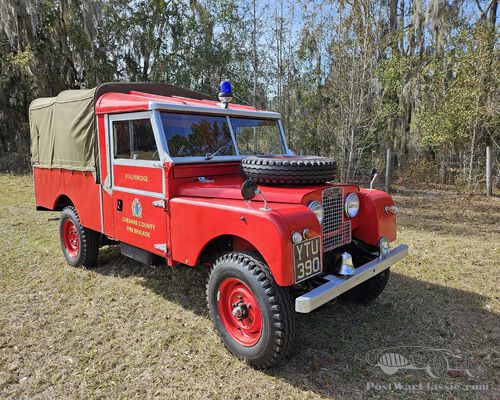
1957 Series 1 Land Rover Fire Engine + Coventry Climax Godiva Fire Pump
Betsy was used by Cheshire Fire Service (UK) from 1957 to 1975. She was based at Hazel Grove and Stalybridge Fire stations. She comes with an exten..
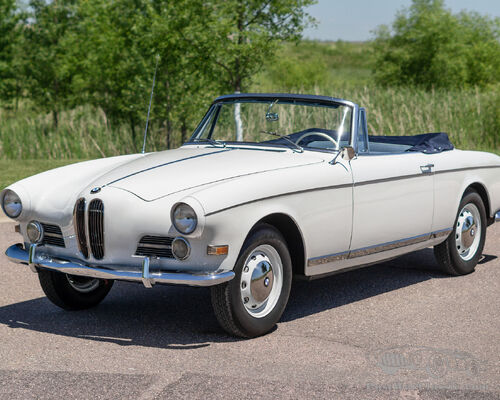
1957 BMW 503 Cabriolet (V8) 1 of 13 Built for US Market #Matching Example
1957 BMW 503 Cabriolet Series 1 Original Aluminum V8 # Matching Original Aluminum Body with Factory Stampings 1 of ..
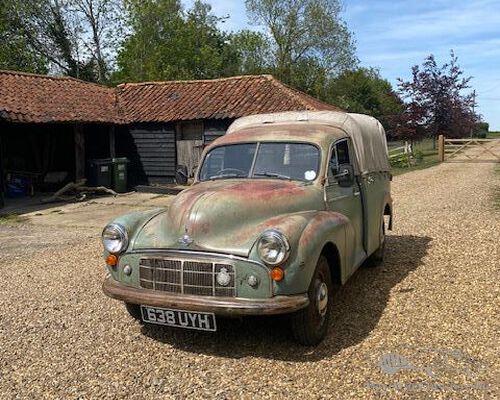
1954 Morris Minor Series II Pick Up
Morris Minor Series II Pick-Up, first registered 15th Jan 1954. Exported from new to Australia, returned to the UK in 2014. Swansea documentation r..