The global magazine and marketplace for classic car enthusiasts, by enthusiasts.


Filter
Classic Plymouth for sale - Plymouth cars for sale
-

Daimler 1970 420 Limousine
This Daimler 420 S Limousine is a car as which have been used by the Royals of England. The car has been restored about 15 years ago, the engine has been revised in 2014. For more information please contact me FRANK KENNIS phone: 00.31.622.420.766 or mail me: info@KennisCars.NL Frank Kennis Phone: 00.31.622.420.766 or mail me: info@KennisCars... -
1965 Jaguar E Type S1 4.2 Roadster
Technical Specifications:Mark & Model: Jaguar E Type S1 4.2 RoadsterYear: 1965Registration plate: Jersey registeredChassis Number: 1E 1359Engine Number: 7E 5167-9Engine Capacity: 4235 ccTransmission: 4-speed ManualMileage: 31,370Body style: 2-door RoadsterInterior color: B.. -
1969 Riley Elf Mark III
Technical Specification:Mark & Model: Riley Elf Mark IIIYear: 1969Registration plate: Jersey registeredChassis Number: RA2S3-1285573AEngine Number: 99H249A-H265Engine Capacity: 998 ccTransmissions: 4-speed manualMileage: 67,947Body style: 2-door saloonInterior col.. -
1957 BMW 503 Cabriolet (V8) 1 of 13 Built for US Market #Matching Example
1957 BMW 503 Cabriolet Series 1 Original Aluminum V8 # Matching Original Aluminum Body with Factory Stampings 1 of 13 Built for the US Market 1 of 139 Ever ProducedBecker Mexico Radio OptionAMAZING UNTOUCHED UNDERCARRIAGE (Take al look at the photos) BMW Classic Certificate Finish.. -
1957 LHD Aston Martin DB MKIII Saloon. AM300/3/1344
A rare, left-hand drive example, in very smart and sound condition, unusually and very attractively finished in cream, with contrasting deep red leather and wire wheels – a colour scheme that works surprisingly well, suiting the car nicely in many ways. The paintwork is to a high standard and has a 'warm' feel to it, and the interior is lovely, .. -
1994 Aston Martin Virage Volante Wide Body RHD.
1994 Aston Martin Virage Volante Wide Body RHD.Chassis number: SCFDAM2C2PBR60114Registration number: L871SUAJust 45,350 miles have been covered in this car since new. Additionally it comes to us with massive service history bills from the likes of HWM Aston Martin, Davron, Desmond Smail, Trinity Engineering etc etc attestin.. -
1986 Ferrari Testarossa | RM Sotheby's | Private Sales
Asking | €320,000 EUR Said to be one of just six examples of the Testarossa 'Monospecchio' delivered in Argento Metallizzato over a red interiorFerrari Classiche certified in January 2026, retains its original chassis, engine, and gearboxRecipient of a comprehensive engine and gearbox service by Toni Auto in November 202.. -
Alfa Romeo 1750 GTV - LHD
Technical Specifications:Mark & Model: Alfa Romeo 1750 GTV - LHDYear: 1970Registration plate: Jersey registeredChassis Number: AR1377920Engine Number: AR00548 H9992Engine Capacity: 1779 ccTransmission: 5-speed manualMileage: 57,935 kmsBody style: 2-door CoupeInterior color.. -
Multiple Concours Winner: Stunning Austin Healey 100-4/BN2 from 1955
Austin Healey 100-4/BN2 from 1955-In outstanding state and condition-Multiple concours winner-Ex UK-Registration: VFO 398-Ready and eligible for Mille Miglia-A very desirable British Classic Sportscar The Austin-Healey 100-4 BN1 and also the BN2 Series cars are considered the “most wanted” .. -
1963 VW T1 Westfalia SO33 Camper with pop up roof.
1963 VW T1 Westfalia SO33 Camper Vin Number: 1142211 Registration Number: 63D120003 This 1963 VW T1 Westfalia SO33 Camper completely restored to concourse condition by VW experts in The Netherlands in 2015 to original VW ‘Westfalia’ specifications. This VW German factory built ..


Plymouth
US, 1928 to date
Chrysler Corporation, Detroit, Mich.
The 4-cylinder 21hp Plymouth car appeared in 1928 at a list price of $725 for a sedan. This Plymouth car replaced the earlier 4-cylinder Chryslers and represented a serious challenge for Ford and Chevrolet in their lowest price class. The Plymouth car had side valves, internal-expanding hydraulic brakes and ribbon-type radiator and gave the Plymouth car a close resemblance to the 1928 Chryslers and De Sotos, and Plymouth cars sold over 100.000 in its first year, even improving its sales position in the bleak economic climate of 1932. Plymouth cars adhered to four cylinders until 1933, when the Plymouth PD-series 6-cylinder was listed at less than $600. 1934 de luxe models of Plymouth cars had independent front suspension, but this was dropped after a year and did not reappear for some time on Plymouth cars. The standard engine in the later 1930 Plymouth cars had a capacity of 3.3-litres, rather smaller than that used in comparable Chevrolets and Fords: a small-bore 2.8-litre version Plymouth car was made for export up to 1939, but the name Plymouth was not usually found on Plymouth cars sold in England, which were nominally Chrysler Kew and Wimbledon sixes. After World War 2 evolution followed that of other Chrysler Corporation cars closely, the old-fashioned styling losing the Plymouth car division its long-held third place in American sales to Buick. Further, Plymouth cars retained the L-head six as its staple power unit right up to 1955, when Flight Sweep versions were introduced with over-square ohv V8 engines on accepted American lines in a variety of powers from 157 to 177bhp. The capacity of these Plymouth cars had 4.3-litres, while the six, now of 3.8-litres, remained available. These 1955 Plymouth cars were lower and longer than their predecessors and could be obtained with synchromesh, overdrive or automatic gearboxes.
The Plymouth Fury models of the ensuing decade represented a breakaway from the traditional Plymouth stolid family car, while the Plymouth Car Division was also responsible for Chrysler’s contribution to the compacts, the Plymouth Valiant launched for 1960. This Plymouth car had rather more European styling than its competitors, with a dummy spare-wheel moulding on the tail; interesting items of specification were the unitary construction of the Plymouth car, alternator ignition, and inclined in-line 2.8-litre ohv 6-cylinder engine. The influence of the Plymouth GT car on America resulted in the Plymouth Barracuda of 1965, a fastback coupé using the Valiant’s 8ft 10in wheelbase and a 4½-litre V8 power unit. Plymouth cars, like Ford and Chevrolet, was aiming at comprehensive coverage of the low and medium price market in 1966, with the compact Plymouth Valiant, the sports-compact Plymouth Barracuda, the medium-sized Plymouth Belvedere, the full-size Plymouth Fury, and the luxurious ‘VIP’ 4-door hardtop Plymouth car, offered only with a 5.2-litre V8 engine and selling for $2.930. An increasing emphasis on sporting Plymouth cars was detectable by 1968, when in addition to the established Barracuda there were two other sports coupés Plymouth car, the Plymouth GTX and the Plymouth Road Runner. All three Plymouth cars were available with 4-speed manual gearboxes and the 6.981cc 425bhp hemi-head V8 also used by Dodge. In 1970, when Valiant prices started at a low $2.172, there was also a Valiant sports coupé, the Plymouth Duster.
In 1971 Plymouth car company added a sub-compact to their Plymouth car range when they offered the 1½-litre Hillman Avenger as the Plymouth Cricket. The 1972 range of Plymouth cars embraced the Valiant on a 9ft wheelbase, the Barracudas and Satellites, and the full-size Furys with V8 engines and automatic transmission as standard. Engines in the Plymouth cars ranged from the Valiant’s 3.2-litre and 3.7-litre sixes up to the largest Chrysler unit, a V8 of 7.210cc. Electronic ignition was offered on the costliest Barracuda model. Casualties of new Federal regulations were the hemi-head engine and convertibles, and the same range Plymouth cars with minor improvements, among them manually-operated sun roofs, was offerd in 1973.
Source: Georgano, encyclopedia of motorcar; MCS
The information is written with the greatest of care. However, if you have any suggested amendments please contact us at office@postwarclassic.com


Featured

Rolls-Royce
Rolls-Royce Silver Wraightlinks gestuurd, automatic, stuurbekrachtigingkleur antraciet grijs, lopende auto op Nederlands kenteken
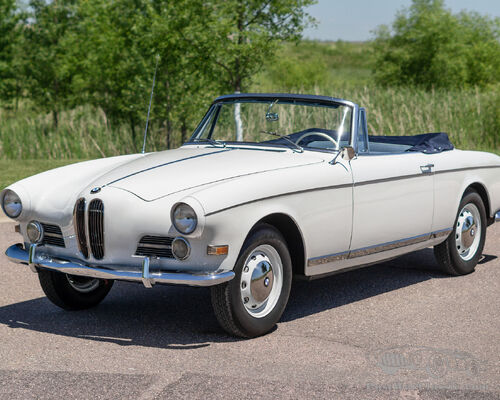
1957 BMW 503 Cabriolet (V8) 1 of 13 Built for US Market #Matching Example
1957 BMW 503 Cabriolet Series 1 Original Aluminum V8 # Matching Original Aluminum Body with Factory Stampings 1 of ..
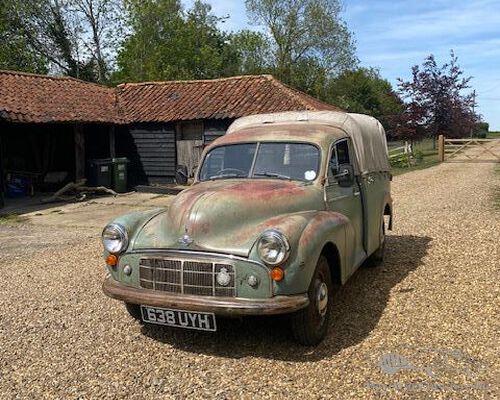
1954 Morris Minor Series II Pick Up
Morris Minor Series II Pick-Up, first registered 15th Jan 1954. Exported from new to Australia, returned to the UK in 2014. Swansea documentation r..