The global magazine and marketplace for classic car enthusiasts, by enthusiasts.


Filter
Classic Saab for sale - Saab cars for sale
-

Saab 96 V4
The Saab 96 was a model manufactured by Saab from 1960 until January 1980. During these twenty years, more than 540,000 cars of all versions were produced. The cars became famous in rally races. The roots of the 96 model go back to the car marked 92 from 1945, which was designed in connection with the Saab Group’s efforts to expand its productio..


Saab
Sweden, 1950 to 2011
(1) Svenska Aeroplan AB, Linköping, 1950 – 1965
(2) SAAB Aktiebolag Ltd, Linköping, 1956 – 1968
(3) SAAB-Scania AKtiebolag Ltd, Linköpng, 1968 to 2011
Although the Svenska Aeroplan Aktiebolaget (the SAAB car) began testing their car during the war, and showed a prototype to the press in 1947, production of SAAB cars did not start until 1950. This SAAB car was the Model 92 which used a 764cc 2-cylinder 2-stroke engine of DKW type developing 25bhp, and driving the front wheels. Suspension on the SAAB car was by torsion bars all round, and the aerodynamic 2-door saloon body was not very different from that used on later SAAB cars. Excellent road-holding made the SAAB car a popular car for rallies and in 1955 more power was provided for the SAAB car with the SAAB Model 93. This SAAB car used a 3-cylinder engine of 748cc capacity giving 38bhp. Suspension was now by coil springs and hydraulic shock-abrobers. The GT model of this SAAB car was tuned to do nearly 100mph.
The 1966 SAAB car model was the SAAB 96 (841cc, 46bhp, or with tuned Monte Carlo 850 engine, 60bhp), equipped with triple carburetors and duo circuit brakes (discs on front wheels). Since the late 1950s the Saab car has been increasingly successful at rallies, Erik Carlsson winning the 1960, 1961 and 1962 RAC Rallies, and the 1962 and 1963 Monte Carlo Rallies. For several years the SAAB car company had been experimenting with open sports and GT SAAB cars, and in 1966 a fiberglass GT coupé went into limited production.
In 1960 only 1.246 SAAB cars left the factory, but in 1965 the figure was 48.300 SAAB cars, of which 17.000 SAAB cars were exported. In 1967 came the first 4-stroke SAAB cars with 1½-litre German Ford V4 engines, and towards the end of the year details were released of the new SAAB 99 2- and 4-door saloons, though serious production of this SAAB car did not begin until 1969. These SAAB cars used a 5-bearing 1.709cc 4-cylinder ohc in-line engine of Triumph manufacture, mounted above the 4-speed all-synchromesh gearbox; other features were all-disc brakes and rear suspension by rigid axle and coils. Fuel injection was available on 1970 SAAB cars, and there were two capacity increases, to 1.854cc in 1971 (when the free wheel was abandoned) and to 1.985cc during 1972. New on the SAAB car in 1968 was a fiberglass sports coupé, the SAAB Sonett, based on the Ford-engined V4 type; this was also the last season for the traditional 2-stroke power units for the SAAB car and it marked amerger with the old-established Scania-Vabis truck firm, also the Swedish importers of the Volkswagen. The 4-cylinder engines brought rally successes again for SAAB cars, who won the RAC British event in 1968, the Scottish in 1969, the RAC and Swedish in 1971, and the Swedish and the Thousand Lakes also with a SAAB car in 1972.
Source: Georgano, encyclopedia of motorcar; OB
The information is written with the greatest of care. However, if you have any suggested amendments please contact us at office@postwarclassic.com


Featured
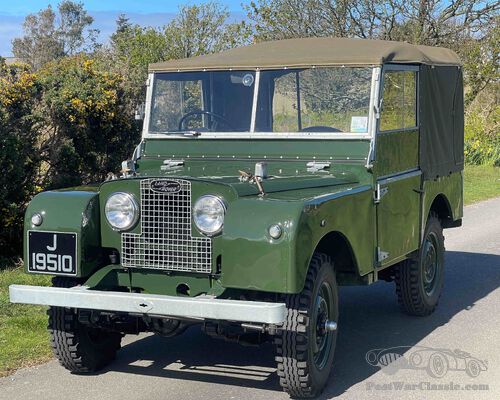
1952 Land Rover Series 1
Technical Specifications:Mark & Model: Land Rover Series 1Year: 1952Registration plate: Jersey registered
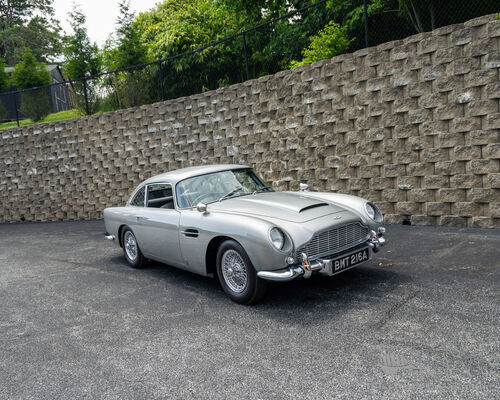
2020 Aston Martin DB5 Goldfinger Continuation | RM Sotheby's | The Monterey Auction
To Be OFFERED AT AUCTION at RM Sothebys' The Monterey Auction event, 13 - 15 August 2026. $1,000,000 - $1,500,000 USD One of 25 examples co..
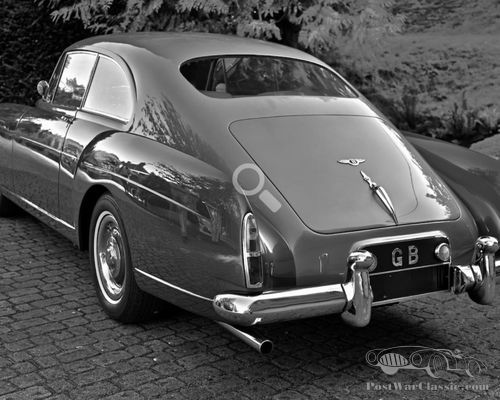
1957 Bentley S1 Fastback by H.J. Mulliner.
1957 Bentley S1 Fastback by H.J. Mulliner.A freshly restored award winning car in like new condition. A later car with Power assited steerin..