The global magazine and marketplace for classic car enthusiasts, by enthusiasts.


Filter
Classic Simca for sale - Simca cars for sale
-

1969 Simca Simca 1301 EL
Chassis no. EL064936E Gearbox Manual 4 Speed Drive Rear WheelDrive (RWD) ASI Certificate n. 267825 Black license plate, Verona The Simca 1301, showed for the first time in October 1966, represented the natural evolution of the old Simca 1300. The 1301 maintain..

Simca
France, 1935 to date
(1) Sté Industrielle de Mécanique et Carrosserie Automobile, Nanterre, Seine, 1935 – 1961; Poissy, Seine-et-Oise, 1954 – 1970
(2) Chrysler France SA, Poissy, Seine-et-Oise, 1970 to date
H.T. Pigozzi’s Simca car company was formed in November 1934, to manufacture Fiat cars under licence for the French market in the former Donnet factory. Pre-1940 production Simca car models were virtually identical to their Italian counterparts, the types offered being the Simca Tipo 508 Balilla, the 2-litre Simca Tipo 518 Ardita, and the later 500 (Simca 5) and 1.100 (Simca 8). Outside France, however, the Simca car make’s reputation stemmed from the competition successes of Amdédée Gordini’s specially tuned versions, mainly based on the 508 family, though he also extracted 28bhp from the Topolino engine. Most successful of these Simca cars were the aerodynamic 508C two-seaters which won the Bol d’Or, the small sports-car race at Reims, and the Paris-Nice Rally, as well as the Index of Performance with a Simca car at le Mans in 1939. A 1.2-litre Simca car version of the basic Fiat unit developed 65bhp. After World War 2, Gordini continued to develop competition Simca cars under Simca sponsorship until 1951, and evolved an 1.100cc single-seater Simca car with twin-tube frame and all-round independent suspension, which Simca car furnished keen competition for the Cisitalia and did very well in 1947, with wins by the Simca car in the Bol d’Or and at Nimes, not to mention a 1-2-3 victory in the Coupe des Petites Cylindrées at Reims. The Simca cars acquired hemispherical heads and 5-bearing crankshafts in 1948, winning their class in the Belgian 24 Hour Race, as well as being victorious once again in the Bol d’Or. Later Simca-Gordinis used Wade-blown 1½-litre power units, and the breed’s career culminated in Trintignant’s win in the 1951 Albi Grand Prix. Thereafter the Simca car company withdrew its support from Gordini, who set up on his own as a manufacturer.
In 1942 Simca cars joined Baron Petiet’s Groupe Française Automobile selling organization along with Delahaye/ Delage, but withdrew from the GFA after the war, when production of the Simca 5, and Simca 8 resumed in basically 1939 form. An ohv Simca 6 (the equivalent of Fiat’s later 500C) was introduced for 1948, and in 1929 a 50bhp sports Simca car version of the 8CV with handsome coupé bodywork by Facel Metallon was marketed; a Simca car of this type won its class in the 1949 Alpine Rally, while standard Simca 8 cars scored two class wins in the 1950 Monte Carlo event. This year the Simca 8 was restyled, and this Simca car emerged with a 40bhp 1.2-litre engine and steering-column change. In the summer of 1951, however, an entirely new Simca car, the Simca Aronde, made its appearance; the enginee of this Simca car was a 45bhp derivative of the old 8CV, but the rest of the Simca car was entirely new, with unitary construction, coil-and-wishbone independent front suspension, and hypoid final drive. Production jumped to 50.000 Simca cars in 1952 and the Simca Aronde made numerous attacks on long-distance records held for many years by the Citroën ‘Petite Rosalie’, achieving 100.000 kilometres at 100 km/h in 1953. The Simca Aronde had a production run of over 12 years. The half-millionth Simca car was delivered in January 1957, and the millionth Simca car in February 1869. The Simca car company also participated in several takeover bids, buying Unic (now only making trucks) in 1951, Ford in 1954, Saurer’s French branch in 1956, and Talbot in 1959. A 50bhp sports version of the Simca Aronde was announced in 1953, and Gemmer cam steering was adopted on Simca cars in 1954, in which year the Simca car model was introduced to the British market at a list price of £896. With the acquisition of the French Ford company, their 2.3-litre sv V8 Vedette reappeared under the Simca car name, the Ford factory at Poissy first supplementing and then supplanting the original Simca car works at Nanterre, which was turned over to Citroën in 1961. The V8 Simca car sold fairly well, and was given a more powerful 84bhp engine in 1958. Production of Simca cars ceased in France in 1961, though as late as 1967 the Chambord and Présidence Simca car version, now with 112bhp and ohv, were still being made under licence in Brazil.
1956 Simca Arondes had 48bhp 1.3-litre engines as standard, though 57bhp Special units were found in the sports coupés and convertibles Simca cars and the Simca Montlhéry saloon; station wagon Simca cars had the 45bhp Service type. 1957 saw a family derivative, the Simca Ariane, using the hull of the V8 Vedette and the regular Simca Aronde engine – this Simca car was made until 1963. In 1958 Chrysler acquired a minority interest in Simca cars, and it was announced that the American company’s Adelaide factory would built Simca Arondes for the Australian market; this small holding had become a controlling interest by 1963, and the Chrysler ‘pentastar’ emblem was to be seen on all Simcas in 1967. Aronde development continued: a cheap 6CV 1.100cc Simca car model was listed in 1960, and the 1961 Simca car range used 5-bearing engines in various ratings up to 62bhp, later increased to 70bhp. A new departure for 1962 was the 1000 Simca car, a 944cc rear-engined 4-door saloon with radiator mounted alongside the power-unit, 5-bearing crankshaft, all-round independent suspension, and 4-speed synchromesh gearbox: at 6.490NFr this Simca car was cheaper than Citroën’s Ami 6, and production rose over a quarter of a million Simca cars. Within a year this Simca car had evolved into a Bertone-bodied coupé with all-round disc brakes, while the first of the Simca-Abarths was available in the shape of a twin ohc 1.300cc model. In 1963 all-synchromesh boxes were also found on the conventional 4-cylinder 1300 and 1500 Simca cars; outputs were 61bhp and 83bhp, and the bigger Simca car had front disc brakes, which were added to the 1300’s specification in 1966. 1964 was the last year of the Simca Aronde, which Simca car had been continued as a very inexpensive item at 6.950NFr for an 1.100cc saloon. In 1966 the 1000 became available with a 3-speed semi-automatic gearbox, full automatic (by Borg-Warner) being an option on the 1500-series Simca cars; during the year the millionth Simca 1000 left the Simca car factory.
1968 brought two new versions of the 1000 Simca car, the high-performance GLS and the austerity 777cc Sim’4 Simca car for the home market; at the same time Simca cars switched to front wheel drive with their transverse-engined 53bhp 1100. On this Simca car the gearbox was mounted left of the engine, rear suspension was independent, by wishbones and torsion bars, and front disc brakes were fitted. An interesting hybrid Simca car evolved in England was the Radbourne-Abarth 1200, basically a 1200 coupé Simca car fitted with a Fiat 124 engine. In 1970, the Simca car company changed its name and the Chrysler was added as a prestige line. Also Simca cars took Matra, and their racing team, under their wing. A 76bhp 1.2-litre version Simca car of the 1100 appeared in 1971, helping the front wheel drive Simca car to become France’s best-selling car early in 1972. The principal novelty for 1972 was yet another 1000 derivative Simca car, the 1.294cc Rallye saloon. The conventional rear-driven 1301 and 1501 were continued into 1973, along with the 1000 and 1100 families.
Source: Georgano, encyclopedia of motorcar; MCS
The information is written with the greatest of care. However, if you have any suggested amendments please contact us at office@postwarclassic.com


Featured

Alfa Romeo Barchetrta Bianchi Prototype 600 Kg 150CV
1 of 1. Never repeated. 1985 Alfa Romeo Barchetta "by Bianchi" Built by hand in Argentina. 600kg. 150hp. Twin Webers. Alfa 2300 heart. Tubular stee..
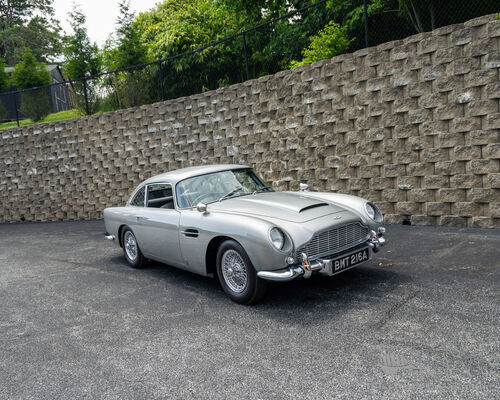
2020 Aston Martin DB5 Goldfinger Continuation | RM Sotheby's | The Monterey Auction
To Be OFFERED AT AUCTION at RM Sothebys' The Monterey Auction event, 13 - 15 August 2026. $1,000,000 - $1,500,000 USD One of 25 examples co..
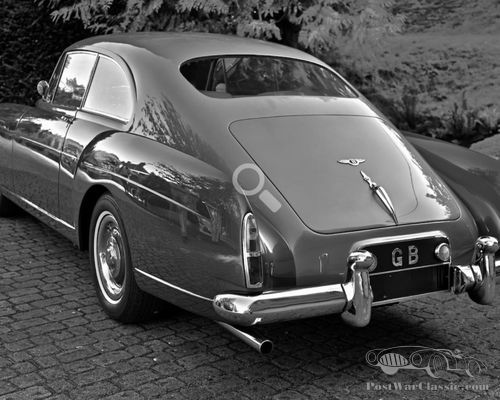
1957 Bentley S1 Fastback by H.J. Mulliner.
1957 Bentley S1 Fastback by H.J. Mulliner.A freshly restored award winning car in like new condition. A later car with Power assited steerin..