The global magazine and marketplace for classic car enthusiasts, by enthusiasts.


Filter
Classic Toyota, Datsun for sale - Toyota, Datsun cars for sale
-

Datsun 240Z Rally 1971 / 6 Cylinder / Rally version
Datsun 240Z, built in 1971. Chassis number HLS30-2108X, engine number L28 01335X. Exterior finished in orange with a black hood, combined with a black leatherette interior. This fantastic Datsun 240Z was sold new in the US. The car was imported to the Netherlands in 2008. In 2009, the owner commissioned ..

Toyota
Japan, 1936 to date
(1) Toyota Automatic Loom Works, Kariya City, 1936
(2) Toyota Motor Co, Toyota City, 1937 to date
The Toyota Works, a flourishing textile concern, began experimenting with cars and in 1935 completed the A1 prototype, still named Toyoda. In the first years of manufacture, Toyota cars concentrated on the AA and AB models Toyota cars, a 4-door sedan and a tourer respectively, based on the A1. These Toyota cars were powered by 6-cylinder, in-line, ohv engines of 65hp at 3.000rpm, and the Toyota cars had bodies reminiscent of the Chrysler Airflow.
In 1938 the design of the Toyota car was revised as the model AC, and this was joined by the newly styled 2.258cc AE series Toyota car in 1939.
During World War 2 a number of experimental types Toyota cars were constructed, including the BA sedan Toyota car with a 4-cylinder 48bhp engine and the larger B Toyota car with a 6-cylinder engine of 85bhp and a seven-seater body. When the war was over the SA model Toyota car was marketed and was the first of the Toyota car firm’s products to use the Toyopet trade mark. In more recent years its use has been limited to machines for the home market, with the Toyota name replacing it on exports.
The Model SA Toyota car was a neatly styled 2-door sedan with 27bhp, a backbone chassis and independent coil-spring front suspension; a total of 215 Toyota cars were built from October 1947 to May 1952. The Toyota car firm expanded rapidly, adding many models of Toyota cars, trucks and buses to its range. Production boomed from 700 Toyota cars a month in 1955, and 11.750 in 1958, to 50.000 Toyota cars by 1964. By 1955 the 1.453cc ohv 4-cylinder Toyota Crown was available, with 3-speed synchromesh gearbox, column change, hydraulic brakes, and hypoid final drive. A 1-litre Toyota car, first of the Toyota Coronas, followed in 1958.
In 1961 the 700 series Toyota car was introduced and in 1964 the Toyota Corona and Toyota Crown private cars were redesigned for an increased export trade. In 1967 theToyota Publica 700 was the smallest of the Toyota cars, using a 2-cylinder air-cooled engine. The conventional 1.100cc 60bhp Toyota Corolla sold in England for £700 and the handsome and well-equipped Corona Toyota car line was powered by 1½-litre 74bhp and 1.6-litre 95bhp engines. The Crown models Toyota cars had 6- and 8-cylinder units. The Toyota Crown Eight was the largest Toyota car built for 1967 and contained a 115bhp V8 engine, and Toyoglide automatic transmission. There were also two sports Toyota cars with twin-ohc engines, a four and a six, and the big Toyota Land Cruiser, a 4-wheel-drive Toyota car using Toyota’s 3.9-litre push-rod 6-cylinder Truck engine.
Like Nissan, Toyota cars explored Group 7 racing, as well as building up an empire. Hino were absorbed in 1966, their private Toyota cars being discontinued shortly afterwards. Daihatsu followed in 1968, which was Toyota car companys first million year. Meanwhile the Crown series Toyota car had been re-engineered with perimeter frames, and emerged with the formidable choice of two 2-litre engines (a pushrod four or an ohc six), and four transmissions, 3- or 4-speed manual and 2- or 3-speed automatic. The Crown 8 Toyota car, never a great success, gave way to the unitary-construction Toyota Century 8 with 3-litre all-aluminium engine developing 150bhp, and such options as power-assisted steering and air suspension. With an overall length of 16ft 2in, the Toyota car was one of Japan’s largest private cars. The Publica, Corolla and Corona series Toyota cars were continued into 1969. New during 1970 were the Toyota Carina and Toyota Celica. The former Toyota car was a conventional pushrod four sold in 1.4-litre and 1.6-litre forms, with live axle and coil rear suspension, bridging the gap between the Corolla and the Corona. The later Toyota car represented serious international competition for cars like the Fiat 124 Sport and the MGB-GT. The Toyota car had a 1.588cc dohc 4-cylinder engine developing 115bhp, front disc brakes and a 5-speed all-synchromesh gearbox.
Toyota cars 1972 line-up was complex and comprehensive. Rear suspension of the Toyota cars alternated between orthodox semi-elliptics (Publica, Corona) and live axles with coils. Front disc brakes were standard on the Toyota Corona and the Toyota Celica, and offer on the more expensive variants of other series. The smallest Toyota car was still the 790cc air-cooled flat-twin Publica on a 7ft 1in wheelbase; this Toyota car was also available with 1-litre and 1.2-litre in-line water-cooled fours. Toyota Corollas had 7ft 10in wheelbases, and these Toyota cars came with pushrod engines of 1.2-, 1.4- or 1.6-litres: a 5-speed gearbox was used on the high-performance SR coupé. The Corolla’s two larger engine options were common to the Carina, though the 1600GT Toyota car ran to two carburetors and hohc. Most Toyota Corona cars used 1.707cc or 1.858cc single-cam engines and 4-speed gearboxes, though extremes of the range were a 3-speed 1½-litre for the home market, and the 5-speed twin-cam 2-litre GSS with 140bhp. The Toyota Celica remained a dohc 1600, the Toyota Crown was now available only with 6-cylinder engines (in 2-litre, 2.3-litre, or 2.6-litre sizes), and the Toyota Century’s output was increased ot 170bhp. The 4x4 LandCruiser Toyota cars were continued, these Toyota cars being made under licence in Brazil with Mercedes-Benz disel engines. Toyota cars were also being manufactured or assembled in twelve other countries.
Source: Georgano, encyclopedia of motorcar; BE
The information is written with the greatest of care. However, if you have any suggested amendments please contact us at office@postwarclassic.com
Datsun
Japan, 1932 to date
(1) DAT Automobile Manufacturing Co, Osaka, 1932
(2) Jidosha Seizo Co Ltd, Yokohama, 1933 – 1934
(3) Nissan Motor Co Ltd, Yokohama, 1934 – 1944
(4) Nissan Heavy Industries Corp, Yokohama, 1947 – 1949
(5) Nissan Motor Co Ltd, Yokohama, 1949 to date
One of the giants of the Japanese car industry, Datsun has a history commencing in 1912 with an experimental Datsun car constructed by the Kwaishinsha Motor Car works. This Datsun was not considered very successful, but by 1914 a second machine was completed and the DAT name was adopted, derived from the partners’ initials; K. Den, R. Aoyama and A. Takeuchi. In 1915 the Dat Model 31 was marketed followed by Model 41 in 1916. Construction of cars and trucks continued in Tokyo until 1926, when the company merged with Jitsuyo Judosha Seizo to form the Dat Automobile Manufacturing Co of Osaka. Jitsuyo Jidosha Seizo had been producing Lila cars, but manufacture of these and of the Dat automobile was given up and all facilities were devoted exclusively to trucks until 1930. In that year a Dat test car, Model 91, was built, and this led to a return to car manufacture in 1931 with the Datson or son-of-Dat. In order to make use of the national rising sun emblem, the name was finally altered to Datsun in 1932.
The new patron of the Datsun make, Tobata Imono Co, disposed of the Osaka plant to Ishikawajima in 1933 and established a fresh firm, Jidosha Seizo, in Yokohama. Datsun manufacture continued there, to be joined by a larger private car range when the Datsun company name was changed to Nissan. The little Datsun cars of the 1930s were well-proportioned and attractive and were built in sedan, phaeton, coupé and roadster forms. These Datsun cars were closely based on the British Austin Seven, but by the late 1930s had acquired more flowing lines.
The evolution of the Datsun make can be traced through the DAT 41 of 1924, which was a five-seater sedan with a 4-cylinder, water-cooled engine of 17hp and a top speed of 30mph; the Datson phaeton of 1931, a two-seater with a 10hp, 4-cylinder engine and a 45mph speed; and the 1936 Datsun sedan with a 4-cylinder, 15hp engine driving it at 50mph.
Early post-war styling of Datsun cars owed much to the American Crosley, though the 1952 Datsun sports model had a look of MG about it. It wsa not until 1958 that the old, Austin-like sv engine disappeared, replaced by a 988cc 4-door saloon with 37bhp 4-cylinder pushrod unit. Coil ifs did not arrive until the Datsun 310 series of 1959, which had 1189cc engines and three forward speeds. A sports two/four-seater Dastun version had fiberglass coachwork. In 1960 the group replaced its licence-produced Austin A5-s with the 1½-litre and 2-litre 4-cylinder Cedrics, invariably sold as Nissans until 1966. By 1963 the sports Datsun Fairlady was a more serious proposition, with elegant open coachwork, 2LS front brakes, and a 1½-litre engine giving 71bhp.
In 1966 Nissan/Datsun offered an impressive range. Their small family saloon, the Datsun Bluebird, had progressed to full unitary construction, alternator ignition, an all-synchromesh gearbox, and a 1300cc pushrod engine, and the Datsun Fairlady had grown up into the 1600cc Datsun Silvia, with 96bhp 5-bearing unit and front disc brakes; a hardtop was available as well as the roadster. In addition to the standard pushrod Cedrics there were a 2.2-litre diesel-engined four and an ohc 7-bearing 1987cc six developing 123bh; this was available with automatic transmission and could reach 100mph. Finally Nissan offered a prestige car, the Nissan/Datsun President saloon on a 9ft 4½-in wheelbase, with a 3-litre 6-cylinder engine and manual gearbox, or a 4-litre pushrod V8 of American type and automatic. The absorption of the Prince concern led to further complications, for though the Datsun marque disappeared there were now a host of ‘ex-Princes’ in the medium category sold under the Nissan/Datsun Skyline and Gloria names.
The main consequence was an increasing sophistication, especially in engines and suspensions. Transverse-leaf ifs came on the conventional 988cc ohv Nissan/ Datsun Sunny saloon of 1967. The Nissan/Datsun Bluebird was completely redesigned in 1968, emerging with a 96bhp 5-bearing ohc slant four engine of 1.6-litres’ capacity, and all-independent springing.
By 1969 Nissan/ Datsun had pushed production to nearly 700.000 units a year, as well as delivering their 5 millionth Datsun car. In 1970 896.748 cars were made. A competition programme pursued since 1966, initially with Group 6 and Group 7 racers, was extending in the direction of international rallies: 1600s won the Team prize in the 1969 R.A.C. evnet, and a year later a Datsun/ Nissan 1600SS was victorious in the East African Safari. Fastest of the 1970 big Nissan/ Datsun saloons was a 2.3-litre ohc six, and the Nissan/ Datsun company also marketed two high-performance 6-cylinder coupés, both with 5-speed all-synchromesh gearboxes irs, and front disc brakes. The Datsun/ Nissan 240Z, widely exported, used a 160bhp 2.4-litre sohc unit. The 2-litre Z432 had twin overhead camshafts.
At the end of 1970 Datsun fell into line with the prevailing fwd idiom. Their Datsun Cherry was a fastback saloon using a transversely-mounted 5-bearing pushrod engine in an all-independently-sprung unitary structure; 988cc and 1171cc versions were offered, with outputs ranging up to 80bhp, as well as 3- or 4-speed gearboxes, front disc brakes (though drums were standard), and coupé and station-wagon bodies. The 1972 Datsuns included the Cherry; the conventional 4-cylinder Sunny with 1.4-litre or 1.6-litre ohc engines; the similarly-engineered Datsun Bluebirds, of which the most powerful was the 1800SS-E hardtop with 125bhp fuel-injection engine; the medium-sized Nissan/ Datsun Skyline and Laurel saloons and station wagons; the sohc and dohc 6-cylinder sports cars; and the luxurious Nissan/ Datsun President series. Revised versions of the Laurel and Bluebird were introduced during the year. Datsun cars were also made under licence by YLN in Taiwan.
Source: Georgano, encyclopedia of motorcar; BE
The information is written with the greatest of care. However, if you have any suggested amendments please contact us at office@postwarclassic.com


Featured

Rolls-Royce
Rolls-Royce Silver Wraightlinks gestuurd, automatic, stuurbekrachtigingkleur antraciet grijs, lopende auto op Nederlands kenteken
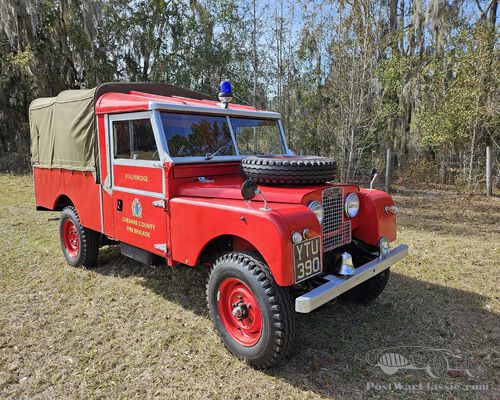
1957 Series 1 Land Rover Fire Engine + Coventry Climax Godiva Fire Pump
Betsy was used by Cheshire Fire Service (UK) from 1957 to 1975. She was based at Hazel Grove and Stalybridge Fire stations. She comes with an exten..
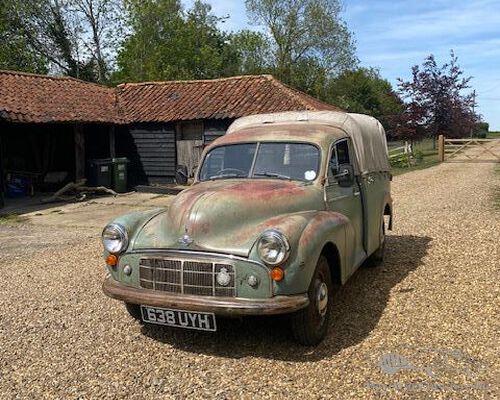
1954 Morris Minor Series II Pick Up
Morris Minor Series II Pick-Up, first registered 15th Jan 1954. Exported from new to Australia, returned to the UK in 2014. Swansea documentation r..